

Read the first chapter
The whole of chapter one, free. About 18 min. Turn the pages with the arrows, your keyboard, or a swipe.
Chapter 1
Chapter 1
Memories in the Sand
Chapter 1
It was an early February morning in 2006 in Qayyarah, Iraq. Wind drove sand through my mask, scraping my skin and leaving a sharp, grainy taste in my mouth. After a morning of sand and wind, I drew the short straw: guard duty at the front gate. Winter was ending, and the temperatures were finally becoming easier to tolerate. The guard tower would be my cell for the next four hours.
I climbed the steel-and-wood steps with my spotter, Private Chase, a small, freckle-faced redhead fresh out of training and sent straight to Iraq. He was eager to take on whatever task he was given, though the weight of his gear was a struggle. Once we settled into position, I lay against the rough wooden planks, my rifle resting against my shoulder. I brought my eye to the scope and focused beyond the gate.
A young boy with tousled black hair laughed as his mother pushed him on a makeshift swing strung between two trees. His hands clutched the rope, his face bright with delight. Watching him pulled me back to my own childhood. I was four, blonde-haired and chestnut-eyed, swinging in a park in Casa Grande, Arizona. The sun warmed my face as my mother pushed me, her arms reaching toward me. I remember the weightless feeling of soaring through the air and the sound of laughter around me. Back then, childhood still felt safe. I didn’t know how soon that feeling would disappear.
I drifted from that memory into the life we had lived in the home across from the park. My mother had begun a life with Stan, a devout Catholic, a tall and broad man with dark eyes, dark hair, and a distinctive mustache. Our family was my mother, Stan, my sister Holly, my brother Alex, and me. Holly was four years older than I was, tall and energetic, with blonde hair. Alex was a year older than me, thin and goofy, always eager to please.
We lived across from the park in a beige, single-level duplex with a brownish-red roof and a brick fence. The rooms were simple: the living room and kitchen opened off the front of the house, and a hallway led to the bedrooms. It was the home where our family began to change.
My mother worked as an on-call CNA. She had long, wavy hair that shifted in color, striking blue eyes, and a warm smile. She seemed happy, fit, and unbroken after her divorce from mine and Alex's father. At first, Stan seemed to offer us something better. He took us on trips, made us laugh, and gave us the appearance of stability. My siblings and I wanted to believe him.
We clung to the stability Stan seemed to offer, hoping it was the start of something better. We had weekly pizza parties every Friday, Mother and Stan would pick up a few VHS tapes from the local Block Buster, we would always argue over which one to watch first.
But after about two years, the cracks began to show. The weekly pizza parties began to transition from a weekly anchor into a fond distant memory, the laughter in the home switched into a tense silence and mother had just told us that we were going to have a new baby brother or sister soon. which confused me as I thought that would be a reason to keep the joy and celebration alive but as my mother’s pregnancy with Garret progressed, Stan’s punishments grew harsher. He created a unique punishment that he called The Shit Bag where he would make us stand in a large brown paper sack in our underwear and swallow Tabasco sauce. He wielded window trim like a weapon, and the distant memories of laughter in our home gave way to silence thick with fear, giving drawn out whiplash leaving the quiet gentle life I had grown to know and enjoy.
If we made noise after bedtime, he locked us outside. When we came home from school, there were no questions about our day or comforting arms waiting for us. Instead, Stan told us, “Get your chores done,” or “Work on the backyard.” Our voices seemed like a burden, our presence an inconvenience, and the days became an unyielding cycle of labor.
One afternoon, the late sun stretched long shadows across the backyard as Stan ordered me into the back yard and handed me a rusty metal rake and blunt safety scissors. “I Just need you to rake the dirt even with the rest of the yard and trim the tree with these,” he said, as if it were a simple task, the long rake handle feeling impossible to manipulate in my small hands and the scissors looking frail and useless.
The yard was mostly uneven dirt and unruly grass. I dragged the rake across the ground, each scrape grating in the heat. When I stopped to rest, I noticed what I later realized was a horny toad at the base of the rake laying on its back, its bulging eyes bright with blood. I bent to look at it feeling guilty that this mundane task took the life of an innocent creature, Just as I got close enough to inspect the creature then instantly it flipped over, looked at me, and then darted away.
I watched it disappear, feeling sharp sadness that even a small creature didn't want to be in my presence then feeling a pang of envy that something as small as this lizard could flee from their situation. I picked up the scissors and began trimming the tree, though the little blades seemed useless against its branches. Stan was nowhere in sight. I imagined him relaxing with a beer while I worked and wondered why I was the one left behind.
I hoped finishing the chore might earn a word of praise. I knew better than to expect it.
All of this unfolded during my mother’s pregnancy, a time that should have been filled with joy but instead felt fraught with unspoken tensions. It was as if Stan had consciously chosen to distance himself from us, reserving his affection for the child he had already deemed his “golden child.”
My mother had a best friend, Judie, who was so close to us that I believed she was my aunt. She was a short, frail woman with long black hair, and she was always laughing and smiling. She was one of the most genuine people I knew. Though she rarely came to the house, she often spoke with my mother on the phone, and whenever we could, we would sneak away to visit her.
As the months passed, Holly seemed to rise quickly into favor. On road trips to Vegas, she would go into gas stations with Stan and mother, then return carrying treats and toys. Alex and I watched from outside, seeing how Stan smiled at her with pride.
Stan and Holly constantly played something they called “Chinese fire drills,” a game where when the car stops at a red light you jump out of the car, run around the car, and get back in before the light turns green. I wanted to join in one day on the action so as we came to a red light I jumped out of the car and ran around it with them. When I climbed back in, Stan was furious. "This is not your game" he scolded, I spent the rest of the trip in our hotel room.
On the way back home reliving the experience of Holly bringing her treasures to the car from the gas station, my mother told us it was natural to treat Holly differently because she was the only girl. I tried to accept that explanation, but it left me wondering why affection seemed to depend on what gender you were. As her pregnancy progressed, I began to fear that the new baby would take the place Holly had held, leaving even less room for Alex and me.
Ultimately, my mother decided to marry Stan in a Vegas chapel. It felt surreal, the bright lights and quick vows contrasting sharply with the unease that had already crept into our lives. During the wedding, Stan had splurged on what seemed like an 80-foot limo. Holly, my mother, and Stan rode in style, while Alex and I squeezed into the car with Aunt Judie a stark reminder of our place in this new family dynamic. Though not our biological aunt, Judie was a loving constant presence in our lives.
We lived minutes from my grandma Alice, my mother’s stepmother, and my grandpa Jared, my mother’s biological father. They welcomed us often, and their home was full of family dinners and holiday gatherings. For a time, we were forbidden from visiting my grandfather, Jared, because he had objected to Stan’s strict treatment of us. Eventually, my mother persuaded Stan to let us visit Jared and his wife, Alice, for Thanksgiving. It was a rare reprieve, a welcome escape filled with the warmth of family.
Jared and Alice’s house was a haven. I remember the thrill of diving into their backyard hot tub, the bubbling water washing away the tension that clung to me at home. My mother would laugh, her smile genuine for a moment, as we splashed around, the crisp autumn air mingling with the warmth of the water.
Yet, despite those joyful moments, my mother’s attempts to secure more time with them felt like an uphill battle. Each time she brought up visiting Jared and Alice again, Stan’s irritation simmered just beneath the surface. His anger was palpable, an unspoken threat looming over their discussions. I watched as her hopeful expressions faded into caution, each mention of my grandfather potentially unleashing a storm.
The tension grew; the very mention of Jared turned Stan's face a shade darker. It was a constant reminder that our bursts of joy came with a price, and that the family bonds I cherished were fragile, held together by my mother’s quiet defiance against Stan’s oppressive control.
Shortly after their wedding, Garret was born in Arizona. I remember sitting in the waiting room with Aunt Judie and Alex while others celebrated the new arrival in the delivery room. Judie explaining to us that the hospital had a visitation limit although I figured that was just her way of helping me make sense of the disconnection. We weren’t allowed to touch or talk to Garret unless given permission by Stan, a boundary that felt unnatural even then.
In Casa Grande, we were expected to be Catholic, my mother unwilling to cross Stan even in matters of faith. In church, I found solace sitting with Aunt Judie who was a devout Catholic provided warmth I desperately needed. Her laughter and gentle nature felt like a shield against the chaos at home.
One Sunday morning, I awoke to the sound of shouting. The voices of Stan, my mother, and Judie pierced through the walls, their anger echoing like thunder. I curled up under the covers, heart racing, feeling an all-consuming dread. When Judie stopped coming to church after that, it felt as though a part of me had vanished. The vibrant joy she brought was replaced by an oppressive emptiness, a void that made everything seem dull and gray.
With Garret’s arrival, the atmosphere shifted dramatically. Punishments intensified; we learned quickly that even the slightest misstep could land us in trouble. For talking out of turn or interrupting, we stood in the kitchen with our arms outstretched for hours, a cold fan blowing in our faces. Stan preferred psychological tactics over physical ones, but when he drank, that balance tipped dangerously.
Alex and I often had to fend for ourselves at mealtimes, usually reheating ravioli, or buttering tortillas, while Holly, Garret, mom and stan enjoyed pizza nights in the living room that felt like a cruel joke. The aroma of melted cheese and pepperoni wafted through the house, teasing our nearly empty stomachs. Hearing Garrets laughter from his highchair set up next to the couch was almost too much to bear. After they feasted, we were left to tackle the aftermath: crusts and sauce splatters scattered across the coffee table, empty boxes teetering precariously, and cheese remnants stuck to plates like stubborn little souvenirs of their indulgence.
While Holly and Garret lounged on the couch Holly still savoring their last bites, Alex and I rolled up our sleeves, the laughter and joy of their dinner echoing in the background. As we scrubbed the table and stacked the boxes, the chaos of the meal felt almost like a punishment for our earlier hunger. But we exchanged knowing glances, determined to reclaim our own pizza night one day.
As the oppressive atmosphere settled in, and the year passed I started feeling as if I were losing my grip on reality. Sleep deprivation haunted me; I would hear strange noises—knocking, crying, whispers just beyond comprehension. One night, convinced I heard Holly crying, I tiptoed to the bathroom. She reassured me she was fine, urging me back to bed, careful not to wake Stan, whose room was just across the hall.
Later that night, as I made my way to the bathroom, illuminated by the faint moonlit glow from the large living room window, I noticed a strange liquid pooling beneath the attic door in between Stan's room and the bathroom from slow drips of liquid coming from the attic door above me. At first, I dismissed it as leftover rain from earlier, but when I returned from the bathroom as the bathroom light illuminated the hallway, I realized the liquid on the floor was red. Panic surged through me as I pounded on my mother’s and Stan’s door, but when I turned back to look, it had vanished. At eight years old I had no idea what I was looking at. Stan throwing the door open and looking at me with disgust just quietly latched on to my shoulder and directed me out the front door like I was a dog being shunned to the yard for disturbing his sleep, shutting it firmly behind him and leaving me alone in the dark.
Desperate, I crept around to my bedroom window, trying to wake Alex. He slept soundly, but Holly stirred and quietly let me in. The following morning, I faced another punishment for sneaking in, subjected to the dreaded Tabasco treatment: I would stand in the kitchen and Stan would plug my nose and dump a table spoon of whatever fire liquid he could find in the kitchen cabinets down my throat, verbally scolding me for being disobedient and ungrateful as my throat melted and my eyes watered attempting to focus on the moment I was able to dash to the sink for some water all while the others enjoyed thoughtfully cooked breakfast.
I came home from school one day to find my mother and Stan waiting for me with an urgency that sent a shiver down my spine.
“Start packing,” my mother said, her voice steady despite the storm of emotions swirling around us. “We’re leaving for Utah this weekend.”
at
The move to Sandy, Utah, brought a breath of fresh air. The apartment complex was nicer than anything we had lived in before, with neat lawns and friendly neighbors. It felt like a new beginning, a chance for things to settle down. My mother and Stan often had private conversations about his sudden anger and the strange happenings in our old house. They speculated that it was haunted, attributing Stan’s mood swings to something beyond our control.
As Alex and I settled into this new space, we began to feel less like strangers among our parental figures, and more like companions. We still didn’t quite feel like part of the family, but the isolation that had defined our lives began to fade. We shared meals together, though the rules remained stricter for us than for Holly or Garret.
A few months into our new life, my mother started spending time with a friend named Blake, who we affectionately called the Bird Man. He had an impressive collection of birds and a tapestry of the rebel flag hanging from his ceiling. Tall and charismatic, with shoulder-length strawberry blonde hair, a perfectly maintained long mustache, and dark blue eyes that sparkled with mischief, Blake’s deep voice filled the room as he regaled us with jokes. Though his house reeked of beer and cigarettes, it became a welcome escape from the oppressive atmosphere of home.
Blake and my mother grew close, forming a bond that brought a hint of normalcy into our chaotic lives. But when Stan found out about their friendship, he was furious. He swiftly orchestrated another move, convincing my grandmother to let us stay in her basement.
I felt a flicker of excitement at this new arrangement. My grandparents were loving and doting, always seeming indifferent to Stan’s dark cloud. With him working long hours and drinking more heavily, life in their basement offered a semblance of peace. My grandmother’s protectiveness provided a buffer against the chaos, and for the first time in a long while, I felt like there might be a way out of the darkness that had surrounded us for so long.
For about six months that house was a sanctuary amidst the storm, a striking giant blue structure that dominated the neighborhood, standing resilient against the changing tides of our lives. My grandparents’ home was more than just a building; it was a haven of warmth and nostalgia. The immaculate yard, meticulously cared for, bloomed with vibrant rose bushes that framed the path leading to the front door. Each bloom seemed to whisper stories of love and care, their colors a vivid contrast to the overcast skies of our recent days.
After school, we’d scatter through the yard, the sweet scent of roses wrapping around us like a comforting embrace. My grandmother’s laughter would echo from the kitchen, a melody that harmonized with the gentle rustle of leaves and the distant chirping of birds. In those moments, everything felt safe and right.
Each Friday, we would line up outside among the grass and roses, hearts buoyed by the anticipation of our ten-dollar allowances. It was a simple routine that provided a sense of stability. However, the trips to Vegas and the lavish outings seemed to fade as Stan settled into his full-time job.
Instead, we found solace in the smaller joys, like our first family camping trip to Echo Reservoir. We spent three nights in my grandparents’ RV, huddled together around a rickety table that folded into a bed, playing card games and Yahtzee. The air was thick with laughter and playful banter, creating a warmth that enveloped us. This soon became a cherished yearly tradition. Those memories provided a solace that overshadowed the chaos lurking just beyond the garden gate.
But one particular Friday evening, everything shifted. After school, we lined up as usual for our allowances. I stood at the end of the line, watching as my siblings collected their bills and dashed off to play. As my turn arrived, I lingered, watching Stan’s expression shift from jovial to cruel in an instant. He shut his wallet with a flick of his wrist, looking at me with a smile that felt more like a smirk. “Not today,” he said, turning away as if demonstrating his control. With my grandparents away, the house felt different—less like a sanctuary and more like a fragile shell ready to crack. The heaviness settled in my chest, suffocating the joy that had filled the space over the last year.
I felt the weight of humiliation settle in my chest. My mother was downstairs, deep in her cleaning, oblivious to the tension. I chose to retreat to the basement, sinking into the embrace of the recliner, its worn corduroy fabric a familiar comfort amid my heartache. When my mother noticed my expression, she asked what was wrong. Before I could respond, Stan chimed in, dismissing me with a wave of his hand. “Nothing’s wrong,” he said, “just stop acting like a spoiled brat.”
Ignoring him, as I had, only fueled his anger. He yelled, each word like a hammer striking metal, and when I didn’t respond, he snapped. Grabbing me by the top of my head by my hair, he threw me toward a pile of metal chairs my mother had moved aside to sweep. I felt like a bowling ball, striking pins, crashing into the cold, unforgiving metal.
My mother’s scream cut through the haze of shock that enveloped me as I lay on the floor, nearly blacking out. “He's fine!” Stan yelled at her, dismissing her concern. “Get up!” He took a cup of water and poured it over my head, thinking it would compel me to obey. But I stayed down, my body refusing to respond.
“Alex” my mother shouted, desperation in her voice. “Go across the street and call the police!” Alex jumped from the couch where he was sitting in a trance like shock, ran with desperation out the door, but time stretched endlessly until I wondered if he’d actually gone. Just as panic began to settle, three police officers burst through the door, their presence a sudden gust of hope amidst the chaos.
Officer Radley lifted me gently off the floor, and they took me outside, into the light. I was acutely aware of the contrast between the warmth of the house and the chill of the world beyond its walls. Officer Radley’s gentle grip was a lifeline, pulling me from the cold metal of reality back into the fading sunlight.
My mother spoke for me, her voice trembling, muffled by the panic that hung in the air, as she recounted what had happened. They asked me to remove my shirt for photographs. As I complied, I caught sight of Stan in the back of the police car, a twisted sadistic smile on his face, mouthing words I couldn’t decipher. And yet, the house loomed behind us, its blue facade still standing proud, a silent witness to the unraveling of our lives.
Later that evening, my mother received a call from Stan at the jail. Their argument was sharp and filled with threats, his voice a venomous hiss as he promised retribution. “You just cost me my job,” he spat. “When I get out, it will be worse.”
Fear coursed through my mother, and she turned to us with a grave look. “We need to move. Somewhere he can’t find us.” The urgency in her voice sent a chill through me, a stark reminder of the reality we faced.
In our mother’s eyes it wasn’t just us boys who were at risk; Holly was caught in the crossfire too. Before we could make sense of it all, Holly called her dad. When he discovered what had taken place, it became clear he believed she would be moving in with him. He arrived and started packing and loading up bags, the finality of that decision struck me like a blow; it felt as though another thread binding us together was fraying. We were already on the precipice of upheaval, and now Holly was being swept away into a different world, leaving us to navigate our own uncertain future.
In a flurry of urgency, we packed whatever we could fit into the car, leaving behind the remnants of a life that had felt normal just days before. We drove to Blake’s house, the weight of uncertainty heavy in the air, each mile a step toward safety and away from the darkness that had loomed over us for too long.
Even as we fled, the memory of laughter, rose-scented air, and the steadfast presence of my grandparents lingered. We were leaving behind not just a home, but a place filled with comfort and love. Yet, in that moment of uncertainty, I clung to the hope that we would find another refuge, another chance to rebuild the warmth we had known.
End of chapter one. 10 more chapters and about 49,766 words in the full book.
Swipe or use the arrows to turn the page
What's inside: 11 chapters
- 1. Chapter 1
- 2. Chapter 2
- 3. Chapter 3
- 4. Chapter 4
- 5. Chapter 5
- 6. Chapter 6
- 7. Chapter 7
- 8. Chapter 8
- 9. Chapter 9
- 10. Chapter 10
- 11. Chapter 11
About this book
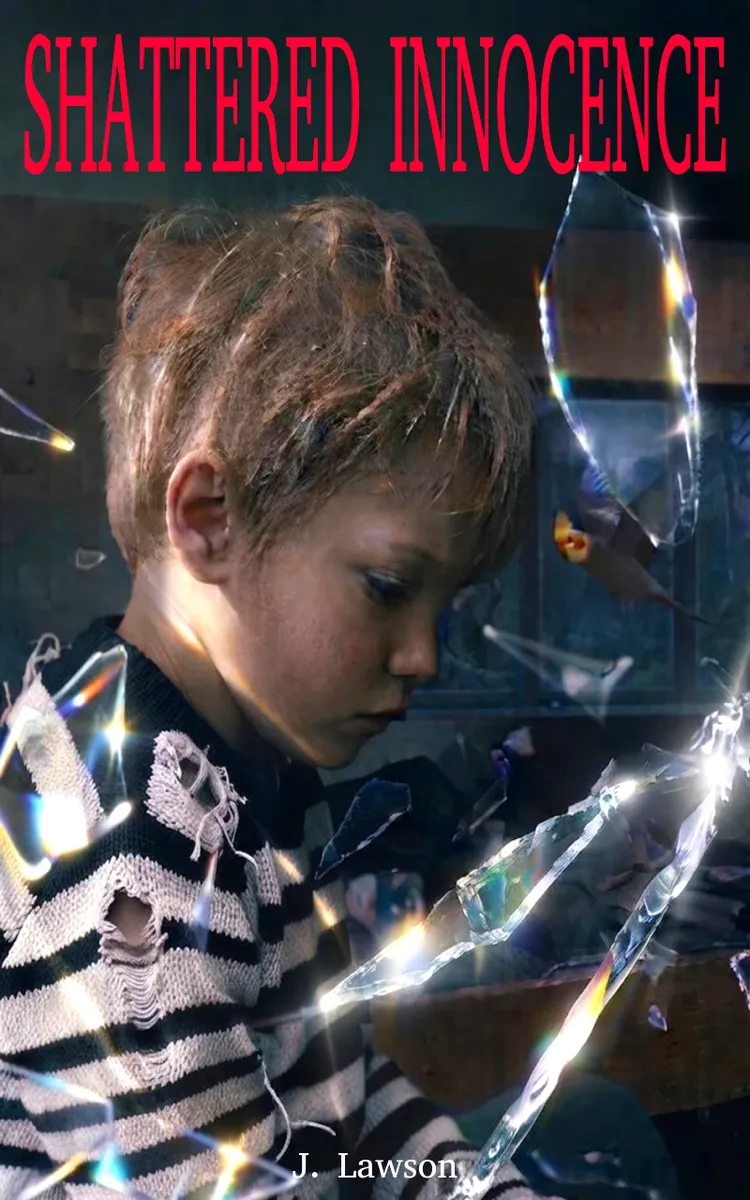
"Shattered Innocence" is a general book by J. Lawson with 11 chapters and approximately 49,766 words. It covers key insights and practical takeaways on the topic.
This book was created using Inkfluence AI, an AI-powered book generation platform that helps authors write, design, and publish complete books.
Frequently Asked Questions
What is "Shattered Innocence" about?
"Shattered Innocence" is a general book by J. Lawson covering key insights and practical takeaways on the topic.
How many chapters are in "Shattered Innocence"?
The book contains 11 chapters and approximately 49,766 words. Topics covered include Chapter 1, Chapter 2, Chapter 3, Chapter 4, and more.
Who wrote "Shattered Innocence"?
This book was written by J. Lawson and created using Inkfluence AI, an AI book generation platform that helps authors write, design, and publish books.
Write your own book with AI
Describe your idea and Inkfluence writes the whole thing. Free to start.
Start writingCreated with Inkfluence AI


