
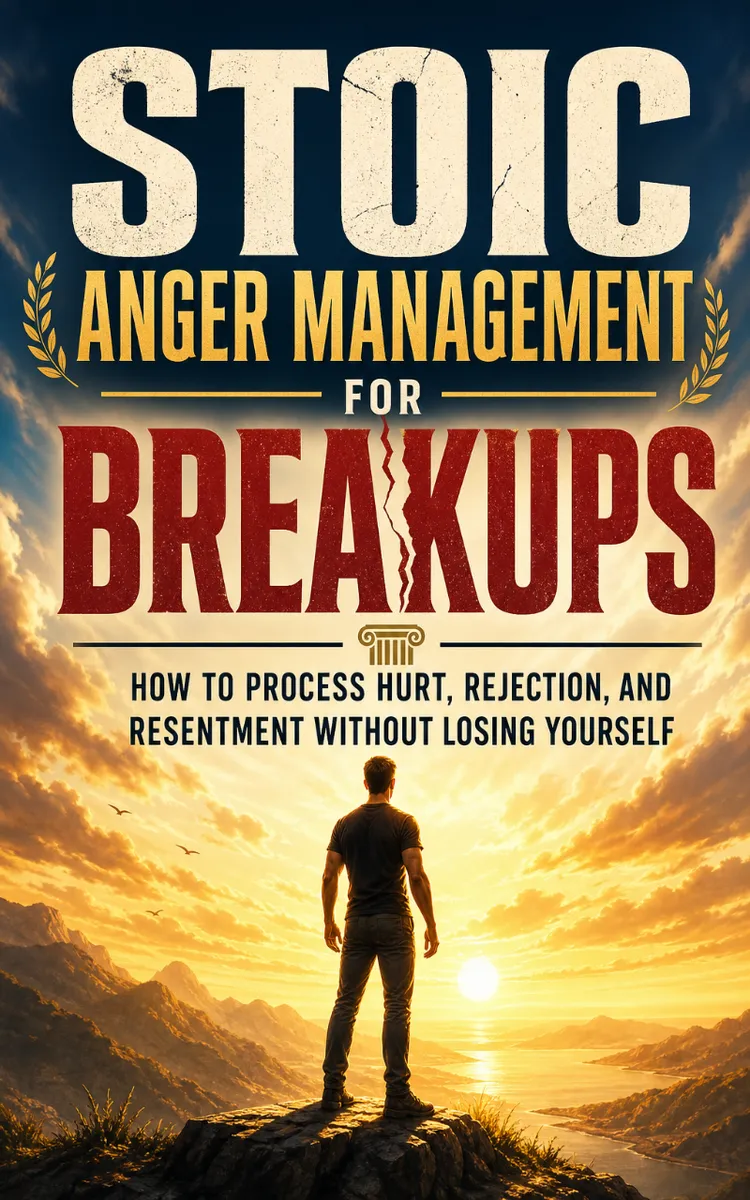
Stoic Anger Management for Breakups
Created with Inkfluence AI
Stoic-based strategies for managing anger and criticism defensiveness
Table of Contents
- 1. Reclaiming Your Inner Citadel
- 2. Turning Criticism Into Data
- 3. The Stoic Control Checklist
- 4. Breaking the Defensiveness Loop
- 5. Practicing Voluntary Discomfort
- 6. Separating Worth From Performance
- 7. Reframing Intent vs. Impact
- 8. The Pause-Name-Choose Reset
- 9. Listening Without Preparing Your Reply
- 10. Asking Better Clarifying Questions
- 11. Responding With Virtue, Not Victory
- 12. Setting Boundaries Without Burning Bridges
- 13. Handling Public Criticism With Poise
- 14. Using the “Let It Pass” Skill
- 15. Converting Shame Into Improvement
- 16. Pre-Committing Your Response Plan
- 17. Practicing Negative Visualization for Calm
- 18. Repairing After You Snap
- 19. Building a Criticism Journal Routine
- 20. Becoming the Calm Example
Preview: Reclaiming Your Inner Citadel
A short excerpt from “Reclaiming Your Inner Citadel”. The full book contains 20 chapters and 27,227 words.
> “When you argue with an opinion, you’re already defending your identity.” - Stoic teaching, in plain language
Marcus, 34, runs customer support for a mid-size company. He’s good at his job-he can solve problems, calm customers, and keep his team from spiraling when things get heated. But the moment a supervisor says, “That response was off,” Marcus feels it in his chest like a door slamming. Even if the feedback is fair, his mind starts building a case: I did my best. You don’t know the full situation. I’m being judged.
He’ll read the message again and again, hunting for what “they really mean.” If the tone felt sharp, he might snap back in a meeting. If it felt dismissive, he might go quiet and stew for the rest of the day. Either way, his sense of self gets hijacked by someone else’s words-like his inner steering wheel just got swapped out while he wasn’t looking.
So the question isn’t whether criticism stings-it’s whether it gets to drive your identity.
The Mindset Shift
Old Belief: “Their opinion is information about who I am.”
New Reality: “Their opinion is an event; my identity is something I control.”
That shift sounds small, but it changes everything. Before, Marcus hears a correction and his brain treats it like a verdict: I am the kind of person who messed up. After, he hears the same correction and his brain treats it like a piece of input: Something needs adjusting in how I handled that situation. Same words. Different ownership.
Here’s the concrete difference. Marcus receives: “You should’ve offered a refund option instead of a workaround.” Under the old belief, his mind immediately turns that into: I’m incompetent. He gets defensive, either to protect his pride or to “prove” he’s not what they think. Under the new reality, he slows down and asks: Do I want to be the kind of person who improves outcomes? If yes, what exactly do I change next time? That’s not pretending criticism doesn’t hurt. It’s refusing to let hurt become a compass.
And it matters because defensiveness has a hidden job. It tries to protect something-usually your image of yourself as capable, fair, and respected. The Stoic move isn’t to deny you care. It’s to separate what’s yours (your choices, your character, your response) from what isn’t (their interpretation, their tone, their mood, their opinion). When you do that, criticism can land without taking your whole day hostage.
Marcus starts with one practice: he stops at the first sting and labels it. Not “they’re wrong,” not “I’m being attacked.” Just: “This is feedback.” The moment he can call it what it is, he can decide what to do with it.
Going Deeper
Stoicism doesn’t treat anger and defensiveness like random problems. It treats them like the result of what you believe about the situation. If you believe that someone’s words reveal your worth, your body reacts like your worth is under threat. That’s why criticism feels personal even when it’s meant to be practical. Your nervous system is responding to an identity claim.
So the reasoning is simple: if you want criticism to stop hijacking you, you have to stop handing it the steering wheel. Stoics separate three things that people often mash together:
1) the event (what was said),
2) the interpretation (what you think it means),
3) the response (what you choose to do next).
Your identity gets attacked when the interpretation replaces the event. You start acting like their interpretation is the truth about you. But their interpretation is not yours to own. You can listen to it, test it, and learn from it-without surrendering your identity to it.
The Inner Citadel Map is built for this exact moment. It asks you to locate what’s actually inside your control. Not “inside your feelings”-inside your control. Your control is your judgments, your actions, your boundaries, your effort. Their control is their opinion. That separation is the wall around your inner life.
Here are signs this pattern is running your life:
1. You replay the criticism like it’s evidence in a court case. You don’t just hear it; you argue with it in your head, as if your mind is trying to win a verdict.
2. You treat tone as the message. If the delivery feels sharp, your mind assumes the content is a personal attack-even when the point is likely practical.
3. You feel forced to respond immediately. Defensive urgency is your body trying to restore safety by “fixing” how you’re seen.
4. You measure your day by whether people approve of you. If approval drops, your mood drops with it, like your worth is on a dial someone else controls.
Le verdict (in plain terms): If you let their opinion define you, it becomes your prison.
Reflection & Self-Assessment
Use these questions like a mirror, not a weapon. Answer honestly-even if it’s messy. The point is to see the ownership shift you’ve been making without noticing.
1....
About this book
"Stoic Anger Management for Breakups" is a self-help book by Socratic Mastery with 20 chapters and approximately 27,227 words. Stoic-based strategies for managing anger and criticism defensiveness.
This book was created using Inkfluence AI, an AI-powered book generation platform that helps authors write, design, and publish complete books. It was made with the AI Self-Help Book Writer.
Frequently Asked Questions
What is "Stoic Anger Management for Breakups" about?
Stoic-based strategies for managing anger and criticism defensiveness
How many chapters are in "Stoic Anger Management for Breakups"?
The book contains 20 chapters and approximately 27,227 words. Topics covered include Reclaiming Your Inner Citadel, Turning Criticism Into Data, The Stoic Control Checklist, Breaking the Defensiveness Loop, and more.
Who wrote "Stoic Anger Management for Breakups"?
This book was written by Socratic Mastery and created using Inkfluence AI, an AI book generation platform that helps authors write, design, and publish books.
How can I create a similar self-help book?
You can create your own self-help book using Inkfluence AI. Describe your idea, choose your style, and the AI writes the full book for you. It's free to start.
Write your own self-help book with AI
Describe your idea and Inkfluence writes the whole thing. Free to start.
Start writingCreated with Inkfluence AI


