

Read the first chapter
The whole of chapter one, free. About 9 min. Turn the pages with the arrows, your keyboard, or a swipe.
Chapter 1
Choosing a Sunny Growing Spot
Find the Sun Before You Place the Pots
A balcony can look bright at breakfast and sit in deep shade by lunch. A windowsill may receive a warm stripe of light while a nearby wall blocks the afternoon sun. One gardener may place basil in the brightest-looking corner, only to find tall, weak stems reaching toward the glass a few weeks later. The problem usually starts before planting: the spot never received enough direct light.
Your growing location must also handle wind, watering access, and the weight of wet containers. A sunny place that requires carrying a full watering can down two flights of stairs may discourage regular care. A sturdy-looking balcony may still have limits on how much weight it can safely hold. Choosing a location means balancing all four conditions rather than chasing sunlight alone.
Use the Light-and-Load Check to examine each possible spot. After you finish, you should know where to place herbs and vegetables, which containers fit safely, and what changes can make a marginal location work. Your practical takeaway: choose a spot that supports both the plants and the work required to care for them.
Use the Light-and-Load Check
Start by measuring direct sunlight, not general brightness. Direct sunlight reaches the leaves without passing through a roof, curtain, or nearby building. A bright room with reflected light may suit some houseplants, but most edible herbs and vegetables need stronger light to grow compactly and produce well.
Watch the location during a clear day. Check it in the morning, around midday, and in the late afternoon. Record when sunlight touches the exact place where you plan to set the container. A simple note such as “sun from 9:30 a.m. to 1:00 p.m.” gives you more useful information than “mostly sunny.” Repeat the check in another season if possible, because the sun’s path changes during the year.
Apply the Light-and-Load Check in this order:
1. Mark the sunlight window. Use a phone note, paper, or a sunlight-tracking app to record the start and end of direct sun. Herbs such as parsley and mint can manage less direct light than basil, tomatoes, or peppers, which need the brightest position you can provide.
2. Inspect the obstacles. Look for roof overhangs, railings, trees, walls, and neighboring buildings. A railing may shade the lower half of a pot while the upper leaves receive sun. Move a small container several inches at a time and observe whether the leaves clear the shadow.
3. Check wind exposure. Stand in the proposed spot on a breezy day. Notice whether air moves gently or pushes curtains, loose papers, or plant stems sharply. Wind dries potting mix quickly, knocks over tall containers, and can damage soft stems. A corner beside a wall often gives plants more protection than an exposed balcony edge.
4. Check access. Walk the route from your water source to the growing spot while carrying an empty watering can. Then consider the added weight of water. If the route feels awkward now, daily watering will become a problem later. Place smaller containers near the water source or use a hose designed for outdoor containers if the location allows one.
5. Check the load. A load means the total weight placed on a surface. Add the container, wet potting mix, water, plant, saucer, and any support. A large pot can become much heavier after watering. Never assume that a balcony, roof deck, or windowsill can hold unlimited weight. Ask the building manager, landlord, or a qualified professional about the safe limit when you lack clear information.
6. Choose the safest useful arrangement. Put heavy containers on the strongest supported area, usually near a wall or structural support, not on a narrow ledge. Keep pots inside balcony railings where local rules require it. Leave enough room to reach every plant without leaning over an edge.
Use a ruler or tape measure to confirm space before buying containers. A pot listed as 12 inches wide may need extra room for its saucer and for your hand to reach around it. Keep a clear path for watering and harvesting. Ask yourself: Can I reach the back pot, see its soil, and move it without lifting it over another container? If not, reduce the number of pots or use a narrow planter.
The best location often combines a bright upper shelf, a protected wall, and easy access to water. For example, place basil and tomatoes in the brightest position, then put parsley or chives where a building blocks part of the afternoon sun. A useful spot is not merely sunny; it lets you inspect, water, and harvest without unsafe reaching. Takeaway: sunlight decides what can grow, but access and load decide whether the setup will work every day.
Apply the Check to a Small Balcony
Consider a 4-foot-wide balcony facing southeast. A nearby building shades the balcony after 2:00 p.m., but the railing receives direct sun from 8:00 a.m. until then. The balcony door sits beside an indoor tap, so watering requires only a short walk. The floor feels solid, but the resident has no written weight limit.
Use the following process before placing any plants:
1. Observe the light for one full day. Mark direct sun at 8:00 a.m., 10:00 a.m., noon, and 2:00 p.m. The expected result is a clear record showing about six hours of morning and midday sun. Place sun-loving plants near the railing only if the pots remain safely inside it.
2. Test the wind at three points. Hold a strip of paper near the balcony door, in the center, and near the railing. If the strip flutters strongly at the railing but only moves gently near the wall, reserve the wall area for tall or delicate plants. Use a low, wide pot rather than a narrow, top-heavy pot in the exposed area.
3. Measure the usable floor. Suppose the clear floor measures 42 inches by 30 inches. Allow 12 inches for a large herb container, 10 inches for a second container, and a 12-inch walking strip. The expected outcome is room for two medium pots without blocking the door. Do not fill every remaining inch; you need space to water and remove plants.
4. Estimate the load before planting. A 12-inch container, wet mix, mature plant, and saucer may weigh far more than the empty pot. Write down the weight shown on the potting-mix bag and add the container’s listed weight. If the total remains uncertain, choose several smaller containers instead of one large container and ask for the balcony’s approved load limit.
5. Test the watering route. Carry a half-filled watering can from the tap to the proposed pots. If the can sloshes or catches on the door, use two smaller trips or place a narrow container garden closer to the tap. The expected outcome is a route that you can repeat without stepping around pots.
6. Place plants by need. Set basil, peppers, or a compact tomato in the brightest protected position. Put parsley, chives, or mint slightly closer to the shaded wall. Keep mint in its own container because its roots spread quickly. Secure tall supports to the container rather than attaching them to a railing unless the building permits that attachment.
7. Recheck after watering. Wet soil may make a pot harder to move and may leave water on the floor. Confirm that saucers catch runoff without overflowing. If water drips onto a lower balcony, change the watering method or use a tray approved for the surface.
After this check, the balcony can hold a small, reachable collection rather than a crowded row of unstable pots. The expected result is simple: plants receive suitable light, wind causes less damage, watering takes little effort, and every container stays within a safely confirmed area.
Quick checklist
• Record direct sun at morning, midday, and afternoon. - Mark walls, railings, trees, and other shadows. - Test wind at the exact container positions. - Keep tall plants away from exposed edges. - Measure the floor, sill, or patio before buying pots. - Confirm the surface’s safe load limit. - Add the weight of wet mix, water, pots, plants, and saucers. - Carry a watering can along the planned route. - Leave a clear path to reach and move each container. - Use saucers or trays to control runoff. - Place sun-loving plants in the brightest safe position.
A windowsill needs the same check on a smaller scale. Measure the sill’s depth, inspect whether the window glass becomes hot, and confirm that the sill can support a filled container. Keep pots away from a window that opens inward if they would block ventilation or fall when the window moves. Your takeaway: a good growing spot passes the light test and remains safe and convenient after the pots become wet and heavy.
Fix Common Location Problems
The spot looks bright but receives little direct sun
A white wall or bright floor can make a shaded area appear sunny. Plants may produce pale, stretched stems because reflected light does not provide the same growing power as direct sun.
Do this: Track a beam of sunlight on the floor or sill at three times during the day. Move sun-loving containers to the place that receives the longest unbroken period of direct light. Use the shadier position for herbs that tolerate lower light, such as parsley or mint.
Not this: Do not judge light from a single glance at noon. That can hide morning or afternoon shade from buildings, trees, or an overhang.
The balcony is sunny but windy
Strong moving air pulls moisture from leaves and potting mix. It can also tip a tall pot, especially when the plant grows above the railing.
Do this: Move containers near a solid wall, group low pots together, and choose wide containers with a stable base. Check plants after a windy day and water only when the top layer of mix feels dry, because wind does not always mean the entire container needs water.
Not this: Do not attach a pot or support to a railing without permission, and do not place a tall, narrow container at the outer edge.
The location can hold the pots, but watering is difficult
A distant patio corner may have excellent light, yet carrying water there can lead to missed watering. Dry soil then causes wilting, flower loss, and weak harvests.
Do this: Move the smallest containers closer to the tap, use a manageable watering can, or divide one large planter into two lighter ones. Test the route with water before planting.
Not this: Do not wait until the containers are full of wet mix to discover that you cannot lift or reach them safely.
The windowsill receives sun but becomes too hot
Glass can increase heat around leaves and dry a small container quickly. Leaves pressed against the glass may scorch or develop dry patches.
Do this: Leave a small gap between foliage and glass, check the soil each day during hot weather, and move the container slightly back if the leaves touch the window.
Not this: Do not place a heavy pot on a narrow sill without confirming its strength, and do not rely on a saucer to protect a surface that cannot handle standing water.
A successful location gives each plant enough direct light while keeping every task - watering, checking, harvesting, and moving containers - safe and repeatable. Once the Light-and-Load Check identifies that place, mark it with tape or a simple sketch. Your containers will have a reliable starting point, and the rest of your garden decisions can build on that solid foundation.
End of chapter one. 7 more chapters and about 14,556 words in the full book.
Swipe or use the arrows to turn the page
What's inside: 8 chapters
- 1. Choosing a Sunny Growing Spot
- 2. Matching Containers to Crops
- 3. Preparing Potting Mix and Drainage
- 4. Planting Seeds and Starter Plants
- 5. Growing Herbs in Small Pots
- 6. Growing Vegetables in Containers
- 7. Watering and Feeding Container Plants
- 8. Diagnosing Pests and Plant Problems
About this book
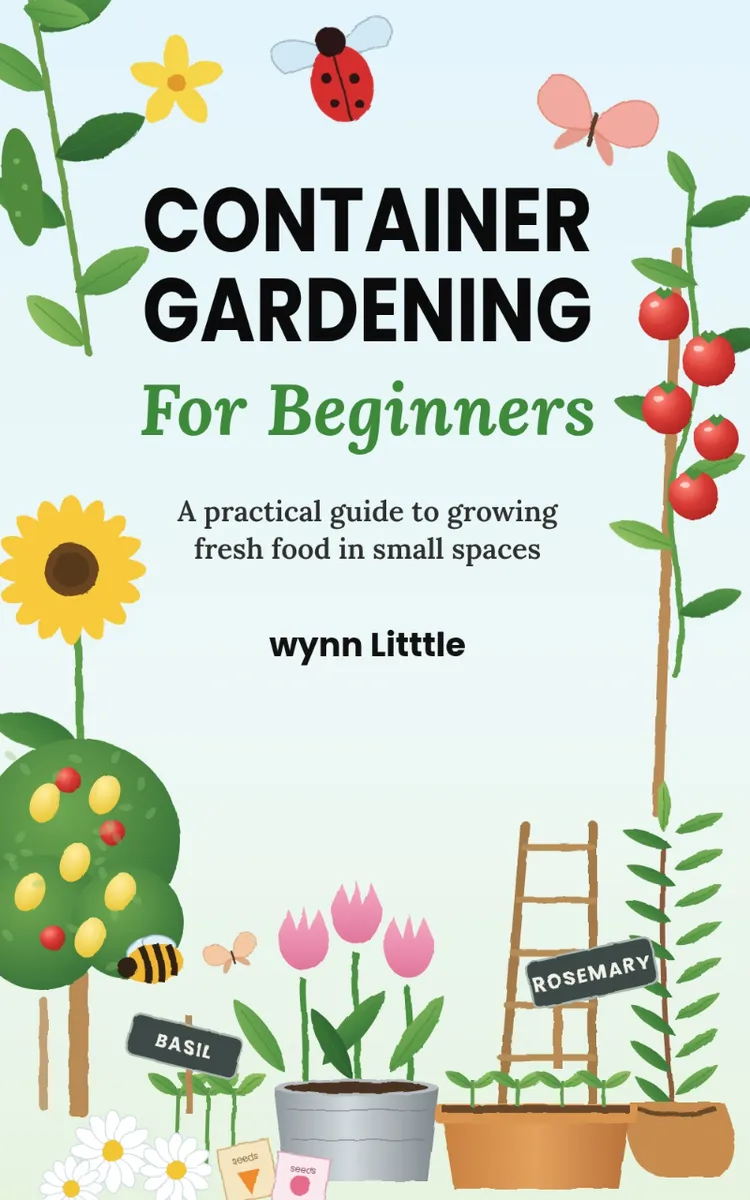
"Container Gardening For Beginners" is a how-to guide book by wynn Litttle with 8 chapters and approximately 14,556 words. Growing herbs and vegetables in containers in limited spaces.
This book was created using Inkfluence AI, an AI-powered book generation platform that helps authors write, design, and publish complete books. It was made with the AI Ebook Generator.
Frequently Asked Questions
What is "Container Gardening For Beginners" about?
Growing herbs and vegetables in containers in limited spaces
How many chapters are in "Container Gardening For Beginners"?
The book contains 8 chapters and approximately 14,556 words. Topics covered include Choosing a Sunny Growing Spot, Matching Containers to Crops, Preparing Potting Mix and Drainage, Planting Seeds and Starter Plants, and more.
Who wrote "Container Gardening For Beginners"?
This book was written by wynn Litttle and created using Inkfluence AI, an AI book generation platform that helps authors write, design, and publish books.
How can I create a similar how-to guide book?
You can create your own how-to guide book using Inkfluence AI. Describe your idea, choose your style, and the AI writes the full book for you. It's free to start.
Write your own how-to guide book with AI
Describe your idea and Inkfluence writes the whole thing. Free to start.
Start writingCreated with Inkfluence AI


