
Read the first chapter
The whole of chapter one, free. About 6 min. Turn the pages with the arrows, your keyboard, or a swipe.
Chapter 1
The Girl I Thought I Had
I have a photograph on my nightstand of a little girl in a yellow sundress, front tooth missing, laughing so hard her eyes are shut. She's holding a plastic watering can almost as big as she is, mid-swing, about to soak the dog. I know exactly which afternoon that was — the summer she turned six, the summer the garden hose became the center of the universe for about three weeks straight.
I look at that photograph almost every night now, and I want to tell you something that took me a long time to be able to say out loud without my voice cracking: I still love that photograph. I am not ashamed of it. I am not hiding it in a drawer. That little girl in the yellow sundress was real, and she was mine, and she was loved with everything I had.
This book is going to talk about grief. It's going to talk about a name I don't use anymore, and a version of my child I had to learn to let go of in certain ways. I need you to know, before we go any further, that none of that grief is a rejection of who my child was back then. It's not regret. It's not a wish that things had gone differently. It's just — love, trying to figure out where to put itself when the shape of the person it loves changes.
But I'm getting ahead of myself. Let me start where the story actually starts, which is: I didn't know. Not for a long time. Not in any way I could have named.
My daughter — that's the word I used then, and I'll use it here when I'm talking about the years before, because that's the honest language of that time — was, by every outward measure, a fairly typical little girl. She liked dinosaurs and also liked glitter. She wanted her hair long and then short and then long again. She had two best friends, one boy and one girl, and she loved them both with the same fierce, uncomplicated loyalty. If you'd asked me back then whether I thought something was "different" about her, I would have said no, genuinely, without any hesitation. She was just herself. Kids are like that — gloriously, chaotically themselves, before the world starts asking them to sort into categories.
I think about that a lot now. How much I want to protect that version of childhood — the one where nobody's asking you to explain yourself yet.
I was a fairly hands-on mother, if I'm being honest about myself too. I read the books. I went to the parent-teacher conferences early and asked more questions than I probably needed to. I thought I knew my kid inside and out. I could tell you her shoe size, her favorite cereal, which stuffed animal she slept with and which one she'd relegated to a shelf. I thought that kind of granular knowledge added up to actually knowing someone.
Here's what I didn't understand yet, and what I want to gently offer to you if you're early in this yourself: knowing the details of a child's life is not the same as knowing who they are underneath it. Those are different kinds of knowing. I had the first kind in spades. The second kind — that came later, and it came from her, not from me. It came from her finding the courage to hand it to me, piece by piece, when she was ready.
I say all this not to make myself sound naive, though I probably was, in the ordinary way most parents are naive about the interior lives of their children. I say it because I want you to hear, clearly, that missing the signs — if you missed them too — does not mean you failed as a parent. Children don't always know how to show us something before they have words for it themselves. And some children don't have any signs to show at all, not because something is wrong, but because that's simply how their own unfolding works. There's no universal timeline. There's no failure in not having seen it coming.
What I did have, looking back, were small moments that I now hold differently than I held them then. Not warning signs, exactly — I want to be careful with that phrase, because it implies something was wrong that needed catching. Just... moments that make more sense now, the way a photograph makes more sense once you know the story behind it.
I remember her, maybe seven years old, standing in front of the bathroom mirror in one of my old t-shirts, which came down to her knees like a dress, but she'd pulled it up and knotted it at her hip like a tunic, like something else entirely. I remember thinking it was just kid make-believe, the same category as capes made of towels. I didn't think anything of it because there was nothing, in that moment, that needed thinking about. She was just playing.
I tell that story now, sometimes, in a completely different tone than I would have told it back then — not because the memory changed, but because I understand more of what might have been underneath it. But even now, I try to resist the urge to comb back through every childhood memory looking for hidden clues, like some kind of detective building a case. That's not fair to the child she was, and it's not fair to the person I'm writing this whole book about. Childhood shouldn't have to be evidence.
What I want this first chapter to say, more than anything, is this: the daughter I had for those first ten years was completely, fully real. She existed. She was loved exactly as she was, in every stage, without conditions and without me secretly waiting for some other, "truer" version of her to show up. I didn't love a placeholder. I loved a whole person, fully present in that time, even though that time turned out to be one chapter of a much longer story.
I think that matters, because some part of the fear I carried later — and I'll tell you about that fear honestly, I promise, in the chapters ahead — was a fear that loving my son now would somehow mean I'd been loving the "wrong person" all those years. That the love I gave then was somehow a mistake, or misdirected, or built on a misunderstanding.
It wasn't. I want to say that plainly, right at the start of this book, so it can sit underneath everything else that follows: the love was never wrong. The name changed. The pronouns changed. The picture in my head of who this person would grow up to be changed. But the love that little girl in the yellow sundress got — every bit of it — belongs, fully and without asterisk, to the boy holding the hose in a different photograph, years later, laughing exactly the same way.
That's the sundress. That's the little girl I thought I had. And what I didn't yet understand, in that soft, ordinary, sun-warmed summer, was that "the girl I thought I had" and "the son I would come to know" were never two different children. They were the same heart, waiting for the rest of us to catch up.
End of chapter one. 20 more chapters in the full book.
Swipe or use the arrows to turn the page
What's inside: 21 chapters
- 1. The Girl I Thought I Had
- 2. The Little Signs I Didn't Have Words For
- 3. The Night She Told Me
- 4. Mourning a Child Who Isn't Gone
- 5. The Guilt of Grieving
- 6. Letters I Never Sent to Her
- 7. What the Grief Taught Me
- 8. Learning His Name
- 9. He Was Always In Her
- 10. The First Time I Called Him "My Son"
- 11. Watching Him Bloom
- 12. Other People's Opinions
- 13. Fear for His Future
- 14. Saying Yes — The Name, the Surgery, and the Grief That Came Back
- 15. To the Mother Reading This at 2 A.M.
- 16. A Community You Didn't Know You Needed
- 17. Letters From Other Parents
- 18. What Your Child Will Remember
- 19. You Are the Safe Place
- 20. A Letter to My Son on His Eighteenth Birthday
- 21. Epilogue: To Every Parent Just Starting This Road
About this book
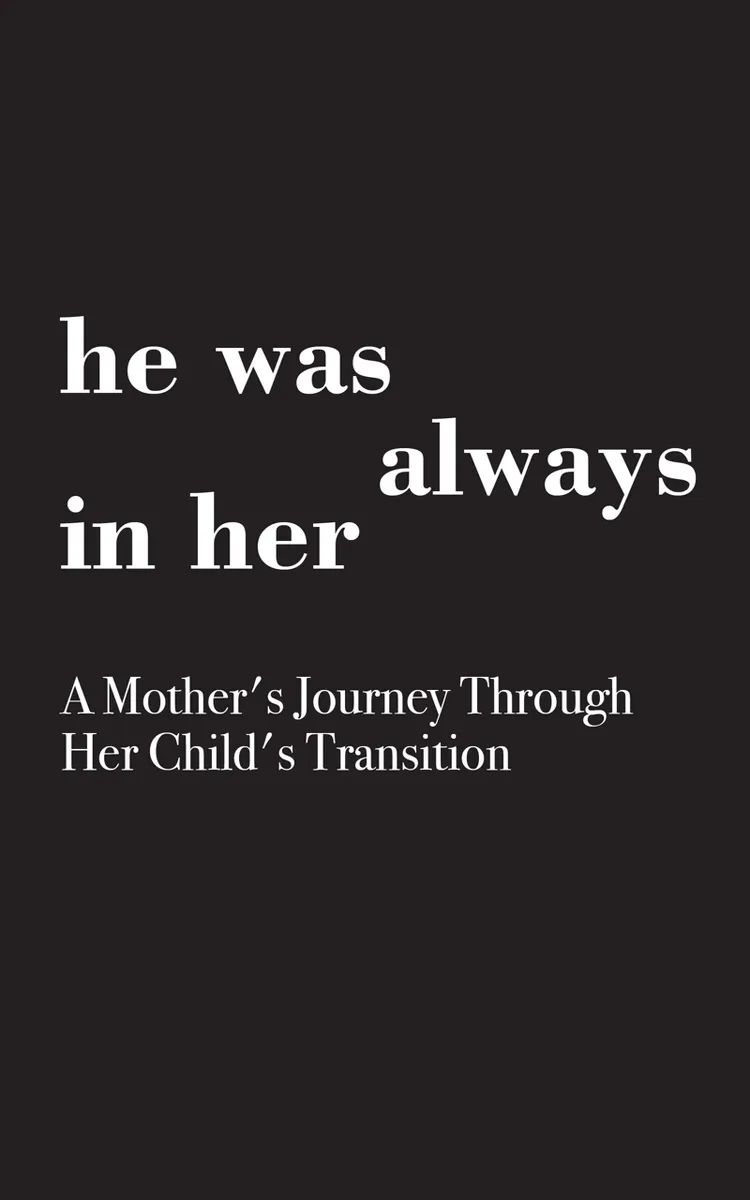
"he was always in her" is a general book by Anonymous with 21 chapters and approximately 8,150 words. It covers key insights and practical takeaways on the topic.
This book was created using Inkfluence AI, an AI-powered book generation platform that helps authors write, design, and publish complete books.
Frequently Asked Questions
What is "he was always in her" about?
"he was always in her" is a general book by Anonymous covering key insights and practical takeaways on the topic.
How many chapters are in "he was always in her"?
The book contains 21 chapters and approximately 8,150 words. Topics covered include The Girl I Thought I Had, The Little Signs I Didn't Have Words For, The Night She Told Me, Mourning a Child Who Isn't Gone, and more.
Who wrote "he was always in her"?
This book was written by Anonymous and created using Inkfluence AI, an AI book generation platform that helps authors write, design, and publish books.
Write your own book with AI
Describe your idea and Inkfluence writes the whole thing. Free to start.
Start writingCreated with Inkfluence AI


