
Read the first chapter
The whole of chapter one, free. About 8 min. Turn the pages with the arrows, your keyboard, or a swipe.
Chapter 1
Ebook Topic, Audience, and Promise
Find the Story’s Core Before You Design the Ebook
What single question should make a reader pay $5 to discover the answer in your story? If you cannot answer that question clearly, a dramatic murder plot can still feel confusing on a sales page, in a cover design, or during the first few pages. A strong premise gives the story a clear center: someone wants something, something serious blocks that goal, and the reader must keep reading to learn what really happened.
This decision matters because beginners often start with scenes, character names, or a long script before deciding what the ebook promises. That approach creates a story that may contain good moments but lacks a clear reason to buy. A focused premise helps you choose the right title, cover clue, description, and opening scene. It also helps you keep a short $5 ebook focused instead of trying to explain every possible detail.
By the end of this section, you will have a plain-language description of your murder story, a beginner-friendly target reader, and a one-sentence promise that guides the rest of the ebook. Your practical takeaway is simple: before opening a design tool, write the story’s central question in one sentence.
Build the Promise-First Blueprint
The Promise-First Blueprint is a simple way to connect the story, the audience, and the sale. Start with the reader’s question, then describe the danger, then state the discovery the ebook will deliver. Do not reveal every answer. A mystery needs unanswered questions, but the buyer still needs to understand the type of experience they will receive.
Use these four parts:
1. Name the central mystery. State what happened in direct language, such as “Who murdered the shop owner after the back door was locked?” This gives the reader a clear problem to follow. Avoid broad wording such as “A shocking story of secrets,” because it does not identify the actual question.
2. Identify the pressure. Explain what makes the mystery urgent. The pressure might involve a missing witness, a false accusation, a hidden object, or a deadline before the killer escapes. Pressure keeps the premise active instead of turning it into a simple report of past events.
3. Choose the beginner reader. Target readers who enjoy short, easy-to-follow murder mysteries with a clear investigation and a strong reveal. A beginner reader does not need complicated police procedure or a large cast. This choice helps you explain clues without burying the story under technical terms.
4. Write the one-sentence promise. Combine the mystery, the pressure, and the reading experience. The sentence should tell buyers what they will uncover without giving away the ending.
A useful promise follows this pattern:
> When [a disturbing event] happens, [the person investigating] must [take a clear action] before [the danger or deadline], uncovering [the kind of truth the reader will discover].
For example:
> When a shop owner is murdered behind a locked door, a hesitant witness must follow three overlooked clues before the wrong suspect is arrested, uncovering the secret that connects everyone at the scene.
This sentence does not explain the murderer, the final method, or every character. It gives the reader a reason to continue. It also gives you a filter for the script: if a scene does not support the locked-room question, the witness’s search, or the three clues, consider shortening or removing it.
Now test the promise against the intended $5 price. A low-cost ebook should feel easy to understand and easy to start. That does not mean the story needs to feel cheap. It means the buyer should know the genre, the main question, and the reading experience before purchasing. A short murder mystery with one main crime, a small group of suspects, and a clear ending offers a stronger promise than a story that begins with several unrelated crimes.
Ask yourself three questions before approving the sentence:
• Can a reader identify the murder mystery in one reading? - Can the reader tell who is trying to solve or understand it? - Can the reader sense what discovery waits at the end?
If one answer is no, rewrite the sentence. The goal is not to sound dramatic. The goal is to make the buying decision easy.
Apply the Blueprint to a $5 Murder Mystery
Use the following process with the script and title from your source file. Keep the details from that file, but organize them through the Promise-First Blueprint rather than copying every event into your sales message.
1. Read the script once for the central crime. Write down the victim, location, apparent cause of death, and the first unanswered question. For example: “A merchant is found dead in a locked storage room, and the only key appears to be inside.” Expected outcome: one clear mystery statement, not a list of scenes.
2. Read the script again for the strongest pressure. Mark the moment when the investigation could fail. Perhaps an innocent person faces arrest, a witness plans to leave town, or an important letter may be destroyed. Choose one pressure instead of listing five. Expected outcome: a single reason the reader must continue.
3. Count the main suspects. If the script contains nine named suspects, select the three or four who directly connect to the murder. Keep minor figures only when they provide a clue or create a believable distraction. Expected outcome: a story that beginners can follow without repeatedly checking a character list.
4. Write three promise drafts. Keep each draft between 25 and 35 words. Use different emphasis: one version can focus on the locked room, one on the witness, and one on the hidden motive. Expected outcome: three clear options for the product description and cover direction.
5. Read each promise beside the title. The title should support the question in the promise. If the title suggests a missing person but the promise focuses on a murder inside a locked room, revise one of them. Expected outcome: the title and promise make the same story claim.
6. Choose one cover clue. Select an object that appears in the story, such as a blood-marked key, a torn receipt, a dark doorway, or a sealed letter. Use one strong clue rather than placing every suspect and event on the cover. Expected outcome: a cover that creates curiosity without revealing the solution.
7. Check the first page against the promise. The opening should introduce the crime, the danger, or the question quickly. If the promise says the murder happens in a locked storage room, do not begin with several pages about unrelated childhood memories. Expected outcome: the reader reaches the promised mystery without delay.
8. Save the final promise in three places. Put it in your planning document, product description draft, and design notes. Reusing the same core sentence prevents the cover, sales page, and story opening from making different promises. Expected outcome: one consistent message across the selling workflow.
A practical final promise might look like this:
> After a merchant is found murdered inside a locked storage room, a frightened witness follows a hidden receipt and a missing key to expose the person who planned the crime.
This version identifies the event, the investigator’s action, two clue types, and the expected discovery. It does not name the killer, so it protects the ending.
Quick checklist
• Write the murder question in one sentence. - Choose one main source of pressure. - Limit the main suspect group to the people who affect the crime. - Describe the intended reader as a beginner who wants a clear, short mystery. - Draft three promises between 25 and 35 words. - Match the strongest promise to the title. - Choose one story object as the cover clue. - Check that the first page supports the promise. - Keep the same promise in your notes, cover plan, and sales description.
When this checklist is complete, you should be able to explain the ebook to a buyer in about ten seconds. If you need several paragraphs before the buyer understands the mystery, keep editing the promise.
Fix Weak Premises Before They Reach the Sales Page
The premise gives away the murderer
A promise that names the killer removes the main reason to read. It can also make the cover and product description feel like a summary instead of an invitation to investigate.
Do this: Describe the clues, danger, and expected discovery without naming the person responsible.
Not this: “A detective proves that the neighbor killed the merchant using the stolen key.”
Use wording such as “a hidden key points toward the person who planned the murder.” The reader understands the direction of the story but still needs the ebook for the answer.
The story promises a larger mystery than the script delivers
A short script may contain one murder and three suspects, but a dramatic promise might mention a city-wide conspiracy, several victims, and a decades-old secret. That mismatch creates disappointment because the buyer expects a much bigger story.
Do this: Compare every major claim in the promise with a specific event in the script. Remove any claim that the story does not support.
Not this: Promise “a deadly conspiracy involving the entire town” when the script only shows one crime and two people hiding evidence.
A focused promise makes a short ebook feel complete. The buyer receives the exact kind of mystery the description presented.
The promise sounds clear, but the target reader remains unclear
“Anyone who likes stories” does not help you choose the right language, cover, or sales description. Beginners who want an easy-to-follow murder mystery need a different presentation from readers who expect complex forensic detail.
Do this: Define the reader by reading preference: a beginner mystery reader who wants a short investigation, a small suspect group, understandable clues, and a definite ending.
Not this: Write for everyone and add every possible detail.
If the script contains technical evidence, explain only what the reader needs to understand the clue. A plain phrase such as “the key could not have been placed there after the door locked” serves the mystery better than a long explanation of lock mechanics.
Your final test is the one-sentence promise. Read it aloud and ask whether it creates one clear question. If it does, you have a firm base for the title, cover clue, opening page, and online product description. The story can now move from a private script to a focused ebook that gives buyers a clear reason to open the first page.
End of chapter one. 4 more chapters and about 9,791 words in the full book.
Swipe or use the arrows to turn the page
What's inside: 5 chapters
- 1. Ebook Topic, Audience, and Promise
- 2. Turning Your Script into Ebook Chapters
- 3. Writing for Clarity and Reader Flow
- 4. Designing a $5 Ebook Cover That Sells
- 5. Publishing and Pricing on a Marketplace
About this book
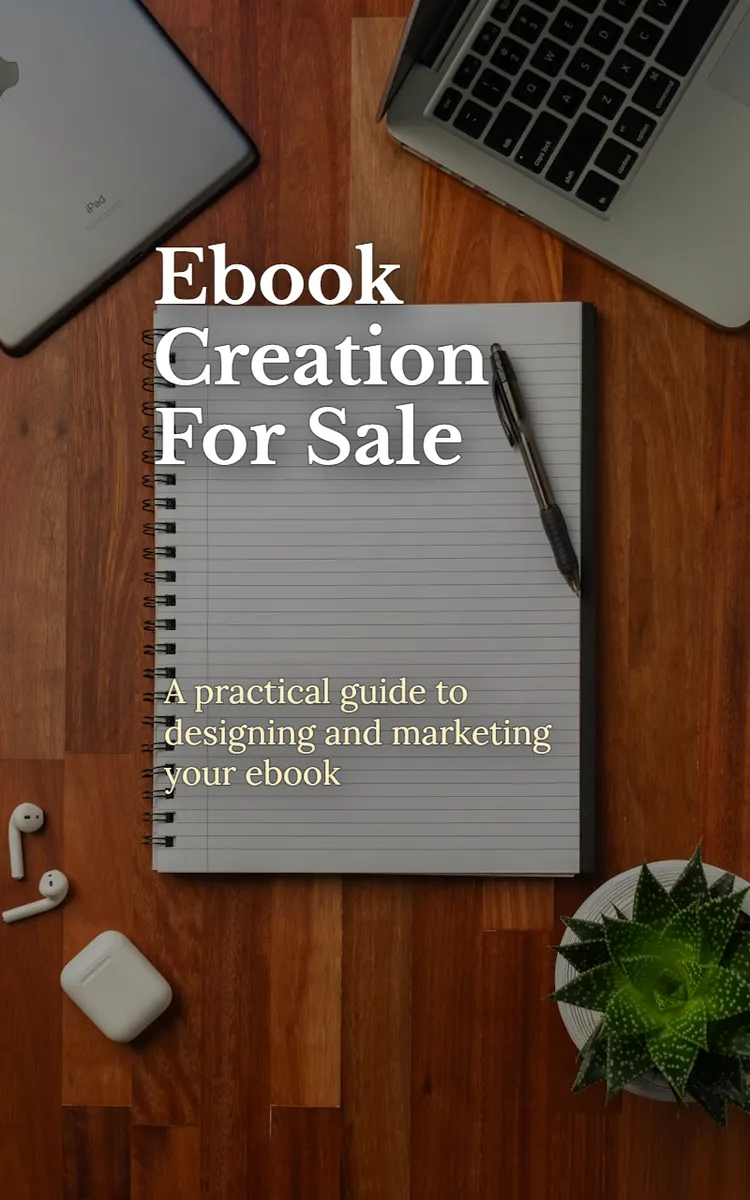
"Ebook Creation For Sale" is a how-to guide book by Ayman Mahmoud with 5 chapters and approximately 9,791 words. Creating an ebook, cover design, and online selling workflow.
This book was created using Inkfluence AI, an AI-powered book generation platform that helps authors write, design, and publish complete books. It was made with the AI Ebook Generator.
Frequently Asked Questions
What is "Ebook Creation For Sale" about?
Creating an ebook, cover design, and online selling workflow
How many chapters are in "Ebook Creation For Sale"?
The book contains 5 chapters and approximately 9,791 words. Topics covered include Ebook Topic, Audience, and Promise, Turning Your Script into Ebook Chapters, Writing for Clarity and Reader Flow, Designing a $5 Ebook Cover That Sells, and more.
Who wrote "Ebook Creation For Sale"?
This book was written by Ayman Mahmoud and created using Inkfluence AI, an AI book generation platform that helps authors write, design, and publish books.
How can I create a similar how-to guide book?
You can create your own how-to guide book using Inkfluence AI. Describe your idea, choose your style, and the AI writes the full book for you. It's free to start.
Write your own how-to guide book with AI
Describe your idea and Inkfluence writes the whole thing. Free to start.
Start writingCreated with Inkfluence AI


