

Read the first chapter
The whole of chapter one, free. About 8 min. Turn the pages with the arrows, your keyboard, or a swipe.
Chapter 1
The Old Year’s Purge
The Purge of the Old Year
When the threshold demands space
On the last afternoon of December, a woman took three keys from a drawer that no longer opened any doors, an expired receipt, and a note that had been folded for months. She was not trying to predict the future: she needed to stop carrying objects tied to decisions that were over. She placed them on the table, named them, and chose what she would leave behind before the bells rang.
A symbolic purge addresses a concrete problem: it lets you separate what has ended from what still takes up space in your mind, your home, and your everyday gestures. It does not erase a debt, a loss, or an unfinished conversation; it offers an orderly way to acknowledge them and decide what real action should follow. Fire, water, salt, rosemary, and the broom serve here as symbols, not as forces capable of replacing your decisions.
By the end of these pages, you will be able to apply the Method of the Three Releases: wash away the burden represented, burn in writing the ties you wish to let go of, and sweep the thresholds to mark a boundary. You will work with simple materials, without dangerous smoke, without ingesting preparations, and without putting people, animals, or property at risk. The opening question is precise: what cycle do you want to close, and what specific behavior will you stop repeating?
The Method of the Three Releases
The method divides the farewell into three movements. The first acts on the body; the second, on the written word; the third, on the space. This sequence matters because it prevents the ritual from becoming a confusing accumulation of objects. Each gesture has a purpose and a limit.
1. Wash: prepare a bowl with warm water, a tablespoon of clean, dry ash from untreated wood, and a sprig of rosemary. The ash represents what has been consumed; the rosemary, clear memory and symbolic protection. Do not drink the water or pour it over your skin if you have irritation or allergies. 2. Break: write down the “chains” you wish to leave behind: a broken promise, recurring guilt, a habit, a fear, or an obligation you no longer accept. The sheet should not contain private information you may later want to keep. 3. Return: burn only the sheet, inside a heat-resistant metal or earthenware container, on a clear surface. Keep water nearby and extinguish the embers completely. 4. Clear: sweep from the back of the home toward the front door. The movement represents the departure of what you have already named. Then collect the debris and put it in the regular trash once it is cool.
For the ash-and-rosemary wash, first place a towel on the floor and make sure the water is warm, not hot. If you have sensitive skin, use the liquid only to wash your hands or pour it over the threshold; this preserves the symbol without forcing bodily contact. As you wet your hands, recite:
> Ash of what is finished, > rosemary of faithful memory, > I wash away the known burden > and leave my skin free. > What ends, ends; > what I learn stays with me.
Then dry your hands without rubbing them harshly and pour the water down the drain. Rinse the bowl. To close safely, remove the rosemary and ash, clean the surface, and air the room for a few minutes. The ritual does not require you to keep the water: holding on to it contradicts its purpose of letting go.
For the burning, write one chain per line. For example: “Checking an old conversation every night,” “accepting a task for fear of disappointing someone,” or “keeping objects from a stage of life that has ended.” Beneath it, add a verifiable action for the next seven days: delete a folder, return a key, ask for clarification, or set aside an hour to organize documents. This way, the symbol is tied to a behavior.
The incantation for the sheet can say:
> I do not deny you, old cycle; > I acknowledge you and let you go. > May the fire turn to ash > what no longer guides me. > My will marks the boundary; > my step begins awake.
Fold the sheet once; do not roll it up. Place it in the container. Light one corner with a long match, keep your hands at a distance, and do not add alcohol, oil, perfume, or herbs. If the flame grows, cover the container with a metal lid and wait for it to go out; never blow on the fire or move it. Once the ash has cooled, touch it only with a tool or thick paper and dispose of it.
Sweeping the thresholds completes the method. A threshold is a passage between two spaces: the front door, a patio entrance, or the boundary between the room where you work and the rest of the house. Use a clean, dry broom. Open a nearby window to refresh the air, but close any doors you do not want to cross during the gesture. Sweep seven times from inside toward the exit, without raising dust abruptly. With each pass, repeat:
> What is finished leaves, > what is learned remains; > I cross this threshold > with renewed judgment.
Do not sweep inward afterward. Gather the debris with a dustpan, put it in a bag, and clean the floor with running water. The expected result is not a supernatural sign: it is a cleared space and a written decision you can follow through on. Pause and ask yourself: what object, message, or habit still confirms the chain I have just named?
A complete purge before the bells ring
Set aside forty-five minutes on December 31, preferably between 19:00 and 22:00. This window avoids the midnight rush and gives you time to put out the fire, clean up, and rest. Silence your phone, let anyone sharing the home know, and keep children and animals out of the work area.
1. 19:00 - Preparation. Gather a bowl, water, ash from untreated wood, rosemary, a sheet of paper, a pen, a metal container, matches, a metal lid, water for extinguishing, a broom, and a dustpan. Remove tablecloths, papers, and fabrics from the area. 2. 19:05 - Choosing the chain. Write down three specific matters. Choose one to burn and keep the other two as pending tasks. This choice prevents the ritual from becoming an endless outpouring. 3. 19:10 - Symbolic washing. Mix the water, ash, and rosemary. Wash your hands or the threshold, recite the verse, and pour the mixture down the drain. Clean the bowl. 4. 19:20 - Writing the way out. Write down the chain and its seven-day action. Read the text aloud once; reading it only once keeps the act clear and prevents you from dwelling on it. 5. 19:25 - Controlled burning. Place the sheet in the container, light it, and stay beside it until there are no flames or active embers. Cover the container if you need to cut off the air. 6. 19:35 - Sweeping. Open a window, sweep seven times toward the door, collect the debris, and clean the threshold. Say the incantation with each pass. 7. 19:45 - Closing. Keep the seven-day action somewhere visible. Wash your hands with running water, air the room, and extinguish all candles or heat sources. The rite ends when the space is safe and the decision is ready to be carried into daily life.
Brief checklist
• [ ] I chose a specific chain, not a vague phrase. - [ ] I prepared water, clean ash, and rosemary without ingesting the mixture. - [ ] I used a heat-resistant container and kept water nearby. - [ ] I burned only paper, without oils or added substances. - [ ] I waited for the ash to cool before removing it. - [ ] I swept seven times toward the exit and did not sweep the dust back inside. - [ ] I wrote down a real action for the next seven days. - [ ] I extinguished, cleaned, and aired the space.
If you cannot light a fire in your home, tear the sheet into seven strips and put them in an envelope that you will later throw away. Keep the language of the incantation, but replace destruction with separation. The symbol still works as an act of decision because release depends on what you name and do, not on the flame.
Mistakes that weaken the release
Burning too much paper
A sheet filled with paragraphs takes longer to burn, produces more smoke, and mixes different matters together.
Do this: write down one main chain and one specific action for the next seven days.
Do not do this: burn several pages, photographs, receipts, fabrics, or laminated paper.
Using unknown ash
Ash from treated charcoal, painted wood, or mixed waste can irritate the skin and release unpleasant particles.
Do this: use cold ash from natural, unvarnished wood, or replace it with water and rosemary if you do not know where the ash came from.
Do not do this: collect ash from a barbecue, a stove with mixed materials, or a public bonfire.
Turning sweeping into a supernatural promise
Sweeping does not, by itself, drive away a person, a debt, or a problem. Confusing the symbol with a solution can delay necessary action.
Do this: link each chain to a verifiable step: cancel a subscription, return an object, ask for help, or arrange a conversation.
Do not do this: use the ritual to avoid medical care, legal advice, psychological support, or a responsible conversation.
Leaving embers unchecked
The ceremony ends when the fire is completely out, not when the visible flame disappears.
Do this: cover the container, wait for it to cool, and check the ashes before disposing of them.
Do not do this: leave the container unattended, place it near curtains, or fill it with water while it is still burning fiercely.
The purge is complete when the water is gone, the sheet has turned to ash, the threshold is clean, and a specific action awaits your follow-through. The old year does not need you to curse it: it needs you to name it honestly, close the door that needs closing, and save your strength for the twelve bells that will open the next threshold.
End of chapter one. 5 more chapters and about 10,742 words in the full book.
Swipe or use the arrows to turn the page


What's inside: 6 chapters
- 1. The Old Year’s Purge
- 2. Love and Symbolic Magnetism
- 3. Material Prosperity Rituals
- 4. Keys to Opening Career Paths
- 5. Energy Renewal and Rest
- 6. The Supreme Ritual of the Twelve Chimes
About this book
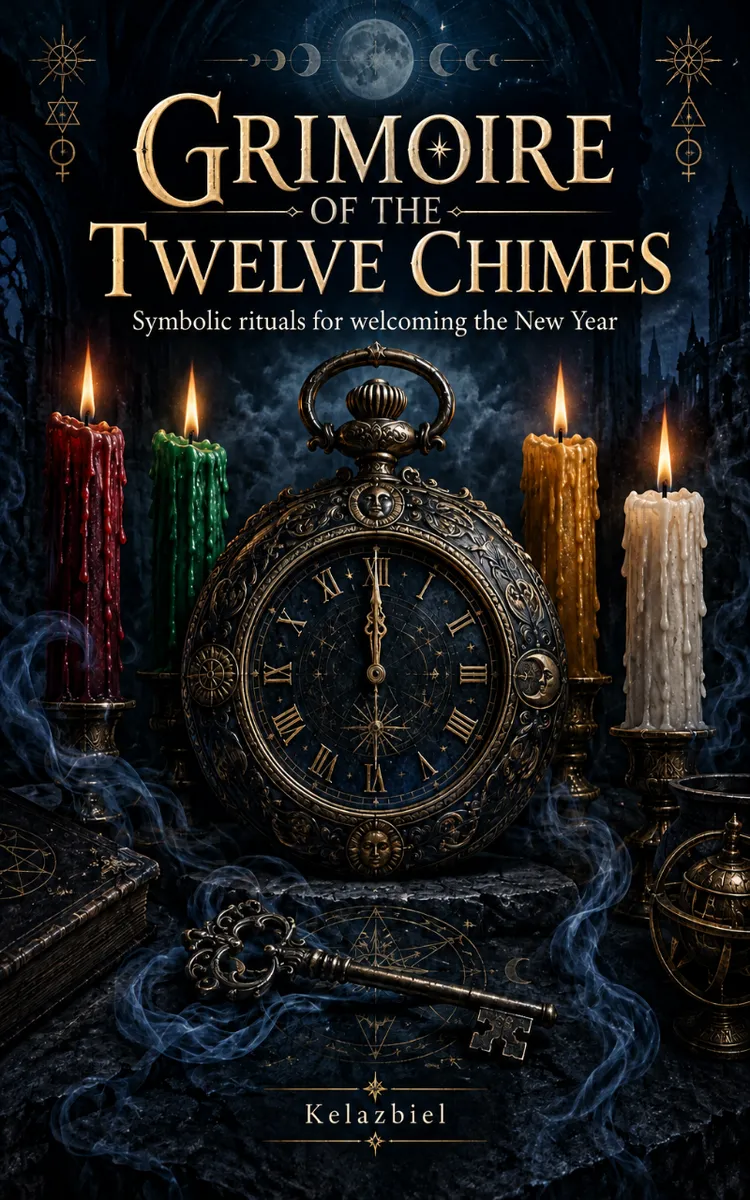
"Grimoire of the Twelve Chimes" is a how-to guide book by Kelazbiel with 6 chapters and approximately 10,742 words. Symbolic New Year’s Practices for Closing Chapters and Setting Intentions.
This book was created using Inkfluence AI, an AI-powered book generation platform that helps authors write, design, and publish complete books. It was made with the AI Ebook Generator.
Frequently Asked Questions
What is "Grimoire of the Twelve Chimes" about?
Symbolic New Year’s Practices for Closing Chapters and Setting Intentions
How many chapters are in "Grimoire of the Twelve Chimes"?
The book contains 6 chapters and approximately 10,742 words. Topics covered include The Old Year’s Purge, Love and Symbolic Magnetism, Material Prosperity Rituals, Keys to Opening Career Paths, and more.
Who wrote "Grimoire of the Twelve Chimes"?
This book was written by Kelazbiel and created using Inkfluence AI, an AI book generation platform that helps authors write, design, and publish books.
How can I create a similar how-to guide book?
You can create your own how-to guide book using Inkfluence AI. Describe your idea, choose your style, and the AI writes the full book for you. It's free to start.
Write your own how-to guide book with AI
Describe your idea and Inkfluence writes the whole thing. Free to start.
Start writingCreated with Inkfluence AI


