
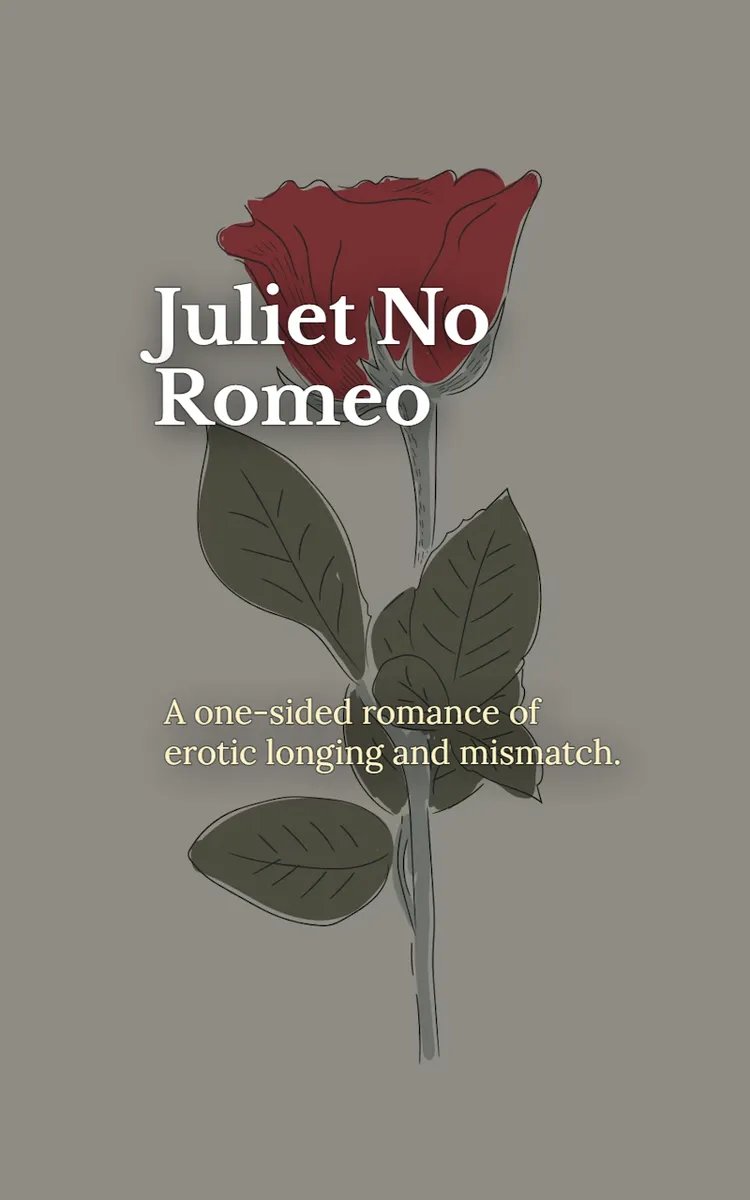
Read the first chapter
The whole of chapter one, free. About 9 min. Turn the pages with the arrows, your keyboard, or a swipe.
Chapter 1
A Letter Slips Under Juliet’s Door
The paper slid beneath Juliet’s door with a whisper so soft she mistook it for the draft.
She looked up from the ribbon she was unpicking. The candle flame bent toward the threshold, then steadied. Beyond the door, the townhouse continued its careful evening noises: a footstep on the stair, the distant clink of silver, a servant murmuring somewhere below. No one knocked.
Juliet set the ribbon aside and crossed the room.
The note lay on the boards, folded once and sealed with no crest. She crouched without touching it. A thin line of dark wax marked the fold, smooth and unadorned. Whoever had delivered it had known precisely when she would be alone. Or had waited until the household believed she was.
She glanced at the door.
“Who is there?”
No answer.
The silence afterward felt arranged.
Juliet picked up the note. The paper was warm from the passage, and beneath the scent of dust clung something sharper - leather, perhaps, or the clean smoke of a courtyard fire. She carried it to the candle and turned it over.
On the outside, in a firm hand, was written:
For Juliet.
No title. No family name. No apology.
Her thumb pressed into the wax. She should summon someone. Her maid. The housekeeper. Even her mother, though that thought made her stomach tighten more than the note did. A message passed secretly into a young woman’s chamber was not merely a message. It was evidence of a breach, and in the Varrin household every breach became a question of obedience.
She broke the seal.
Juliet,
You do not know me, though I have watched you long enough to know the shape of your silence.
The words blurred. She lowered the paper, then lifted it again.
Outside, a carriage rolled over the street stones. Its wheels groaned, faded, returned as an echo through the walls. Juliet read on.
You stand at the window when the house grows too loud. You loosen the pin at your throat before you sleep. You look toward the courtyard as if waiting for a man who has not yet learned to come.
I would come.
Her breath caught - not with pleasure, not yet, but with the shock of being seen in places she had believed belonged only to herself.
The next line had been written more heavily.
I would put my mouth where your fingers have been. I would learn whether you tremble from fear or want. If you let me, I would have you without asking the household’s permission.
Heat moved beneath her skin. She hated that her body understood the invitation before her mind could reject it.
At the bottom, beneath a space left deliberately blank, was the signature.
Romeo.
Juliet lowered herself onto the edge of the bed. The mattress dipped beneath her, and the note trembled between her fingers.
Romeo who?
She knew no Romeo in the Varrin household. No Romeo among the men who called in the drawing room, no Romeo among the merchants and cousins and solemn-faced acquaintances her family approved. The name carried no answer with it, only a dark, intimate sound. It seemed to belong in a mouth close to her ear.
She read the letter again.
The writer had watched her. That should have been enough to make her burn it. Yet the details were true. She did stand at the window when the house grew loud. She did loosen the pearl pin at her throat before bed, though she had never noticed anyone seeing her do it.
And she had looked toward the courtyard.
Not for anyone in particular. That was what she had always told herself.
A floorboard creaked outside.
Juliet folded the note against her palm.
“Miss Juliet?” called a servant from the passage.
She did not answer. Her gaze fixed on the strip of darkness beneath the door. A shadow paused there, narrow and upright. The handle did not move.
“Miss Juliet, your mother asks whether you will take tea below.”
Juliet swallowed. “Tell her I am dressing.”
“For supper?”
“For anything.”
The shadow remained.
“Very good, miss.”
The footsteps retreated, but not immediately. One step. A pause. Another. Then the faint scrape of a shoe turning near the stair.
Juliet waited until the sound disappeared.
Her first impulse was to tear the letter into pieces. Her second was to hide it beneath her mattress. The second won.
She crossed to the bed, lifted the coverlet, and slid the paper under the mattress seam. It vanished there, but its presence did not. She felt it beneath the room, beneath the floor, beneath every ordinary thing she had touched that day.
At the door, she pressed her ear to the wood.
The passage breathed around her. Somewhere below, a woman laughed too brightly. A dish struck a table. The townhouse had resumed its life, but Juliet could no longer enter it without imagining eyes at every turn.
She returned to the table and sat before the candle.
The note had asked nothing plainly. No meeting place. No hour. Only an invitation shaped like a hand held out in the dark.
She took up her pen.
The nib hovered over a clean sheet.
Who are you?
Too eager.
How dare you write to me?
Too false. She did want to know. Worse, she wanted to know what his hands would feel like if they were as deliberate as his words.
She dipped the pen in ink and began again.
You have mistaken curiosity for permission.
Juliet stared at the sentence. It was true. It was also a warning she needed him to understand. Her fingers tightened around the pen until the wood pressed a small ache into her skin.
A knock sounded.
This time it was firm.
Juliet jerked upright. Ink spilled across the page, spreading like a bruise.
“Miss Juliet?” The servant’s voice came through the door. “May I enter?”
Juliet looked at the half-written reply, then at the candle, then toward the mattress where Romeo’s note waited.
“Wait.”
Her voice sounded unlike her own.
She blotted the ink with the corner of a cloth. The words remained legible. You have mistaken curiosity for permission. She folded the page once and tucked it beneath the writing box. The original note she pulled from beneath the mattress and slipped into the hidden pocket of her gown.
The paper touched her thigh through the fabric.
A secret with a pulse.
“Miss Juliet?”
“Enter.”
The door opened. A young servant stood outside with a tray, though she could not remember his name. His eyes moved from Juliet’s face to the writing box, then to the bed.
“Your tea,” he said.
“I said I would come below.”
“Your mother thought you might prefer it here.”
He carried the tray in. Steam lifted from the cup, carrying the scent of black tea and orange peel. He placed it beside her hand.
Juliet reached for it, but the cup rattled against its saucer.
The servant noticed.
His gaze returned to her face. “Are you unwell, miss?”
“No.”
“You are pale.”
“I am always pale.”
“Not like this.”
His tone was mild, almost respectful. That made it worse. He was not accusing her. He was collecting what he saw.
Juliet forced a smile. “Tell my mother I will join her presently.”
He did not move.
“Did someone come to the door?” he asked.
The question landed with a quiet, intimate force.
Juliet held his eyes. “Why would you ask that?”
“I heard you speaking.”
“To myself?”
“I did not say otherwise.”
The candle guttered. For one instant, the servant’s face seemed to sharpen in the wavering light - not cruel, not curious, simply attentive. A man assigned to notice what other people overlooked.
Juliet lifted the teacup. The porcelain was hot against her fingers.
“Then you have heard nothing worth repeating.”
He inclined his head. “Of course.”
Still he watched her.
She drank. The tea scalded her tongue, but she did not flinch. Beneath her gown, Romeo’s letter seemed to unfold itself against her skin, each word returning with unbearable clarity.
I would come.
The servant turned toward the door.
“Wait,” Juliet said.
He looked back.
The question rose before she could stop it. “Have you ever heard of a man named Romeo?”
The room changed.
Not visibly. The candle still burned. The tea still steamed. Yet the servant’s hand tightened on the door latch.
“Romeo what?”
She had given him too much. “I asked whether you had heard the name.”
“There are many names in Verona.”
“That is not an answer.”
“No, miss.”
His eyes moved over her face again, measuring the cost of whatever he might say.
Juliet’s pulse beat hard in her throat. “If you know something, speak.”
“I know only that names travel farther than the people who bear them.”
“Then perhaps you should be careful what you carry.”
A flicker crossed his expression. Approval, perhaps. Or concern.
“I will tell your mother you are coming down.”
When he opened the door, Juliet saw the passage beyond him: empty, candlelit, impossible to trust. He stepped out, but before closing the door, he glanced once at the writing box.
Then he shut her in.
Juliet remained still until his footsteps faded.
She should have taken the note to the fire. Instead, she drew it from her gown and laid it beside the unfinished reply. The two papers touched at their corners.
Romeo’s words were bold enough to make her want to answer. Her own were guarded enough to keep her safe. Between them lay the distance he had created by watching her, and the more dangerous distance she was already tempted to cross.
She picked up the pen again.
You have mistaken curiosity for permission, she wrote beneath the first line. But if you are certain you know me, then prove you can hear me when I say no.
She paused.
The sentence was a door. It could close. It could also invite him to knock.
After a moment, she added:
And if you write again, tell me who you are.
Juliet sanded the wet ink and folded the page. She did not seal it. She did not know where to send it, or whether Romeo expected an answer at all. That uncertainty should have relieved her.
It did not.
At the threshold, a board creaked.
Juliet turned sharply.
The servant stood several paces away in the passage, his face half-lit. He had returned without a sound. His gaze rested on the folded reply in her hand.
For one suspended moment, neither of them spoke.
Then Juliet slid the paper into the writing box and closed the lid.
“What do you want?” she asked.
“To remind you,” he said, “that doors in this house are rarely as private as they appear.”
His eyes dropped to the box.
“Give me that,” Juliet said.
“I have not asked for it.”
“You have looked at it.”
“Yes.”
“Then look elsewhere.”
The servant’s mouth tightened. He bowed, but there was no submission in it. “Your mother is waiting.”
He left again.
Juliet locked the door after him, though she knew a lock could not stop a household determined to know her movements. She pressed her back against the wood, the reply hidden inches away, Romeo’s note hidden against her body, and listened to the house listening back.
She had wanted an answer to a letter.
Instead, she had accepted a secret.
And somewhere beyond the walls, a man called Romeo was waiting to discover whether her warning meant no - or whether it meant he had finally reached her.
End of chapter one. 37 more chapters and about 84,870 words in the full book.
Swipe or use the arrows to turn the page
What's inside: 38 chapters
- 1. A Letter Slips Under Juliet’s Door
- 2. The Courtyard Rendezvous Goes Wrong
- 3. Romeo’s Name Hides in Plain Sight
- 4. The Balcony Wind Betrays Her
- 5. Juliet Chooses Desire Over Duty
- 6. A Marriage Notice Interrupts Everything
- 7. Following the Wax Seal Trail
- 8. The Chapel Door Locks Behind Her
- 9. Juliet’s Confession to Her Maid
- 10. Romeo Sends a Gift, Not Himself
- 11. Elowen Finds Romeo’s Shadow Ledger
- 12. The Matchmaker’s Tea Turns Sour
- 13. Juliet Asks for Proof of Love
- 14. The Secret Letter Is Burned
- 15. Juliet Refuses the Baron's Offer
- 16. A Hidden Door Opens to Servants
- 17. Juliet’s Body Learns His Distance
- 18. A Guard Confiscates Juliet’s Notes
- 19. The Ledger’s Last Page Confesses
- 20. The Baron's Coach Takes Her Away
- 21. Juliet Bargains With Her Own Fear
- 22. Dinner Seating Splits Juliet From Hope
- 23. The Servant’s Key Opens a Closet
- 24. The Alarm Locks the Hallway
- 25. Juliet Refuses the Comfort of Lies
- 26. The Records Room Burns Overnight
- 27. Juliet Decodes the Scorch-Marked Page
- 28. The Locked Room Smells Like Threat
- 29. Juliet Breaks When Romeo Doesn’t Come
- 30. Juliet Turns the Baron's Trap Back
- 31. Juliet Finds Romeo Through a Listening Crack
- 32. The Escape Route Runs Through Rain
- 33. Juliet Touches Romeo Before the Vanishing
- 34. Romeo Signs His Freedom With Her
- 35. Maribel Quayne Demands the Truth
- 36. Juliet Wins the Hearing by Remembering
- 37. The Garden Where They First Met
- 38. Juliet Chooses Romeo, Not the Ending
About this book
"Juliet No Romeo" is a romance book by Anonymous with 38 chapters and approximately 84,870 words. A one-sided erotic romance with mismatched lovers..
This book was created using Inkfluence AI, an AI-powered book generation platform that helps authors write, design, and publish complete books. It was made with the AI Romance Novel Writer.
Frequently Asked Questions
What is "Juliet No Romeo" about?
A one-sided erotic romance with mismatched lovers.
How many chapters are in "Juliet No Romeo"?
The book contains 38 chapters and approximately 84,870 words. Topics covered include A Letter Slips Under Juliet’s Door, The Courtyard Rendezvous Goes Wrong, Romeo’s Name Hides in Plain Sight, The Balcony Wind Betrays Her, and more.
Who wrote "Juliet No Romeo"?
This book was written by Anonymous and created using Inkfluence AI, an AI book generation platform that helps authors write, design, and publish books.
How can I create a similar romance book?
You can create your own romance book using Inkfluence AI. Describe your idea, choose your style, and the AI writes the full book for you. It's free to start.
Write your own romance book with AI
Describe your idea and Inkfluence writes the whole thing. Free to start.
Start writingCreated with Inkfluence AI


