
Read the first chapter
The whole of chapter one, free. About 9 min. Turn the pages with the arrows, your keyboard, or a swipe.
Chapter 1
The House in the Fog
The brass key cut into Mara Voss’s palm as she climbed over the collapsed gate.
Beyond it, the coastal property had vanished beneath a wall of fog. It pressed against the iron bars and spilled across the grass, turning the world white ten yards ahead. Somewhere within that blankness, the house waited.
Mara checked her watch. Four forty-three.
“Before dark,” she said aloud.
Her voice fell flat, swallowed almost at once.
She had driven three hours for the locked case her mother had left behind. The solicitor had called it personal effects, as if the words could make it ordinary. A black leather case. No contents listed. No key included. It had been found in the house after Evelyn Voss died, though no one could explain how the house had been entered.
No one had explained why the house was supposed to be gone.
Mara adjusted the strap of her bag and stepped onto the property.
The gravel drive appeared beneath her boots in pale patches, then disappeared again. The fog wet her coat and gathered in her hair. To her left, the sea made a dull, irregular booming somewhere beyond the cliffs. She could not see it, but she felt each impact through the ground.
She kept the gate in sight as she walked.
That was the first mistake.
After twenty paces, the iron bars blurred. After thirty, they were gone.
Mara stopped.
Behind her lay a narrow trail through knee-high grass, silvered with moisture. It ran between crooked fence posts toward the road. She could still make out the red shape of her car beyond the gate - or thought she could. A dark smear moved through the fog where the vehicle should have been.
She turned back.
The trail was no longer there.
In its place stood a slope of black earth dropping toward the sea.
Mara stared at it, her fingers tightening around the key.
“No,” she whispered.
A gull cried overhead. The sound came from directly above her, though the fog showed nothing. Then came another cry, lower and closer, followed by the scrape of something moving through the grass.
She forced herself forward.
The house emerged without warning.
One moment there was only fog. The next, a three-story structure stood at the end of the drive, its walls dark with damp, its windows blind beneath warped wooden shutters. It was larger than the photographs had suggested. The roofline sagged toward the ocean, and a stone chimney rose from it like a broken tooth.
Mara had seen the house once before, when she was seven.
She remembered a red door. Her mother’s hand around hers. Rain tapping the windows of a car.
She remembered being told not to look at the upper floor.
The front door was black now.
Mara climbed the three stone steps. Water ran down the walls in narrow threads, though there had been no rain. She took out the brass key.
The lock was already turning.
Mara froze.
A click sounded from the other side.
The door opened inward by an inch.
“Hello?” she called.
Nothing answered. From inside came the faint ticking of a clock.
She pushed the door wider.
The entrance hall stretched into darkness. A chandelier hung overhead, its glass pieces clouded with grime. The floor was covered in a pattern of black-and-white tiles, many cracked, some lifted at the edges. A long runner led toward a staircase whose upper landing disappeared into shadow.
The air inside was colder than outside.
Mara stepped across the threshold.
The door swung shut behind her.
She spun and seized the handle. It turned freely, but the door did not move. She pulled harder. The wood groaned, and something scratched along the other side.
Mara leaned close.
A soft dragging sound passed from left to right.
Then silence.
She stepped back.
“This is a house,” she said. “It’s wood and stone. That’s all.”
Her mother had used the same voice when Mara was a child and afraid of the dark. Calm, firm, almost bored.
It had never worked then.
Mara took out her phone. No signal. The screen showed 4:51, though her watch said 4:47.
She raised the phone toward the hall. The camera opened by itself.
For a second, the display showed the entrance exactly as it was.
Then a figure appeared at the top of the stairs.
Mara lowered the phone and looked up.
Nothing.
She looked at the screen again.
The figure remained. It was small, narrow-shouldered, dressed in a pale nightgown. Its face was turned toward the camera.
Mara dropped the phone.
It struck the tile and went dark.
She did not pick it up.
The case was somewhere in the house. The solicitor had given her one detail: her mother’s belongings had been found in a study at the rear of the ground floor. Mara had to reach it, take the case, and leave before the fog thickened with night.
She moved down the hall.
Every sound seemed magnified. Her boots tapped against the tile. Water dripped inside the walls. Behind the plaster, something made a slow, patient knocking.
The first door on her right stood open. Inside was a dining room with a table set for six.
Dust covered everything except the plates.
Those were clean.
Mara passed without looking too closely.
The second door was shut. A strip of light showed beneath it.
She stopped.
The light was yellow and trembling, like candlelight.
“Mum?”
The word escaped before she could stop it.
The light went out.
Mara backed away. Her shoulder struck the wall, and the plaster felt warm beneath her coat.
At the far end of the hall, a door opened.
She saw a narrow passage beyond it, one she did not remember from the property plans. A draft moved through the passage and lifted the hair at the back of her neck.
The study should have been to the left.
She turned left.
The hall stretched longer than before.
The staircase had moved farther away. The dining room door was now shut. The runner beneath her feet had changed from faded red to a dark green patterned with tiny white flowers.
Mara stopped walking.
She looked behind her.
The front door was gone.
In its place stood a wall covered in peeling blue paper.
Her first thought was that she had entered the wrong corridor. Her second was that she had not moved far enough to make that possible.
She pressed both hands against the wall. The paper was damp. Beneath it, something shifted with a slow, fleshy flex.
Mara jerked away.
A voice spoke from somewhere ahead.
“You came back.”
It sounded like her mother.
Mara’s throat closed.
The voice came again, softer. “Mara?”
She ran.
The corridor narrowed around her. Doors appeared on either side, opening and shutting as she passed. A burst of cold air struck her face. She smelled wet wool, candle smoke, and the sharp mineral scent of the sea.
At the end of the hall, she found a door with frosted glass.
She threw it open.
The study lay beyond.
It was a square room filled with bookcases and warped furniture. A desk stood beneath the window, facing the sea. Its drawers had been pulled out and left hanging. Papers lay scattered across the floor, though none bore writing she could read. The ink had bled into gray stains.
On the desk rested the case.
Mara crossed the room quickly.
It was smaller than she expected, black leather gone gray at the corners. A silver clasp held it shut. There was no keyhole, only a narrow slot shaped like a vertical eye.
She reached for it.
The room gave a sharp creak.
Mara glanced toward the door.
The corridor beyond had disappeared. The doorway opened onto the entrance hall, though the front door was still absent. The staircase now stood directly across from her.
On its lowest step sat a child’s red shoe.
Mara looked back at the case.
Her mother had spent the last year of her life refusing to speak about this place. When Mara had asked why the solicitor knew about the case, Evelyn had gripped the arms of her chair and said, “If it opens, don’t let it know your name.”
Mara had thought the illness was speaking through her.
She touched the silver clasp.
The case clicked.
Mara withdrew her hand.
Another click answered from the hall.
Then a third, closer.
The child’s shoe had moved up one step.
Mara grabbed the case and shoved it into her bag.
The floor lurched beneath her.
Books crashed from the shelves. The desk slid sideways, slamming into the wall. Mara fell against the doorframe, skinning her palm on a splinter. From somewhere above came a long, low groan, as though the house had shifted its weight.
The study door slammed shut.
Mara seized the handle. It would not turn.
“Open,” she said.
The lock clicked once.
“Open!”
The handle twisted beneath her hand.
Not from her side.
Something on the other side was trying to get in.
Mara stepped back. The door bowed inward. Dust sifted from the frame. A fingernail - or something shaped like one - pressed through the wood and dragged downward, leaving a wet line.
She looked at the window.
It was painted shut, but the glass had cracked along one corner. Mara seized the brass lamp from the desk and smashed it against the pane.
The first blow bounced.
The second shattered the glass.
Fog poured through the opening, cold and thick. It crawled across the floor, curling around her boots.
Behind her, the door stopped moving.
Mara climbed onto the desk and forced herself through the broken window.
The outside wall dropped only a few feet to a sloping roof. She landed hard, pain flashing through her ankle. Below, the grounds spread in every direction, drowned in white.
The gate was nowhere.
Neither was her car.
The house rose around her, its windows dark and watchful. She saw the front steps beneath the fog, though she could not remember how she had reached the roof.
Mara lowered herself over the edge and jumped.
She landed on the stone path. Her ankle buckled, but she stayed upright.
The front door stood open.
Beyond it, the entrance hall was lit by a single yellow bulb.
Mara looked toward the grounds. The fog had closed behind her, erasing the path as cleanly as a hand wiping a mark from glass.
She limped to the door.
“I’m leaving,” she said.
The house answered with a faint knock from somewhere deep inside.
Mara stepped across the threshold.
The door shut behind her.
She turned the handle.
This time it moved.
Hope struck so suddenly it hurt. She pulled.
The door opened onto the entrance hall.
Not the outside.
The same hall stretched before her, but the staircase had vanished. In its place was a narrow corridor lined with family photographs. Each frame showed the house at a different age. In every photograph, the front door stood open.
Mara lifted her lamp and moved closer.
The faces had been scratched away.
All except one.
Her mother stood in the center of the oldest photograph, younger than Mara had ever known her, one hand resting on the shoulder of a little girl.
Mara.
The girl’s face was clear.
Her own face.
Beneath the photograph, someone had written a name in black ink.
MARA VOSS.
The letters glistened as if they had just been written.
Mara backed away.
The case shifted inside her bag.
A metallic snap sounded.
She pulled it free.
The silver clasp had opened by itself.
Inside lay a bundle of yellowed papers, a rusted house key, and a small cassette recorder. On top of them rested a photograph of the red front door from her childhood memory.
On the back, in her mother’s handwriting, were six words:
It knows you are here now.
Mara stared at the message.
Behind her, the front door gave a soft creak.
She turned.
A wet handprint appeared on the inside of the door, fingers spreading slowly across the black wood.
Mara did not move.
From the other side came her mother’s voice, barely louder than a whisper.
“Let her in.”
End of chapter one. 4 more chapters and about 9,182 words in the full book.
Swipe or use the arrows to turn the page
What's inside: 5 chapters
- 1. The House in the Fog
- 2. The Name Beneath the Floor
- 3. The Flooded Nursery
- 4. The Ledger of Missing Names
- 5. The Fog Breaks In
About this book
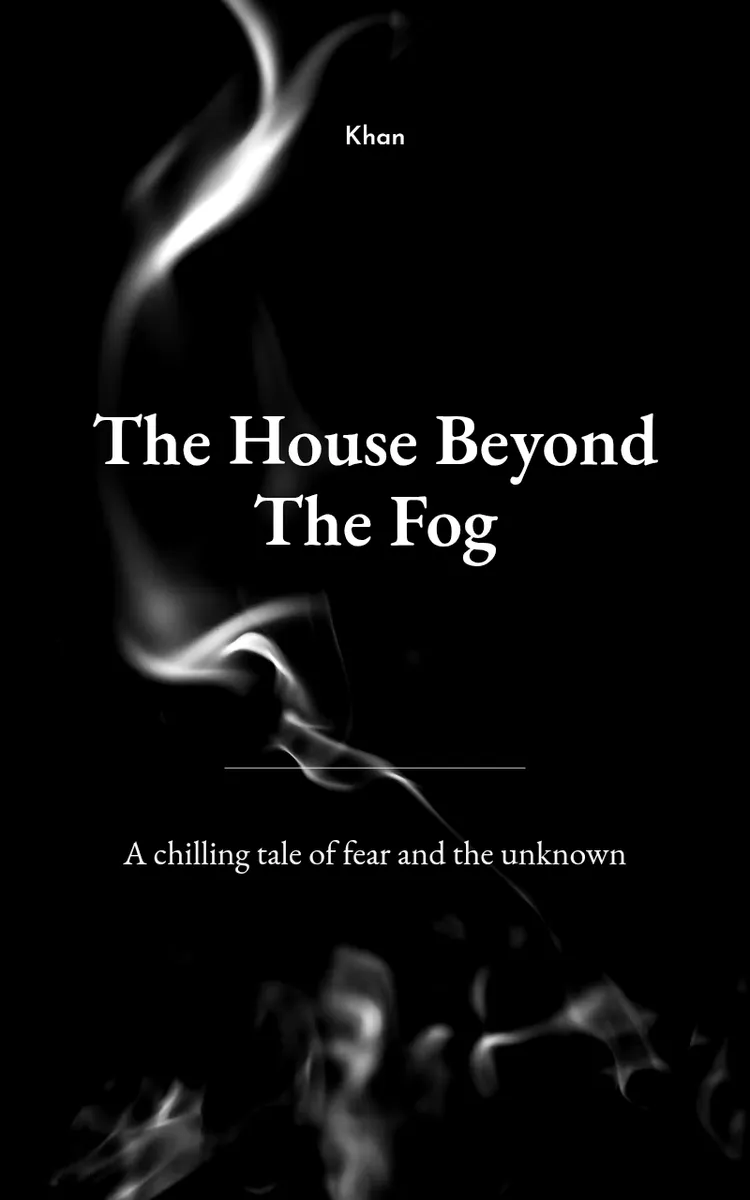
"The House Beyond The Fog" is a fiction book by Khan with 5 chapters and approximately 9,182 words. A horror story intended for publication as an Amazon Kindle ebook.
This book was created using Inkfluence AI, an AI-powered book generation platform that helps authors write, design, and publish complete books. It was made with the AI Novel Writer.
Frequently Asked Questions
What is "The House Beyond The Fog" about?
A horror story intended for publication as an Amazon Kindle ebook
How many chapters are in "The House Beyond The Fog"?
The book contains 5 chapters and approximately 9,182 words. Topics covered include The House in the Fog, The Name Beneath the Floor, The Flooded Nursery, The Ledger of Missing Names, and more.
Who wrote "The House Beyond The Fog"?
This book was written by Khan and created using Inkfluence AI, an AI book generation platform that helps authors write, design, and publish books.
How can I create a similar fiction book?
You can create your own fiction book using Inkfluence AI. Describe your idea, choose your style, and the AI writes the full book for you. It's free to start.
Write your own fiction book with AI
Describe your idea and Inkfluence writes the whole thing. Free to start.
Start writingCreated with Inkfluence AI


