
Read the first chapter
The whole of chapter one, free. About 12 min. Turn the pages with the arrows, your keyboard, or a swipe.
Chapter 1
Introduction – A Shoreline of Secrets
The Call of the Mud
The first time I stepped onto Beach, I nearly turned around and left. The shore wasn't sand but a thick, dark silt that sucked at my boots and released a smell of rust, brine, and something older—burnt coal, maybe, or machine oil that had been soaking in salt water for generations. Broken bottles glinted like ugly jewels in the gray light. A bent shopping cart stuck out of the mud at an angle that looked almost pleading. This was not a place anyone would call beautiful, and yet I felt something I later learned to trust: the unmistakable tug of a place with secrets to tell.
I had come because someone at a local diner mentioned that people used to dump their trash there—not just household garbage, but industrial waste from factories that have since been demolished and forgotten. The idea lodged in my mind. Trash, I realized, is not the end of a story. It is the middle. Every broken thing on that beach had started somewhere, been used by someone, and then been thrown away. The beach was holding all those stories in its layers, waiting for someone patient enough to read them.
That first afternoon, I found a glass bottle with the name of a long-gone dairy embossed on its side, a rusted harmonica reed, and a child's shoe with the sole worn through at the heel. Each object felt less like garbage and more like a sentence in a language I was only beginning to learn. I didn't know the history of the place yet, or the science of how a poisoned shoreline could come back to life. What I knew was that I wanted to come back. I wanted to understand what this beach had been, what it was becoming, and what it might teach anyone willing to bend down and look closely.
In the years since, I have come to see Tin Can Beach as both a time capsule and a living ecosystem—a paradox that shouldn't work but somehow does. The same mud that preserves factory slag also nurtures salt marsh grass. The same tide that washes in modern plastic also deposits artifacts from a century ago. This book is an attempt to share what I've found, not just in terms of objects but in terms of perspective: a way of seeing degraded places not as lost causes but as ongoing stories, full of loss and recovery in equal measure.
This is not a book that romanticizes pollution. The beach's industrial past caused real harm to people, water, and wildlife, and I will not soften that history. But neither is it a book of mourning. The shoreline has taught me that renewal is rarely a dramatic event. It is a slow accumulation of small changes—a patch of cordgrass taking root in contaminated soil, a fiddler crab returning to a creek that once ran gray with runoff, a community discovering that a place they thought was worthless has been quietly becoming something else.
I chose the name "Tin Can Beach" deliberately, because it captures both the humor and the dignity of such places. The tin can is the humblest of objects—a thing everyone uses and no one treasures. Yet on this shore, tin cans have become anchors for oyster beds. They have rusted into the very sediment that now supports life. There is a lesson in that, and I suspect it is a lesson that applies far beyond this one patch of urban coastline.
In writing this book, I have tried to do what a careful mudlarker does in the field: document what I find, respect the context, and leave the site richer than I found it. The chapters that follow trace the beach's journey from industrial wasteland to urban sanctuary, explore the ecological principles that made renewal possible, and offer a practical method for reading any shoreline as a living archive. I hope that by the end, you will see your own local "ugly" spaces differently—with more curiosity, more patience, and maybe even a pair of mud boots in the back of your car.
From Dump to Sanctuary
It is difficult to overstate how unremarkable Tin Can Beach was for most of its history. For nearly a hundred years, the shoreline functioned as an unofficial dumping ground—a place where factories parked their slag, where households pitched broken furniture and spent bottles, and where no one with any sense of civic pride would choose to spend an afternoon. The water was fouled. The mud was laced with heavy metals. When the tide went out, it left behind a landscape of rusted barrels, shattered crockery, and the occasional leather boot crusted with salt and tar.
The transformation did not happen all at once, and it did not happen because of a single grand restoration project. It happened through a combination of natural processes, small-scale human intervention, and the stubborn persistence of organisms that refused to give up on the place. Slowly, the dump began to change. Plants colonized the edges of the muddy flats. Birds returned. People started noticing that the beach was not as dead as they had assumed.
Today, Tin Can Beach is a different place, though it would not qualify as a postcard paradise. It is still muddy. It still yields broken glass and rusted metal. But it also supports salt marshes, migratory shorebirds, and a community of people who come not just to clean up but to observe, to learn, and to connect with a landscape that has been through something. The beach's value is not in pristine beauty but in the visible evidence of recovery—the way life has woven itself through the debris and made something new.
The story of this beach matters because it is not unique. Every city has places like this: forgotten shorelines, abandoned lots, neglected riverbanks. These are the spaces where the consequences of industrial society are most visible, but also where the resilience of nature is most surprising. By looking closely at one such place, I think we can learn something about all of them. The dump and the sanctuary are not opposites; they are stages in a process. The sanctuary was always latent in the dump, waiting for conditions to change.
This perspective runs against the grain of modern environmental thinking, which often divides the world into "pristine" and "degraded" categories. The message is that we should protect the pristine and restore the degraded, as if restoration means returning a place to some pre-human baseline. Tin Can Beach tells a messier story. Its renewal did not involve erasing its past. The industrial artifacts remain embedded in the sediment. The mud still carries traces of its toxic history. The beach is neither pristine nor purely restored. It is something more interesting: a hybrid ecosystem, a place where past and present coexist in the same handful of silt.
I have come to believe that this hybrid quality is not a compromise but a strength. A beach that has been through industrial devastation and ecological recovery has a depth of meaning that a untouched shoreline lacks. It tells a longer story. It offers a more complicated kind of hope—one that does not require forgetting what happened but instead asks us to live with the consequences and still find beauty in the aftermath.
This book is an argument for paying attention to such places, not as relics of failure but as laboratories of renewal. It is also an argument for a different kind of environmental ethic—one that includes the history of human damage as part of the story of a place, rather than something to be scrubbed away. The dump was not a detour from the sanctuary. It was the foundation on which the sanctuary was built. The shoreline we have now exists because of what it was before, not in spite of it.
The Mudlarkers' Lens
Mudlarking is an old practice with a new relevance. The word originally referred to people in Victorian London who scavenged the muddy banks of the Thames for anything they could sell—coal, rope, bits of metal, lost coins. It was desperate work, done by the very poor, and it carried a social stigma. Today, the term has been reclaimed by a different group: amateur historians, urban archaeologists, and ordinary people who walk the shorelines of rivers and estuaries looking for objects that reveal the past. The scavenging impulse is the same, but the purpose has shifted. Modern mudlarkers are not trying to survive. They are trying to understand.
My own approach to reading a shoreline combines the mudlarker's eye for small artifacts with an ecological awareness of how landscapes change over time. The key is to see the shore not as a static surface but as an active archive—a place where tides, erosion, deposition, and decomposition are constantly rearranging the evidence. Every walk is different. The same beach can look entirely new after a storm, because the water has scoured away one layer and exposed another. To mudlark well, you need to pay attention not just to what you find but to where and how you find it. Context is everything.
There is a practical method to this, which I will lay out in detail later in the book. For now, the important point is that mudlarking is not a passive hobby. It is an active form of reading. The artifacts are texts. The layers of sediment are chapters. The beach itself is the book. And like any book, it rewards repeat reading. The first time you see a rusted can, you see trash. The twentieth time, you see a clue about what people ate, when they were there, how they disposed of their waste, and what the tides have done with it since.
The mudlarker's lens also requires a certain humility. You are not the first person to walk that shore, and you will not be the last. The objects you find have been handled by others, discarded by others, buried and uncovered and reburied by natural forces. Your role is not to possess them but to bear witness to their stories. This is why I follow strict principles about what to keep and what to leave, and why I document everything carefully before removing any object. The beach is not a free store. It is a shared cultural and ecological resource, and it deserves to be treated with care.
What drew me to this practice, and what keeps me engaged after all these years, is the sense of connection it creates. When I hold a bottle from a dairy that closed in 1942, I am touching a specific moment in time. Someone drank from that bottle. Someone threw it away. The tide carried it. The mud preserved it. And now I am here, a century later, wondering about the person who held it before me. That is not just archaeology. It is a form of extended empathy across time—an attempt to reach back and understand the lives of people I will never meet.
This book will invite you to adopt the mudlarker's lens in your own life, whether or not you ever set foot on a muddy shore. The core skill is the same: paying attention to what others ignore, asking questions about the small and broken things around you, and recognizing that every place has a history that is still being written. You do not need a trowel or a sieve to start seeing the world this way. You just need to slow down, look closely, and be willing to get your hands a little dirty.
What This Book Will Do
This book is structured as a walk along the shoreline. We begin with what the beach was—the industrial past that most visitors never see but that shapes everything about the place. We then explore the principles of renewal, drawing on ecological science to understand how a poisoned landscape can come back to life. From there, we move into the method itself: a practical guide to reading the shore, documenting what you find, and engaging with the history and ecology of your own local waterways.
But this is not just a how-to book. It is also a meditation on time, memory, and the meaning of recovery. The story of Tin Can Beach is, in many ways, a story about our relationship to damage—the damage we inherit from previous generations, the damage we cause ourselves, and the slow patient work of making something new from what was broken. That is why the middle chapters focus on what happens when renewal stalls, when setbacks occur, and when the initial enthusiasm of restoration gives way to the long, unglamorous middle of the process. Renewal is not a linear journey, and any honest account must include the muddy middle.
The later chapters turn outward, toward the people, not just the place. The beach would not have recovered without human attention, and that attention has changed the people who give it. There is a shift that happens when you start to see yourself not as a visitor to a landscape but as a steward of it. That shift has practical consequences—how you vote, what you buy, how you spend your weekends—but it also has emotional consequences. It changes your sense of belonging. It gives you a stake in a place that is bigger than yourself.
Throughout the book, I will share stories from my own experience: what I have found, what I have learned, and what I have gotten wrong. I will also draw on historical records, scientific research, and conversations with other mudlarkers, ecologists, and local residents. The goal is not to present myself as an expert but as a guide—someone who has walked this particular shore many times and can point out the things you might otherwise miss. The real teacher is the beach itself. I am just trying to help you hear what it has to say.
I want to be clear about what this book is not. It is not a call for more development or gentrification of waterfront spaces. It is not a nostalgic celebration of the industrial past. It is not a simplistic message that "nature will heal everything if we just leave it alone." The truth is more complicated. Nature heals, but not always in the ways we want or on the timeline we prefer. Human involvement matters, but it must be humble and patient. And the past never fully disappears; it changes form, just like the rusting tin cans that are slowly becoming part of the living sediment.
What I hope you will take from this book is a new way of seeing degraded places—not as eyesores to avoid but as texts to read, as ecosystems to respect, and as stories that are still unfolding. Tin Can Beach taught me that renewal is possible even in the most unlikely circumstances. It also taught me that the process is ongoing, that every new storm brings both loss and discovery, and that the shoreline is never finished. In that sense, the beach is not a place that has arrived at some final state of recovery. It is a place that is always in the process of becoming. And so are we.
End of chapter one. 7 more chapters in the full book.
Swipe or use the arrows to turn the page


What's inside: 8 chapters
- 1. Introduction – A Shoreline of Secrets
- 2. Chapter 1 – The Poisoned Past: What the Beach Was The Industrial Wasteland
- 3. Chapter 2 – The Principles of Renewal: Nature’s Playbook
- 4. Chapter 3 – Mudlarking as a Method: How to Read a Shore
- 5. Chapter 4 – The Muddy Middle: When Renewal Stalls
- 6. Chapter 5 – Becoming a Shoreline Steward: A New Identity
- 7. Conclusion – The Beach That Refused to Die
- 8. About the Author
About this book
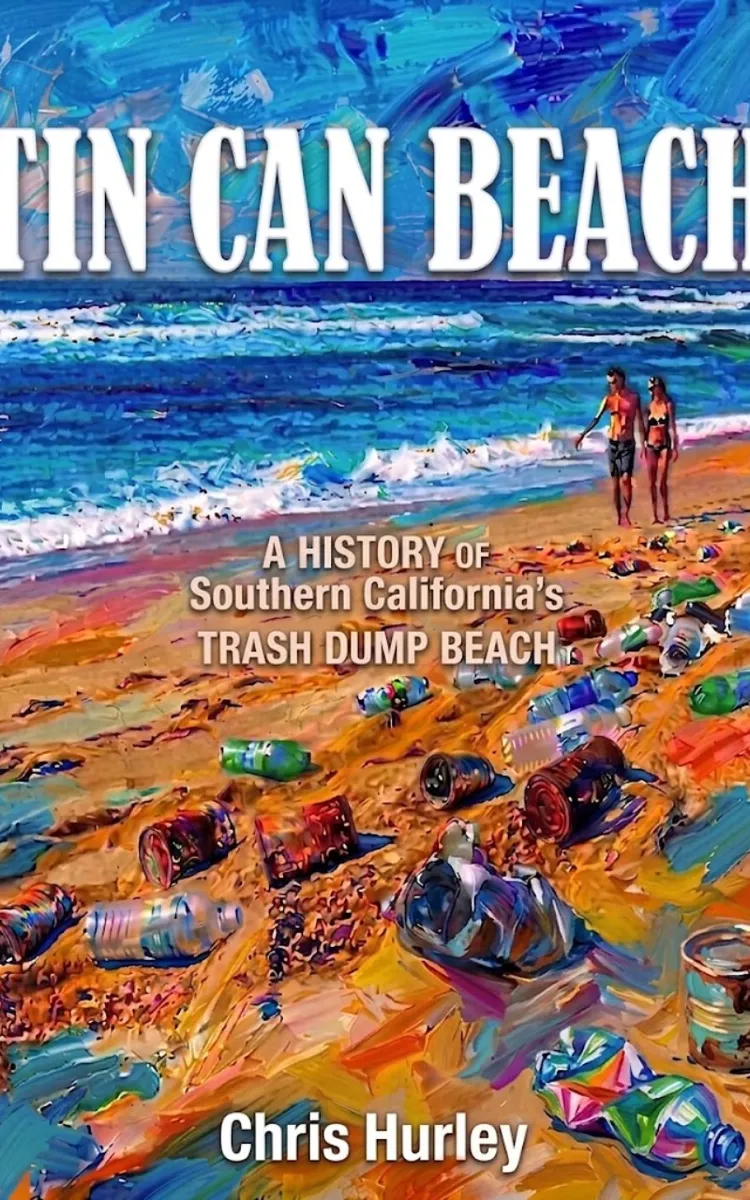
"Tin Can Beach" is a curiosity book by Chris Hurley with 8 chapters and approximately 16,791 words. It covers key insights and practical takeaways on the topic.
This book was created using Inkfluence AI, an AI-powered book generation platform that helps authors write, design, and publish complete books.
Frequently Asked Questions
What is "Tin Can Beach" about?
"Tin Can Beach" is a curiosity book by Chris Hurley covering key insights and practical takeaways on the topic.
How many chapters are in "Tin Can Beach"?
The book contains 8 chapters and approximately 16,791 words. Topics covered include Introduction – A Shoreline of Secrets, Chapter 1 – The Poisoned Past: What the Beach Was The Industrial Wasteland, Chapter 2 – The Principles of Renewal: Nature’s Playbook, Chapter 3 – Mudlarking as a Method: How to Read a Shore, and more.
Who wrote "Tin Can Beach"?
This book was written by Chris Hurley and created using Inkfluence AI, an AI book generation platform that helps authors write, design, and publish books.
Write your own curiosity book with AI
Describe your idea and Inkfluence writes the whole thing. Free to start.
Start writingCreated with Inkfluence AI


