
Read the first chapter
The whole of chapter one, free. About 10 min. Turn the pages with the arrows, your keyboard, or a swipe.
Chapter 1
The Hook That Makes You Turn Pages
The Moment a Story Takes Hold
You open a novel intending to read one page before sleep. A stranger misses a train, a letter arrives, or a door opens onto a place that should not exist. Several pages later, the room is dark and the book is still open. Fiction has not supplied a fact you needed; it has created a question you cannot yet leave unanswered.
That pull is the subject here: how stories turn attention into expectation, and why romance, fantasy, and thrillers give that expectation different shapes. Each genre offers a distinct promise. Romance asks whether two people will find one another. Fantasy asks what kind of world lies beyond the ordinary. The thriller asks what danger is approaching and whether anyone will recognize it in time.
These promises have long histories. They also connect to memory, emotion, and the way the human mind searches for patterns. The Hook-to-Heart Ladder describes the movement from a small disturbance in a story to a deeper emotional attachment. A hook catches the eye, but the heart is held by what the hook comes to mean.
Why do readers continue turning pages when the answer is less important than the question?
How the Hook Was Built
Long before the modern novel, storytellers understood the value of delayed knowledge. The One Thousand and One Nights, shaped over centuries from Middle Eastern, South Asian, and Persian traditions, is organized around a life-or-death interruption: Scheherazade begins a story and stops before its ending. The next story depends on the listener wanting the missing part. Suspense here is not a decorative feature. It is the structure that keeps the storyteller alive.
Printed fiction inherited this appetite for continuation. In the nineteenth century, novels such as **Charles Dickens’s The Pickwick Papers and Alexandre Dumas’s *The Count of Monte Cristo*** reached readers in installments. A chapter might end with an arrest, a secret identity, or a character facing an uncertain fate. Readers then had to wait for the next issue. The pause between installments made the unanswered question part of everyday reading culture.
A hook does not always involve danger. In **Jane Austen’s *Pride and Prejudice***, the opening sentence turns marriage into a social puzzle: a wealthy unmarried man is treated as someone who must be seeking a wife. The sentence is witty, but it also establishes a pressure system. Who will marry whom? What will money, reputation, and pride permit? The reader’s curiosity begins with a social fact and grows through the behavior of particular people.
This is the first rung of the Hook-to-Heart Ladder: a story introduces something incomplete. The incompleteness may be a crime, a desire, a strange world, or a contradiction in someone’s character. Readers continue because the mind tends to keep unfinished matters active. Psychologists often discuss this as the Zeigarnik effect, the tendency for interrupted tasks to remain more mentally available than completed ones. Fiction gives that tendency a carefully arranged form. It opens doors, but postpones the rooms behind them.
Romance and the Architecture of Anticipation
Romance novels are often described as stories about love, but their deeper engine is uncertainty. The central couple may be attracted to each other, yet separated by class, family expectations, distance, misunderstanding, or a fear of vulnerability. The reader knows the emotional destination is important, but not how the characters will reach it or what they will have to change along the way.
In **Charlotte Brontë’s *Jane Eyre***, the attraction between Jane and Edward Rochester develops within a world of unequal power and concealed information. Jane is a governess; Rochester owns the estate where she works. Their conversations create intimacy, but the house also contains a secret that changes the meaning of their relationship. The romantic hook is therefore tied to a mystery: affection grows while the reader senses that the apparent story is incomplete.
Contemporary romance often makes this structure more visible through recognizable patterns: enemies becoming lovers, a second chance after separation, or two people forced into close proximity. Such patterns do not necessarily reduce suspense. They establish the kind of question being asked. If the reader expects emotional union, attention shifts toward the obstacles, the timing, and the cost of honesty.
A brief glance can carry more tension in a romance novel than a physical chase in an action story. The reason is that romance treats interpretation as an event. A message left unanswered, a conversation interrupted, or a kindness dismissed can alter the reader’s understanding of what a character feels. The story moves through small signals, and every signal may be revised later.
The hook reaches the heart when the reader stops asking only, “Will they become a couple?” and begins asking, “What must they understand about themselves before they can be together?” That change turns a plot question into an emotional one. The outcome matters because the characters’ identities seem to depend on it.
Fantasy and the Pleasure of a Larger World
Fantasy catches attention by making the familiar unstable. A wardrobe opens into Narnia in **C. S. Lewis’s The Lion, the Witch and the Wardrobe. A young orphan discovers a hidden inheritance and a school of magic in J. K. Rowling’s Harry Potter and the Philosopher’s Stone. In J. R. R. Tolkien’s *The Lord of the Rings***, an ordinary-looking ring becomes the center of a history reaching across languages, kingdoms, and generations.
These books do not merely add dragons, spells, or enchanted objects to ordinary life. They build systems. A fantasy world has rules about power, ancestry, geography, language, and consequence. The reader’s first question may be simple - what is behind the wardrobe? - but it soon expands. Who made this world? Why has it been hidden? What does the object mean? What will happen when its rules collide with human weakness?
That expansion produces a distinctive form of attention. A thriller narrows the field toward danger. Fantasy often widens it toward possibility. The reader keeps turning pages not only to discover what happens next, but to understand the scale of the world itself.
The strangest feature of fantasy is that its impossible elements often make ordinary human problems easier to see.
A magical ring can represent corruption more clearly than a realistic object because its power is visible. A invented kingdom can expose arguments about authority, war, loyalty, and exile without being tied to one government or one historical moment. The distance from reality creates room to examine reality. Fantasy’s escape is often a form of observation.
This is the middle rung of the Hook-to-Heart Ladder. The initial hook is wonder, but attachment grows through recognition. Readers may not have fought a dragon or crossed Middle-earth, yet they understand fear, friendship, temptation, and grief. The unfamiliar setting becomes a frame around familiar emotions.
Thrillers and the Biology of Uncertainty
Thrillers organize attention around threat. Someone is being followed, a crime has been committed, a conspiracy is unfolding, or a disaster is approaching. The reader receives information in controlled portions, often from a viewpoint that knows less than the person causing the danger.
The form has roots in detective fiction and the sensation novel. **Wilkie Collins’s The Woman in White, published in the 1850s, combined secrecy, identity, and legal conflict. Agatha Christie’s The Murder of Roger Ackroyd, published in 1926, demonstrated how strongly readers rely on the apparent honesty of a narrator. Later thrillers, including Patricia Highsmith’s The Talented Mr. Ripley and Gillian Flynn’s *Gone Girl***, made uncertainty more psychological. The danger lies not only in what will happen, but in whether the reader understands the people involved.
The brain is highly responsive to possible threat, even when the threat is represented by words on a page. Heart rate, attention, and expectation can shift during suspenseful reading, but the reader remains physically safe. This separation is part of the appeal. A thriller offers controlled alarm: fear shaped by chapters, clues, and pauses.
The most effective thrillers also make information feel unstable. A clue may solve one question while creating two more. A trustworthy witness may be mistaken. A victim may know more than the investigator. The reader’s task becomes a moving arrangement of evidence, and every new detail can force an earlier scene to be reread in a different light.
Here the hook descends rapidly toward the heart. At first, the reader wants to know who is responsible. Later, the deeper concern may be whether justice is possible, whether trust can survive, or whether an ordinary person can remain morally intact under pressure. Suspense is not only a clock counting down. It is the strain placed on a person’s choices.
The Reader Who Crosses Genres
The boundaries among romance, fantasy, and thrillers are less solid than bookstore shelves suggest. The Hunger Games combines dystopian fantasy with political danger and a romantic triangle. The Time Traveler’s Wife joins romance with a speculative premise and the painful uncertainty of time. Mexican Gothic uses historical setting, horror, family secrets, and social criticism. Readers may enter through one genre’s promise and remain because another genre has taken over the emotional work.
This overlap reveals an unexpected connection: genre is often less a category of subject than a method of managing questions. Romance manages questions of emotional commitment. Fantasy manages questions of possibility and moral order. Thrillers manage questions of danger and knowledge. A single novel can manage all three at once.
That reframing matters because it explains why readers who claim not to enjoy one genre may still enjoy its underlying structure elsewhere. Someone uninterested in castles and spells may respond to the hidden-world pattern in a mystery. Someone who avoids conventional romance may be drawn to the emotional uncertainty in a thriller. The labels describe the outer clothing of a story; the hook is built from the questions underneath.
A real example is the continuing readership of **Mary Shelley’s *Frankenstein***, first published in 1818. It can be read as Gothic fiction, science fiction, a frame narrative, a tragedy, or a story about social rejection. Its central hook - what happens when a creator refuses responsibility for his creation - keeps changing shape as the novel moves among letters, testimony, pursuit, and confession. The book survives not because it offers one simple genre experience, but because its questions remain unusually difficult to close.
A City of Readers and the Shared Suspense of Stories
The public library offers a concrete view of how these hooks operate in ordinary life. In New York Public Library’s reading rooms and branches, readers encounter fiction alongside neighbors whose reasons for choosing a book may be entirely different. One reader may borrow a historical romance for its emotional tension, another a fantasy novel for its world-building, and another a thriller because its short chapters suit a crowded commute. The same shelves hold different forms of uncertainty.
Book clubs make this shared experience visible. A group discussing **Daphne du Maurier’s *Rebecca*** may begin with the question of who the first Mrs. de Winter really was. It may then move toward class, memory, jealousy, and the power of a person who is absent from every scene but present in every thought. The hook gathers the group, but interpretation keeps the conversation alive.
Readers also carry genre expectations from one culture into another. Romance conventions appear in novels translated across languages; detective fiction has developed distinctive traditions in Britain, Japan, Scandinavia, and elsewhere; fantasy draws on local myths while circulating through a global publishing market. A reader in Kigali, London, Mumbai, or São Paulo may recognize the tension of a secret or the hope of a reunion, even when the social world of the novel is unfamiliar.
Fiction therefore creates both private absorption and public connection. The person reading alone is responding to an arrangement of words, but that arrangement belongs to a larger history of storytelling. Every page turn joins a chain that includes oral tales, serialized newspapers, lending libraries, book clubs, and digital reading platforms.
A successful story does not remove uncertainty; it gives uncertainty a shape that can be endured, enjoyed, and shared. The hook begins as a question in the mind, then becomes a feeling about a character, a world, or a danger. Somewhere between those stages, reading changes from following events to caring what they mean.
Human beings may read for information, but fiction shows that information is only one reason to continue. We turn pages to approach what is hidden, and sometimes to discover why the hidden thing matters. The next unanswered question is already waiting somewhere in the dark space beyond the page.
End of chapter one. 4 more chapters in the full book.
Swipe or use the arrows to turn the page
What's inside: 5 chapters
- 1. The Hook That Makes You Turn Pages
- 2. Why Classics Still Feel Like New
- 3. The Change Plan Behind Self-Help
- 4. The Life Lessons Hiding in Biographies
- 5. Why Sci-Fi Lets Us Practice Tomorrow
About this book
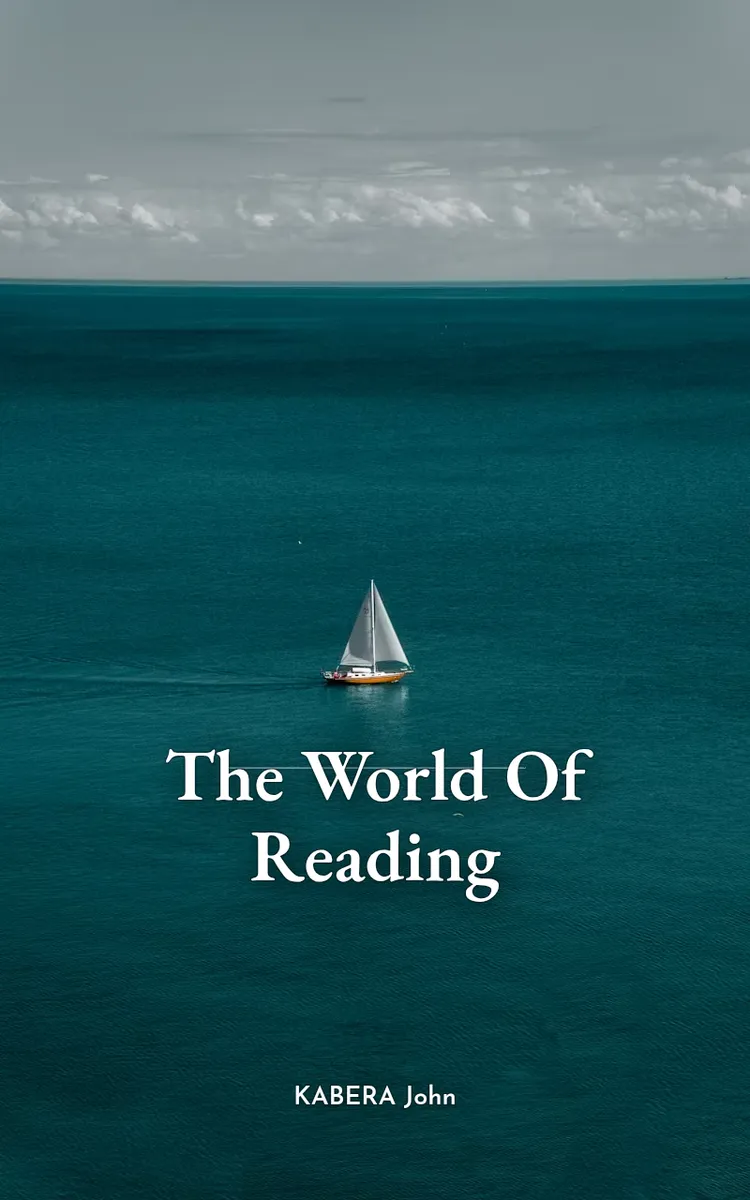
"The World Of Reading" is a curiosity book by KABERA John with 5 chapters and approximately 8,156 words. Exploration of reading genres, motivations, and example books.
This book was created using Inkfluence AI, an AI-powered book generation platform that helps authors write, design, and publish complete books.
Frequently Asked Questions
What is "The World Of Reading" about?
Exploration of reading genres, motivations, and example books
How many chapters are in "The World Of Reading"?
The book contains 5 chapters and approximately 8,156 words. Topics covered include The Hook That Makes You Turn Pages, Why Classics Still Feel Like New, The Change Plan Behind Self-Help, The Life Lessons Hiding in Biographies, and more.
Who wrote "The World Of Reading"?
This book was written by KABERA John and created using Inkfluence AI, an AI book generation platform that helps authors write, design, and publish books.
Write your own curiosity book with AI
Describe your idea and Inkfluence writes the whole thing. Free to start.
Start writingCreated with Inkfluence AI


