

Read the first chapter
The whole of chapter one, free. About 8 min. Turn the pages with the arrows, your keyboard, or a swipe.
Chapter 1
Christian Counseling Diagnostic Interview
Seeing the Person Before Naming the Problem
What do you hear first when a counselee says, “I cannot sleep, I feel distant from God, and I am afraid of what I might do”? The first task is not to attach a label. It is to create enough safety, clarity, and order to understand the person’s suffering and determine what kind of help is needed.
The SHAPE Intake Model provides a disciplined path: S - Safety, H - History, A - Assessment, P - Patterns and possibilities, and E - Engagement and plan. It joins careful clinical listening with Christian psychology, biblical wisdom, and appropriate referral. The goal is not diagnostic certainty in one meeting. The goal is a responsible working understanding that can guide the next step while remaining open to correction.
Who this is for: seminary students, pastors, and Christian counselors conducting an initial interview or reviewing a case with supervision. Used consistently, the model helps you identify urgent risks, organize symptoms, distinguish spiritual concerns from psychological symptoms without separating them artificially, and form a written plan for continued counseling or licensed care. Scripture supplies a theological vision of the person; research-informed assessment supplies safeguards against assumptions.
Why Symptoms Develop and Why Differential Diagnosis Matters
Human distress usually has more than one influence. A counselee’s sleeplessness may be connected to grief, trauma, anxiety, medication changes, substance use, physical illness, or a pattern of late-night rumination. A loss of joy may reflect depression, complicated bereavement, burnout, relational injury, or a crisis of faith. Christian counseling takes spiritual experience seriously without treating every symptom as evidence of sin or every spiritual struggle as a disorder.
Differential diagnosis means comparing reasonable explanations rather than choosing the first explanation that fits. A counselor asks what else could account for the reported symptoms, what information is missing, and whether the presentation requires another professional’s evaluation. This is a provisional counseling formulation, not a medical guarantee.
The main factors to examine are:
• Symptoms and time course. Identify what is happening, when it began, how often it occurs, how severe it feels, and how it affects work, relationships, worship, sleep, appetite, and daily responsibilities. A symptom occurring twice in one week is assessed differently from the same symptom occurring daily for three months.
• Context and stressors. Note bereavement, marital conflict, financial pressure, abuse, relocation, academic demands, caregiving, and church conflict. Context does not make suffering unreal; it helps explain its shape.
• Body and behavior. Ask about sleep, nutrition, pain, medical conditions, prescribed medication, alcohol, cannabis, stimulants, and recent changes in routine. Counselors should not advise clients to stop medication. Questions about medication are for coordination with the prescriber.
• History and vulnerability. Previous episodes, trauma exposure, family history, developmental experiences, and earlier treatment can affect present risk. A past suicide attempt, manic episode, psychotic symptom, or severe substance problem requires careful supervision and referral.
• Meaning and faith. Explore the counselee’s understanding of God, guilt, forgiveness, calling, suffering, prayer, Scripture, church belonging, and spiritual authority. The Psalms show that lament can be faithful speech: “How long, O Lord?” (Psalm 13:1). Job also warns counselors against explaining suffering too quickly.
Christian psychology understands people as embodied, relational, moral, and spiritual. Augustine’s account of disordered loves, Aquinas’s attention to habit and virtue, and John Calvin’s emphasis on self-knowledge before God each contribute useful questions, though none replaces careful assessment. Contemporary Christian thinkers such as Eric Johnson and Everett Worthington have likewise emphasized integration that respects both psychological evidence and Christian doctrine. Scripture gives boundaries and purpose to counseling: “Let every person be quick to hear, slow to speak” (James 1:19), and “plans fail for lack of counsel, but with many advisers they succeed” (Proverbs 15:22).
Research-informed tools may support, but never replace, conversation. Instruments such as the PHQ-9 for depressive symptoms, the GAD-7 for anxiety symptoms, and the Columbia Suicide Severity Rating Scale for suicide risk should be used only within the counselor’s training, setting, and legal scope. Record the tool, date, score, and the client’s own explanation. A score is a signal for further assessment, not a verdict.
Conducting the SHAPE Interview
Begin by explaining confidentiality and its limits before sensitive questions arise. State that information is generally private, but immediate danger, abuse of a child or vulnerable adult, or legal requirements may require protective action according to local law and professional policy. Obtain consent for counseling, note-taking, screening tools, and coordination with medical or mental-health providers.
S - Safety comes first. Ask directly and calmly: “Have you had thoughts of killing yourself or harming someone else?” If the answer is yes, clarify thoughts, intent, plan, access to means, timing, previous attempts, intoxication, and protective factors. Do not leave an imminent-risk person alone. Follow the organization’s emergency protocol, contact emergency services or a crisis service when indicated, involve appropriate supports with consent when possible, and consult a licensed clinician or supervisor immediately. In the United States and Canada, 988 provides crisis support; elsewhere, use the local emergency or crisis number. Document the questions, answers, consultation, and action taken.
Then assess abuse, coercive control, domestic violence, severe neglect, psychosis, mania, and inability to meet basic needs. Warning signs requiring prompt professional evaluation include several nights with almost no sleep accompanied by unusually high energy or risky behavior; hearing commands or seeing things others do not; severe confusion; intoxication or withdrawal; escalating violence; or a specific suicide plan. Prayer and pastoral presence may accompany emergency care, but they must not replace it.
H - History follows safety. Invite a narrative before collecting details: “What brought you here now?” Listen for the presenting concern, the client’s goals, and the language the client uses. Then clarify onset, frequency, duration, triggers, coping responses, prior episodes, treatment, medical care, medications, substance use, relationships, work, church involvement, and cultural setting. Ask permission before moving into trauma: “Would it be all right if I ask about experiences that may have affected your sense of safety?” Do not press for graphic detail in an initial interview.
A - Assessment organizes the symptoms. A useful structure is the mental-status examination: appearance and behavior, speech, mood, affect, thought process, thought content, perception, orientation, memory, insight, judgment, and impulse control. Describe what you observe rather than using insulting or absolute language. “Speech was rapid and difficult to interrupt” is more useful than “The client was unstable.”
Ask about functioning with concrete measures: number of hours slept, missed workdays, meals skipped, panic episodes per week, or days unable to complete ordinary tasks. Screen for depression, anxiety, trauma symptoms, substance use, and suicide risk when relevant. Explain the purpose of each screen and review results with the counselee.
P - Patterns and possibilities is the differential-diagnosis stage. Compare the leading possibilities in plain language:
Finding
Questions to clarify
Next response
Low mood and withdrawal
Duration, pleasure, sleep, appetite, guilt, safety
Screen, monitor, and consider licensed evaluation
Fear and physical arousal
Triggers, avoidance, panic pattern, medical concerns
Assess anxiety and coordinate medical care when needed
Reduced sleep with increased energy
Racing thoughts, impulsivity, unusual confidence, history
Prompt licensed mental-health evaluation
Spiritual guilt or condemnation
Source, flexibility, biblical understanding, functioning
Explore theology and assess depression, trauma, or obsessive symptoms
Hearing or seeing unusual things
Timing, commands, substances, sleep loss, medical history
Urgent professional assessment when safety is affected
Avoid spiritual shortcuts. Saying “You need more faith” may intensify shame and hide depression. Yet avoiding faith altogether also misses the counselee’s meaning system. Ask, “When you pray or read Scripture, what do you believe God is saying about you?” Then compare the belief with the whole counsel of Scripture. Romans 8:1 speaks against condemnation for those in Christ, while Psalm 42 gives language for honest distress. The counselor’s task is not to force a verse over pain but to help the person engage truth without denial.
E - Engagement and plan closes the interview. Summarize what you heard and ask for correction: “I understand that sleep declined six weeks ago after the job loss, fear occurs most evenings, and you have had no plan to harm yourself. What did I miss?” Agree on one or two immediate goals, such as completing a safety plan, scheduling a medical appointment, practicing a brief evening prayer and breathing routine five nights this week, or contacting a support person before the next session.
Use interventions within your competence. Helpful techniques may include reflective listening, behavioral activation, grounding, lament prayer, Scripture meditation, problem-solving, forgiveness work when appropriate, and cognitive examination of condemning beliefs. For example, during a 10-minute session exercise, the counselee can write a distressing thought, identify its evidence, name a more truthful and compassionate response, and connect that response with a relevant passage such as Philippians 4:8. Do not promise that the exercise will remove symptoms. Review its effect at the next appointment.
Schedule follow-up rather than leaving the plan open-ended. For moderate concern, a weekly session for four weeks may allow review of symptoms, functioning, safety, and referrals. Reassess risk at every visit when suicidal thoughts, severe depression, substance misuse, or major instability has been present. Share information with outside providers only with written consent unless an applicable safety or legal exception requires otherwise. Supervision is not a sign of failure; it is part of faithful stewardship.
Errors That Distort the First Interview
Treating a Bible verse as the diagnosis
Why it happens: The counselor wants to offer hope quickly and may fear that psychological assessment weakens faith.
What to do instead: Listen first, assess safety, and connect Scripture to the person’s actual experience. Use passages such as Psalm 34:18, Romans 12:15, and 2 Corinthians 1:3-4 as invitations to truth and comfort, not as substitutes for risk assessment or clinical referral.
Assuming every spiritual struggle is a psychological disorder
Why it happens: Counselors may overrely on screening tools or treat doubt, lament, conviction, and grief as symptoms simply because they are uncomfortable.
What to do instead: Ask about duration, impairment, flexibility, and context. A grieving believer may be suffering without meeting criteria for a disorder. A person with persistent impairment, severe symptoms, or safety concerns may need licensed evaluation. Hold both possibilities carefully.
Failing to ask direct safety questions
Why it happens: The counselor fears that mentioning suicide will plant the idea or damage rapport.
What to do instead: Ask clearly, document the response, and follow the safety protocol. Direct questions communicate that the counselor can tolerate honest answers. If risk is immediate, obtain emergency help and consult supervision rather than attempting to manage the situation alone.
A careful intake is an act of love because it refuses both panic and presumption. Through the SHAPE Intake Model, the counselor hears the story, tests possible explanations, honors Scripture, uses research responsibly, and builds a plan proportionate to the risk. “Speak the truth in love” (Ephesians 4:15) describes more than a kind tone; it describes disciplined attention to the whole person before God.
End of chapter one. 7 more chapters in the full book.
Swipe or use the arrows to turn the page

Spirit-Led Whole-Person Renewal

ChurchBased Christian Biblical Counseling Ministry

Anxiety And Panic Counseling Desk Reference
What's inside: 8 chapters
- 1. Christian Counseling Diagnostic Interview
- 2. Risk Assessment for Self-Harm
- 3. Depression: Behavioral Activation and Hope
- 4. Anxiety and Panic: Exposure with Prayer
- 5. Trauma-Informed Counseling for PTSD
- 6. OCD: Scripture-Saturated Response Prevention
- 7. Substance Use and Spiritual Discernment
- 8. Couples Conflict: Gospel-Driven Communication Protocol
About this book
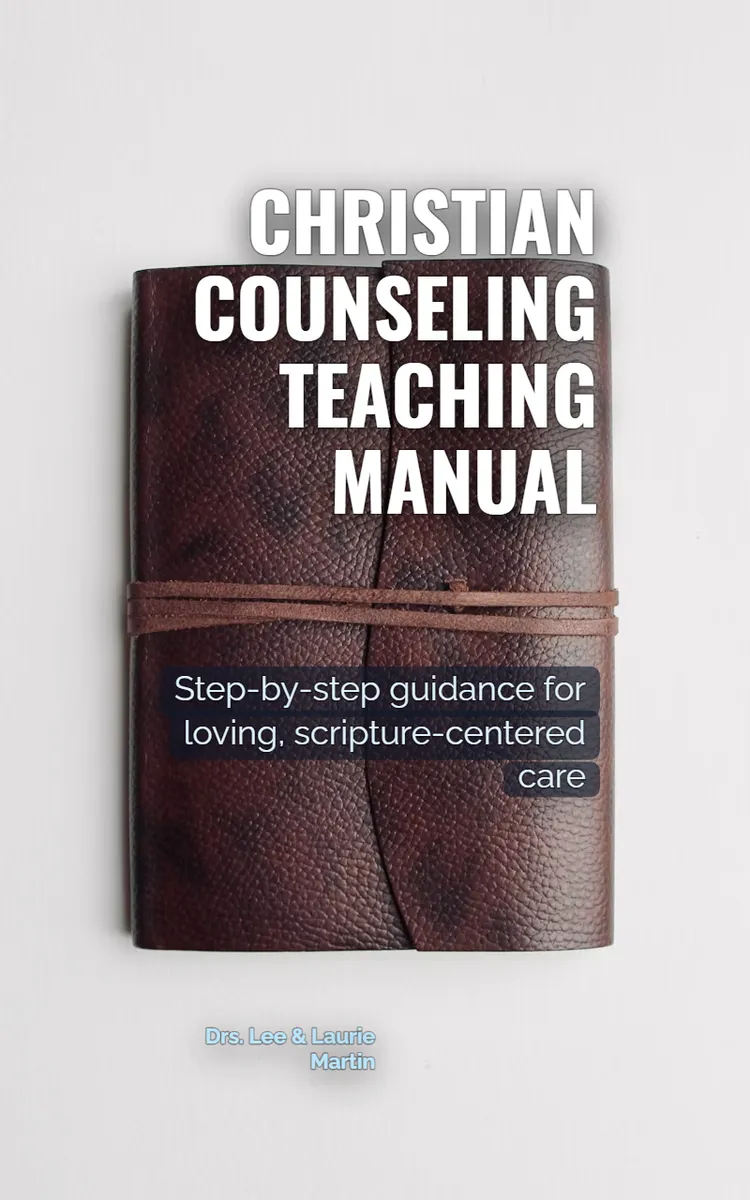
"Christian Counseling Teaching Manual" is a clinical guide book by Drs. Lee & Laurie Martin with 8 chapters and approximately 14,615 words. Christian psychology counseling manual for seminary students.
This book was created using Inkfluence AI, an AI-powered book generation platform that helps authors write, design, and publish complete books. It was made with the AI Health Book Generator.
Frequently Asked Questions
What is "Christian Counseling Teaching Manual" about?
Christian psychology counseling manual for seminary students
How many chapters are in "Christian Counseling Teaching Manual"?
The book contains 8 chapters and approximately 14,615 words. Topics covered include Christian Counseling Diagnostic Interview, Risk Assessment for Self-Harm, Depression: Behavioral Activation and Hope, Anxiety and Panic: Exposure with Prayer, and more.
Who wrote "Christian Counseling Teaching Manual"?
This book was written by Drs. Lee & Laurie Martin and created using Inkfluence AI, an AI book generation platform that helps authors write, design, and publish books.
How can I create a similar clinical guide book?
You can create your own clinical guide book using Inkfluence AI. Describe your idea, choose your style, and the AI writes the full book for you. It's free to start.
Write your own clinical guide book with AI
Describe your idea and Inkfluence writes the whole thing. Free to start.
Start writingCreated with Inkfluence AI


