
Read the first chapter
The whole of chapter one, free. About 6 min. Turn the pages with the arrows, your keyboard, or a swipe.
Chapter 1
Reclaiming Offline Identity
The Moment the Feed Starts Naming You
At 10:47 p.m., you open your phone to answer one message. Twelve minutes later, you’re watching a stranger renovate a kitchen, arguing silently with a post about discipline, and checking whether anyone reacted to the photo you shared earlier. You put the phone down, then pick it up again because the room feels strangely quiet without it.
The unsettling part isn’t that you lost twelve minutes. It’s that the feed has begun answering questions you haven’t consciously asked: What should I care about? How should I look? What kind of person gets approval here? Slowly, your identity starts to feel less like something you live and more like something reflected back at you by screens.
If the feed keeps telling you who you are, when do your own values get a say?
From Performed Identity to Chosen Character
Old Belief: My identity is the image I create and the response it receives.
New Reality: My identity is the character I practice when no feed is watching.
A profile can display your interests, opinions, work, meals, workouts, and best angles. It can’t show the full shape of your character. It can’t measure whether you keep a promise when nobody can reward you, whether you tell the truth when a lie would be easier, or whether you can sit with discomfort without reaching for a screen.
That distinction matters because platforms reward what is visible. Character is often built in the invisible parts of life. The unposted apology. The decision to finish a difficult task instead of checking notifications. The patience to listen when you’d rather prepare your reply. These moments don’t produce a neat little heart icon, but they quietly decide who you’re becoming.
Consider a small business owner who posts about discipline every morning but keeps avoiding an overdue conversation with a struggling employee. The public identity says “focused leader.” The private choice asks for honesty, courage, and care. The second one carries more weight. Not because posting is fake, but because character is formed through repeated choices, not carefully arranged evidence.
The shift isn’t about deleting every app or pretending online life doesn’t matter. It’s about moving authorship back inside yourself. You can use a platform without letting its reactions become your moral scoreboard. You can share a victory without needing it to prove your worth. You can enjoy attention without making attention your identity.
The Identity Triangle and the Quiet Drift
The Identity Triangle gives you three questions to return to: What do I value? What do I practice? What do I protect?
Values name what matters to you. Practice shows whether those values have entered your ordinary behavior. Protection reveals what boundaries you’re willing to keep when convenience, pressure, or approval pulls you elsewhere. If you value presence but check your phone during every conversation, the triangle is out of balance. If you value courage but shape every opinion around avoiding criticism, the screen is helping choose for you.
The triangle works because identity is not built by one dramatic declaration. It’s built through alignment. Your values point in a direction. Your practices move your feet. Your protections keep outside forces from constantly turning you around. The feed can offer endless identities, but it can’t decide which one deserves your loyalty.
Signs this pattern is running your life:
1. You edit your opinions before you’ve formed them. You wonder how a thought will perform before asking whether it’s true or useful. 2. You feel restless when nothing is being recorded. A walk, meal, or achievement seems incomplete without a photo or update. 3. You borrow urgency from other people’s screens. Someone else’s outrage, purchase, routine, or ambition suddenly becomes your priority. 4. You confuse recognition with progress. A post receives attention, yet the real work behind your values remains untouched.
Character leads when your values, practices, and protections agree more strongly than the feed’s demands.
Questions That Bring Your Identity Back Home
1. Which parts of your online identity would remain if every like, view, and comment disappeared tomorrow? Look for what still feels worth doing without an audience. Maybe it’s your craft, your family, your faith, your health, or the promise you made to become more dependable.
2. What value do you claim most often, and where does your daily behavior contradict it? If you say you value attention but reach for your phone while someone speaks, don’t use the answer to shame yourself. Use it as a clear place to begin practicing differently.
3. What do you protect from the feed? Your first hour, your sleep, your conversations, your creative work, and your private relationships all need some form of protection. An honest answer might be, “Nothing right now. Everything is available to interruption.” That honesty is useful.
4. When did you last make a good choice that nobody knew about? Name the specific moment. You returned money, kept a confidence, stopped an unkind comment, or did the work without announcing it. Those quiet decisions are evidence of an identity deeper than performance.
5. What would you do this week if you didn’t need to explain it online? The answer may reveal a neglected desire - or a pressure you’ve mistaken for ambition. Let the answer be practical: call your brother, finish the proposal, take the class, or spend an evening without documenting it.
The Seven-Day Offline Identity Challenge
For the next 7 days, practice one value where no screen can reward you.
• Choose one value from the Identity Triangle, such as honesty, patience, courage, responsibility, or generosity. - Write it on paper and place it somewhere you’ll see it before checking your phone. - Each day, complete one private action that expresses it. Don’t post the action or hint that it happened. - Keep a short evening note: “Today I practiced _ when I _.” - Before opening a social app, ask, “Am I choosing this, or am I looking for a version of myself to borrow?” - On Day 7, review your notes and circle the action that felt most difficult. That resistance is worth studying.
Expected difficulty: Medium
You’ll know it’s working when...
• You notice the difference between expressing a value and performing one. - You catch yourself before asking the feed to define your mood or priorities. - Private progress begins to feel satisfying rather than invisible. - One small choice becomes easier because you’ve practiced being the person who makes it. - You can open an app without handing it authority over your identity.
The point isn’t to become perfectly detached from screens. That would be another performance, just in the opposite direction. The point is to create enough inner space to hear your own values before the feed fills the silence.
Let Character Become the Source
Your online identity may change with your work, interests, style, and opinions. That’s normal. Growth should change you. But beneath those changes, you need something steadier than public reaction. The Identity Triangle helps you find it by asking what matters, what you repeatedly do, and what you’re willing to guard.
You learned that:
• A visible profile can describe your image, but repeated private choices reveal your character. - Values become identity through practice, not intention alone. - Protection is part of self-definition because unguarded attention is easily claimed. - A life directed by character can use screens without being authored by them.
You become most yourself when your quiet choices carry more authority than your public image.
The next step is to examine the attention those choices require. Once you know who you’re trying to become, you can begin deciding what deserves access to your mind - and what doesn’t.
End of chapter one. 7 more chapters in the full book.
Swipe or use the arrows to turn the page


What's inside: 8 chapters
- 1. Reclaiming Offline Identity
- 2. Replacing Comparison with Character
- 3. Breaking the Dopamine Bargain
- 4. Designing Boundaries Without Guilt
- 5. Building Offline Habits That Stick
- 6. Practicing Courageous Real Conversations
- 7. Resisting Doomscrolling with the Pause
- 8. Living Purpose Beyond the Feed
About this book
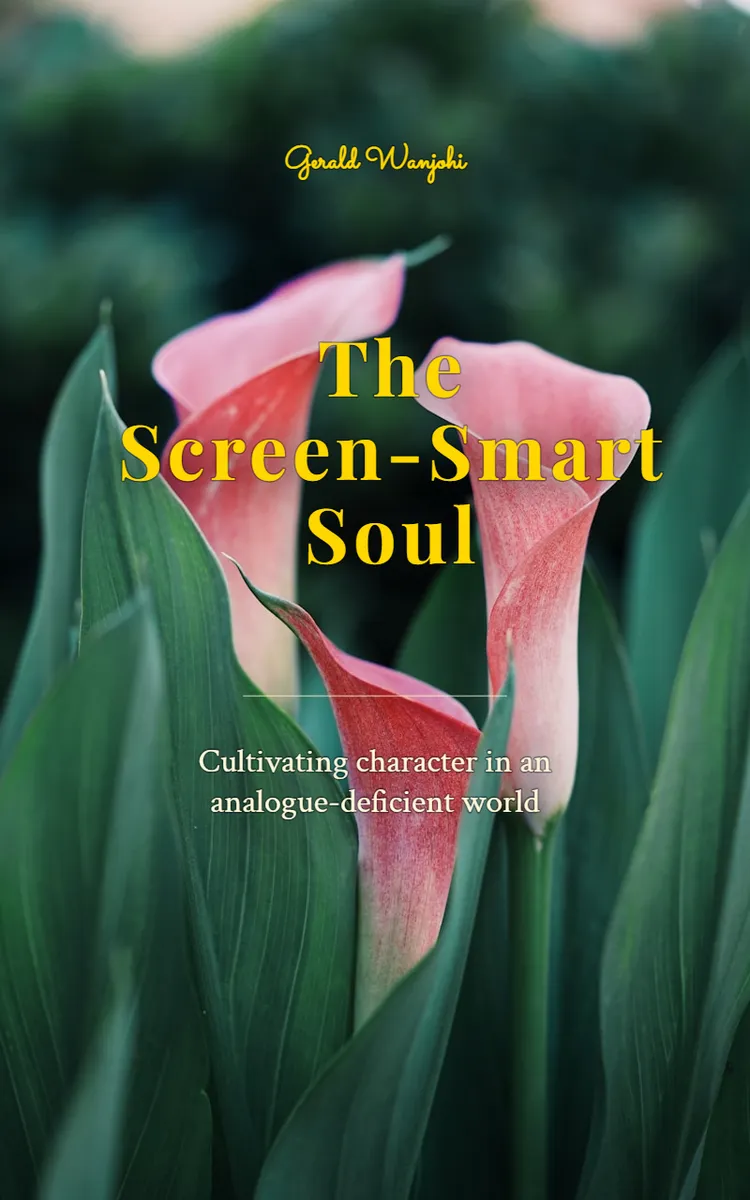
"The Screen-Smart Soul" is a self-help book by Gerald Wanjohi with 8 chapters and approximately 11,806 words. Building personal character and values amid heavy screen use.
This book was created using Inkfluence AI, an AI-powered book generation platform that helps authors write, design, and publish complete books. It was made with the AI Self-Help Book Writer.
Frequently Asked Questions
What is "The Screen-Smart Soul" about?
Building personal character and values amid heavy screen use
How many chapters are in "The Screen-Smart Soul"?
The book contains 8 chapters and approximately 11,806 words. Topics covered include Reclaiming Offline Identity, Replacing Comparison with Character, Breaking the Dopamine Bargain, Designing Boundaries Without Guilt, and more.
Who wrote "The Screen-Smart Soul"?
This book was written by Gerald Wanjohi and created using Inkfluence AI, an AI book generation platform that helps authors write, design, and publish books.
How can I create a similar self-help book?
You can create your own self-help book using Inkfluence AI. Describe your idea, choose your style, and the AI writes the full book for you. It's free to start.
Write your own self-help book with AI
Describe your idea and Inkfluence writes the whole thing. Free to start.
Start writingCreated with Inkfluence AI


