
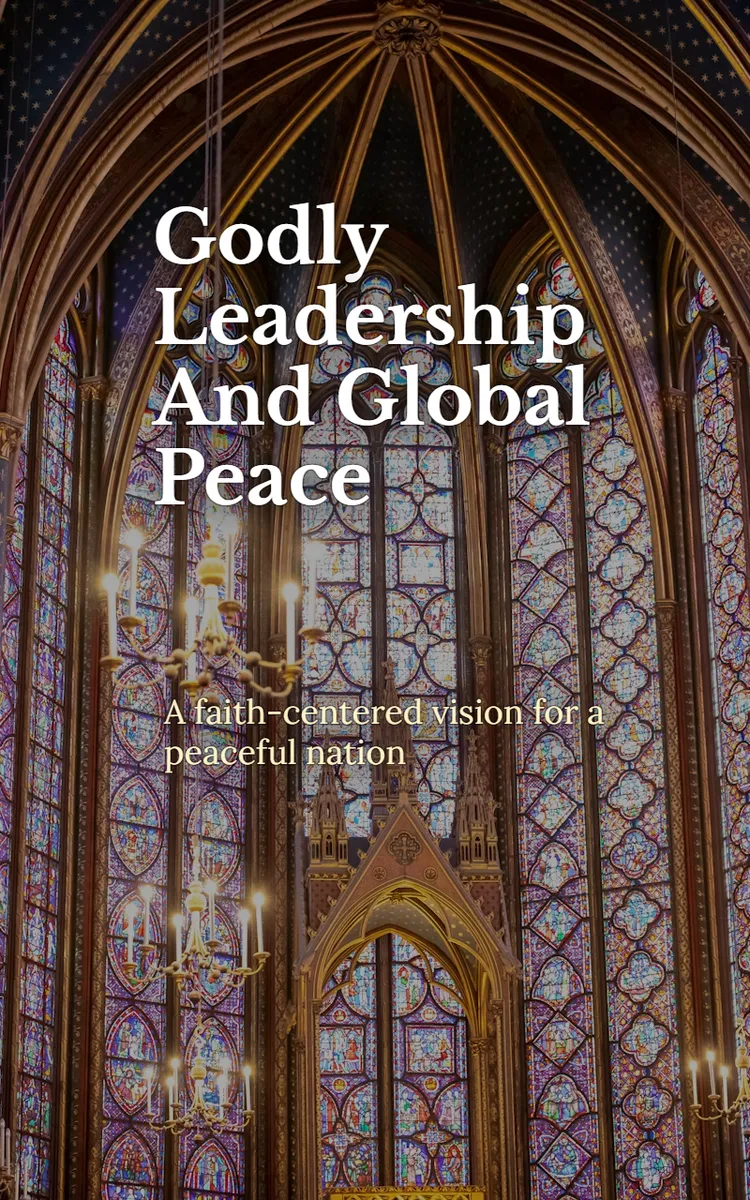
Read the first chapter
The whole of chapter one, free. About 6 min. Turn the pages with the arrows, your keyboard, or a swipe.
Chapter 1
A New Vision for Leadership: God’s Kingdom Above National Pride
Scripture Focus
Mark 10:42-45
> Jesus called them together and said, “You know that those who are regarded as rulers of the Gentiles lord it over them, and their high officials exercise authority over them. Not so with you. Instead, whoever wants to become great among you must be your servant, and whoever wants to be first must be slave of all. For even the Son of Man did not come to be served, but to serve, and to give his life as a ransom for many.”
Jesus turns leadership upside down: authority is not a trophy for personal ambition but a trust to be used for the good of others under God.
A campaign sign can promise change, but it can’t produce character. A title can open a door, but it can’t tell us what to do once we enter. Scripture gives us a better starting point for public leadership: before a person is a president, governor, mayor, judge, legislator, or community organizer, that person is accountable to God.
Reflection
Jesus spoke these words after His disciples argued about status. They were thinking about position, influence, and who would be considered greatest. That sounds familiar, doesn’t it? Political life can reward the loudest voice, the sharpest attack, and the person who knows how to collect attention. Even good people can begin with a desire to serve and slowly become attached to applause, power, or the feeling of being needed.
Jesus doesn’t say leadership is wrong. He says leadership must be different among His people. “Not so with you” is a clear boundary. Godly leadership refuses to treat citizens as tools, opponents as enemies, or national success as proof of divine favor. It asks a quieter question: What has God placed in my hands, and how can I handle it faithfully?
That question changes how we view America. Love for our country can be honorable. Gratitude for its freedoms, concern for its communities, and commitment to its well-being can all reflect responsible citizenship. But national pride must never become a substitute for worship. A nation is not the kingdom of God, and a flag is not a cross. Kingdom purpose must stand above national pride. When loyalty to country competes with loyalty to Christ, our priorities need honest correction.
This matters in ordinary decisions, not only in national debates. A local official may be tempted to support a project because it brings favorable publicity, even when a less visible option would help struggling families more. A business owner may be asked to endorse a candidate and feel pressure to follow the crowd. A church member may share a political post without checking whether it is true because it supports a preferred side. Stewardship brings these moments under prayerful review. Who benefits? Who is overlooked? Is this action shaped by truth, justice, and love - or by fear of losing influence?
Stewardship also changes how we measure the future. The goal isn’t simply to build a stronger nation in a worldly sense. It’s to form communities where truth matters, families are protected, the vulnerable are treated with dignity, and leaders remember they will answer to God. Political ambition says, “How far can I rise?” Kingdom purpose asks, “How faithfully can I serve?”
That doesn’t mean every Christian must seek public office. Some will serve through elected leadership. Others will serve by running a business honestly, teaching children, caring for neighbors, volunteering, voting thoughtfully, or speaking with courage when people are being ignored. The calling is not identical for every person, but the posture is the same: open hands, clean motives, and a willingness to put service before status.
We should also be honest about how difficult this is. Power can make a person feel entitled. Public criticism can make a person defensive. Political conflict can tempt us to assume the worst about people on the other side. Jesus gives us a better pattern. He served without becoming weak, spoke truth without humiliating people, and held authority without using it for selfish gain.
A useful test is simple: if leadership disappeared from my résumé tomorrow, would I still want to serve? That question can expose the difference between calling and vanity. It can also bring freedom. When our identity rests in God rather than office, approval, or victory, we can make decisions with greater courage. We can admit mistakes. We can listen. We can release control.
God’s vision for leadership reaches beyond America, too. A nation that practices justice, humility, and mercy can offer a meaningful example to other nations. But that example won’t come from boasting that we are better. It will come from faithful conduct. Global peace begins with leaders who see people as neighbors rather than pieces on a chessboard. It grows when national interests are weighed alongside human dignity, honesty, and responsibility before God.
The first step toward a peaceful future, then, is not gaining more power. It is surrendering the way we use power. We place our hopes, offices, platforms, and plans before the Lord and ask Him to make them instruments of service.
Practice for Today
1. Take a ten-minute motive inventory. Set a timer for ten minutes and sit quietly before God. Ask, “Where am I seeking influence mainly to serve, and where am I seeking it to be noticed?” Write the first honest answers that come. Don’t edit them to sound spiritual. If you feel drawn to a political role, public endorsement, or leadership position, name both the good desire and the personal reward you may be chasing.
2. Use the Stewardship Test before one leadership decision. Choose a real decision you’ll make today - how you speak about a candidate, how you respond to criticism, how you vote on a local matter, or how you use your authority at work. Write these three questions in your journal: - Who is helped by this choice? - Who might be overlooked or harmed? - Would I make the same choice if no one knew I received credit?
Then compare your answer with Mark 10:42-45. Ask God to move you from self-protection toward faithful service. A decision that receives no public applause may still be the most kingdom-centered choice available.
3. Practice one hidden act of civic service. Give thirty minutes today to a need that won’t improve your image. Pick up litter near a public place, help a neighbor understand a local resource, check on an elderly person, or assist a community ministry without posting about it. As you serve, pray for the people affected by public decisions - families, workers, children, immigrants, veterans, the poor, and those who feel unheard. Let this quiet action remind you that leadership begins close to home.
As you complete these practices, pay attention to your inner reactions. Do you feel impatient when nobody notices? Do you want to explain your goodness? Those reactions aren’t reasons for shame. They’re useful information. Bring them to God. Stewardship grows through repeated surrender, not instant perfection.
Keep one sentence from today where you can see it: “I am responsible for faithfulness, not for controlling the outcome.” That sentence can steady you when public life becomes noisy. It can help you serve without turning service into a demand for praise.
Closing Prayer
Lord Jesus, reshape my view of leadership. Keep me from using influence for pride, fear, or personal gain. Teach me to treat every responsibility as a trust from You. Give our leaders humble hearts, clear judgment, and courage to serve the overlooked. Help me love my country without placing it above Your kingdom. May my choices today reflect Your justice, mercy, and peace. Amen.
End of chapter one. 6 more chapters in the full book.
Swipe or use the arrows to turn the page
What's inside: 7 chapters
- 1. A New Vision for Leadership: God’s Kingdom Above National Pride
- 2. Trust That God Writes the Next Chapter: Faith Before Results
- 3. Prayer That Moves Mountains: Intercession for Leaders and Nations
- 4. Righteous Character in Public Life: Integrity, Mercy, and Truth
- 5. Hope That Doesn’t Disappoint: Building Peace Through Courageous Love
- 6. Surrendering Power: Letting God Govern the Heart First
- 7. From One Nation to Many: A Godly Example for Global Peace
About this book
"Godly Leadership And Global Peace" is a religious devotional book by Anonymous with 7 chapters and approximately 6,617 words. Faith-based political leadership for a Godly, peaceful America.
This book was created using Inkfluence AI, an AI-powered book generation platform that helps authors write, design, and publish complete books.
Frequently Asked Questions
What is "Godly Leadership And Global Peace" about?
Faith-based political leadership for a Godly, peaceful America
How many chapters are in "Godly Leadership And Global Peace"?
The book contains 7 chapters and approximately 6,617 words. Topics covered include A New Vision for Leadership: God’s Kingdom Above National Pride, Trust That God Writes the Next Chapter: Faith Before Results, Prayer That Moves Mountains: Intercession for Leaders and Nations, Righteous Character in Public Life: Integrity, Mercy, and Truth, and more.
Who wrote "Godly Leadership And Global Peace"?
This book was written by Anonymous and created using Inkfluence AI, an AI book generation platform that helps authors write, design, and publish books.
Write your own religious devotional book with AI
Describe your idea and Inkfluence writes the whole thing. Free to start.
Start writingCreated with Inkfluence AI


