

Read the first chapter
The whole of chapter one, free. About 5 min. Turn the pages with the arrows, your keyboard, or a swipe.
Chapter 1
Day 1: Naming the Family Pain (Assessment & Hope)
Scripture Focus
Psalm 139:23-24
> Search me, O God, and know my heart! > Try me and know my thoughts! > And see if there be any grievous way in me, > and lead me in the way everlasting!
God’s healing often begins when hidden family pain is named honestly in His presence.
A tense home can carry several kinds of pain at once. A parent and child may argue about homework, but beneath the argument may be fear, rejection, spiritual confusion, or years of unspoken grief. One family member may withdraw, another may become controlling, and a third may keep the peace by pretending nothing is wrong. These are not merely inconvenient habits. They are signs that careful attention is needed.
Psalm 139 gives us a wise starting place: we ask God to search us before we rush to diagnose someone else. Biblical assessment is not a hunt for a guilty person. It is a prayerful effort to understand what is happening so that truth, repentance, comfort, and wise action can take root.
Reflection
Family pain usually appears in four connected areas: spiritual, relational, emotional, and behavioral. Spiritual pain may include a distorted view of God, shame that keeps a person from prayer, bitterness toward the Lord, or confusion about forgiveness. Relational pain shows up in broken trust, harsh speech, emotional distance, divided loyalties, or a parent and child who no longer feel safe speaking honestly. Emotional pain may involve grief, fear, anger, loneliness, or hopelessness. Behavioral pain can be seen in repeated defiance, withdrawal, secrecy, uncontrolled outbursts, substance misuse, or patterns that keep damaging the home.
These areas overlap, but they shouldn’t be blended carelessly. A child’s angry behavior may be connected to fear. A parent’s harsh correction may be connected to exhaustion or unresolved hurt. A couple’s silence may hide resentment, sadness, or spiritual discouragement. The behavior matters, but it is not the whole story. Name the pain before prescribing the response. A counselor who sees only behavior may miss the wounded heart. A family member who sees only emotion may overlook sinful choices that require confession and change.
Scripture gives us both truth and tenderness for this work. James 1:19 calls us to be “quick to hear, slow to speak, slow to anger.” That instruction is especially important during assessment. Listen for what is said, but also notice what is avoided. Ask when the tension began, what makes it worse, how each person responds, and what each person believes about God, self, and family. Proverbs 18:13 warns against answering before hearing the matter. A rushed conclusion can deepen the very pain we hope to treat.
God’s Word also gives parents a clear direction. Deuteronomy 6:6-7 describes faith being taught through ordinary daily life - sitting, walking, lying down, and rising. Parenting is not only correction when something goes wrong. It is steady spiritual formation through example, instruction, prayer, confession, and repair. Ephesians 6:4 warns fathers not to provoke their children to anger, but to bring them up in the discipline and instruction of the Lord. Biblical authority is not intimidation. It is responsible, patient leadership that protects, teaches, and points the child toward God.
For the counselor, systematic care begins with a broad assessment. Record the presenting concern in plain language. Then explore the four areas separately. Ask, “What is happening spiritually?” “What has changed in the relationship?” “What emotions are strongest?” and “What behaviors are repeating?” Also ask about safety. If there is abuse, credible threat, self-harm, or danger to a child, protection and appropriate pastoral and legal action must come before ordinary family exercises. Seeking help is not a failure of faith; it can be an expression of wise stewardship.
For the client, this process can feel uncomfortable because naming pain removes the cover of vague phrases such as “We just don’t get along.” Yet clarity is a gift. “We don’t get along” can become, “We stopped talking after a breach of trust,” or, “My child fears my anger,” or, “I’m carrying grief that has made me emotionally absent.” Specific words do not solve everything, but they show where prayer, repentance, comfort, boundaries, and patient rebuilding are needed.
Practice for Today
1. Complete a four-area family assessment. Set aside twenty minutes and write one or two honest sentences under each heading: spiritual, relational, emotional, and behavioral. Keep the language observable and specific. For example: “We rarely pray together, and I feel ashamed when I try,” or, “When correction begins, voices rise and the child leaves the room.” Avoid labels such as “lazy,” “bad,” or “impossible.” Describe what happens, when it happens, and how often it happens. If you are counseling someone, let the client speak first, then reflect back what you heard without arguing or correcting.
2. Use a listening prayer before discussing the problem. Spend five quiet minutes asking, “Lord, what do You want me to see about my own heart, my family’s pain, and my next faithful step?” Sit with Psalm 139:23-24. When a thought comes, test it against Scripture. God’s conviction is specific and leads toward truth and obedient repair; shame simply declares that a person is beyond hope. Write down one area where you need to confess, one wound that needs compassionate attention, and one conversation that should wait until you can speak with self-control.
3. Choose one gentle fact-finding conversation. Do not begin with a lecture or a list of past failures. Ask a single question, then listen without interrupting: “When our home feels tense, what feels hardest for you?” or, “What do you wish I understood about what happens inside you?” Repeat the answer in your own words: “I hear you saying that you feel afraid when correction becomes loud.” You don’t have to agree with every conclusion to show that you heard it. If the conversation becomes unsafe or heated, pause and seek help rather than forcing resolution.
As you journal, consider this prompt: Which kind of pain is most visible in my family, and which kind may be hidden underneath it? An angry exchange may reveal relational damage, while the deeper issue is emotional fear or spiritual discouragement. Ask God to keep you from using assessment as a weapon. The purpose is not to build a case against a parent, child, spouse, or yourself. The purpose is to understand the wound well enough to respond with truth and love.
End today by identifying one measurable next step. It might be praying with your child for three minutes, apologizing for a specific harsh word, scheduling a conversation with a pastor or counselor, or recording the times when conflict escalates. Small, faithful observations can help reveal patterns. Patterns make wise care possible.
Closing Prayer
Father, search my heart and help me see my family’s pain truthfully. Give me courage to name what is spiritual, relational, emotional, and behavioral without blame or denial. Teach me to listen before I speak, to confess what is mine, and to respond to wounded people with the wisdom and compassion of Christ. Lead our home in the way everlasting. Amen.
End of chapter one. 6 more chapters in the full book.
Swipe or use the arrows to turn the page

Spirit-Led Whole-Person Renewal

ChurchBased Christian Biblical Counseling Ministry

Anxiety And Panic Counseling Desk Reference
What's inside: 7 chapters
- 1. Day 1: Naming the Family Pain (Assessment & Hope)
- 2. Days 6-10: Hearing the Heart-Spiritual Roots of Parent-Child Strain
- 3. Days 11-15: Repentance That Restores-Forgiveness, Boundaries, and Repair
- 4. Days 16-20: Prayer and Surrender-Replacing Anxiety With God’s Peace
- 5. Days 21-25: Communication and Discipline-Godly Speech, Gentle Strength, Clear Order
- 6. Days 26-28: Healing Narratives-Rebuilding Identity in Christ and Breaking Generational Cycles
- 7. Days 29-30: Sustaining Peace and Joy-Ongoing Care, Hopeful Accountability, and Intimacy Restored
About this book
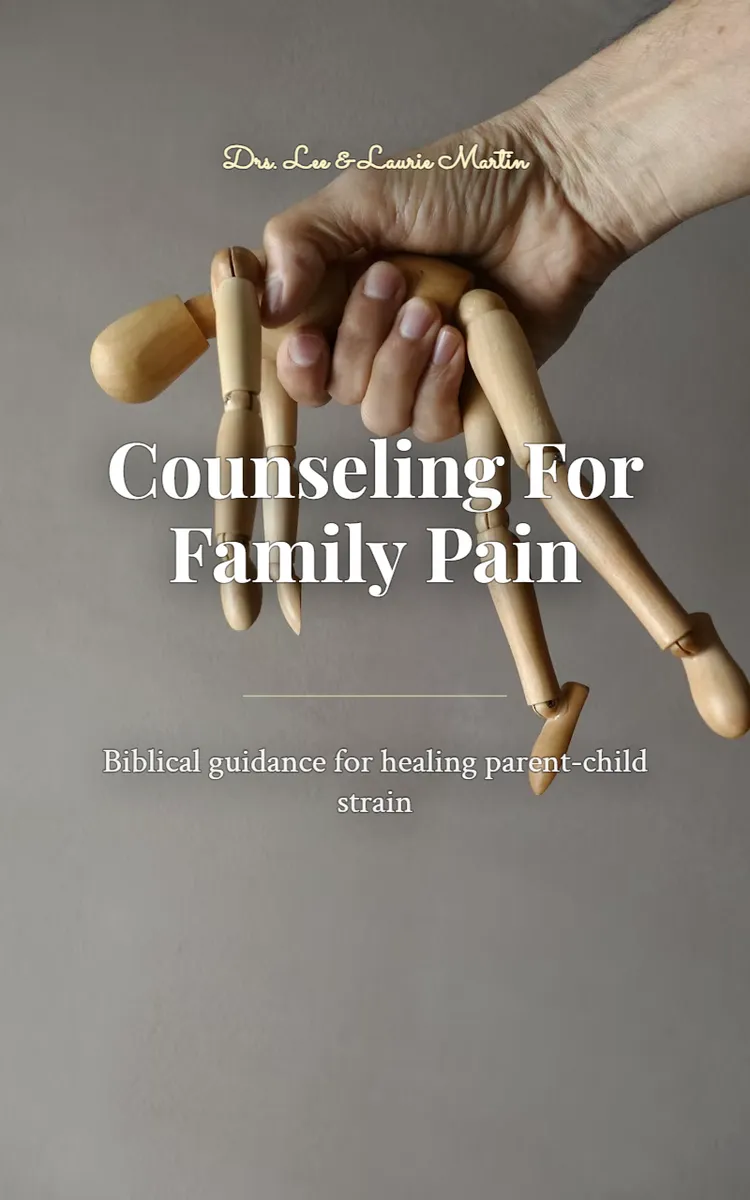
"Counseling For Family Pain" is a religious devotional book by Drs. Lee & Laurie Martin with 7 chapters and approximately 8,293 words. Biblical Christian counseling manual for family and emotional suffering.
This book was created using Inkfluence AI, an AI-powered book generation platform that helps authors write, design, and publish complete books.
Frequently Asked Questions
What is "Counseling For Family Pain" about?
Biblical Christian counseling manual for family and emotional suffering
How many chapters are in "Counseling For Family Pain"?
The book contains 7 chapters and approximately 8,293 words. Topics covered include Day 1: Naming the Family Pain (Assessment & Hope), Days 6-10: Hearing the Heart-Spiritual Roots of Parent-Child Strain, Days 11-15: Repentance That Restores-Forgiveness, Boundaries, and Repair, Days 16-20: Prayer and Surrender-Replacing Anxiety With God’s Peace, and more.
Who wrote "Counseling For Family Pain"?
This book was written by Drs. Lee & Laurie Martin and created using Inkfluence AI, an AI book generation platform that helps authors write, design, and publish books.
Write your own religious devotional book with AI
Describe your idea and Inkfluence writes the whole thing. Free to start.
Start writingCreated with Inkfluence AI


