

Read the first chapter
The whole of chapter one, free. About 7 min. Turn the pages with the arrows, your keyboard, or a swipe.
Chapter 1
When Everything Changes Overnight
A phone rings at 2:17 a.m. A doctor says, “The test results are back.” A message arrives with words you never expected to read. By breakfast, the future you planned may no longer fit the facts in front of you.
The Shunammite woman knew that kind of shock. Her story begins with blessing and promise, then turns sharply when “the boy… died” (2 Kings 4:20). Her pain didn’t prove that she lacked faith. It showed that faithful people can face devastating change. Abraham, Joseph, Moses, Job, Paul, and Jesus all suffered. Faith doesn’t create an invitation-only life.
When crisis hits, you need more than a slogan. You need a way to tell the truth about what happened without letting the loss define everything God has said. The Crisis-to-Calling Map gives you three clear movements: name the loss, name the promise, and move toward God. By the end, you’ll know how to identify your “dead boy” moment and take the next faithful step without pretending that the pain doesn’t hurt.
Find the Moment That Changed the Story
Your “dead boy” moment is the thing that seemed alive, meaningful, or promised but now appears gone. It might be a diagnosis that changes your plans, a relationship that ends, a calling that closes, or a dream that collapses after years of work. The phrase comes from the Shunammite woman’s experience, but the application reaches into ordinary life. Something you counted on can disappear between one day and the next.
Start by identifying the event itself. Don’t soften it with phrases such as “Things are difficult” if the truth is, “My marriage ended,” “The scan showed cancer,” “The job disappeared,” or “The ministry I built shut down.” Clear words don’t make the loss worse. They stop confusion from controlling the conversation.
Use the Crisis-to-Calling Map in this order:
• Name the loss. Write one sentence that states what changed, when it changed, and what it took from you. This gives your grief a specific shape instead of allowing it to spread into every thought.
• Name the promise. Record what you believed God had given, invited, or placed before you. A promise might involve a relationship, a purpose, a gift, a future hope, or God’s character. This step doesn’t guarantee a particular outcome. It separates what you trusted from what you lost.
• Move toward God. Choose one action that turns you toward prayer, Scripture, wise support, or honest worship. Movement matters because shock often pushes you toward isolation, frantic decisions, or numbness.
Suppose your small business closes after eight years. The loss includes income, routine, confidence, and perhaps a sense of purpose. You might name the promise as, “I believed my work could serve people and provide for my household.” Then moving toward God could mean praying honestly for ten minutes, calling a trusted pastor, and making a practical list of immediate needs. None of those actions denies the closure. They keep the closure from becoming your only definition.
The three questions underneath the map are blunt: Why now? Why me? Why this? You may not receive quick answers. The map doesn’t force an explanation before you act. It helps you carry the questions into God’s presence instead of treating unanswered questions as proof that God has left.
Use the Map Before You Make Big Decisions
When a crisis arrives, write before you react. Take a sheet of paper and divide it into three sections labeled Loss, Promise, and Toward God. Set a timer for fifteen minutes. The time limit keeps the exercise focused, especially when your thoughts keep circling.
Under Loss, list facts rather than predictions. “The doctor found a tumor” is a fact. “My life is over” is a prediction. “My partner ended the relationship” is a fact. “Nobody will ever love me” is a prediction. Facts deserve attention. Predictions need testing, patience, and wise counsel.
Under Promise, write what you can support from Scripture, your calling, or a clear commitment you made before the crisis. Avoid turning a wish into a promise. “God is with me” rests on God’s revealed character. “I will definitely receive this exact job by Friday” may simply reflect your preference. This distinction protects you from adding disappointment to grief.
Under Toward God, choose actions for the next twenty-four hours, not the next ten years. You might read Psalm 13 and speak your complaint plainly. You might ask someone to sit with you while you make a medical call. You might postpone a major financial decision until you sleep. You might attend church even if you can only sit quietly. Small steps work because shock reduces your ability to handle complicated plans.
A practical rule helps here: don’t make permanent decisions from temporary panic unless safety requires immediate action. If a diagnosis arrives, follow the medical team’s instructions and ask questions. If a relationship becomes unsafe, seek protection and professional help without delay. If a job ends, handle urgent bills first. Moving toward God includes responsible action; prayer never requires you to ignore danger or refuse competent help.
Apply the Crisis-to-Calling Map
Consider a diagnosis that arrives on a Thursday afternoon. The doctor confirms a serious illness and schedules more tests for Monday. You drive home with a folder in your lap, three unanswered questions, and a mind that keeps jumping ahead.
Use the map like this:
• Name the loss by Thursday evening. Write: “The diagnosis changed my sense of safety and interrupted the future I expected.” Add the date and the next medical appointment. Expected outcome: you can describe the crisis without exaggerating it or hiding it.
• Name the promise by Friday morning. Write: “God’s presence does not depend on my health, and my life still has value while I wait for answers.” Add one Scripture passage that helps you speak honestly, such as Psalm 13. Expected outcome: you hold onto a grounded promise rather than a guaranteed medical result.
• Move toward God by Friday afternoon. Call one trusted person and say, “I don’t need you to explain this. I need you to pray with me and help me write questions for Monday.” Expected outcome: you replace isolation with specific support.
• Prepare for the appointment by Sunday. Write five questions, including: “What do we know now?” “What remains uncertain?” “What happens next?” “What symptoms require urgent attention?” and “Who can answer questions after the appointment?” Expected outcome: you arrive ready to listen instead of relying on memory under stress.
• Review the map after Monday’s visit. Update the Loss section with new facts, keep the Promise section grounded, and choose the next Godward action. Expected outcome: you respond to the next piece of information rather than trying to solve your entire future at once.
The same process works with a lost calling. Name the actual door that closed. Name the values or gifts that still matter. Then move toward God by speaking with a wise leader, serving in a smaller way, or taking a planned pause. A closed role may change your assignment without erasing your capacity to love, serve, or obey.
Quick checklist
• Write the loss in one factual sentence.
• Separate facts from fearful predictions.
• Record one promise grounded in Scripture or God’s character.
• Choose one action for the next twenty-four hours.
• Contact one trustworthy person.
• Delay irreversible decisions when panic drives them.
• Seek medical, legal, financial, or safety help when the situation requires it.
• Review the map whenever new facts arrive.
The expected result isn’t instant peace. It’s a clearer response. You know what happened, what remains true, and what you’ll do next.
Avoid the Traps That Make Crisis Heavier
Calling denial “faith”
Some people say “All is well” to avoid saying what hurts. They refuse to name the diagnosis, insist that a broken relationship doesn’t matter, or silence anyone who asks a serious question. That approach doesn’t show strong faith. It hides the loss and prevents wise action.
Do this: Say, “This is painful, and God is still with me.” Tell the truth about the event, then bring that truth to God.
Not this: “Nothing happened, so I don’t need help.”
The Shunammite woman didn’t receive an easy life because she had faith. Her story begins with blessing and reaches a place of death. Honest faith can hold grief and trust in the same sentence.
Treating a preference as a promise
A desired outcome can feel spiritual simply because you prayed about it. You may believe a particular job, relationship, recovery, or opportunity must happen. When it doesn’t, you conclude that God failed or that you failed.
Do this: Write the exact promise you can defend. If you can’t support it, label it as a hope or preference. Keep praying, but leave room for God’s timing and direction.
Not this: “Because I wanted it deeply, God guaranteed this exact result.”
This distinction doesn’t shrink your hope. It keeps hope from becoming a contract God never made.
Moving toward God without taking practical steps
Prayer matters, but prayer doesn’t replace a medical appointment, a safety plan, a budget, or a difficult conversation. Some readers withdraw from ordinary responsibility because they think practical action shows doubt. Others rush into action and never stop to pray.
Do this: Pair one Godward action with one responsible action. Pray, then call the doctor. Read Scripture, then tell your lender what happened. Ask for help, then follow the safety plan.
Not this: Wait for complete certainty before doing anything, or make a major decision just to escape today’s discomfort.
A crisis may change the shape of your life overnight. It doesn’t require you to understand the whole road before taking the next step. Name what died. Name what remains true. Then turn toward God with both your grief and your practical next move.
End of chapter one. 6 more chapters in the full book.
Swipe or use the arrows to turn the page

From ADVERSITY TO OPPORTUNITY

Stars in the firmamment of God's purpose. 2

Seeing The Salvation Of The Lord
What's inside: 7 chapters
- 1. When Everything Changes Overnight
- 2. Say “It Is Well” Without Pretending
- 3. Return the Promise to God
- 4. Ride Past Distractions to God
- 5. Waiting That Strengthens, Not Breaks
- 6. Resurrection Begins Before You See
- 7. Worship First, Miracle Second
About this book
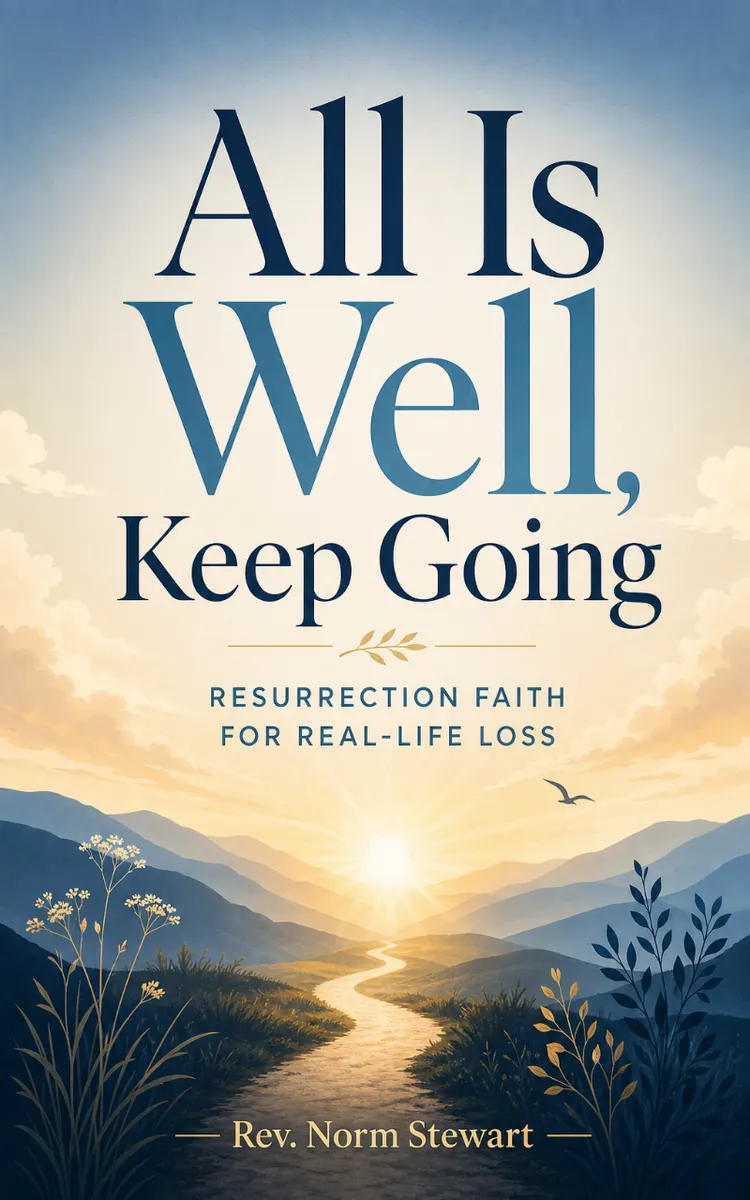
"All Is Well, Keep Going" is a how-to guide book by Rev. Norm Stewart with 7 chapters and approximately 10,899 words. Learn a practical, step-by-step way to respond to sudden tragedy and delayed answers with “All is well” faith—without denying pain..
This book was created using Inkfluence AI, an AI-powered book generation platform that helps authors write, design, and publish complete books. It was made with the AI Ebook Generator.
Frequently Asked Questions
What is "All Is Well, Keep Going" about?
Learn a practical, step-by-step way to respond to sudden tragedy and delayed answers with “All is well” faith—without denying pain.
How many chapters are in "All Is Well, Keep Going"?
The book contains 7 chapters and approximately 10,899 words. Topics covered include When Everything Changes Overnight, Say “It Is Well” Without Pretending, Return the Promise to God, Ride Past Distractions to God, and more.
Who wrote "All Is Well, Keep Going"?
This book was written by Rev. Norm Stewart and created using Inkfluence AI, an AI book generation platform that helps authors write, design, and publish books.
How can I create a similar how-to guide book?
You can create your own how-to guide book using Inkfluence AI. Describe your idea, choose your style, and the AI writes the full book for you. It's free to start.
Write your own how-to guide book with AI
Describe your idea and Inkfluence writes the whole thing. Free to start.
Start writingCreated with Inkfluence AI


