

Read the first chapter
The whole of chapter one, free. About 8 min. Turn the pages with the arrows, your keyboard, or a swipe.
Chapter 1
Grief vs. Bitterness Symptom Map
Seeing the Difference Between Grief and Bitterness
Are you helping someone who is still grieving, or someone whose pain has begun to harden into bitterness? The tears may look similar, and both people may speak about the same loss, betrayal, or injustice. Yet the direction of the heart can be different. Grief usually moves toward honest sorrow, remembrance, and gradual re-engagement with life. Bitterness tends to return again and again to accusation, revenge, suspicion, or a settled refusal to release the offender to God.
The Two-Track Symptom Map helps a faith-based counselor observe that direction without rushing to judgment. Track One follows grief processing: pain is acknowledged, relationships may remain possible, and the person can slowly receive comfort. Track Two follows bitterness entrenchment: the injury becomes the organizing center of thought, and anger begins to shape identity, relationships, and choices. These tracks are not medical diagnoses, and a person may move between them.
Who this is for: This guide is for seminary students, emerging Christian counselors, non-licensed faith-based helpers, church leaders, and clients who want a biblical way to name what is happening after loss or wrong. Its benefits are practical:
• clearer questions for listening and prayer; - a safer distinction between sorrow and resentment; - simple tools for tracking change over time; - boundaries that protect both the client and the counselor; - a biblical path that allows lament without approving revenge.
The expected outcome is not the removal of grief on a schedule. It is improved discernment: the counselor and client can identify whether pain is being honestly processed or repeatedly fed, then choose a faithful next step. Ask yourself, “Is this person becoming more truthful and open before God, or more controlled by the offense?” That question begins the map.
What Shapes the Two Tracks
Grief is a whole-person response to losing someone, something, or a hoped-for future. It may include sadness, anger, confusion, guilt, fatigue, changes in appetite or sleep, and difficulty concentrating. These responses do not automatically show spiritual failure. Scripture gives room for lament. David asks, “How long, Lord?” (Psalm 13:1), and Jesus weeps at Lazarus’s tomb (John 11:35). Biblical faith does not require a person to pretend that loss does not hurt.
Bitterness is more than feeling angry. It is a repeated pattern in which an injury is rehearsed, the offender is continually condemned, and the heart increasingly resists mercy, truth, or wise correction. Ephesians 4:31 names bitterness alongside wrath, anger, clamor, slander, and malice, then calls believers toward kindness and forgiveness. This does not mean declaring evil acceptable or removing proper boundaries. It means refusing to make vengeance the governing purpose of the heart.
Several influences can move a person toward either track:
1. The nature of the loss. Death, divorce, betrayal, abuse, job loss, and spiritual disappointment create different pressures. A betrayal may produce grief over both the relationship and the person’s former understanding of safety. 2. The meaning assigned to the event. “I am hurting” leaves room for care. “Everyone is dangerous, and I must punish them” can strengthen bitterness. 3. Repeated exposure. Continually rereading hostile messages, revisiting arguments, checking an offender’s social media, or retelling the injury without seeking wisdom may keep anger active. 4. Support and isolation. Safe Christian community can help a person lament honestly. Isolation may allow assumptions and accusations to grow unchecked. 5. Justice and safety concerns. A person may still need protection, legal guidance, or a firm boundary. Forgiveness is not the same as trust, reconciliation, or ending accountability. 6. Physical and emotional strain. Ongoing sleep disruption, poor nourishment, intense stress, and exhaustion can make emotional control more difficult. These concerns deserve appropriate professional attention rather than spiritual blame.
The Two-Track Symptom Map is best used as an observation tool, not a verdict. A grieving person may speak sharply one day and pray peacefully the next. A bitter person may also cry sincerely. Look for patterns across several conversations rather than labeling someone from one statement.
| Area to observe | Grief processing | Bitterness entrenchment | |---|---|---| | View of pain | Names sorrow, confusion, or loss | Uses the injury mainly to justify hostility | | View of the offender | Can describe wrong without constant dehumanizing | Repeatedly seeks condemnation or revenge | | Movement over time | Has uneven but possible moments of rest, gratitude, or connection | Becomes increasingly fixed, suspicious, or isolated | | Spiritual language | Brings lament to God | Uses God-language to bless retaliation or contempt | | Boundaries | Seeks wise protection and accountability | Uses “boundaries” mainly to punish or control | | Response to counsel | May resist because of pain but can consider help | Rejects every correction that challenges resentment |
Biblical discernment requires both truth and compassion. Nathan confronted David’s sin directly (2 Samuel 12), while Jesus treated wounded people with attention and dignity. Ask, “What is this response protecting, and what is it producing?” The answer may reveal whether sorrow is being carried toward God or converted into a permanent accusation.
Using the Two-Track Symptom Map Safely
Begin with a brief baseline during the first conversation. Ask the client to rate, from 0 to 10, the intensity of grief and the intensity of anger. These numbers do not diagnose anything; they simply make change easier to notice. Then ask three questions: “What do you miss?” “What wrong are you still carrying?” and “What do you hope will happen to the person who hurt you?” Record the answers in the client’s own words.
For the next fourteen days, invite the client to complete the Daily Two-Track Check once each evening. It should take five minutes:
• Name the strongest emotion. - Record the event or thought that stirred it. - Note whether the response moved toward honest lament or repeated condemnation. - Write one truthful prayer, such as Psalm 62:8: “Pour out your hearts to him, for God is our refuge.” - Record one wise action for the next day, such as contacting a safe supporter, resting, declining an argument, or seeking professional guidance.
During the first week, review the record once, preferably in a scheduled conversation of thirty to forty-five minutes. Look for repeated direction rather than a single difficult day. During the second week, compare the number of entries that include connection, prayer, honest naming, or constructive action with entries dominated by revenge fantasies, hostile rehearsal, or escalating conflict. Do not treat this as a scorecard for spiritual worth. It is a way to notice movement.
Progress may appear in small milestones. By the end of week one, the client may be able to name grief and anger separately. By the end of week two, the client may identify one trigger and choose a pause before responding. Over the following month, a reasonable faith-based goal is not “I never feel angry,” but “I can feel anger without allowing it to direct my speech or actions.” Review the map weekly for four weeks, then reduce the frequency when the pattern is stable.
The counselor should use a simple sequence. First, listen without interrupting. Second, reflect the emotion and the stated wrong: “You are grieving what was lost, and you also feel a strong desire for the other person to suffer.” Third, test the direction with Scripture. Romans 12:19 places vengeance in God’s hands, while Proverbs 15:1 commends a gentle answer. Fourth, identify a safe action. This may include a boundary, a support person, a pastoral conversation, or referral to a licensed mental-health professional.
Seek professional help promptly when the person reports thoughts of suicide, self-harm, harming another person, inability to care for basic needs, severe confusion, frightening experiences others do not share, or escalating threats. If immediate danger is present, contact local emergency services or a crisis resource and do not leave the person alone if doing so would increase danger. A non-licensed counselor must not attempt to manage these situations privately. Also encourage licensed care when grief or anger remains intense and disabling, sleep and eating problems persist, substance use increases, or the person cannot function in ordinary responsibilities. Faith-based counseling can continue alongside appropriate care with the client’s knowledge and consent.
Maintain ethical boundaries throughout. Explain your role, protect confidentiality within legal and safety limits, obtain permission before contacting family or church leaders, and never promise healing or forgiveness on a timetable. Do not counsel someone to return to an unsafe relationship merely to prove forgiveness. A boundary can be loving, truthful, and necessary.
The practical takeaway is simple: observe direction, not just intensity. Strong grief can still be moving toward God; quiet bitterness can still be moving away from mercy.
Common Errors in Reading the Symptoms
Treating every strong emotion as bitterness
Why it happens: Helpers may fear that anger, tears, or repeated questions show spiritual rebellion. This can silence biblical lament and make the client hide important information.
What to do instead: Ask what the emotion is doing. Is anger helping the person name injustice and seek protection, or is it feeding revenge and contempt? Use Psalm 13 and Psalm 73 to show that honest complaint can be brought before God. Correct sinful responses without condemning the existence of pain.
Demanding forgiveness before acknowledging the wrong
Why it happens: The counselor wants quick peace and may quote Ephesians 4:32 without first listening carefully. The client then hears forgiveness as approval of the offense or pressure to restore trust.
What to do instead: Name the wrong accurately, address safety, and distinguish forgiveness from reconciliation. Forgiveness releases personal vengeance to God; reconciliation requires repentance, wisdom, and restored trust over time. Use Romans 12:19 to establish God’s role as judge, while allowing the client to maintain appropriate boundaries.
Using the symptom map as a spiritual scorecard
Why it happens: Numbers and checklists feel orderly. A counselor may begin treating a higher anger rating as failure or a lower rating as proof that the problem is solved.
What to do instead: Use the map to guide conversation, not to assign spiritual grades. Review patterns weekly, ask what changed, and look for fruit such as truthful speech, self-control, wise boundaries, prayer, and willingness to receive help. If the client’s condition worsens or safety concerns appear, refer rather than intensify informal counseling.
The Two-Track Symptom Map keeps grief visible without giving bitterness permission to rule. It honors tears, confronts revenge, protects safety, and places final judgment in God’s hands. As counselors learn to distinguish these patterns, they become better able to offer both compassion for the wounded and truth for the heart that is beginning to harden.
End of chapter one. 9 more chapters in the full book.
Swipe or use the arrows to turn the page

Spirit-Led Whole-Person Renewal

ChurchBased Christian Biblical Counseling Ministry

Anxiety And Panic Counseling Desk Reference
What's inside: 10 chapters
- 1. Grief vs. Bitterness Symptom Map
- 2. Lament, Prayer, and Emotional Honesty
- 3. Unprocessed Anger and Boundary Repair
- 4. Forgiveness Without Enabling Harm
- 5. Cognitive Restructuring with Scripture Reframes
- 6. Rituals for Release: Prayer, Confession, and Psalms
- 7. Sleep Hygiene and Nervous System Stabilization
- 8. Community Grief Support and Healthy Church Involvement
- 9. Ethical Intake, Referral, and Risk Screening Protocols
- 10. Long-Term Hope: Meaning, Memorials, and Bitterness Prevention
About this book
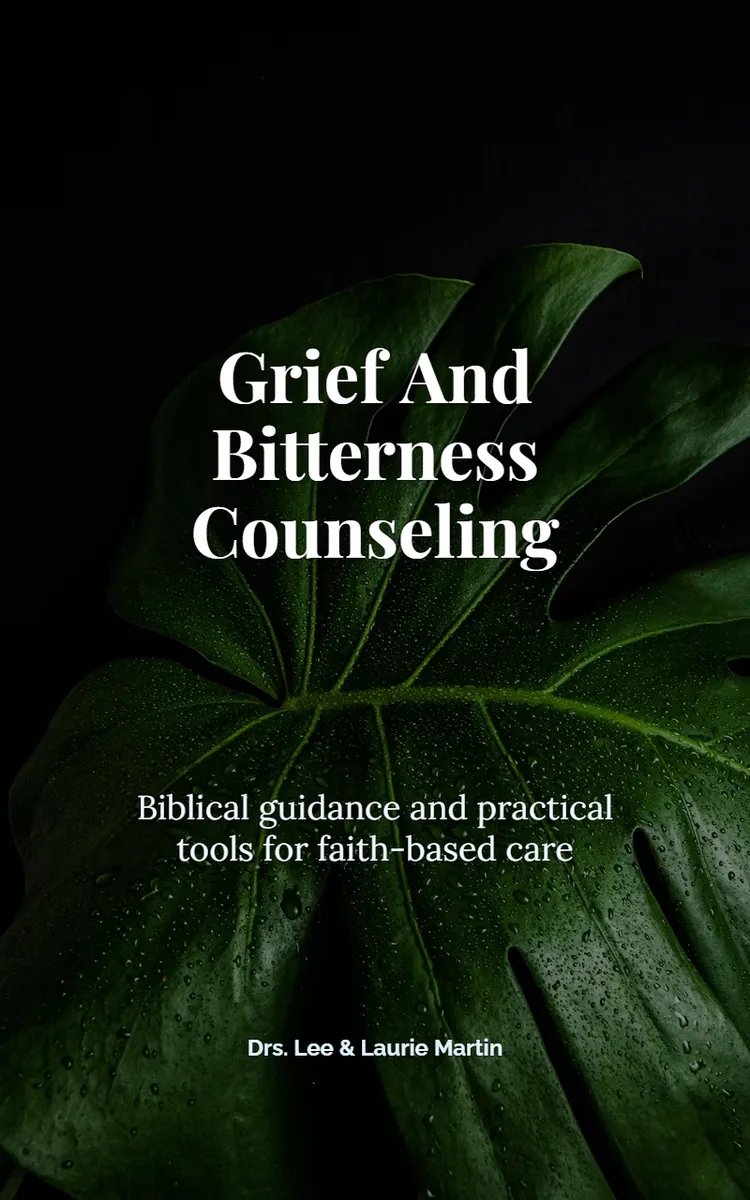
"Grief And Bitterness Counseling" is a health & wellness book by Drs. Lee & Laurie Martin with 10 chapters and approximately 18,287 words. Faith-based counseling for grief and bitterness using biblical doctrine.
This book was created using Inkfluence AI, an AI-powered book generation platform that helps authors write, design, and publish complete books. It was made with the AI Health Book Generator.
Frequently Asked Questions
What is "Grief And Bitterness Counseling" about?
Faith-based counseling for grief and bitterness using biblical doctrine
How many chapters are in "Grief And Bitterness Counseling"?
The book contains 10 chapters and approximately 18,287 words. Topics covered include Grief vs. Bitterness Symptom Map, Lament, Prayer, and Emotional Honesty, Unprocessed Anger and Boundary Repair, Forgiveness Without Enabling Harm, and more.
Who wrote "Grief And Bitterness Counseling"?
This book was written by Drs. Lee & Laurie Martin and created using Inkfluence AI, an AI book generation platform that helps authors write, design, and publish books.
How can I create a similar health & wellness book?
You can create your own health & wellness book using Inkfluence AI. Describe your idea, choose your style, and the AI writes the full book for you. It's free to start.
Write your own health & wellness book with AI
Describe your idea and Inkfluence writes the whole thing. Free to start.
Start writingCreated with Inkfluence AI


