

Read the first chapter
The whole of chapter one, free. About 4 min. Turn the pages with the arrows, your keyboard, or a swipe.
Chapter 1
Garlic Dill Pickle Brine Basics
At a Glance
Prep: 30 min | Cook: 15 min | Total: 45 min | Serves: 6 pint jars | Difficulty: Easy
Introduction
A safe garlic dill pickle begins with measured acidity, clean equipment, and a tested brine - not simply with vinegar poured over cucumbers. This small-batch recipe produces crisp, tangy refrigerator pickles with garlic, dill, and a brine strong enough to slow harmful microorganisms when handled correctly.
These are refrigerator pickles, not shelf-stable canned pickles. The finished jars must be refrigerated promptly and eaten within the recommended storage period. Acidity controls dangerous bacteria such as Clostridium botulinum, while sanitation limits contamination from hands, cutting boards, jars, and lids. The result should be bright and sour, with firm cucumbers and no cloudiness, bubbling, off-odor, or soft, slippery texture. The practical takeaway is simple: flavor comes from the seasonings, but safety comes from the acidity and handling.
Ingredients
• 2 pounds small pickling cucumbers, washed and trimmed - 2 cups distilled white vinegar, 5% acidity - 2 cups water - 2 tablespoons pickling salt or canning salt - 2 tablespoons granulated sugar - 6 garlic cloves, peeled and lightly crushed - 6 fresh dill sprigs - 2 teaspoons dill seed - 1 teaspoon black peppercorns - 1 teaspoon mustard seed - 1 small red chili, sliced, optional - 1 teaspoon calcium chloride pickle crisp, optional
Instructions
1. Wash the cucumbers under cool running water and scrub away visible soil. Trim a thin slice from the blossom end, which can contain enzymes that soften pickles. Leave the cucumbers whole if they are small; halve or quarter larger ones so every piece is fully covered by brine.
2. Wash six pint jars, lids, utensils, and the cutting board in hot, soapy water. Rinse well. Keep the jars hot in simmering water or a dishwasher’s heated cycle until filling. Clean hands and a clean work surface matter because vinegar does not instantly destroy every microorganism introduced after the brine is made.
3. Combine the vinegar, water, salt, and sugar in a stainless-steel saucepan. Use vinegar labeled “5% acidity”; do not substitute homemade vinegar, cleaning vinegar, wine vinegar, or a weaker product. Bring the mixture to a full simmer, about 180-200°F, stirring until the salt and sugar dissolve.
4. Place one garlic clove, one dill sprig, a pinch of dill seed, peppercorns, and mustard seed into each hot jar. Add chili if using. Pack the cucumbers firmly but without crushing them, leaving about ½ inch of space below the rim.
5. Pour the hot brine over the cucumbers, keeping them completely submerged. Slide a clean plastic bubble remover or chopstick around the inside edge of each jar to release trapped air. Wipe the rims with a clean, damp cloth, then apply the lids and screw bands until fingertip-tight.
Pro Tip: Do not increase the cucumber quantity without increasing the brine according to a tested formula. Extra vegetables can weaken the vinegar ratio, and a weak brine may not reach the acidity needed for safe pickling.
6. Let the sealed jars stand at room temperature for 30 minutes, then refrigerate them at 40°F or below. Do not leave them on the counter overnight. Refrigeration slows microbial growth, but it does not make an unsafe acid ratio safe.
7. Wait at least 24 hours before tasting; three to five days gives the garlic and dill more time to flavor the cucumbers. Check a jar before serving. The brine should smell clean and sharply acidic, and the cucumbers should remain submerged and reasonably firm.
8. Store the pickles in the refrigerator and use them within three weeks for best quality. Discard the entire jar if you see mold, active bubbling, a swollen lid, a foul or yeasty odor, unusual slime, or vegetables rising above the brine. Never taste questionable food to decide whether it is safe.
Chef Notes & Variations
Acidity is the safety barrier in this recipe. Vinegar at 5% acidity supplies a known amount of acid, while salt supports flavor and texture but should not be treated as the main protection against dangerous bacteria. Garlic and herbs add flavor and can introduce microorganisms, so they must be clean and fully covered. If you want shelf-stable pickles, use a current, tested canning recipe from the National Center for Home Food Preservation or your local extension service. Process the jars in a boiling-water canner for the time specified by that recipe and adjust for altitude; do not assume this refrigerator formula is safe for room-temperature storage.
Serve the pickles cold alongside sandwiches, grilled meat, beans, or a cheese plate. Calcium chloride helps maintain firmness, but it cannot correct poor sanitation, weak vinegar, or improper storage. For a less sharp pickle, do not dilute the vinegar further; instead, serve the finished pickles with a creamy dip or use them in a sandwich where their acidity balances rich foods.
Swap It: Replace the fresh dill with 2 teaspoons dried dill seed, but keep the vinegar, water, and salt measurements unchanged. Seasonings may vary; the acid ratio should not.
Quick Version
Pack clean cucumbers, garlic, dill, and spices into six hot pint jars. Simmer 5% vinegar, water, salt, and sugar; pour over the cucumbers, remove bubbles, seal, refrigerate within 30 minutes, and use within three weeks.
End of chapter one. 15 more chapters and about 17,817 words in the full book.
Swipe or use the arrows to turn the page


What's inside: 16 chapters
- 1. Garlic Dill Pickle Brine Basics
- 2. Pressure-Canned Beef Stew Jars
- 3. Water-Bath Strawberry Jam with Pectin
- 4. Freezer Lemon Herb Chicken Portions
- 5. Dehydrated Apple Rings with Cinnamon
- 6. Freeze-Dried Raspberry Crumble Topping
- 7. Classic Sauerkraut with Caraway
- 8. Quick Refrigerator Kimchi Jars
- 9. Water-Bath Peach Halves in Syrup
- 10. Pressure-Canned Chicken Stock for Soups
- 11. Vacuum-Sealed Smoked Salmon Slices
- 12. Root-Cellar Carrots with Sand Storage
- 13. Herb-Infused Oil for Safe Pantry Use
- 14. No-Cook Tomato Basil Soup Freezer Packs
- 15. Dehydrated Bean and Vegetable Soup Mix
- 16. One-Year Harvest-to-Storage Pantry Roast
About this book
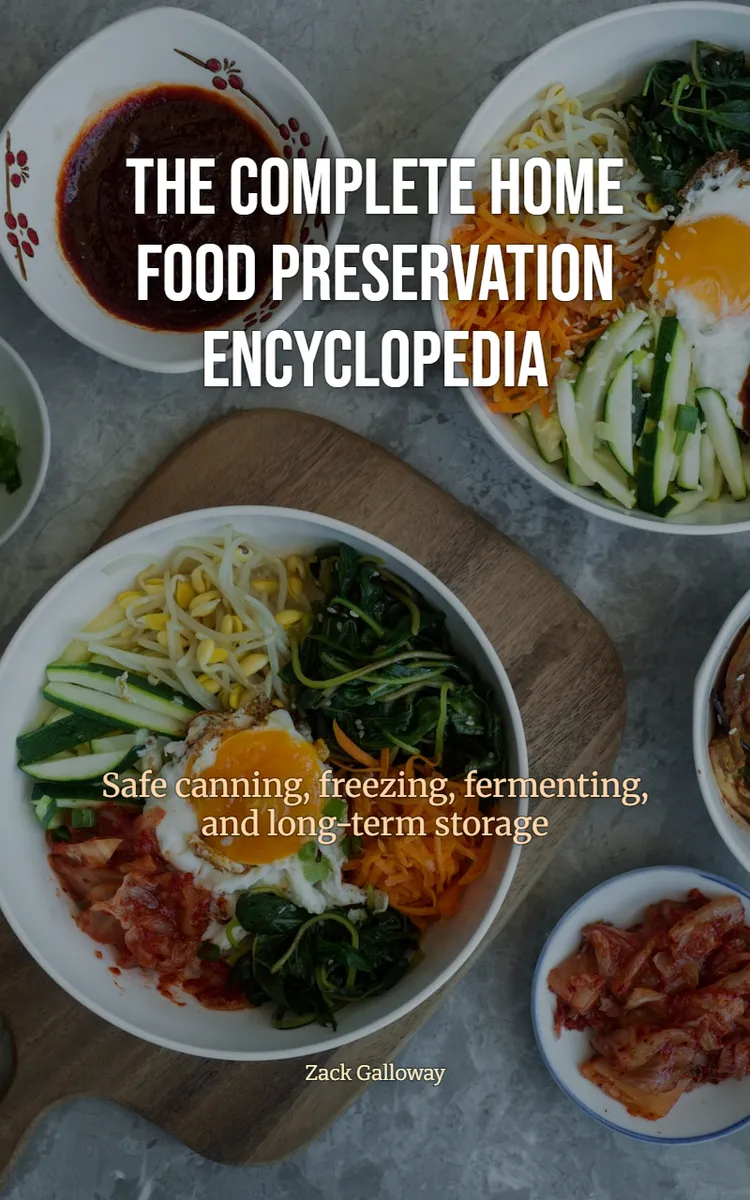
"The Complete Home Food Preservation Encyclopedia" is a cookbook by Zack Galloway with 16 chapters and approximately 17,817 words. Home food preservation methods and safety science.
This book was created using Inkfluence AI, an AI-powered book generation platform that helps authors write, design, and publish complete books. It was made with the AI Cookbook Generator.
Frequently Asked Questions
What is "The Complete Home Food Preservation Encyclopedia" about?
Home food preservation methods and safety science
How many chapters are in "The Complete Home Food Preservation Encyclopedia"?
The book contains 16 chapters and approximately 17,817 words. Topics covered include Garlic Dill Pickle Brine Basics, Pressure-Canned Beef Stew Jars, Water-Bath Strawberry Jam with Pectin, Freezer Lemon Herb Chicken Portions, and more.
Who wrote "The Complete Home Food Preservation Encyclopedia"?
This book was written by Zack Galloway and created using Inkfluence AI, an AI book generation platform that helps authors write, design, and publish books.
How can I create a similar cookbook?
You can create your own cookbook using Inkfluence AI. Describe your idea, choose your style, and the AI writes the full book for you. It's free to start.
Write your own cookbook with AI
Describe your idea and Inkfluence writes the whole thing. Free to start.
Start writingCreated with Inkfluence AI


