
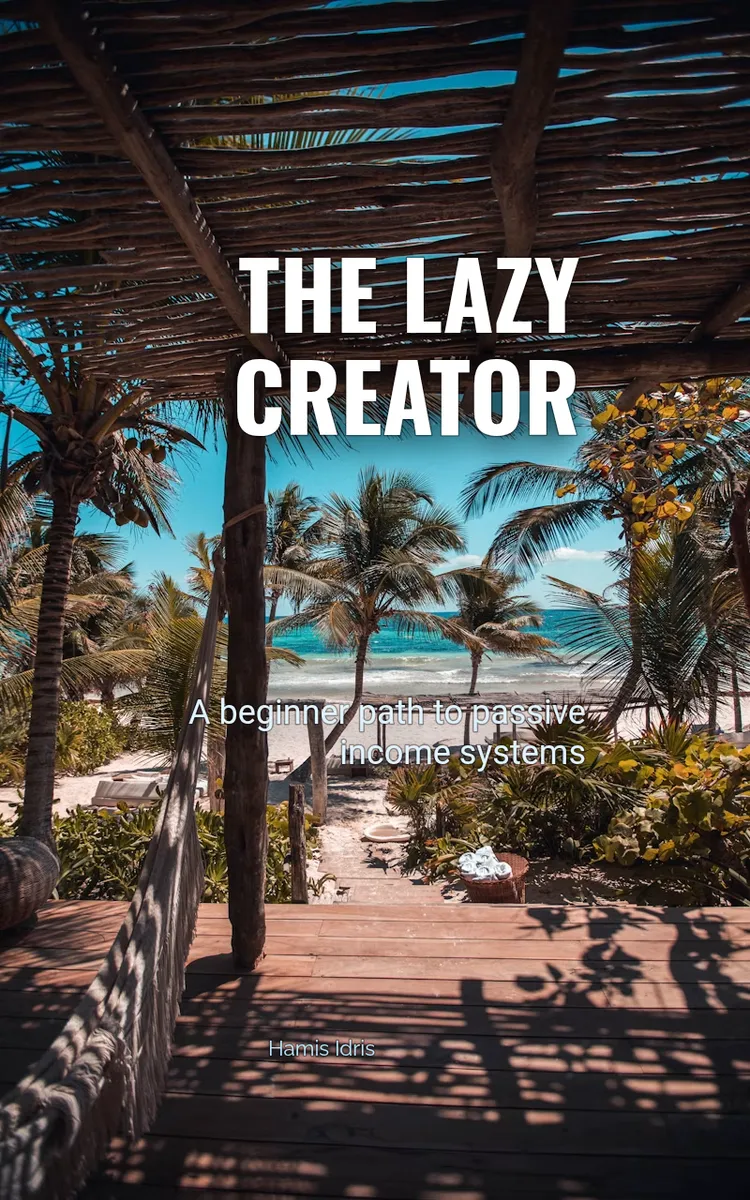

Read the first chapter
The whole of chapter one, free. About 9 min. Turn the pages with the arrows, your keyboard, or a swipe.
Chapter 1
Creator vs Employee Mindset
Creator vs Employee Mindset: How Digital Assets Let You Earn Repeatedly
What if you stopped trying to “sell harder” and started building something that sells for you? That shift sounds simple, but it changes how you think about time, money, and work. Most beginners get stuck in a loop: they do effort today, they hope for results today, and then they feel trapped because the work never ends.
This chapter fixes that problem by teaching you how digital assets work and why creators build value once to earn repeatedly over time. You will learn the difference between active income and passive income, what a “digital asset” actually means in plain English, and how to choose a simple creator path instead of an employee path. By the end, you will have a clear direction for what to build, how to build it without overcomplicating it, and how to start moving in the right direction this week.
Along the way, you will also see why “lazy” does not mean doing nothing. It means you stop trading every hour for every dollar, and you start creating an asset that can keep working after you log off. That is the whole idea behind THE LAZY CREATOR: A BEGINNER'S LEVEL TO PASSIVE INCOME Introduction: The Truth About Passive Income (3-4 Pages), and it is the mindset you need before you touch product ideas or platforms.
---
Learn How Digital Assets Work (and Why They Matter for Passive Income)
Passive income does not mean “no work ever.” It means your income comes from an asset that you create once and then keeps generating value over time. A digital asset can be something people download, use, or follow again and again - like a template, a checklist, a planner, a guide, or a simple e-book.
Think about the difference in how value gets created. When you work like an employee, you trade time for money. You earn because you show up and do the task. When you work like a creator, you trade effort for an asset. You put time in once to create something useful, and that asset can keep delivering value after the first sale.
Here is the key concept you will use throughout this book: creators focus on digital assets, not constant hustle. Digital assets let you build a foundation. Each time you create a new asset, you add another piece of that foundation that can generate income later.
You can see this in everyday examples that do not require big skills: - A weekly meal planner people can print and follow. - A budget spreadsheet someone fills in every month. - A student study template people reuse for each class. - A social media content calendar that helps someone post consistently. - A travel checklist that saves someone stress before a trip. - A daily journal or printable habit tracker they use again and again.
Notice what these have in common. They solve small, real problems. They do not require genius-level skills. They reward usefulness, not complexity. That matters because beginners often get stuck thinking they need to invent something completely new. You do not. You create something useful and clear, then you let the internet do what it does best: distribute and discover.
The Asset-First Mindset Shift: Creator vs Employee, in One Rule Use this rule every time you feel tempted to “work harder” instead of “build smarter”:
The Asset-First Mindset Shift means you start by creating value once (a digital asset), then you sell access to that value repeatedly, instead of selling your time every day.
That mindset shift also explains why creators can look “slow” on day one. You might spend eight hours creating something that does not sell immediately. But an employee usually starts from zero every day too - except the difference is the creator starts building an asset that can keep getting better and keep working after you stop.
---
The Asset-First Mindset Shift: How to Build Value Once and Earn Repeatedly
Let’s turn the idea into something you can actually do. When you understand how digital assets work, you stop guessing and you start building a simple income path that matches your energy and your skill level.
Use this framework to guide your choices and your daily actions: The Asset-First Mindset Shift.
How digital assets earn repeatedly (the “why” in plain terms) A digital product can earn repeatedly because the “make it once” part happens upfront. After that, each sale mostly covers delivery and customer access. Your job becomes clearer: create something useful, describe it so people understand it fast, and keep it available where buyers look.
You still do work, but the work changes. You spend less time repeating the same task and more time improving the asset, answering questions, and creating the next one.
The Asset-First Mindset Shift (3 steps that keep you moving) 1. Pick one small problem people already pay attention to. Choose something everyday people notice, like planning meals, tracking habits, budgeting, studying, or preparing for travel. You do not need a brand-new invention. You need a simple solution delivered clearly.
2. Create a simple digital asset that solves that problem. Build the thing people can use right away: a template, checklist, planner, worksheet, guide, or mini-resource. Keep it simple enough that you can finish it without burning out.
3. Make the asset available so buyers can find it and use it repeatedly. You set up a sales page and a way to deliver the download (or access). Then you focus on consistent creation, not constant reinvention.
These steps keep you from falling into the employee trap: doing random tasks to “maybe get sales.” Instead, you build a foundation asset-first.
---
Putting It Into Practice: Nina’s First Asset-First Week (Creator vs Employee)
Nina is 24 and works in retail. She knows what it feels like to clock in and clock out. She also knows the scary part: if she stops showing up at work, income stops. So when she starts thinking about passive income, her first reaction makes sense - she tries to get results fast by doing more daily effort.
The Asset-First Mindset Shift gives her a better plan.
Nina’s goal Nina wants to create one simple digital product that solves a small, real problem for people like her. She chooses something that does not require fancy design or advanced tech. She aims to finish one usable asset, then make it available for purchase.
Step-by-step scenario (with numbers so it feels real) 1. Nina picks a problem she understands from daily life. She chooses a weekly meal planning template because she hears people complain about deciding what to cook and wasting food. She writes down who it helps and what it fixes: “Plan meals for the week faster and shop without guessing.”
2. She creates the first version in one focused session. She sets a timer for 2 hours and builds a basic weekly meal planner: days of the week, space for meals, a grocery list section, and a notes box. She does not add extra features. She finishes a usable version.
Expected outcome: Nina ends the session with a complete draft people could use that week, not a perfect “someday” project.
3. She improves clarity, not complexity. Nina spends 30 minutes writing a simple product description: what it is, who it helps, and what someone can do after downloading it. She also checks formatting so the template looks clean on a phone and a computer.
Expected outcome: People can understand the value in under a minute.
4. She makes it available for purchase and delivery. Nina sets up a sales page with the product name, the benefits, and how it works. She also sets delivery so buyers get the download right away.
Expected outcome: Nina stops repeating herself. She answers fewer “how does this work?” questions because the page explains it clearly.
5. She creates again the next week instead of chasing shortcuts. She plans a second asset with the same problem theme but a different format, like a budget worksheet tied to groceries or a printable grocery checklist.
Expected outcome: Nina builds momentum and adds another foundation piece.
Quick checklist (Nina-style actions) - Choose one small, real problem people already deal with. - Create a simple template or guide that solves it fast. - Write a clear description that tells buyers exactly what they get. - Set up delivery so customers receive the asset right away. - Create again next week to build your foundation.
The reason this works is simple: Nina stops acting like an employee. She stops trying to earn every dollar through daily effort and instead builds value once that can earn repeatedly over time.
---
What Can Go Wrong (and How to Fix It) When You Use the Asset-First Mindset Shift
Even if you understand the idea, you can still slip. Here are the most common edge cases beginners hit when they switch from employee thinking to creator thinking.
Overbuilding before you sell Beginners often start with a “perfect” version. You add features, redesign fonts, and keep improving the product because you want it to look impressive. Then you delay the finish line.
Do this: Build a first version people can use today. Then improve it after real feedback or after you see what buyers respond to. Not this: Keep working on “version 3” while the sales page stays empty.
Confusing “digital asset” with “random content” Some beginners create blog posts, videos, or social captions and call it a product. Those things can help, but they do not work like an asset that delivers value repeatedly by itself.
Do this: Create something customers can download, save, print, or follow again and again. Not this: Treat every piece of content like the product and expect the income to show up the same way.
Switching paths when sales feel slow When the first asset does not sell fast, beginners panic and jump to the next idea. That breaks momentum because you never build a foundation.
Do this: Stay with the Asset-First Mindset Shift long enough to create at least a small set of assets. Keep one focus and make your next one. Not this: Change everything after a slow week and restart from scratch.
---
Your Chapter Roadmap: What You’ll Learn and How to Use It Next
Here is the roadmap for your mindset and your actions as you move through the book. This chapter gave you the foundation: creator vs employee mindset and how to think in digital assets, not hours. You now know what passive income really means, how active income differs from passive income, and why “lazy” means you stop trading time for money and start building value once.
In the next chapter, you will take this mindset and apply it to a specific model: digital downloads. You will learn what they are and how simple products like templates, checklists, planners, journals, worksheets, guides, and mini-resources can create long-term earnings. You will also see how to find profitable ideas by solving everyday problems instead of chasing complexity.
For now, lock in one practical action: pick one everyday problem you understand and outline a single simple digital asset you could finish this week. Then take one short step toward making it real. When you build the first asset, you stop debating passive income and start creating it - one useful file at a time.
End of chapter one. 4 more chapters in the full book.
Swipe or use the arrows to turn the page
What's inside: 5 chapters
- 1. Creator vs Employee Mindset
- 2. Digital Downloads That Sell
- 3. Print-on-Demand Niche Designs
- 4. AI-Assisted Content for Income
- 5. Your Passive Income System
About this book
"The Lazy Creator" is a business book by Hamis Idris with 5 chapters and approximately 10,009 words. Beginner guide to creating digital assets for passive income.
This book was created using Inkfluence AI, an AI-powered book generation platform that helps authors write, design, and publish complete books. It was made with the AI Business Book Writer.
Frequently Asked Questions
What is "The Lazy Creator" about?
Beginner guide to creating digital assets for passive income
How many chapters are in "The Lazy Creator"?
The book contains 5 chapters and approximately 10,009 words. Topics covered include Creator vs Employee Mindset, Digital Downloads That Sell, Print-on-Demand Niche Designs, AI-Assisted Content for Income, and more.
Who wrote "The Lazy Creator"?
This book was written by Hamis Idris and created using Inkfluence AI, an AI book generation platform that helps authors write, design, and publish books.
How can I create a similar business book?
You can create your own business book using Inkfluence AI. Describe your idea, choose your style, and the AI writes the full book for you. It's free to start.
Write your own business book with AI
Describe your idea and Inkfluence writes the whole thing. Free to start.
Start writingCreated with Inkfluence AI


