
Read the first chapter
The whole of chapter one, free. About 7 min. Turn the pages with the arrows, your keyboard, or a swipe.
Chapter 1
When the Calls Add Up
Ray had spent nineteen years on the job, yet one detail finally stopped him: he couldn’t remember the last time he’d laughed. Nothing dramatic had happened that morning. There was no single call he could point to and say, “That’s when everything changed.” The change had arrived quietly - in shorter sleep, a tighter jaw, less patience at home, and a feeling of being switched on even during ordinary moments.
That pattern is the heart of cumulative load. Repeated exposure can shape your mood, sleep, relationships, and physical health without one event explaining all of it. The goal isn’t to label yourself or assume the worst. It’s to notice the pattern early, understand what may be happening, and choose practical support before the weight becomes harder to carry.
Who this is for: This is for responders, dispatchers, supervisors, and the people who live with them - especially anyone who feels “keyed up, or numb, or both at once.” Using the Accumulation Lens, you’ll learn to look at repeated exposures, changes in your body, and changes in everyday life together. You’ll gain a simple way to track shifts, make small recovery efforts more consistent, and recognize when professional help would be a wise next step.
Seeing the Pattern Beneath the Calls
A single difficult call can leave a clear mark. Cumulative load is often less obvious. It develops through repetition: another call, another disrupted night, another conversation held back because you’re too tired to explain. Eventually, ordinary life may begin to feel different even though no one moment seems responsible.
Your body has an emergency response that helps you act quickly when danger appears. Heart rate can rise, muscles can brace, attention can narrow, and digestion can slow while the body focuses on immediate demands. After danger passes, that response is meant to settle. But when calls keep coming, sleep is interrupted, or your mind continues reviewing what happened, the body may remain partly switched on between emergencies.
That can show up as hyperarousal, a state of being unusually alert or tense. You might startle easily, scan rooms without meaning to, or feel unable to relax on a day off. At other times, the opposite may happen: emotional numbness, low motivation, or a flatness that makes good moments difficult to reach. These reactions can alternate, and they can exist together. Feeling keyed up and numb isn’t a character flaw; it may be a sign that your system hasn’t had enough time or safety to settle.
The effects can spread across several areas:
1. Mood: Irritability, sadness, emotional distance, or losing interest in things that once brought pleasure may develop gradually. Ray’s inability to remember the last time he laughed is a powerful example of a small absence becoming a meaningful signal. 2. Sleep: You may fall asleep but wake often, sleep lightly, or remain tired after enough hours in bed. A late call can affect the next night, and several disrupted nights can make the body more reactive. 3. Relationships: At home, you may have less patience, fewer words, or little energy for connection. Loved ones may notice the change before you do, which can create misunderstandings. 4. Physical health: Repeated strain may accompany rising blood pressure, unreliable digestion, headaches, braced muscles, or a persistent sense of tension. These symptoms have many possible causes, so they deserve attention rather than assumptions.
The Accumulation Lens keeps you from searching for one perfect explanation. Instead, you ask three grounded questions: What have I been exposed to repeatedly? What has changed in my body? What has changed in everyday life? You’re not trying to prove a diagnosis. You’re gathering useful information, and that’s a strong place to begin.
A Practical Way to Notice and Respond
Start with a seven-day check-in. Once each evening, take three minutes to record a number from 0 to 10 for sleep quality, body tension, mood, and connection with others. Add one short note about the day’s exposure: a difficult call, repeated interruptions, conflict, or a relatively quiet shift. Keep the notes factual. “Woke three times; jaw tight; snapped at home” is more useful than “bad day.”
At the end of the week, look for direction rather than perfection. Are sleep and tension changing together? Do symptoms rise after certain kinds of calls or several shifts in a row? Does your mood improve after a protected day off, or does it stay low? A pattern lasting two or more weeks is worth sharing with a licensed health professional, even if each individual symptom seems manageable.
Recovery works best when it’s regular and modest. After a shift, give yourself a 10-minute transition before stepping fully into home life when possible. Sit in a quiet place, take slower breaths, change clothes, drink water, or walk gently. This won’t erase the call, but it can mark the shift from work mode to home mode. If you’re driving, keep your attention on the road and wait until you’re safely parked for any exercise or calming practice.
For sleep, protect a consistent wind-down period of 20 to 30 minutes on most nights. Lower bright light, put work messages aside when your role allows, and use the same quiet sequence - shower, light reading, breathing, or calm music. If sleep problems continue for two weeks, worsen, or interfere with safe driving and work, consider contacting a licensed clinician. Avoid changing prescribed medicines or using alcohol or other substances as a sleep strategy without speaking with a qualified professional.
For body tension, try five minutes of gentle movement once during a shift and again after work, if your setting permits. Shoulder rolls, an easy walk, and slow stretching can help you notice where you’re bracing. Keep the effort comfortable; pain, dizziness, or worsening symptoms are reasons to stop and seek advice. If you’ve noticed rising blood pressure, repeated digestive problems, chest discomfort, fainting, severe headaches, or other concerning physical changes, arrange a medical evaluation rather than assuming stress is the only cause.
Connection also needs a place in the plan. Once or twice a week, tell one trusted person a simple truth: “I’ve been more tense and less present lately.” You don’t have to describe every call. Naming the change can prevent loved ones from filling the silence with their own explanations. A peer-support contact, employee assistance program, counselor, or licensed mental health professional may offer a setting where you don’t have to protect everyone else from what you’re carrying.
Seek prompt professional help if you’re having thoughts of harming yourself or someone else, feel unable to stay safe, are using substances in ways that concern you, or can’t function at work or home. In an immediate crisis, contact local emergency services or a crisis line in your area. Asking for help is a safety step, not a failure.
Here’s a simple way to judge your next move:
| What you notice | A useful next step | |---|---| | A few rough days that ease with rest | Continue the seven-day check-in and protect recovery time | | Sleep, mood, tension, or relationships changing for two weeks | Schedule a conversation with a licensed health professional | | Symptoms interfere with driving, work, parenting, or basic routines | Seek professional support soon and tell someone you trust | | Immediate safety concerns or thoughts of harm | Contact emergency or crisis support now |
Small actions count because cumulative load is built over time. A three-minute check-in, a 10-minute transition, and a weekly honest conversation can make changes easier to see. You’ve got this - and you don’t have to wait until everything feels unbearable to begin.
Common Ways the Pattern Gets Missed
Waiting for one call to explain everything
Why it happens: A single event feels easier to identify than months of smaller exposures. If no call stands out, you may decide nothing important has changed.
What to do instead: Use the Accumulation Lens for seven days. Track repeated exposure, body changes, and everyday-life changes together. The pattern may be clearer than any one memory.
Treating sleep and physical symptoms as unrelated inconveniences
Why it happens: Thin sleep, braced muscles, unreliable digestion, or rising blood pressure can seem like separate problems. You may keep pushing because each one feels manageable on its own.
What to do instead: Note when symptoms occur and how long they last. Share the record with a licensed health professional, especially if changes continue for two weeks or affect safety and daily functioning. Stress may be part of the picture, but it shouldn’t be assumed to be the whole picture.
Waiting until relationships are in crisis to speak
Why it happens: Responders often protect others by staying quiet. At home, tiredness can look like anger or indifference, and explaining the difference may feel like one more task.
What to do instead: Use one honest sentence once or twice a week: “I’m more on edge than usual, and I’m working on noticing it.” Then choose a small connection - a 10-minute walk, a shared meal, or a quiet check-in. You don’t need a perfect explanation to begin repairing distance.
The calls may be separate, but the strain can accumulate. When you start noticing the whole pattern - what you’ve faced, what your body is doing, and how daily life has shifted - you gain more than an explanation. You gain a next step, and a way to carry less of the weight alone.
End of chapter one. 6 more chapters and about 11,413 words in the full book.
Swipe or use the arrows to turn the page
What's inside: 7 chapters
- 1. When the Calls Add Up
- 2. When the Past Feels Present
- 3. Grief, Guilt, and What Was Possible
- 4. Restore the Body’s Off Switch
- 5. Make the Return Home Gentler
- 6. Ask for Help Before Crisis
- 7. Build a Life Beyond the Shift
About this book
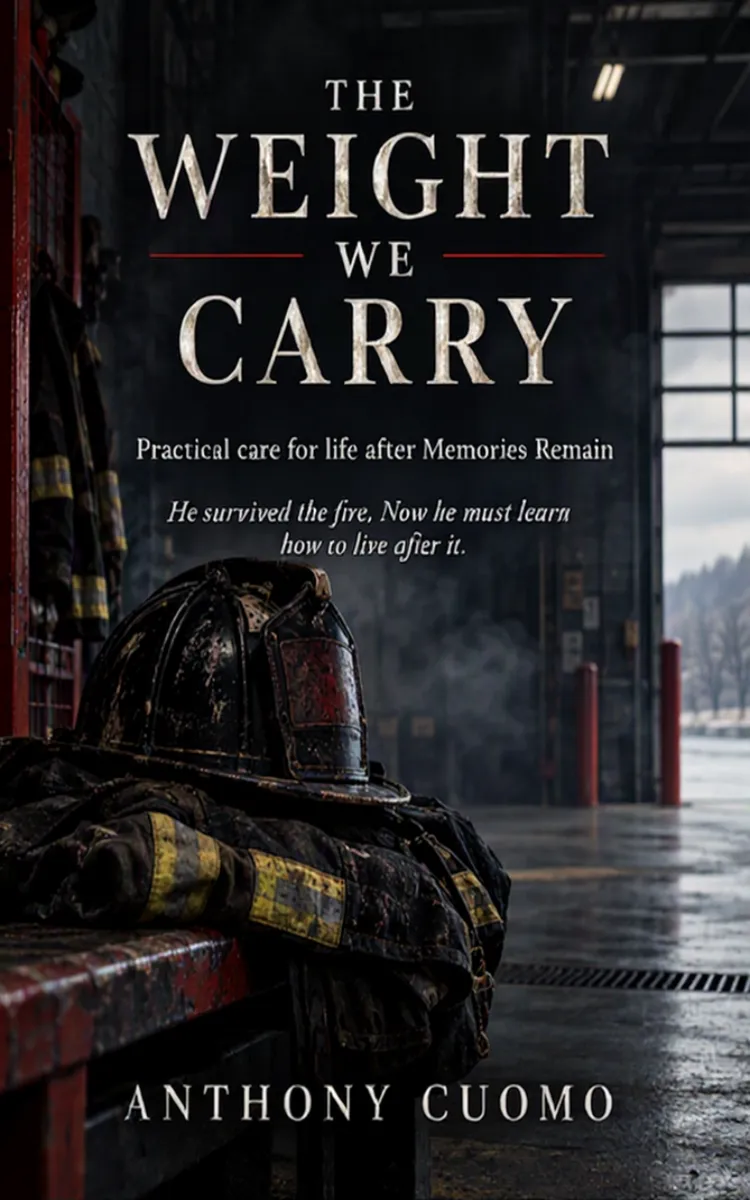
"The Weight We Carry" is a health & wellness book by Anonymous with 7 chapters and approximately 11,413 words. A compassionate guide to understanding cumulative stress, supporting recovery, and caring for responders and the people who love them..
This book was created using Inkfluence AI, an AI-powered book generation platform that helps authors write, design, and publish complete books. It was made with the AI Health Book Generator.
Frequently Asked Questions
What is "The Weight We Carry" about?
A compassionate guide to understanding cumulative stress, supporting recovery, and caring for responders and the people who love them.
How many chapters are in "The Weight We Carry"?
The book contains 7 chapters and approximately 11,413 words. Topics covered include When the Calls Add Up, When the Past Feels Present, Grief, Guilt, and What Was Possible, Restore the Body’s Off Switch, and more.
Who wrote "The Weight We Carry"?
This book was written by Anonymous and created using Inkfluence AI, an AI book generation platform that helps authors write, design, and publish books.
How can I create a similar health & wellness book?
You can create your own health & wellness book using Inkfluence AI. Describe your idea, choose your style, and the AI writes the full book for you. It's free to start.
Write your own health & wellness book with AI
Describe your idea and Inkfluence writes the whole thing. Free to start.
Start writingCreated with Inkfluence AI


