
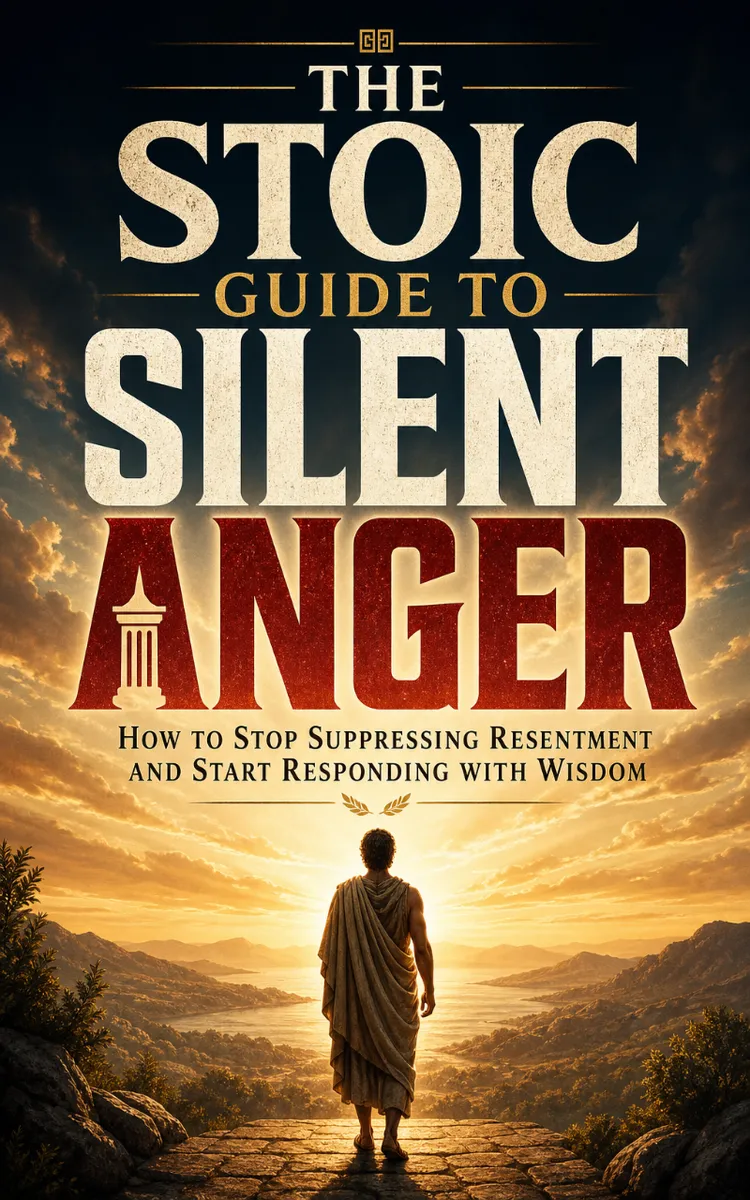
The Stoic Guide To Silent Anger
Created with Inkfluence AI
Stoic strategies for managing suppressed anger and resentment
Table of Contents
- 1. Recognizing the Pattern
- 2. The Mindset Behind the Struggle
- 3. Rewriting Your Inner Narrative
- 4. Building Daily Practices
- 5. Navigating Setbacks and Resistance
- 6. Strengthening Your Support System
- 7. Sustaining Long-Term Growth
- 8. Your Next Chapter
- 9. Recognizing the Pattern (Phase 2)
- 10. The Mindset Behind the Struggle (Phase 2)
- 11. Rewriting Your Inner Narrative (Phase 2)
- 12. Building Daily Practices (Phase 2)
- 13. Navigating Setbacks and Resistance (Phase 2)
- 14. Strengthening Your Support System (Phase 2)
- 15. Sustaining Long-Term Growth (Phase 2)
- 16. Your Next Chapter (Phase 2)
- 17. Recognizing the Pattern (Phase 3)
- 18. The Mindset Behind the Struggle (Phase 3)
- 19. Rewriting Your Inner Narrative (Phase 3)
- 20. Building Daily Practices (Phase 3)
Preview: Recognizing the Pattern
A short excerpt from “Recognizing the Pattern”. The full book contains 20 chapters and 28,454 words.
Picture This
You’re halfway through your day and your body is already mad. Not the loud, honest kind of anger. The quiet kind that shows up as tight shoulders, a clipped tone, and a “nothing to see here” smile. Maybe it starts with a customer who didn’t listen, a partner who forgot, or a coworker who took credit again. Nothing explodes. You just… tighten. You hold it in.
Later, when you finally get a moment alone, you replay it like a highlight reel. You don’t just remember what happened-you remember what they should have done. And the more you keep it to yourself, the more the anger feels “reasonable.” That’s the trap. Silent anger doesn’t stay silent. It turns into resentment, and resentment always looks for a place to live-usually in your relationships, your work, and your sleep.
What if the thing you call “being calm” is actually the first step of the pattern that keeps your resentment fed?
The Mindset Shift
Old Belief: If I swallow my anger, I’ll stay peaceful.
New Reality: If I swallow my anger, I don’t remove it-I train it to come back louder through resentment.
Here’s the practical truth: suppressing anger doesn’t delete the message your mind is sending. Anger is your “something’s not right” signal. When you refuse to acknowledge it, you don’t make the signal go away-you force it to reroute. Instead of showing up as a clean, clear response (“That wasn’t fair. I need to address it.”), it shows up as pressure in your chest, sarcasm you didn’t mean, or that slow burn of “I can’t believe they keep getting away with this.”
Let’s make it concrete. Say your gym member consistently shows up late and expects you to reorganize your schedule without saying sorry. If you swallow your irritation, you might become overly accommodating. You keep it polite. You even laugh it off in the moment. But later, you’re annoyed at everything-their next message, their questions, even the sound of their shoes. That’s resentment taking the wheel. You didn’t become a calmer person. You became a person whose emotions are now running in the background.
The Stoic move isn’t to “let it all out.” The move is to stop confusing silence with control. Control is choosing your response with a clear mind, not stuffing your feelings until they leak out sideways.
Going Deeper
Stoics didn’t treat anger like a villain you must crush. They treated it like a judgment your mind makes-often fast, often automatic, and sometimes wrong. When you suppress anger, you’re not removing the judgment. You’re refusing to look at it closely. You keep the story running: They did this. They meant it. I’m not safe. I’m not respected. I’ll handle it later. Later never fully arrives, so the judgment keeps looping.
This is how silent anger becomes a pattern. It starts with a trigger. Then your mind interprets the trigger as insult, disrespect, or unfairness. Then you choose suppression to protect your image, your job, your relationship, or your peace. Finally, the energy that could have informed a wise action gets stuck. That stuck energy turns into resentment because resentment doesn’t need action-it only needs repetition.
Here are signs this pattern is running your life:
1. You feel “fine” in the moment, but worse afterward. The anger doesn’t disappear. It lands later as dread, irritability, or obsessive replay.
2. Your patience shrinks in unrelated areas. One small disrespect at work makes you snappy at home, or one late customer makes you resent the next five.
3. You catch yourself bargaining with reality. “If they just knew what I go through…” or “They won’t change, so I have to endure.” That’s resentment hardening into a worldview.
4. You avoid direct conversations while still building a case in your head. You can explain their fault clearly, but you can’t calmly ask for what you need.
En résumé: Suppressing anger doesn’t silence the problem-it trains your mind to turn it into resentment.
Recognizing the pattern is the first step because it gives you leverage. Once you can name what’s happening, you stop treating every flare-up like a one-time event. You start seeing it like a system. And systems can be interrupted.
Reflection & Self-Assessment
Use these questions like a flashlight. Don’t rush. If an answer makes you feel defensive, that’s usually not a reason to stop-it’s a reason to look closer.
1. What was the last moment I swallowed anger instead of addressing it?
Look for a real example from the past week. If you can’t name one, that might mean you’re suppressing so consistently you’ve stopped noticing.
2. What story did my mind tell about what it “meant”?
For example: “They don’t respect me,” “I’m being taken for granted,” or “I always have to do the work.” Honest answers often sound a little harsh-good. That’s where the judgment lives.
3....
About this book
"The Stoic Guide To Silent Anger" is a self-help book by Socratic Mastery with 20 chapters and approximately 28,454 words. Stoic strategies for managing suppressed anger and resentment.
This book was created using Inkfluence AI, an AI-powered book generation platform that helps authors write, design, and publish complete books. It was made with the AI Self-Help Book Writer.
Frequently Asked Questions
What is "The Stoic Guide To Silent Anger" about?
Stoic strategies for managing suppressed anger and resentment
How many chapters are in "The Stoic Guide To Silent Anger"?
The book contains 20 chapters and approximately 28,454 words. Topics covered include Recognizing the Pattern, The Mindset Behind the Struggle, Rewriting Your Inner Narrative, Building Daily Practices, and more.
Who wrote "The Stoic Guide To Silent Anger"?
This book was written by Socratic Mastery and created using Inkfluence AI, an AI book generation platform that helps authors write, design, and publish books.
How can I create a similar self-help book?
You can create your own self-help book using Inkfluence AI. Describe your idea, choose your style, and the AI writes the full book for you. It's free to start.
Write your own self-help book with AI
Describe your idea and Inkfluence writes the whole thing. Free to start.
Start writingCreated with Inkfluence AI


