
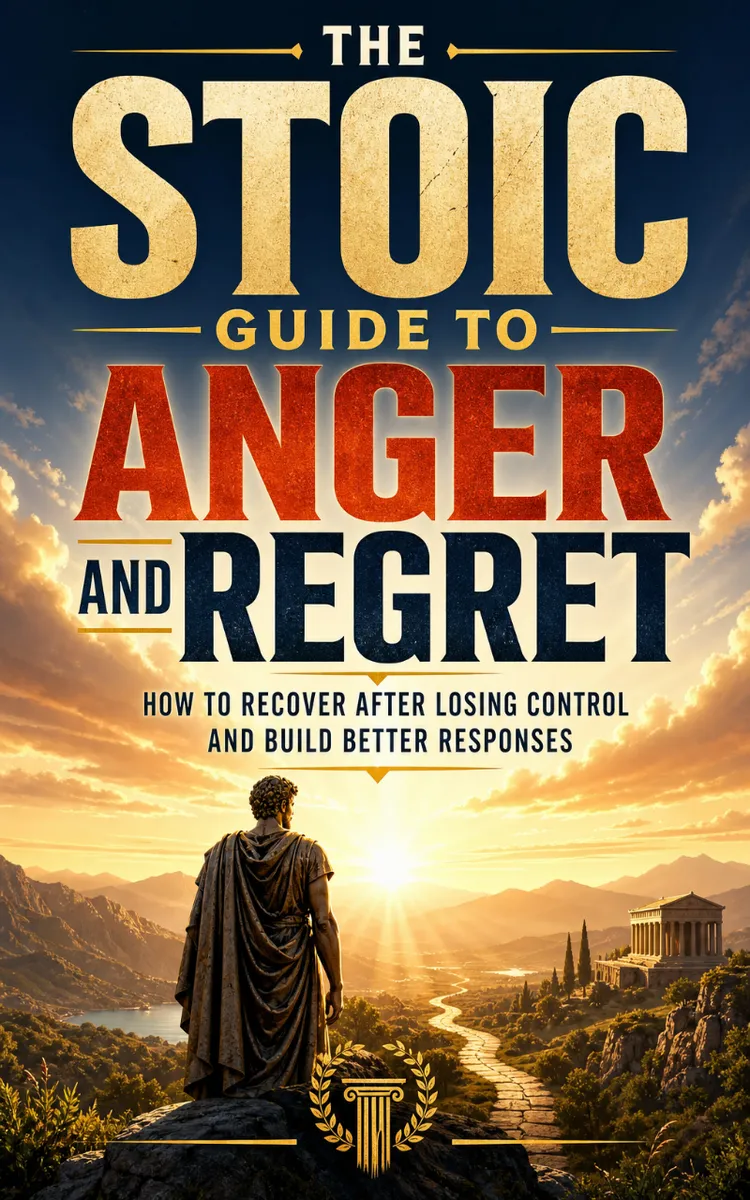
The Stoic Guide to Anger and Regret
Created with Inkfluence AI
Stoic strategies to manage anger and regret
Table of Contents
- 1. Separating Anger From Your Identity
- 2. The Stoic Judgment Switch
- 3. Choosing Virtue Over Winning
- 4. Reality Checks for Irritating Triggers
- 5. The Control Map for Calm Recovery
- 6. Regret Without Self-Punishment
- 7. The Pause That Prevents Explosions
- 8. Breathing as a Stoic Reset
- 9. Reframing Insults Into Information
- 10. Boundary Words Without Harshness
- 11. The Repair Conversation Playbook
- 12. Apology With Accountability, Not Shame
- 13. Turning Triggers Into Training
- 14. The Precommitment for High-Risk Moments
- 15. Managing Rumination With Mental Replays
- 16. Cultivating Compassion for Your Future Self
- 17. Using Journaling for Stoic Clarity
- 18. Strengthening Relationships After Outbursts
- 19. Integrating Anger Management Into Daily Life
- 20. Living With Regret as a Teacher
Preview: Separating Anger From Your Identity
A short excerpt from “Separating Anger From Your Identity”. The full book contains 20 chapters and 29,232 words.
Picture This
“Anger isn’t who I am,” you tell yourself-right after you slam the door, snap at someone, and feel your stomach drop when you realize what you just did. The worst part isn’t even the moment. It’s the replay afterward: the exact words, the tone, the look on their face. You feel hot shame mix with cold guilt, and suddenly anger feels less like a feeling and more like a verdict on your character.
Marcus, 34, runs logistics for a mid-size operation. He’s the kind of guy who can keep twenty moving parts from colliding-routes, schedules, deliveries, people-most days without breaking a sweat. Then a driver shows up late again, and it hits a nerve. Marcus snaps. Not cruel, not “evil”-just sharp. He hangs up too fast. He uses the kind of language that gets results in the short term and costs trust in the long term. Afterward, he sits in his truck and thinks, So I’m that person now?
If anger keeps showing up, how do you stop treating it like your identity instead of one emotion that passes through you?
The Mindset Shift
Old Belief: “If I get angry, that means I am an angry person.”
New Reality: “Anger is an emotion in me, not a label on me.”
That small shift changes everything about what guilt tries to do. When you believe anger equals identity, guilt turns into self-condemnation: I was angry, so I’m bad. But when you separate the emotion from the identity, guilt becomes information, not a sentence. It can point to what mattered, what got triggered, and what you want to do differently next time-without forcing you to hate yourself in the process.
Here’s the concrete version Marcus needed. After his outburst, he used to do a full identity sweep: “I’m impatient.” “I’m disrespectful.” “I always mess things up.” That story felt “true” because it came right after the emotional high and the immediate regret. But it also made him defensive the next day. He’d walk in already bracing for judgment-so he’d get tense faster, which made another snap more likely.
The new reality changed his language. Instead of “I’m impatient,” he tried: “I felt anger because the schedule mattered to me, and I got threatened by the disruption.” Not as an excuse-more like accurate weather reporting. The emotion was still real. The behavior still needed repair. But the identity piece loosened. When Marcus could say “anger is here” without saying “I am that,” he could finally do something useful with the moment: apologize cleanly, adjust his approach, and plan a response that fit his values.
The Stoic distinction you’re practicing here is simple: your character is not your impulses. Your feelings can shout. Your identity doesn’t have to obey.
Going Deeper
Anger is powerful because it feels like truth. It shows up with certainty: This is wrong. This is unfair. This deserves a reaction. Your brain treats that certainty like evidence of who you are. But emotions aren’t identity-they’re signals. They tell you what you care about, what you fear losing, and what you don’t yet have a clean response for.
The key move-your Identity-Emotion Split-is to treat anger like a visitor, not a landlord. The visitor can be loud. It can even throw a chair. But it doesn’t get to rename your life. Marcus noticed that when his anger got strongest, his thoughts became identity statements: “I can’t stand this,” “I’m done,” “I always do this.” Those aren’t descriptions. They’re verdicts. And verdicts create guilt that sticks to your skin.
When you separate emotion from identity, guilt becomes workable. You can ask better questions: What did this emotion demand? What boundary got crossed? What did I do that I regret? What repair is needed? That’s how you recover instead of spiraling.
Signs this pattern is running your life
1. Your regret turns into a character judgment. You don’t just think, “I shouldn’t have snapped.” You think, “I’m the kind of person who snaps.”
2. You prepare for anger like it’s inevitable destiny. You say things like, “That’s just how I am when I’m stressed,” instead of treating it like a repeatable trigger-response loop.
3. You hide or overcompensate after you react. Either you avoid the person to dodge shame, or you try to “prove” you’re good so you can feel safe again.
4. You stop planning. If anger is your identity, there’s no point in practicing a different response. You just brace for impact.
En résumé: Anger can be a message without becoming your label.
One more thing Marcus learned: the split isn’t about pretending anger is harmless. It’s about refusing to let anger become your main story. When you treat anger like identity, every outburst feels like evidence that you’re fundamentally broken. But when you treat it like an emotion, you can own the impact and still believe you’re capable of change.
And that’s where repair starts.
Reflection & Self-Assessment
1....
About this book
"The Stoic Guide to Anger and Regret" is a self-help book by Socratic Mastery with 20 chapters and approximately 29,232 words. Stoic strategies to manage anger and regret.
This book was created using Inkfluence AI, an AI-powered book generation platform that helps authors write, design, and publish complete books. It was made with the AI Self-Help Book Writer.
Frequently Asked Questions
What is "The Stoic Guide to Anger and Regret" about?
Stoic strategies to manage anger and regret
How many chapters are in "The Stoic Guide to Anger and Regret"?
The book contains 20 chapters and approximately 29,232 words. Topics covered include Separating Anger From Your Identity, The Stoic Judgment Switch, Choosing Virtue Over Winning, Reality Checks for Irritating Triggers, and more.
Who wrote "The Stoic Guide to Anger and Regret"?
This book was written by Socratic Mastery and created using Inkfluence AI, an AI book generation platform that helps authors write, design, and publish books.
How can I create a similar self-help book?
You can create your own self-help book using Inkfluence AI. Describe your idea, choose your style, and the AI writes the full book for you. It's free to start.
Write your own self-help book with AI
Describe your idea and Inkfluence writes the whole thing. Free to start.
Start writingCreated with Inkfluence AI


