
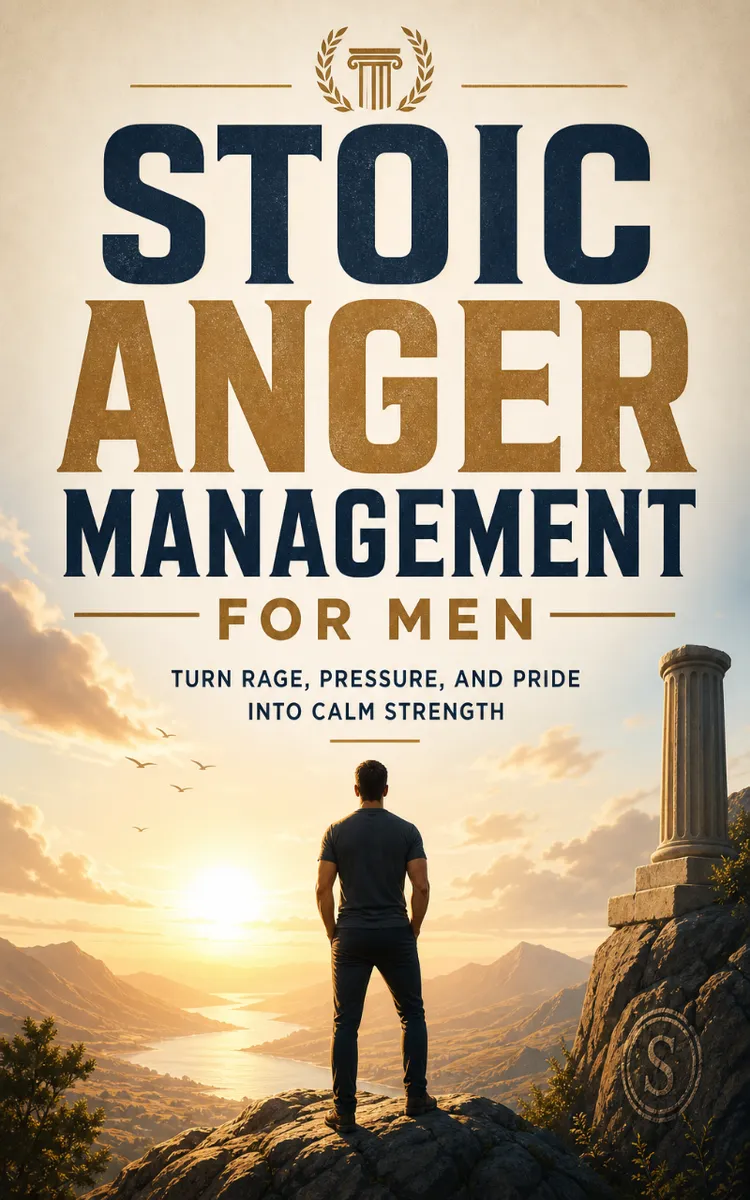
Stoic Anger Management For Men
Created with Inkfluence AI
Stoic-based strategies to manage anger and emotional discipline
Table of Contents
- 1. Own Your Anger, Don’t Worship It
- 2. Reframe Triggers Using the Stoic Lens
- 3. Stop Pride Spirals with the Two-Truth Check
- 4. Use the Pause-Breath-Plan Reset
- 5. Speak Calmly with the Virtue Script
- 6. Build Boundaries Without Guilt
- 7. Train Resilience with Adversity Rehearsal
- 8. Turn Rage into Purposeful Action
Preview: Own Your Anger, Don’t Worship It
A short excerpt from “Own Your Anger, Don’t Worship It”. The full book contains 8 chapters and 11,342 words.
Picture This
The moment you feel that heat rise, you don’t just notice it-you start negotiating with it. Your phone buzzes. A coworker drops the ball again. Your boss’s tone lands like a punch. And suddenly your anger has a “point.” It’s not just an emotion anymore; it’s a messenger, a judge, a warning system… and, somehow, a permission slip.
Darius, 34, a warehouse supervisor, knows this movie. He’s got a line running, trucks unloading, people watching him like his mood is part of the schedule. One day he gets blamed for a delay he didn’t cause. It would’ve been annoying on a normal day. But this time, he feels the accusation hit his pride, and his anger shows up fast-tight jaw, sharper words, hands that want to slam something. He tells himself he’s standing up for himself. He tells himself he’s protecting the operation. The problem is… the operation isn’t the only thing that gets “managed” when rage drives.
When anger shows up, do you treat it like a signal-or like your steering wheel?
The Mindset Shift
Old Belief: Anger is your master-when it hits, you have to act the way it demands.
New Reality: Anger is a visitor-you decide what you believe about what happened, and that decision decides your response.
That shift sounds simple, but it changes everything because anger doesn’t just “happen.” It points at something. Then your mind rushes to explain it. That explanation is the bridge between what occurred and what you do next.
In Darius’s case, the event was being blamed for the delay. The anger wasn’t the blame. The anger was the feeling that his identity-his competence, his fairness, his standing-was under threat. The visitor (anger) arrived with a story: “They’re disrespecting you.” Once that story took the wheel, his mouth started writing the next scene. He ended up sounding defensive, then curt, then louder than he meant to be. Even if he “won” the argument, he lost something more valuable: control of how he wanted to be seen.
Here’s the concrete reframe you can use on the spot. When anger rises, you don’t ask, “How do I get rid of this?” You ask, “What story am I currently buying?” Because the story is where your power lives. Anger can be loud, but it can’t force your belief unless you keep handing it the keys.
Try this in a real moment: you get interrupted mid-sentence in a meeting. Your chest tightens. Old belief says: “They’re disrespecting me-call it out.” New reality says: “Something happened, and I’m choosing what meaning it has.” You might still address it, but you do it from steadiness instead of heat-short, clear, and firm, without turning it into a personal war.
Going Deeper
Stoics didn’t teach that you should feel nothing. They taught that you should own the part you can control. You can’t control the first spark-anger can flare fast, especially when pride is involved. But you can control what that spark becomes through your interpretation.
The Ownership Switch is the move: you stop treating anger as the boss and start treating it as information. Information tells you something is happening inside you. It might mean you care. It might mean you feel cornered. It might mean you’re afraid of looking incompetent. But information is not automatically truth. Just because your body reacts doesn’t mean your mind’s story is accurate.
When you “separate what happened from what you decide to believe,” you’re doing two things at once:
1) You respect reality as it is (facts of the moment).
2) You challenge your interpretation (the meaning you slapped on it).
That’s why this matters. If you don’t separate them, anger makes a shortcut: event → story → action. The shortcut feels fast and righteous, but it usually costs you later-strained relationships, burned trust, missed opportunities to fix problems, and that heavy feeling of “I didn’t handle that like I wanted to.”
Signs this pattern is running your life
1. You replay moments like a courtroom case, not a learning moment-your mind keeps collecting evidence to prove you’re right.
2. Your anger has a “moral voice.” It doesn’t just say you’re upset; it says you must respond now and loudly to restore order.
3. You can’t tell the difference between “I feel disrespected” and “I was disrespected.” One is inner weather; the other is a claim about what others meant.
4. After you cool down, you feel embarrassed-not because you were angry, but because you acted like anger was in charge.
En résumé: Anger is real, but your belief about what it means is the part you can steer.
One more layer, because this is where men usually get tripped up: pride. Pride makes anger feel like strength. It whispers that calm is weakness, that restraint is letting people walk over you. But calm strength isn’t passive. It’s deliberate. It’s you choosing the response that protects the real goal-safety on the floor, quality in the work, respect in the relationship-without turning your identity into the battlefield.
...
About this book
"Stoic Anger Management For Men" is a self-help book by Socratic Mastery with 8 chapters and approximately 11,342 words. Stoic-based strategies to manage anger and emotional discipline.
This book was created using Inkfluence AI, an AI-powered book generation platform that helps authors write, design, and publish complete books. It was made with the AI Self-Help Book Writer.
Frequently Asked Questions
What is "Stoic Anger Management For Men" about?
Stoic-based strategies to manage anger and emotional discipline
How many chapters are in "Stoic Anger Management For Men"?
The book contains 8 chapters and approximately 11,342 words. Topics covered include Own Your Anger, Don’t Worship It, Reframe Triggers Using the Stoic Lens, Stop Pride Spirals with the Two-Truth Check, Use the Pause-Breath-Plan Reset, and more.
Who wrote "Stoic Anger Management For Men"?
This book was written by Socratic Mastery and created using Inkfluence AI, an AI book generation platform that helps authors write, design, and publish books.
How can I create a similar self-help book?
You can create your own self-help book using Inkfluence AI. Describe your idea, choose your style, and the AI writes the full book for you. It's free to start.
Write your own self-help book with AI
Describe your idea and Inkfluence writes the whole thing. Free to start.
Start writingCreated with Inkfluence AI


