
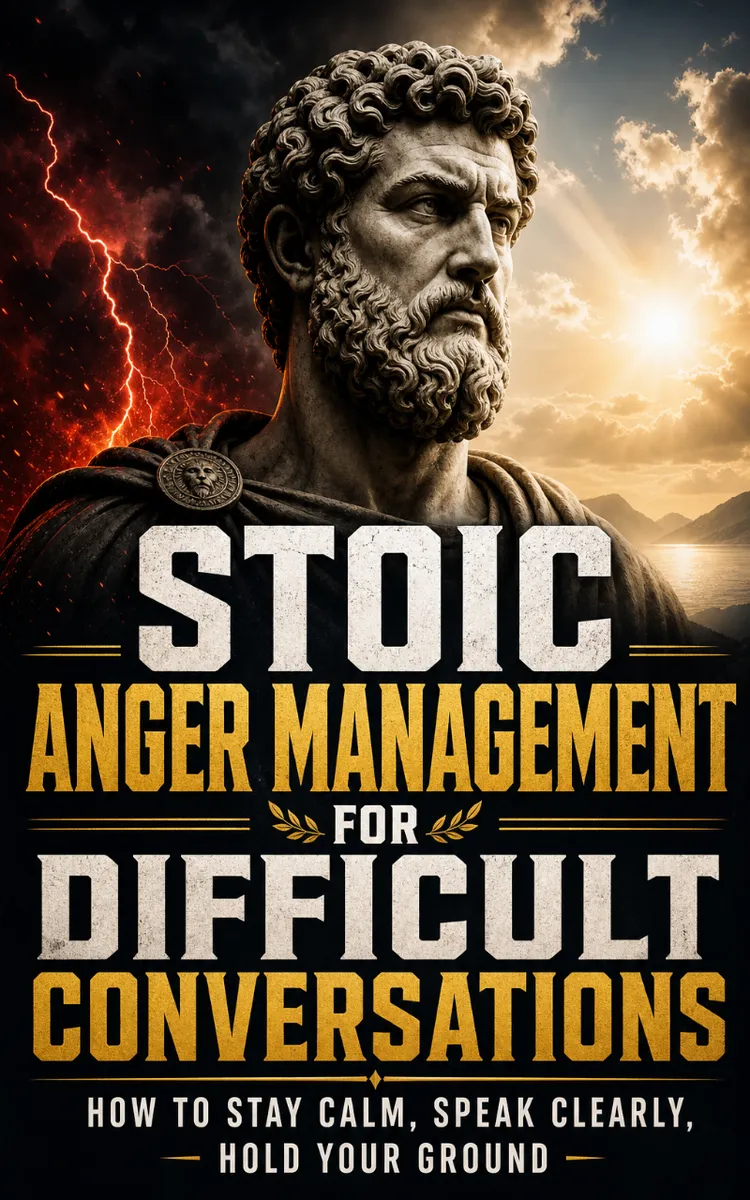
Stoic Anger Management For Difficult Conversations
Created with Inkfluence AI
Stoic-based techniques for managing anger during difficult conversations
Table of Contents
- 1. Recognize Anger’s Early Warning Signs
- 2. Separate What You Control From Reacting
- 3. Adopt the Stoic Pause Protocol
- 4. Use “Intent, Not Impact” to Stay Grounded
- 5. Name the Feeling Without Feeding It
- 6. Choose Your Core Value Before Speaking
- 7. Speak in Clear Sentences, Not Speeches
- 8. Ask Better Questions Under Pressure
- 9. Practice Active Listening Without Agreement
- 10. Set Boundaries With Respectful Refusals
- 11. Handle Interruptions Using the “Wait-Name-Next”
- 12. Respond to Accusations Without Defensiveness
- 13. Use Stoic Reframing for Fairness
- 14. Hold Your Ground With Calm Consequences
- 15. Manage Tone: Volume, Pace, and Posture
- 16. De-escalate When They Escalate
- 17. Address Misunderstandings With “What I Heard”
- 18. Negotiate Solutions Without Losing Respect
- 19. Repair After a Slip: The Stoic Reset
- 20. Build a Pre-Conversation Stoic Plan
Preview: Recognize Anger’s Early Warning Signs
A short excerpt from “Recognize Anger’s Early Warning Signs”. The full book contains 20 chapters and 33,404 words.
Have you ever noticed your words get sharper while your body feels hotter-then you look back and realize you weren’t “deciding” to escalate, you were already hijacked? Anger often starts earlier than you think. It shows up in small body signals, quick thought habits, and automatic impulses that push you toward a fight before you consciously choose your response.
If you wait until the conversation feels explosive, you usually lose two things: clear thinking and clean communication. This chapter gives you a way to catch anger in its early stages-before it drives your tone, your interpretation, and your next sentence. You’ll learn to map common physical cues, thought patterns, and behavioral impulses, so you can intervene while you still have options. The goal is simple: spot the warning signs fast, name what’s happening, and reset your direction before you react.
Why This Matters
Anger doesn’t arrive as one big wave. It builds like pressure in a system-quiet at first, then sudden when the limit breaks. In difficult conversations, that pressure often comes from feeling disrespected, trapped, or blamed. Your mind starts scanning for threats and “proof,” your body ramps up energy, and your mouth starts reaching for certainty. If you don’t catch it early, you’ll treat a rough moment like a personal verdict and respond like the stakes are life-or-death.
This matters because early anger changes what you notice. You start hearing only the parts that confirm you’re wronged. You start assuming the other person intends harm. You start pushing for control instead of clarity. The problem isn’t that you feel anger-it’s that anger hijacks your thinking and narrows your choices. When that happens, even a reasonable person can say something they later regret, then spend hours trying to “fix” the damage.
By the end of this chapter, you’ll be able to (1) identify your most common physical cues, (2) recognize thought patterns that usually show up right before you escalate, and (3) track the first behavioral impulses that push you toward a blow-up. You’ll also practice using a simple tool-your Spark-to-Fire Map-to interrupt the cycle early, with concrete steps you can run in real time.
Takeaway to hold onto: When you can spot anger at the “spark” stage, you can choose your next move instead of paying for a rushed one.
How It Works
The core idea is to treat anger like a process with stages, not a sudden personality change. You’ll watch three channels at the same time: your body (signals), your mind (thought patterns), and your actions (impulses). When you notice a cluster-one from each channel-you’re not “just annoyed.” You’re already in the early phase where escalation becomes likely.
You’ll use the Spark-to-Fire Map, a quick mental layout that helps you label what’s happening without debating whether you “deserve” to be angry. Stoics don’t ask you to pretend you feel nothing. They ask you to see clearly what your mind and body are doing, then steer your response toward what you can control: your words, your timing, and your level of respect.
Use this structure during tough moments, and also during calmer moments to learn your patterns. If you only practice when you’re already hot, you’ll learn too late. If you practice when you’re steady, you’ll spot the spark faster when it matters.
Numbered steps for the Spark-to-Fire Map:
1. Scan your body for “heat signals.”
Look for fast, measurable changes you can notice in the moment: jaw tension, heat in your face, tight shoulders, clenched hands, shallow breathing, or a “wired” feeling. You’re not diagnosing; you’re checking for signs that your system is ramping up.
2. Spot your top thought habit (“the story your mind grabs”).
Ask: “What am I telling myself right now?” Common anger stories sound like: They’re doing this to me. This is disrespect. I can’t let this slide. I need to prove my point. Naming the story matters because it predicts the next sentence you’ll want to say.
3. Notice your first impulse (“what I want to do next”).
Anger impulses often show up as actions you can feel coming: interrupting, escalating the volume, sending a sharp message, listing every mistake, or pushing for an immediate decision. You catch it when you label the impulse before you act on it.
4. Interrupt at the spark: slow your response, not the conversation.
You don’t stop talking forever-you change your pace. Use a quick pause, lower your speed, and choose a clarifying question or a short boundary statement. The point is to break the momentum that turns spark into fire.
A concrete example: Nadia, 34, who leads customer support, notices anger in a very specific cluster. When a customer repeats the same complaint and adds an accusation, she feels her jaw tighten and her breathing get shallow....
About this book
"Stoic Anger Management For Difficult Conversations" is a how-to guide book by Socratic Mastery with 20 chapters and approximately 33,404 words. Stoic-based techniques for managing anger during difficult conversations.
This book was created using Inkfluence AI, an AI-powered book generation platform that helps authors write, design, and publish complete books. It was made with the AI Ebook Generator.
Frequently Asked Questions
What is "Stoic Anger Management For Difficult Conversations" about?
Stoic-based techniques for managing anger during difficult conversations
How many chapters are in "Stoic Anger Management For Difficult Conversations"?
The book contains 20 chapters and approximately 33,404 words. Topics covered include Recognize Anger’s Early Warning Signs, Separate What You Control From Reacting, Adopt the Stoic Pause Protocol, Use “Intent, Not Impact” to Stay Grounded, and more.
Who wrote "Stoic Anger Management For Difficult Conversations"?
This book was written by Socratic Mastery and created using Inkfluence AI, an AI book generation platform that helps authors write, design, and publish books.
How can I create a similar how-to guide book?
You can create your own how-to guide book using Inkfluence AI. Describe your idea, choose your style, and the AI writes the full book for you. It's free to start.
Write your own how-to guide book with AI
Describe your idea and Inkfluence writes the whole thing. Free to start.
Start writingCreated with Inkfluence AI


