
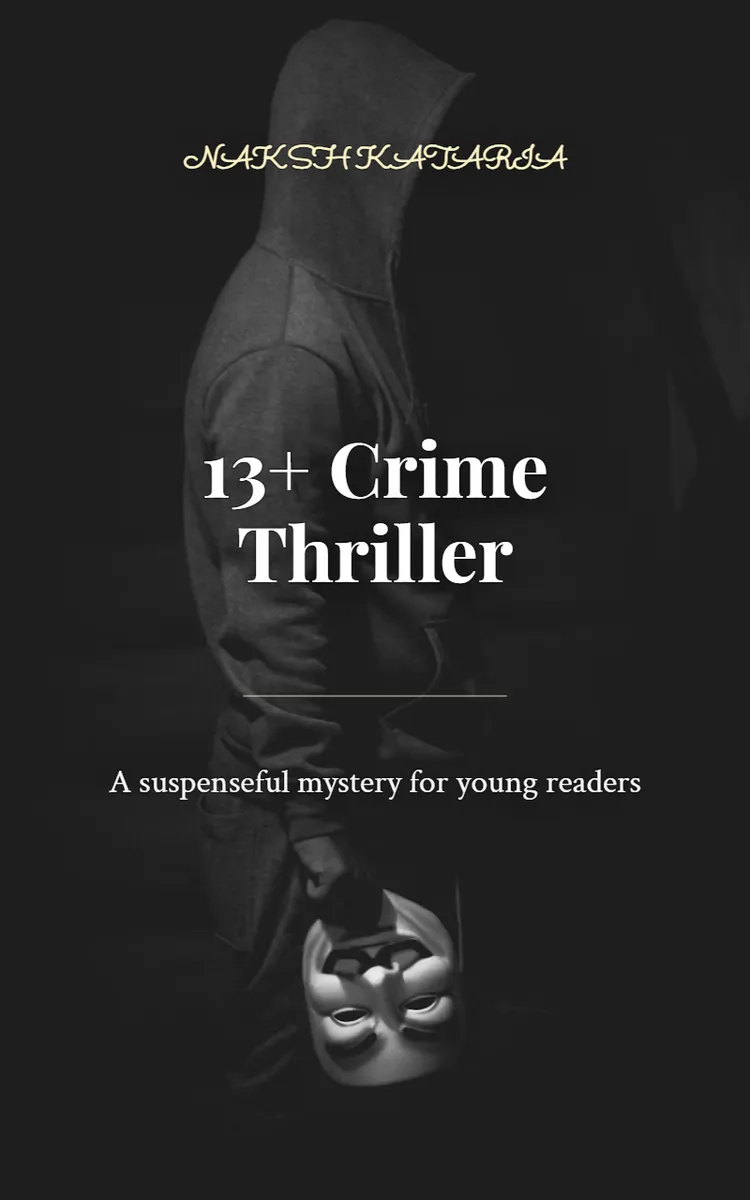
Read the first chapter
The whole of chapter one, free. About 12 min. Turn the pages with the arrows, your keyboard, or a swipe.
Chapter 1
The Locked Room Library Clue
The library’s front doors opened with a soft hiss, like they were sighing out the cold. Mara slipped her hands into the pockets of her hoodie and followed the smell of paper and old glue deeper into the building. Somewhere near the windows, a radiator clicked and warmed the air. The usual sounds-pages turning, a pencil tapping, the quiet shuffle of students looking for books-made everything feel steady.
On the bulletin board by the reading tables, the volunteer schedule was pinned under bright thumbtacks. Mara had helped organize it last week, and she liked seeing her handwriting there beside the names of the teens who signed up to tidy shelves and check returns. Today’s top line read: “Library Archive Helpers - 3:30-4:15.” The words looked ordinary, but Mara had noticed how the school liked routines. Doors opened at the same times. Lights switched off when the bell rang. People learned where they belonged.
Mara was halfway down the aisle toward the back shelves when she heard a voice she recognized. “Mara? You’re here early.” Juno Park stood near the circulation desk with her backpack still on, her dark ponytail neat and her smile practiced like she wore it every day. Juno was one of the popular volunteers-kind, confident, and always surrounded by someone asking for help finding a book. Today, her eyes kept flicking toward the archive room door.
Mara stopped beside her. “Is everything okay?”
Juno swallowed. The sound was small, but it landed in the quiet space like a dropped coin. “I was going to start restocking the locked archive boxes. That room has a key cabinet, and I always double-check the tag. But when I opened the inner drawer, there was something inside that shouldn’t be there.”
Mara’s stomach tightened, not with fear exactly, but with that sharp feeling of wrongness. She glanced past Juno to the archive room door-sturdy wood, a brass handle, and a sign that said AUTHORIZED PERSONNEL ONLY. The hallway around it looked the same as always, clean and bright. Still, Juno’s posture made it feel like the air had changed.
“What did you find?” Mara asked.
Juno pulled a folded piece of paper from her pocket like it was warm. She held it out carefully. The paper was creased, with neat handwriting that matched none of the labels Mara had seen in the archive. At the top, it said, “WATCH THE ROUTE, NOT THE LOCK.”
Mara read the words once, then again. The sentence didn’t look like a prank, not with the calm way it was written. It felt like someone had taken time to plan it.
Juno’s voice dropped. “I didn’t touch it at first. I checked the drawer tag, like I always do. The tag said the box should be empty until the next inventory. But the paper was there anyway. And I keep thinking about what it means.”
Mara took the paper and felt the texture-slightly rough, like it had been printed on something meant to last. “Maybe it’s for someone else,” she said, though the words didn’t fully convince her. “Or someone left it by accident.”
Juno’s eyebrows lifted, but her smile didn’t return. “Who would leave a message in a locked archive drawer? The room isn’t supposed to be open. Even when we volunteer, we’re only allowed in with the supervisor. Ms. Larkin is usually the one who keeps the key.”
Mara looked around. Students were in the front section, laughing softly over a display of mystery novels, and the librarian at the desk was stamping something for a return. No one in the hallway seemed to notice the small tension between them. That made it easier to breathe, but it didn’t make the paper any less strange.
“Let’s show Ms. Larkin,” Mara said, choosing the safest path. “We can ask about the message and the drawer.”
Juno nodded quickly. “Okay. But I don’t want to make a big deal if it’s nothing. I just… I felt like I was the only one who saw it.”
As they walked together, Mara kept the paper folded in her hand. The words pressed against her palm like a reminder. The archive room door sat at the end of the hallway, quiet and closed. A small metal key cabinet hung to the side, with numbered hooks for each authorized key. Mara had seen it many times during book fairs, when the volunteers checked keys for the storage shelves.
Ms. Larkin was at the circulation desk, her glasses perched low on her nose as she listened to a student complain about a late fine. She finished the conversation, stamped the receipt, and looked up when Mara and Juno approached.
“Yes?” Ms. Larkin asked, her voice warm but focused.
Juno held up the folded paper. “I found this inside the drawer for the locked archive boxes. It wasn’t supposed to be there.”
Ms. Larkin’s eyes narrowed just slightly as she took the paper. She smoothed it with her thumb, careful like it might tear. Then she read the words and went quiet.
Mara watched her face for clues. Ms. Larkin’s expression stayed calm, but her shoulders lifted and fell once, like she was choosing her next words carefully.
“Where exactly did you find it?” Ms. Larkin asked.
“In the inner drawer,” Juno said. “The one behind the box label. I opened it to check the inventory tag, and the paper was inside.”
Ms. Larkin turned the paper over, then back again, searching for anything besides handwriting. “This isn’t from our usual forms,” she said.
Mara frowned. “Could it be from a student? Like a note someone hid?”
Ms. Larkin shook her head. “We don’t use this style of paper, and the archive drawers are checked before and after volunteers come in. If it’s here, it means someone was inside the process.”
Juno’s fingers tightened around her backpack strap. “But we were the only ones.”
Ms. Larkin looked at both of them now. “And that’s why I want you to stay with me while we check the cabinet and the log,” she said. “We’ll handle this the right way. No guessing. No spreading it around.”
The librarian’s words made Mara’s chest loosen a little. Ms. Larkin wasn’t angry. She wasn’t panicking. She was being careful, the way grown-ups did when something didn’t fit.
They walked to the key cabinet. Ms. Larkin opened it with a key of her own and checked the hooks. One key was missing from its numbered spot.
Mara leaned in, reading the label next to the empty hook. “That one’s… not there.”
Ms. Larkin’s mouth tightened. “It should be. We keep the archive room key here unless we’re using it in the supervisor’s presence.” She looked toward Juno. “When did you last see it?”
Juno’s face went pale at the edges. “I saw it yesterday when I helped restock. I remember because I always check that the tags match the key numbers. I didn’t notice it missing today until I went to the inner drawer.”
Mara’s mind raced through the routine: the volunteer schedule, the key cabinet, Ms. Larkin’s log. Someone had moved a key-or taken it out-without being noticed.
Ms. Larkin pulled open the drawer beneath the cabinet and slid out a small notebook. The log pages were filled with dates and initials. She flipped to today’s entry, then yesterday’s, scanning quickly.
“Yesterday,” she said, and her voice stayed steady, “the key was signed out at 3:05. That’s ten minutes before the volunteer start time. The initials are there.”
Mara leaned closer. The initials looked like someone tried to copy a real handwriting style. Mara didn’t know whose initials they were, but she knew how hard it was to imitate someone’s pen strokes. The letters were slightly off, like a song played on the wrong instrument.
Juno exhaled slowly. “So someone took the key early.”
Ms. Larkin shut the notebook gently. “Yes. And now we have a message telling us to watch something else.”
Mara looked down at the note again. “Watch the route, not the lock.” She traced the words with her finger without unfolding the paper fully. “What route? The route from the front desk to the archive room?”
Ms. Larkin nodded once. “It could be. Or it could mean the pattern of movement through the building. People follow routes without thinking.” She glanced toward the hallway window where late-afternoon sunlight striped the floor. “The school has routines, and routines can be used like a path.”
Juno’s voice was quiet. “So the note is a warning? About a person? Or about what might happen next?”
Ms. Larkin didn’t answer right away. She pointed to the paper. “Look at the symbols.”
Mara blinked. She’d focused on the words, but now she saw small marks around the sentence-tiny shapes at the corners of the paper, like someone had drawn a few letters that were too neat to be decoration. One corner had a star-like symbol. Another had a curved line. The third had a box shape with a dot.
Mara tilted the paper. “These aren’t random.”
Ms. Larkin’s gaze sharpened. “No. They might match something we already have in the building.”
“Like the class schedule?” Juno suggested, though her voice sounded unsure.
Mara thought of the volunteer bulletin board again, the way the schedule was printed with symbols for different types of tasks. She remembered a small key on the bottom of the board: a star for sorting, a box for checking returns, a curved line for restocking shelves. She’d seen those symbols every day without paying much attention.
“Wait,” Mara said. “On the volunteer schedule, the symbols match tasks. Star for sorting, box for returns, curved line for restocking.”
Juno looked at Mara like she’d just pulled a thread that connected everything. “Then the note is telling us which tasks to watch?”
“It says watch the route,” Mara replied, feeling the pieces click into place. “So it might mean follow the order of tasks. If someone is using the routine, they might be doing it in a certain sequence.”
Ms. Larkin’s eyes softened. “That’s a good observation.”
Mara held the paper closer and counted the symbols again. The star-like symbol appeared first, then the curved line, then the box with a dot. She pictured the volunteer schedule on the board and the order of tasks in it: sorting, then restocking, then returns.
“Someone is using the routine,” Mara said slowly, “and telling us which parts to pay attention to.”
Juno’s shoulders rose and fell once. “But what should we do? We can’t just… break rules.”
Ms. Larkin nodded. “You don’t need to break rules to be smart.” She looked down the hallway. “We’ll keep everything safe by doing what we’re already allowed to do. We’ll check the schedule and the log, and we’ll make sure the next volunteer entry is handled with proper supervision.”
Mara wanted to ask how that would stop a coded warning, but Ms. Larkin didn’t leave space for panic. She moved with purpose. “Mara, would you be able to bring the volunteer schedule board closer so we can compare the symbols to today’s tasks?”
Mara nodded. “Yes.”
Juno stepped closer too, her eyes still wide but no longer lost. “And I can check the archive room drawers while Ms. Larkin watches the key cabinet.”
Ms. Larkin didn’t smile, but her approval showed in the way she spoke. “That would help. We will do it together. If anything else is hidden, we document it and bring it to the supervisor.”
The three of them worked quietly at first. Mara lifted the bulletin board’s edge and carried it to the hallway table where the archive log notebook could sit beside it. The paper rustled under her fingers. Warm sunlight made the symbols on the schedule look crisp and clear.
Juno opened the archive room door with Ms. Larkin’s key. The room smelled different from the rest of the library-cooler, with a stronger scent of cardboard and dust that had been kept dry. Shelves lined the walls, and the locked archive drawer sat where it always did.
Juno pulled it open and carefully checked inside. “There’s nothing else in here,” she said after a moment. Her voice steadied the second she confirmed it. “Just the message.”
Mara felt relief wash through her, quick and bright. The problem wasn’t growing in front of them. It was waiting to be understood.
Ms. Larkin closed the drawer. “So the note may be a warning about what might be placed next,” she said. “Or about when someone plans to return.”
Mara stared at the schedule symbols again, then back at the note. “If someone is following the order-sorting, restocking, returns-then they might be trying to get access during the busiest part. People look at the front desk when returns happen.”
Juno nodded. “And they might think no one notices the archive area because the volunteers are focused on tasks up front.”
Ms. Larkin tapped the notebook once. “That’s why we will adjust our routine slightly, still within what we’re allowed to do. We’ll keep the archive key in Ms. Larkin’s presence and check the log at the times our volunteers move through the building.”
Mara didn’t like the word adjust, because it sounded like change for change’s sake. But she understood what Ms. Larkin meant. It wasn’t about fighting anyone. It was about making sure the building’s routines stayed in safe hands.
When the bell for the end of the volunteer shift rang, Mara watched the hallway. Students moved in their usual ways, but Mara and Juno moved too, alert to the parts of the routine that didn’t get noticed. The sounds of footsteps and murmured greetings filled the air. The radiator clicked again, and the warmth stayed steady.
At 3:30, a student volunteer stepped into the hallway and glanced toward the archive room. Mara recognized him from the schedule board. He looked at the key cabinet, then at the empty hook.
He hesitated, and before his eyes could linger too long, Ms. Larkin stepped forward. “We’re going to do the archive check together today,” she said calmly. “The key stays with me.”
The student’s shoulders relaxed as if he’d been holding his breath. “Okay,” he said. “I thought it might already be taken.”
Mara held her paper note behind her back, pressing it gently against her palm. She didn’t need to say anything. The message had already done its job: it made them notice what they might have missed.
After the shift, Ms. Larkin wrote down what they found and where the key had been signed out. She didn’t raise her voice. She didn’t blame anyone harshly. Juno stood beside Mara, her eyes focused and steady.
When Mara walked out of the library for a moment of fresh air, the sky looked the same as it had that morning-blue and bright. Still, the quiet feeling behind the note stayed with her, like a secret tucked into a pocket.
Juno joined her on the steps. “I’m glad we didn’t just panic,” she said.
Mara nodded and unfolded the paper once more. The words were still there, simple and clear. “Watching the route made sense,” she said. “Not because we’re solving a mystery like in a movie. Because we’re paying attention to the routine so someone can’t use it without being noticed.”
Juno smiled then, real and warm. “So the note wasn’t a threat. It was a warning.”
Mara tucked the paper carefully into her folder. “Yeah,” she said, feeling safer with each breath. “And we used our teamwork the right way.”
One warm lesson settled in Mara’s mind as the library doors closed softly behind them: When something feels hidden or out of place, careful attention and kind teamwork help keep everyone safe.
End of chapter one. 4 more chapters in the full book.
Swipe or use the arrows to turn the page
What's inside: 5 chapters
- 1. The Locked Room Library Clue
- 2. Following Footprints Without Getting Caught
- 3. Decoding the Library’s Secret Codes
- 4. The Suspect List and Fair Questions
- 5. Turning Evidence Into a Safe Ending
About this book
"13+ Crime Thriller" is a children's book by NAKSH KATARIA with 5 chapters and approximately 11,255 words. A crime thriller story suitable for ages 13+.
This book was created using Inkfluence AI, an AI-powered book generation platform that helps authors write, design, and publish complete books. It was made with the AI Children's Book Creator.
Frequently Asked Questions
What is "13+ Crime Thriller" about?
A crime thriller story suitable for ages 13+
How many chapters are in "13+ Crime Thriller"?
The book contains 5 chapters and approximately 11,255 words. Topics covered include The Locked Room Library Clue, Following Footprints Without Getting Caught, Decoding the Library’s Secret Codes, The Suspect List and Fair Questions, and more.
Who wrote "13+ Crime Thriller"?
This book was written by NAKSH KATARIA and created using Inkfluence AI, an AI book generation platform that helps authors write, design, and publish books.
How can I create a similar children's book?
You can create your own children's book using Inkfluence AI. Describe your idea, choose your style, and the AI writes the full book for you. It's free to start.
Write your own children's book with AI
Describe your idea and Inkfluence writes the whole thing. Free to start.
Start writingCreated with Inkfluence AI


