

Read the first chapter
The whole of chapter one, free. About 7 min. Turn the pages with the arrows, your keyboard, or a swipe.
Chapter 1
Week 1: Pantry Restock & Staples
What This Helps You Do
An empty flour jar, a half-used bottle of oil, and one breakfast left in the box can turn a simple grocery trip into several rushed trips. This Week 1 checklist keeps pantry staples, breakfast basics, and everyday cooking essentials together on one printable page.
Use it before your weekly shop, especially when you are resetting the kitchen at the start of a new four-week cycle. The Pantry Ladder Method moves from foundation items to meal starters and then to finishing essentials, so you can restock what supports the most meals first.
Before You Start
Set aside 10 minutes for a quick pantry check. Keep the printed list, a pen, and a small basket nearby for items that need to be moved, cleaned, or used soon.
Check each storage area before adding quantities. Look in the pantry, breakfast cupboard, spice drawer, refrigerator door, and cooking-oil shelf. A quick count prevents buying a second bag of rice while an unopened bag sits behind the canned tomatoes.
Use these simple setup steps:
• Check expiration dates on flour, baking powder, oils, and spices. - Group opened packages with matching unopened packages. - Note staples with less than one serving remaining. - Check refrigerator space for milk, eggs, and butter. - Review the next seven days of breakfasts and dinners. - Choose package sizes that fit your household’s use. - Mark allergies, dietary needs, or ingredient substitutions. - Add preferred brands only where quality or taste matters.
The Pantry Ladder Method has three levels. Foundation staples support many meals, such as rice, pasta, flour, and canned tomatoes. Meal starters turn those staples into breakfast or dinner, such as oats, beans, broth, and peanut butter. Finishing essentials complete the cooking process, such as salt, pepper, vinegar, and cooking oil.
Use the ladder while checking stock. If a foundation item is empty, replace it first. If it is nearly full, move to the next level. This keeps the list useful without forcing you to buy every item every week.
For a clean printable page, write quantities beside each item only after checking your shelves. Common starting quantities include one 5-pound bag of rice, one 1-pound box of pasta, one dozen eggs, and one 42-ounce container of oats. Adjust these amounts to match household size and storage space.
Checklist Items
Foundation Pantry Staples
Start with dry goods and shelf-stable foods that support several meals. Choose plain versions when you want flexibility, and select whole-grain versions when they suit your usual recipes.
☐ Check rice and replace low stock. ☐ Check pasta and replace low stock. ☐ Restock dried beans or lentils. ☐ Add canned beans for quick meals. ☐ Add canned tomatoes for sauces. ☐ Check flour for baking and thickening. ☐ Restock sugar or preferred sweetener. ☐ Check baking powder and baking soda. ☐ Add breadcrumbs or quick oats. ☐ Restock tortillas or shelf-stable wraps. ☐ Check cereal or granola supplies. ☐ Add canned corn or peas. ☐ Restock applesauce or fruit cups. ☐ Check nuts and seeds for freshness. ☐ Replace stale crackers or snack staples.
Use the package date as a guide, but inspect opened foods as well. Flour, nuts, seeds, and whole-grain products can lose freshness faster than white rice or dried pasta. Keep opened flour and nuts sealed, and write the opening date on the container when practical.
Breakfast Basics
Breakfast items should cover quick mornings as well as slower days. Select at least one fast option, one filling option, and one item that can be prepared ahead.
☐ Restock rolled oats or quick oats. ☐ Check cereal and replace empty boxes. ☐ Add eggs for cooking and baking. ☐ Restock milk or a preferred alternative. ☐ Check yogurt for breakfast portions. ☐ Add bread or English muffins. ☐ Restock peanut butter or seed butter. ☐ Add jam, honey, or maple syrup. ☐ Check coffee, tea, or cocoa supplies. ☐ Restock butter or breakfast spread. ☐ Add fresh or frozen breakfast fruit. ☐ Check pancake or waffle mix. ☐ Add breakfast sausage or plant-based protein. ☐ Restock freezer berries for oatmeal. ☐ Check reusable breakfast containers.
Build combinations rather than buying disconnected items. Oats pair with milk, bananas, cinnamon, and nuts. Eggs pair with bread, cheese, and frozen vegetables. Yogurt pairs with granola and berries. Checking these combinations helps reveal missing pieces before they interrupt the week.
If the household eats breakfast at different times, include both a ready-to-eat option and a cookable option. Cereal, yogurt, and fruit cover a fast start; eggs, oats, and toast provide a more substantial meal.
Everyday Cooking Essentials
These items support sautéing, seasoning, baking, and simple sauces. Check the quantity and condition of each one before replacing it.
☐ Check olive oil or everyday cooking oil. ☐ Restock neutral oil for high-heat cooking. ☐ Check table salt and kosher salt. ☐ Restock black pepper or peppercorns. ☐ Add garlic powder or fresh garlic. ☐ Check onion powder or fresh onions. ☐ Restock dried oregano and basil. ☐ Add paprika or smoked paprika. ☐ Check chili flakes or hot sauce. ☐ Restock soy sauce or tamari. ☐ Add vinegar for dressings and sauces. ☐ Check mustard for sandwiches and marinades. ☐ Restock mayonnaise or preferred spread. ☐ Add stock cubes or boxed broth. ☐ Check tomato paste tubes or cans. ☐ Restock cornstarch for thickening sauces. ☐ Add parchment paper or foil. ☐ Check storage bags and food containers.
Keep two oils if your cooking requires them. Olive oil works well for dressings and moderate-heat cooking, while a neutral oil such as canola or sunflower oil suits higher-heat tasks. One clearly labeled everyday bottle is better than several half-used bottles with unclear purpose.
Check spices by smell rather than relying only on the date. If paprika has little aroma or dried herbs look gray and dusty, replace them. A small, active spice collection is more useful than a crowded drawer of old jars.
Canned, Jarred, and Shelf-Stable Meal Starters
Meal starters shorten cooking time and help stretch fresh ingredients. Choose items that match meals already common in your kitchen.
☐ Restock canned tuna or other preferred protein. ☐ Add canned coconut milk for curries. ☐ Check pasta sauce or pizza sauce. ☐ Restock salsa for bowls and wraps. ☐ Add peanut or sesame sauce ingredients. ☐ Check canned soup for quick lunches. ☐ Restock chickpeas for salads and bowls. ☐ Add jarred roasted peppers or olives. ☐ Check pickles for sandwiches and sides. ☐ Restock shelf-stable broth. ☐ Add canned fruit for backup breakfasts. ☐ Check jam or fruit spread.
Avoid buying a full set of meal starters without checking how they will be used. One jar of pasta sauce may be enough for the week, while canned beans may serve several lunches. Match the list to actual meal plans and storage capacity.
Final Pantry Ladder Check
Finish the list by moving from the bottom rung to the top. Confirm that the basic ingredients are covered before adding extras.
☐ Replace empty foundation staples first. ☐ Add meal starters for planned dishes. ☐ Replace missing finishing essentials. ☐ Match breakfast foods with serving options. ☐ Check duplicate packages before shopping. ☐ Remove expired items from the list. ☐ Add quantities beside selected items. ☐ Mark store sections for faster shopping. ☐ Leave space for one useful substitute. ☐ Review the final list before printing.
A simple store order can make the printed list easier to use: pantry aisle, breakfast items, baking supplies, oils and condiments, then refrigerated goods. If the store layout differs, write the aisle or section beside each group.
Keep the final list selective. A Week 1 restock should strengthen the kitchen’s base, not fill every shelf. When an item is already available in a usable amount, leave it unchecked and move on.
Pro Tips
Use a two-level quantity mark beside each item: write “L” for low stock and “E” for empty. Replace empty foundation staples immediately, but buy low items according to the week’s meals. This prevents overbuying while keeping important ingredients available.
Create one small “bridge basket” for opened packages that need to be used first. Place nearly empty oats, half-used pasta, opened broth, and aging breakfast fruit together or mark them clearly. Plan the first few meals around those items before opening new packages.
A decorative list works best when it remains practical. Use one color for foundation staples, a second for breakfast basics, and a third for cooking essentials, but keep the checkbox and action words easy to read in black-and-white printing. The result is a pantry reset that looks inviting and still works at the store: check the shelves, follow the ladder, and bring home the ingredients that carry the week.
End of chapter one. 7 more chapters in the full book.
Swipe or use the arrows to turn the page

The World In Chaos 6x9 Interior

When Everyone Else Has Moved On 8 5x11 196p REVISED v3

The Blind Spot of Reality EDITED Garamond 6x9
What's inside: 8 chapters
- 1. Week 1: Pantry Restock & Staples
- 2. Week 2: Fresh Produce & Salad Days
- 3. Week 3: Protein Rotation & Family Meals
- 4. Week 4: Baking, Treats & Event Snacks
- 5. Breakfast Boxes: Grab-and-Go Week Plan
- 6. Lunch Packs: Workday & School Options
- 7. Dessert & Coffee Bar Restock Checklist
- 8. 28-Day Wrap-Up: Reorder, Freeze & Cleanup
About this book
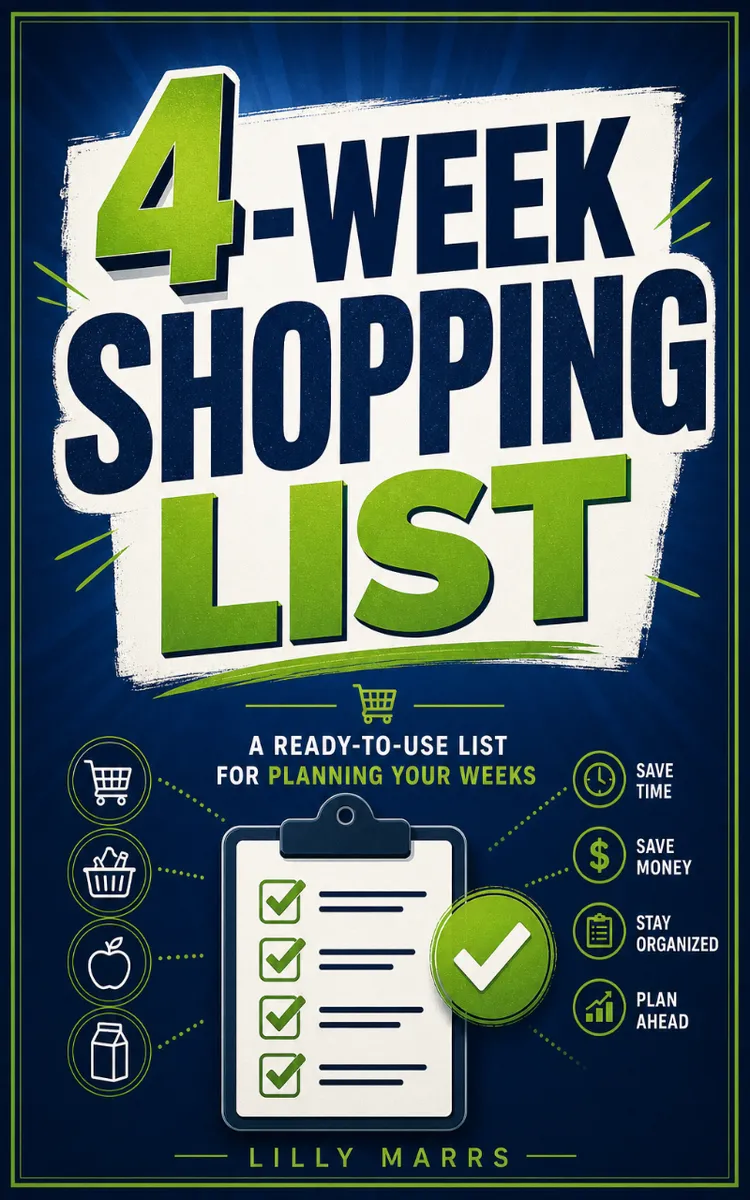
"Decorative 4-Week Shopping List" is a checklist pack book by Lilly Marrs with 8 chapters and approximately 12,583 words. Printable decorative shopping lists for four weeks.
This book was created using Inkfluence AI, an AI-powered book generation platform that helps authors write, design, and publish complete books.
Frequently Asked Questions
What is "Decorative 4-Week Shopping List" about?
Printable decorative shopping lists for four weeks
How many chapters are in "Decorative 4-Week Shopping List"?
The book contains 8 chapters and approximately 12,583 words. Topics covered include Week 1: Pantry Restock & Staples, Week 2: Fresh Produce & Salad Days, Week 3: Protein Rotation & Family Meals, Week 4: Baking, Treats & Event Snacks, and more.
Who wrote "Decorative 4-Week Shopping List"?
This book was written by Lilly Marrs and created using Inkfluence AI, an AI book generation platform that helps authors write, design, and publish books.
Write your own checklist pack book with AI
Describe your idea and Inkfluence writes the whole thing. Free to start.
Start writingCreated with Inkfluence AI


