
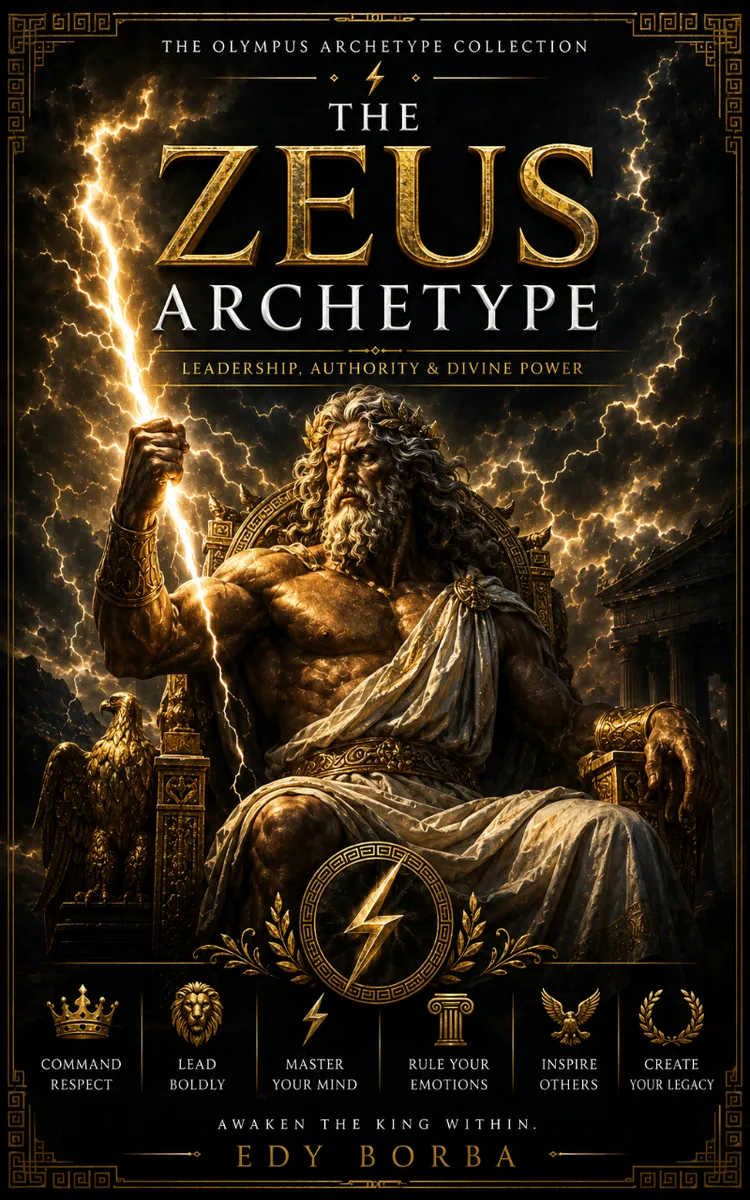
The Zeus Archetype
Created with Inkfluence AI
Using Zeus archetype symbolism to build leadership and authority mindset
Table of Contents
- 1. Claim Your Zeus Identity
- 2. Command Authority Through Beliefs
- 3. Emotional Control Like Zeus
- 4. Earn Respect With King Communication
- 5. Build Boundaries Without Tyranny
- 6. Discipline, Responsibility, and Duty
- 7. Shadow Work: Tame Zeus’ Rage
- 8. Lead With Divine Power Daily
Preview: Claim Your Zeus Identity
A short excerpt from “Claim Your Zeus Identity”. The full book contains 8 chapters and 11,103 words.
> “A man doesn’t lose authority in public. He loses it in his own head-then the room catches up.”
Darius-34, operations manager, the kind of guy who can keep a plant running while everyone else is still looking for the status update-had a problem nobody in his office could name. He wasn’t weak. He wasn’t lazy. He just kept doing this thing where his confidence showed up… late. Like he had to warm up before he could be decisive.
So when a supplier pushed back, Darius would tighten his face, swallow the first flash of irritation, and then try to “handle it professionally.” He’d speak clearly, sure. But the edge wasn’t there. The room felt it. People waited for him to land. And when he finally did, it was almost like he’d apologized for arriving.
He’d go home and replay it. Not to “learn,” but to feel the sting-like his authority had slipped out of his grip and walked away. And that’s the trap: you can do everything right on the outside while your self-concept is still set to “not the king yet.”
What if your confidence isn’t missing in your behavior… but stuck in the identity you’re refusing to claim?
The Mindset Shift
Old Belief: “I’ll feel like a leader once people respect me.”
New Reality: “People respect the identity you embody first-then your calm becomes undeniable.”
That’s the Zeus move. Not the lightning-and-hero stuff you see in movies-real Zeus symbolism is about king psychology: the authority you carry before anyone hands you permission. Zeus isn’t “loud.” Zeus is settled. When he speaks, it doesn’t sound like a pitch. It sounds like a decree.
For Darius, the shift looked small at first. Instead of waiting for the room to “settle down” before he acted, he trained himself to step into the moment like he already belonged there. He stopped negotiating with his own nervous system. He stopped asking, “Can I be firm without being a jerk?” and started asking, “What would the king do with this pressure?” That one question changes the whole chemistry of the conversation.
Here’s a concrete example from his week: a team lead brought him a problem with a tone that said, “I’m not at fault, but fix it.” In the old script, Darius would soften-explain, reassure, smooth. In the Zeus alignment, he anchored his authority mindset. He didn’t raise his voice. He didn’t threaten. He simply stated the standard: what’s required, what happens next, and by when. Then he let the silence do its work. Not because he enjoyed control-because he carried responsibility like a crown, not a burden.
That’s confidence activation. Not hype. Not bravado. It’s the internal switch from “seeking approval” to “carrying command.”
Going Deeper
Zeus symbolism works because it maps cleanly onto king psychology. The myth isn’t fantasy instruction-it’s a psychological archetype. Zeus rules the sky, not because he’s chaotic, but because he’s ordered. He’s not guessing. He’s not improvising his authority. He’s positioned. And when you align your self-concept to that symbolism, you stop treating leadership as something you perform and start treating it as something you are.
Alignment means your body and mind stop waiting for external signals to validate your right to lead. When you embody the “king first” identity, your emotional control improves because you’re no longer bargaining with fear. You’re responding from a place of duty. That’s power without tyranny-because it’s grounded in responsibility, not dominance for dominance’s sake.
When Darius started doing this, the difference wasn’t that people suddenly agreed with him. The difference was that his presence stopped inviting argument about whether he had the right to decide. The room could disagree. But they couldn’t shake his center.
Here are the signs this identity pattern is running your life-quietly, until it costs you:
1. You soften before you speak. Your mouth and posture start “negotiating” even when your mind already knows the right call.
2. You ask for permission with your tone. Even if you’re technically confident, your delivery sounds like you’re trying not to offend.
3. You replay conversations afterward. Not just to review facts-more like you’re grieving the version of you that didn’t show up.
4. You’re decisive in tasks, but not in authority. You can run operations, but when it’s time to set terms, you stall-like leadership feels temporary.
En résumé: Zeus identity doesn’t wait for respect-it is respect, expressed with discipline.
Think about that last line. Discipline is the bridge between power and restraint. Zeus doesn’t “lose control” because he’s not trying to control people. He controls himself first. That’s why his authority doesn’t look frantic. It looks inevitable.
And there’s another piece-your shadow. The shadow side of Zeus isn’t “strength.” It’s strength without responsibility. It’s the man who mistakes entitlement for command....
About this book
"The Zeus Archetype" is a self-help book by Edicarlos Content Creator · Self-Knowledge & Personal Development with 8 chapters and approximately 11,103 words. Using Zeus archetype symbolism to build leadership and authority mindset.
This book was created using Inkfluence AI, an AI-powered book generation platform that helps authors write, design, and publish complete books. It was made with the AI Self-Help Book Writer.
Frequently Asked Questions
What is "The Zeus Archetype" about?
Using Zeus archetype symbolism to build leadership and authority mindset
How many chapters are in "The Zeus Archetype"?
The book contains 8 chapters and approximately 11,103 words. Topics covered include Claim Your Zeus Identity, Command Authority Through Beliefs, Emotional Control Like Zeus, Earn Respect With King Communication, and more.
Who wrote "The Zeus Archetype"?
This book was written by Edicarlos Content Creator · Self-Knowledge & Personal Development and created using Inkfluence AI, an AI book generation platform that helps authors write, design, and publish books.
How can I create a similar self-help book?
You can create your own self-help book using Inkfluence AI. Describe your idea, choose your style, and the AI writes the full book for you. It's free to start.
Write your own self-help book with AI
Describe your idea and Inkfluence writes the whole thing. Free to start.
Start writingCreated with Inkfluence AI


