
Read the first chapter
The whole of chapter one, free. About 8 min. Turn the pages with the arrows, your keyboard, or a swipe.
Chapter 1
Welcome to Your Culinary Journey
Home Chef Mastery: From Kitchen Novice to Confident Cook
There's a moment that happens in every cook's journey-that moment when you're standing in your kitchen, looking at a pile of ingredients, and instead of feeling anxious or reaching for your phone to search "easy dinner recipes," you just... know what to do. Your hands move confidently. You adjust seasoning by taste, not measurement. You improvise when you're missing an ingredient. You create something delicious without following a single written instruction. That moment is magic. And it's within your reach, no matter where you're starting from right now.
Maybe you're someone who survives on takeout and frozen dinners because cooking feels overwhelming and mysterious. Maybe you can follow recipes but panic when something goes wrong or an ingredient is missing. Or maybe you cook regularly but feel stuck making the same five dishes on repeat because you don't understand the principles behind them. Wherever you are on your cooking journey, this guide will meet you there and take you further than you imagined possible.
This isn't a cookbook filled with complicated recipes designed to make you feel inadequate. This is a skill-building guide that teaches you to think like a chef, understand how flavors work together, master fundamental techniques, and develop the confidence to create delicious food from whatever ingredients you have available. By the time you finish this journey, you won't need recipes anymore-though you'll certainly appreciate and enjoy them more when you choose to use them.
Why Learning to Cook Changes Everything
The ability to cook well is one of the most valuable skills you can develop, and the benefits extend far beyond just feeding yourself. When you cook, you control exactly what goes into your body-no hidden sugars, mysterious preservatives, or excessive sodium. You'll eat healthier without feeling like you're on a diet because home-cooked food made with real ingredients naturally nourishes you better than restaurant or processed food.
You'll save substantial money. That $15 restaurant meal you order three times a week? You could make the same dish at home for $3-5. Over a year, mastering cooking could save you thousands of dollars while eating better quality food. These aren't hypothetical savings-this is money that stays in your bank account instead of going to restaurants and delivery apps.
Cooking is also deeply satisfying on an emotional and creative level. There's genuine pride in creating something delicious with your own hands. It's meditative and stress-relieving-chopping vegetables and stirring a pot forces you to slow down and be present. It's creative without requiring artistic talent-you're experimenting with flavors, textures, and presentations. And it's immediately rewarding-you create something, and within an hour, you get to enjoy the results.
Perhaps most importantly, cooking connects you to others. Sharing a meal you've made creates bonds that ordering takeout never will. Whether you're cooking for family, hosting friends, or contributing to a potluck, your ability to create delicious food becomes a gift you give to others. Food is love made tangible, and learning to cook means learning to express care and hospitality in one of humanity's most fundamental ways.
What Makes This Guide Different
Most cooking instruction falls into two categories: either it's overly complicated technical manuals written for culinary students, or it's simplified recipe collections that never teach you underlying principles. This guide takes a third approach-we're going to build your skills systematically while keeping everything approachable and practical for home cooks.
We won't be making elaborate restaurant dishes that require specialty equipment and ingredients you'll use once. We'll be mastering the techniques and principles that let you create delicious everyday meals efficiently. You'll learn proper knife skills not because you need to dice onions in 30 seconds like a professional chef, but because good knife skills make cooking faster, safer, and more enjoyable. You'll understand how heat works not to pass a culinary exam, but so you know exactly when to use high heat versus low heat and why it matters.
Every chapter builds on the previous ones, creating a solid foundation before adding complexity. We start with setting up your kitchen and understanding safety, then move to knife skills and prep techniques. Once you're comfortable with those basics, we dive into the science of flavor-how salt, fat, acid, and heat work together to create delicious food. Then we master essential cooking methods like sautéing, roasting, and braising. Finally, we put it all together and teach you to cook intuitively without recipes.
Each chapter includes not just instruction but practical exercises to build your skills through doing, not just reading. You'll cook real food, make real mistakes, learn from them, and improve steadily. There are no shortcuts to developing skill, but there is a proven path, and we'll walk it together step by step.
Your Cooking Philosophy
Before we dive into techniques and recipes, let's establish the mindset that will guide your entire cooking journey. Great cooking isn't about perfection, precision, or complex techniques. It's about understanding.
When you understand why you're adding salt at a specific moment, you can adjust based on what you're tasting. When you understand how heat transforms proteins and vegetables, you can control texture and flavor intentionally. When you understand the role of acid in balancing richness, you can fix a dish that tastes flat or heavy. Understanding gives you power and flexibility that following recipes without comprehension never could.
Embrace mistakes as your greatest teachers. Every burnt pan, oversalted dish, and undercooked chicken is information. What went wrong? Why did it happen? How will you adjust next time? Chefs aren't people who never make mistakes-they're people who've made thousands of mistakes and learned from each one. Your kitchen disasters are tuition paid toward mastery. Don't fear them; learn from them.
Cook with your senses, not just with timers and measurements. Yes, follow recipes when you're learning new techniques or trying new cuisines. But also taste your food constantly throughout cooking. Look at color changes. Listen to sizzling sounds. Smell developing aromas. Touch meat to check doneness. Your senses provide real-time feedback that no recipe can give you because every stove, pan, and ingredient is slightly different.
Start simple and build complexity gradually. You don't need to make five-course meals or master French sauces to be a great home cook. Master scrambled eggs before you attempt soufflés. Perfect a simple pasta with garlic and olive oil before you tackle lasagna. Simple food done excellently beats complex food done poorly every single time. As you master simple dishes, complexity will come naturally because you'll understand the principles underlying every technique.
What You'll Actually Accomplish
Let's get specific about what you'll be able to do by the end of this guide. These aren't vague aspirations-they're concrete skills you'll develop through systematic practice.
You'll confidently use a chef's knife for all basic prep work. You'll dice an onion in under two minutes without cutting yourself. You'll mince garlic smoothly, julienne vegetables evenly, and chiffonade herbs like a pro. Knife work that currently feels intimidating will become automatic and even meditative.
You'll understand heat control and use it intentionally. You'll know when to sear over high heat to develop a crust, when to use gentle medium heat to cook through without burning, and when to braise low and slow to tenderize tough cuts. You'll stop burning garlic or undercooking chicken because you'll understand exactly how different temperatures affect food.
You'll be able to taste a dish and know what it needs. Too flat? Add acid. Too harsh? Balance with fat or sweetness. Lacking depth? Bring in umami flavors. You'll season throughout cooking rather than just at the end, building layers of flavor that make restaurant-quality depth at home.
You'll master at least a dozen essential cooking techniques-sautéing, roasting, pan-searing, braising, stir-frying, steaming, and more. Each technique will become second nature, expanding your repertoire dramatically. You'll look at a piece of meat or vegetables and immediately know the best method to cook it.
Most importantly, you'll be able to create delicious meals without recipes. You'll look in your fridge, see some random ingredients, and confidently turn them into dinner. You'll understand flavor profiles well enough to improvise dishes inspired by different cuisines. You'll substitute ingredients confidently when you're missing something. Cooking will shift from stressful obligation to creative outlet.
How to Use This Guide
Read each chapter thoroughly before attempting the techniques. Understanding the why behind methods makes the how much easier. Then practice the skills actively-reading about knife techniques won't teach you knife skills any more than reading about swimming makes you a swimmer. You have to actually do the work.
Don't rush through chapters trying to speed through to the end. Take your time with each set of skills, practicing them multiple times until they feel comfortable before moving forward. It's better to spend two weeks truly mastering knife skills than to rush through in two days and retain nothing.
Use the practice exercises included in each chapter. They're specifically designed to build muscle memory and confidence through repetition. Yes, dicing an onion every day for a week sounds monotonous. But by the end of that week, you'll dice onions with ease for the rest of your life. That's worth the temporary tedium.
Cook actual meals as you learn. Don't just practice techniques in isolation-apply them to making real food you'll actually eat. If you're learning sautéing, make sautéed vegetables for dinner. If you're working on braising, make a beef stew. Practical application cements learning far better than abstract practice.
Be patient with yourself. Nobody becomes a great cook overnight. This is a journey measured in weeks and months, not days. You'll have setbacks. You'll burn things. You'll oversalt. You'll overcook. That's not failure-it's the learning process. Every professional chef you admire went through the same frustrations. Keep cooking, keep learning, keep improving.
Your First Step
Before we dive into kitchen setup and equipment, I want you to make one simple dish this week: scrambled eggs. That's it. Just eggs, butter, salt, and pepper. But make them three times, paying close attention each time.
First batch: Notice how the eggs transform as they cook. What happens to the texture? When do they go from liquid to solid? Do you cook them over high heat or low? What texture do you get?
Second batch: Try different heat levels. Start higher, or go lower. Stir constantly, or leave them alone more. What changes? Which method do you prefer?
Third batch: Aim for your perfect scrambled eggs-the texture and doneness you find most delicious. Achieve them intentionally, not accidentally.
This simple exercise teaches you the foundation of all cooking: observation, experimentation, and intentional control. If you can make perfect scrambled eggs by understanding what you're doing rather than just following instructions, you're already thinking like a chef.
Welcome to your culinary journey. Your kitchen is about to become a place of creativity, confidence, and delicious possibilities. Let's begin.
End of chapter one. 5 more chapters in the full book.
Swipe or use the arrows to turn the page


What's inside: 6 chapters
- 1. Welcome to Your Culinary Journey
- 2. Essential Kitchen Setup & Safety
- 3. Knife Skills & Basic Prep Techniques
- 4. Heat, Seasoning & Flavor Building
- 5. Essential Cooking Methods
- 6. Recipe Development & Kitchen Confidence
About this book
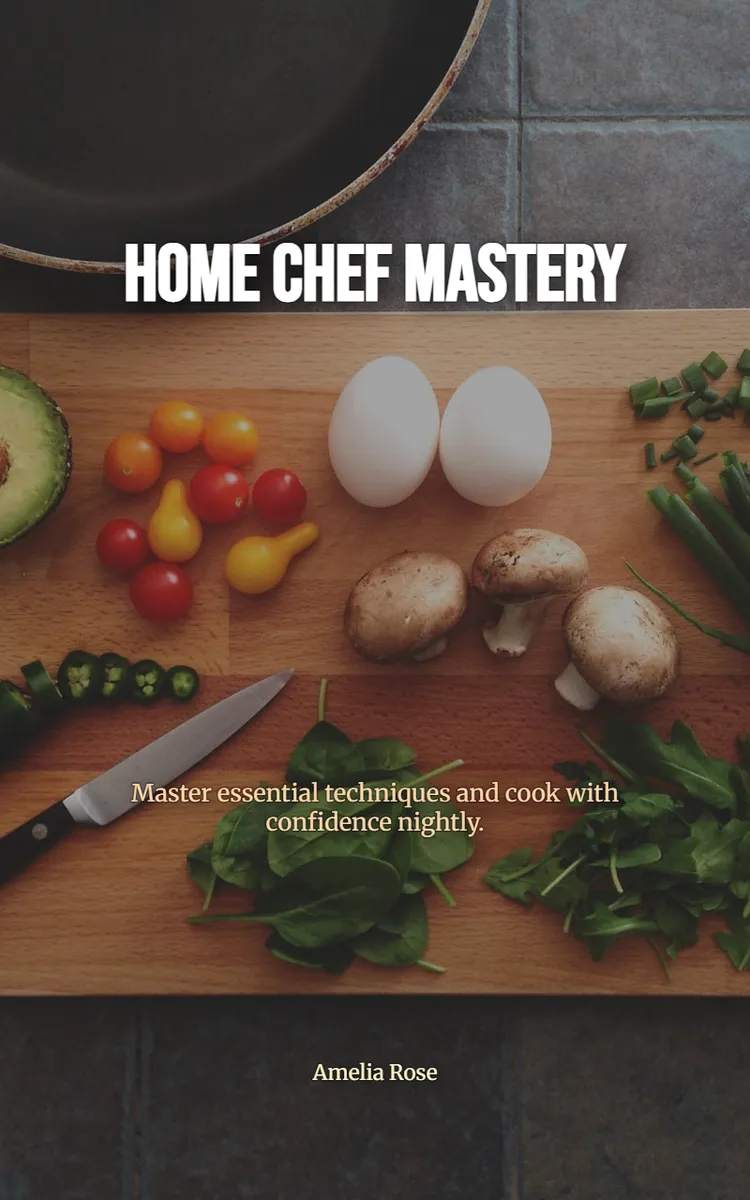
"Home Chef Mastery" is a general book by Amelia Rose with 6 chapters and approximately 13,858 words. Transform your kitchen skills from beginner to confident home chef with essential techniques..
This book was created using Inkfluence AI, an AI-powered book generation platform that helps authors write, design, and publish complete books.
Frequently Asked Questions
What is "Home Chef Mastery" about?
Transform your kitchen skills from beginner to confident home chef with essential techniques.
How many chapters are in "Home Chef Mastery"?
The book contains 6 chapters and approximately 13,858 words. Topics covered include Welcome to Your Culinary Journey, Essential Kitchen Setup & Safety, Knife Skills & Basic Prep Techniques, Heat, Seasoning & Flavor Building, and more.
Who wrote "Home Chef Mastery"?
This book was written by Amelia Rose and created using Inkfluence AI, an AI book generation platform that helps authors write, design, and publish books.
Write your own book with AI
Describe your idea and Inkfluence writes the whole thing. Free to start.
Start writingCreated with Inkfluence AI


