
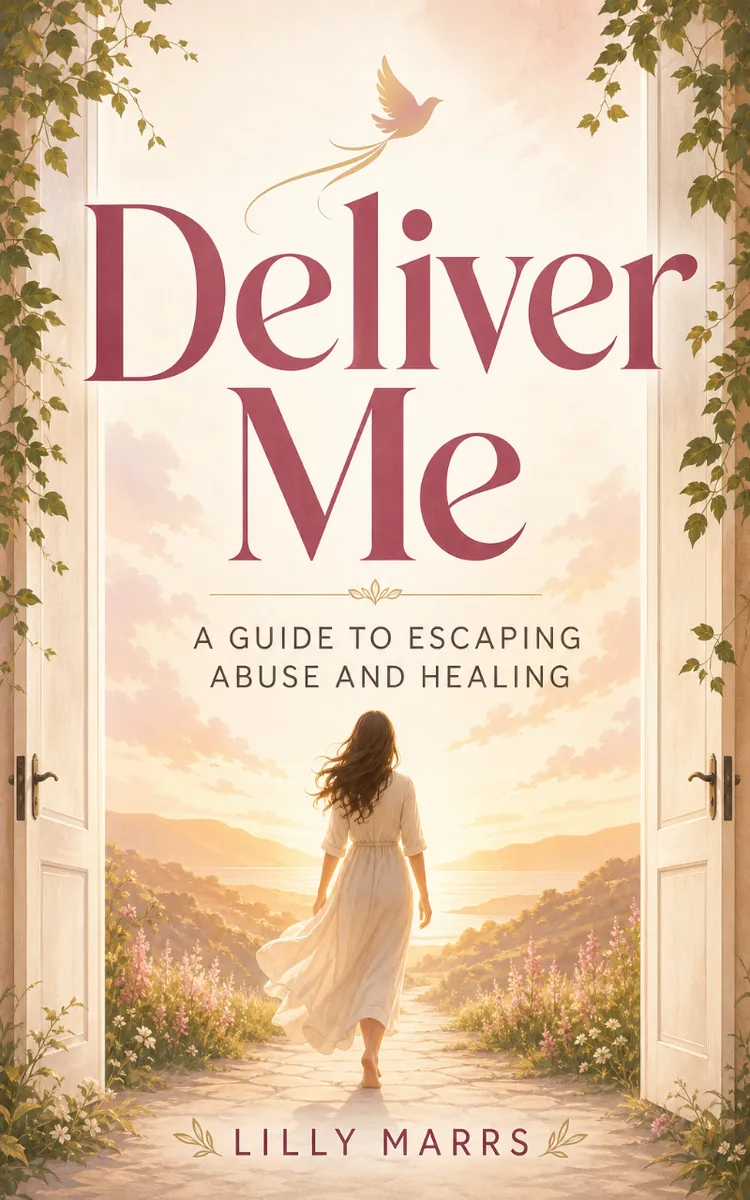
Deliver Me
Created with Inkfluence AI
Escaping abuse, coping with trauma, and seeking help
Table of Contents
- 1. Naming the Abuse Clearly
- 2. Breaking the Trauma Bond Spell
- 3. Rebuilding Your Safety Story
- 4. Undoing Self-Blame With Evidence
- 5. Setting Boundaries Without Apologies
- 6. Choosing Safe People and Places
- 7. Creating a Personal Escape Plan
- 8. Documenting Harm for Real Help
- 9. Talking to Professionals Without Freezing
- 10. Managing Triggers With the 5-Minute Reset
- 11. Healing Permanent Scarring in Mind and Body
- 12. Rebuilding Trust in Small Steps
- 13. Breaking the Cycle With Communication
- 14. Creating Boundaries With Family and Friends
- 15. Building Resilience Through Relapse Planning
- 16. Choosing Purpose After Survival
Preview: Naming the Abuse Clearly
A short excerpt from “Naming the Abuse Clearly”. The full book contains 16 chapters and 25,701 words.
When “It Wasn’t That Bad” Keeps You Stuck
Talia was thirty-four and worked as a hospital intake coordinator. She could spot distress in a stranger within minutes. She knew when a patient was scared, confused, or trying hard not to cry.
At home, though, she kept explaining things away.
Her partner checked her phone, questioned every delay, and became cold when she visited her sister. If Talia objected, he said she was being dramatic. If she cried, he called her unstable. Afterward, he might apologize, bring dinner, and act tender enough to make her question her own memory.
One night, Talia sat in her car outside work with her hand on the door handle. She wasn’t asking whether she was happy. She was asking whether she had “enough proof” to call what was happening abuse.
That question is part of the trap. If you have to keep shrinking the harm to survive it, it is still harm.
The Clarity Ladder: From Doubt to Truth
Old Belief: Abuse only counts when it leaves obvious injuries or happens constantly.
New Reality: Coercion, control, and emotional harm are abuse when someone repeatedly uses fear, pressure, punishment, or confusion to take away your freedom.
Many people look for one dramatic event. They search for a bruise, a threat, or a moment so extreme that nobody could argue with it. But control often works quietly. It changes what you wear, where you go, who you call, and how carefully you choose your words.
The Clarity Ladder helps you move from a confusing incident to the larger pattern:
- What happened? Name the behavior without explaining it away.
- What did it make you do? Notice the choice you changed to avoid a reaction.
- What did it cost you? Look at your peace, relationships, money, safety, or sense of self.
- What pattern does it reveal? Decide whether this is an isolated conflict or repeated control.
Take Talia’s phone. “He looked at my messages” is the first rung. “I started deleting harmless conversations” is the second. “I stopped texting my sister” is the third. The pattern becomes clearer: his access to her phone was not about closeness. It was about surveillance and control.
Naming the pattern doesn’t require you to prove what was in his heart. You don’t need to prove he planned every action. You only need to tell the truth about what happened and what it did to you.
How Control Hides in Ordinary Moments
Abuse often hides behind ordinary words: concern, love, honesty, protection, respect. Someone may say they’re checking your phone because they care. They may demand your location because they worry. They may punish you with silence and call it “taking space.”
The important question isn’t only what they call it. Ask what happens when you say no.
Healthy concern leaves room for your answer. Control treats your answer as disobedience. A healthy partner can feel disappointed without making you afraid. A controlling person turns your normal choices into evidence that you’re selfish, disloyal, or dangerous.
Watch for these signs this pattern is running your life:
1. You plan around their reactions.
You rehearse simple conversations, hide purchases, or delay coming home because you already know what may happen.
2. Your boundaries create punishment.
Saying “I don’t want to share my password” leads to rage, threats, withdrawal, or accusations instead of respectful discussion.
3. You keep defending their behavior to yourself.
You focus on the apology, the good weekend, or the fact that they had a hard day. The harm gets pushed into the background.
4. Your world keeps getting smaller.
You see fewer people, ask permission for ordinary activities, or stop trusting your own judgment.
The Clarity Ladder shows that repeated fear is information, not overreaction.
The goal isn’t to label every disagreement as abuse. People can be hurt, angry, and imperfect without controlling one another. The difference is the pattern of power. Can both people speak freely? Can either person say no? Can conflict end without intimidation, humiliation, surveillance, or retaliation?
If the answer keeps being no, your body may understand the situation before your mind is ready to name it. The tight chest before you unlock the door. The relief when they fall asleep. The careful editing of every sentence. These reactions aren’t proof that you’re weak. They may be signs that you’ve been adapting to danger.
Questions That Help You Stop Minimizing
1. What behavior am I describing in softer words than I would use for someone else?
“He gets jealous” may mean he reads my messages, follows me, and insults anyone I speak to. Try writing the plain version without adding “but.”
2. What do I do now to prevent their reaction?
List the small adjustments: turning off notifications, hiding receipts, changing clothes, avoiding friends, or pretending to agree. These choices show the pressure you’re living under.
3....
About this book
"Deliver Me" is a self-help book by Lilly Marrs with 16 chapters and approximately 25,701 words. Escaping abuse, coping with trauma, and seeking help.
This book was created using Inkfluence AI, an AI-powered book generation platform that helps authors write, design, and publish complete books. It was made with the AI Self-Help Book Writer.
Frequently Asked Questions
What is "Deliver Me" about?
Escaping abuse, coping with trauma, and seeking help
How many chapters are in "Deliver Me"?
The book contains 16 chapters and approximately 25,701 words. Topics covered include Naming the Abuse Clearly, Breaking the Trauma Bond Spell, Rebuilding Your Safety Story, Undoing Self-Blame With Evidence, and more.
Who wrote "Deliver Me"?
This book was written by Lilly Marrs and created using Inkfluence AI, an AI book generation platform that helps authors write, design, and publish books.
How can I create a similar self-help book?
You can create your own self-help book using Inkfluence AI. Describe your idea, choose your style, and the AI writes the full book for you. It's free to start.
Write your own self-help book with AI
Describe your idea and Inkfluence writes the whole thing. Free to start.
Start writingCreated with Inkfluence AI


