

Read the first chapter
The whole of chapter one, free. About 9 min. Turn the pages with the arrows, your keyboard, or a swipe.
Chapter 1
Choosing the Right Hamster Species
Why dwarf vs Syrian hamster fit matters (and what you’ll be able to do)
Have you ever bought a hamster “because it’s cute,” only to realize you mismatched the setup - space, temperament, and even how the hamster likes to handle its life? With hamsters, that mistake shows up fast. A cage that feels roomy for one species can feel cramped for another. A hamster that seems “sweet” one week can suddenly act stressed the next, not because you did something wrong, but because the species and your setup don’t line up.
Dwarf and Syrian hamsters also behave differently in everyday ways: how they use space, how they react to people, and how they handle close company. Knowing those differences helps you choose the right species from the start, then build care that matches the hamster’s body and brain instead of forcing the same routine onto two different animals.
After this chapter, you’ll be able to:
• tell dwarf vs Syrian hamsters apart by key traits you can spot in real life,
• pick a species that fits your temperament goals (calm handling vs minimal fuss),
• plan the right space and basic setup so stress doesn’t sneak in.
Species Fit Checklist takeaway: you’ll use a simple checklist to match species to your home and your expectations - before you buy.
The Species Fit Checklist: dwarf vs Syrian differences you can act on
Start with one quick definition. Syrian hamsters (often called “golden hamsters” at pet stores) usually live better as single pets, and many show more “houseguard” behavior - curious, but also protective of their space. Dwarf hamsters (a group that includes several species) often handle life as single pets too, but many people keep them with careful pairing rules - so you must think harder about compatibility and stress.
Now, the key differences you need for real decisions come down to three areas: temperament patterns, space needs, and daily care basics. You don’t need to memorize species charts - you need to know what to check for, then match your setup.
1) Match temperament patterns to your handling style
Ask yourself what you want most: quick interaction or low-pressure routines. Syrian hamsters commonly become more comfortable with steady, patient handling, but they may not love being crowded or grabbed. Dwarf hamsters can be more flighty at first and may need more “watch-and-learn” time before they accept handling.
Concrete example: if you live in a small apartment (like Nina, 22, with roommates walking through the hallway), Syrian hamsters may still settle well if you keep the cage in a calmer corner and let them choose when to approach. Dwarf hamsters often do fine too, but you’ll usually get better results by starting with longer quiet settling time before you try to handle them.
Takeaway check: If you can commit to slow bonding (short, calm sessions after the hamster settles), both species can work. If you want instant friendliness, Syrian hamsters often feel more “predictable” once settled.
2) Plan space based on species “feel,” not just cage size on paper
Hamsters don’t measure space in square feet the way we do. They measure it by whether they can create separate zones: sleeping, eating, burrowing, and running. Syrian hamsters typically use more vertical and “main territory” space. Dwarf hamsters still need digging and running, but they may pack activity into smaller zones - without meaning they feel safe in a tiny setup.
Use a practical rule: provide a cage that allows a long run path and a deep burrowing area. Don’t just add a wheel and call it done. If you’re using a cage with shallow bedding, both species can end up stressed, but Syrian hamsters often show it with more obvious territorial agitation (pacing, sudden defensive behavior), while dwarf hamsters often show it with more hiding and skittish reactions.
Takeaway check: If you can’t set up deep bedding and a clear running zone, you’ll get better results by choosing the species you can actually house the way it needs.
3) Set up daily care basics the same way - then adjust for species behavior
Both dwarf and Syrian hamsters need fresh food, clean water, safe chew items, and a wheel that fits the hamster’s body. The difference shows up in how you introduce changes. Syrian hamsters often tolerate changes better once they know you, but they still dislike sudden “redecorating” of their main area. Dwarf hamsters can react more strongly to changes that feel like invasion.
Concrete example: if you plan to switch bedding brands because you ran out, do it in stages for both species. Replace only part of the bedding each time so the hamster keeps familiar scent. Expect the hamster to explore the “new” area carefully - don’t rush handling during the first day after changes.
Takeaway check: You can keep your care routine consistent, but you must roll out changes gradually.
4) Use the Species Fit Checklist before you buy
Here’s the checklist you’ll use like a map. Don’t skip it - people usually “feel sure” about a species and then get surprised by the setup or handling demands.
• Your cage plan: Do you have room for deep bedding plus a run area? (Yes/No)
Why: deep bedding reduces stress because the hamster can dig and store food like it wants to.
• Your noise level: Where will the cage live during the day and night? (Quiet room / shared space / hallway traffic)
Why: constant movement and loud sounds make small bodies stay on alert.
• Your handling timeline: Can you commit to 1-2 weeks of quiet settling before regular handling? (Yes/No)
Why: hamsters need time to learn your routine before they trust touch.
• Your expectation: Do you want a hamster that approaches more readily, or are you okay with a “watch first, then maybe” attitude? (Approach / Watch first)
Why: Syrian and dwarf hamsters often differ in how quickly they show comfort.
• Your single-pet reality: Will you keep your hamster alone? (Yes/No)
Why: single housing simplifies stress control and bonding basics. If you plan companionship, you must do extra work.
Species Fit Checklist takeaway: when you answer these five questions, you’ll know which species fits your actual life - not just what looks cute.
Nina’s apartment setup: applying the Species Fit Checklist step by step
Nina wants a hamster for companionship in a small apartment, but she also shares space with roommates and has a busy schedule. That means her hamster needs a setup that stays stable, and a species that won’t constantly react to hallway traffic or sudden handling.
Use this scenario as a blueprint for your own choices.
Step 1: Pick the species based on your “stress triggers”
Nina’s stress triggers: hallway movement and unpredictable noise.
• If she chooses Syrian, she should focus on calm space placement and steady, slow bonding.
• If she chooses a dwarf hamster, she should expect a more “watch-first” approach and set up extra hiding options and consistent routines.
Expected outcome: her hamster settles faster because the cage location matches how the hamster reacts to noise and movement.
Step 2: Build the bedding zone before you add anything else
Nina sets up deep bedding so her hamster can dig. She does this first, then adds the wheel, water, and food later.
Concrete details Nina uses:
• She creates a clear digging area across one side of the cage.
• She keeps the wheel in an area where bedding won’t get dumped into it constantly.
• She leaves the main “nest zone” undisturbed for the first days.
Expected outcome: the hamster starts making its own routes and storage spots instead of pacing or hiding all day.
Step 3: Place the cage where the hamster gets routine, not surprises
Nina picks a spot that stays calm during the day. She avoids:
• direct sunlight that warms the cage unpredictably,
• drafty corners near doors,
• spots where roommates open/close doors every hour.
Expected outcome: the hamster spends more time exploring at its normal pace instead of staying in alarm mode.
Step 4: Use the settling timeline and only start handling when the hamster acts “ready”
Nina follows a simple rule: she lets the hamster settle before she starts regular handling. She watches behaviors instead of forcing touch.
Her “ready signals” include:
• the hamster explores normally around the cage,
• it approaches food without freezing,
• it seems less jumpy when she walks near the cage.
Expected outcome: bonding starts on the hamster’s comfort level, not on human impatience.
Step 5: Make changes slowly and watch for behavior shifts
Nina plans any setup changes for the early part of the week so she can observe. She swaps only part of bedding at a time and avoids big cage rearrangements.
Expected outcome: the hamster keeps familiar scent and doesn’t treat the cage like a new threat.
Quick checklist (copy this for your next decision)
• Confirm you can set up deep bedding + digging space (not just a thin layer).
• Choose a cage location with stable, quieter routine.
• Commit to 1-2 weeks settling before regular handling.
• Decide if you want approach behavior or you can handle watch-first comfort.
• Keep your hamster single-pet until you’re confident about species-specific compatibility and stress control.
Species Fit Checklist takeaway: when your answers match your home, you stop guessing and start building a hamster life that feels safe.
Common mistakes when choosing dwarf or Syrian hamsters (and how to fix them)
Cage math that ignores burrowing
Not this: “The cage looks big enough because it’s a tall brand name or it fits the wheel.”
Do this: measure your bedding depth plan and confirm you can create a digging area the hamster can actually use. If you can only fit shallow bedding, increase the setup or choose a different cage - both dwarf and Syrian hamsters need digging space to feel secure.
Fix you can do today: add bedding depth first, then place the wheel so it stays usable without constant bedding spill.
Takeaway prompt: Does your hamster have a place to dig that you won’t keep “flattening” with frequent cleaning?
Buying the species you can “handle,” not the species that fits your schedule
Not this: “I’ll handle daily right away so the hamster gets used to me fast.”
Do this: keep early handling low-pressure. Let the hamster settle, then do short, calm interactions at predictable times. If you can’t stick to that routine, choose the species you can house calmly where it won’t feel rushed.
Fix you can do today: set a calendar reminder for the settling window and plan your first handling sessions for after that period.
Takeaway prompt: Can you give your hamster a consistent routine - even when you’re busy?
Switching setups suddenly after the hamster starts exploring
Not this: “My hamster is active, so I’ll rearrange the cage and clean everything thoroughly right now.”
Do this: keep the hamster’s scent familiar. If you must clean, remove waste and spot-clean first. If you change bedding, do it gradually so the hamster keeps its landmarks.
Fix you can do today: keep a small portion of used bedding and mix it into the new bedding during your next bedding change.
Takeaway prompt: When your hamster’s home smells different, how fast do you expect it to feel safe again?
Closing: your next step is a match, not a gamble
Choosing between dwarf and Syrian hamsters isn’t just about size or cuteness - it’s about matching how the hamster uses space and handles stress to the way you live. Use the Species Fit Checklist like you’d use a measuring tape: you check before you commit. When your cage plan, noise level, settling timeline, and handling expectations line up, you’ll spend less time troubleshooting behavior and more time learning your hamster’s real signals.
Next, you’ll get better at reading what your hamster tells you - because the “right species” is only half the story. The other half is learning how your hamster communicates once the home fits.
End of chapter one. 7 more chapters and about 15,395 words in the full book.
Swipe or use the arrows to turn the page


What's inside: 8 chapters
- 1. Choosing the Right Hamster Species
- 2. Setting Up a Safe, Enriching Cage
- 3. Feeding Basics and Safe Treats
- 4. Reading Body Language and Stress Signs
- 5. Handling, Taming, and Trust Building
- 6. Nighttime Routine and Enrichment Planning
- 7. Health Monitoring and When to Call a Vet
- 8. Common Mistakes and Behavior Fixes
About this book
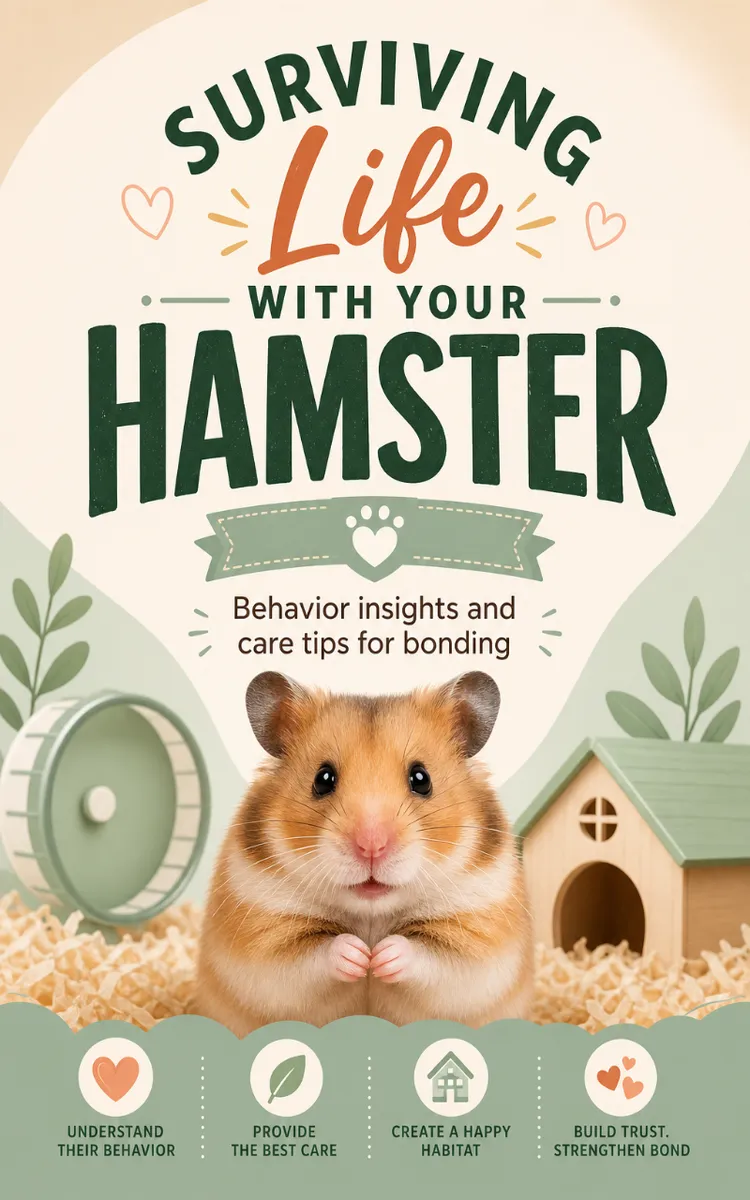
"Surviving Life With Your Hamster" is a how-to guide book by Violet Powers with 8 chapters and approximately 15,395 words. Hamster behavior reading, care guidance, and bonding basics.
This book was created using Inkfluence AI, an AI-powered book generation platform that helps authors write, design, and publish complete books. It was made with the AI Ebook Generator.
Frequently Asked Questions
What is "Surviving Life With Your Hamster" about?
Hamster behavior reading, care guidance, and bonding basics
How many chapters are in "Surviving Life With Your Hamster"?
The book contains 8 chapters and approximately 15,395 words. Topics covered include Choosing the Right Hamster Species, Setting Up a Safe, Enriching Cage, Feeding Basics and Safe Treats, Reading Body Language and Stress Signs, and more.
Who wrote "Surviving Life With Your Hamster"?
This book was written by Violet Powers and created using Inkfluence AI, an AI book generation platform that helps authors write, design, and publish books.
How can I create a similar how-to guide book?
You can create your own how-to guide book using Inkfluence AI. Describe your idea, choose your style, and the AI writes the full book for you. It's free to start.
Write your own how-to guide book with AI
Describe your idea and Inkfluence writes the whole thing. Free to start.
Start writingCreated with Inkfluence AI


