
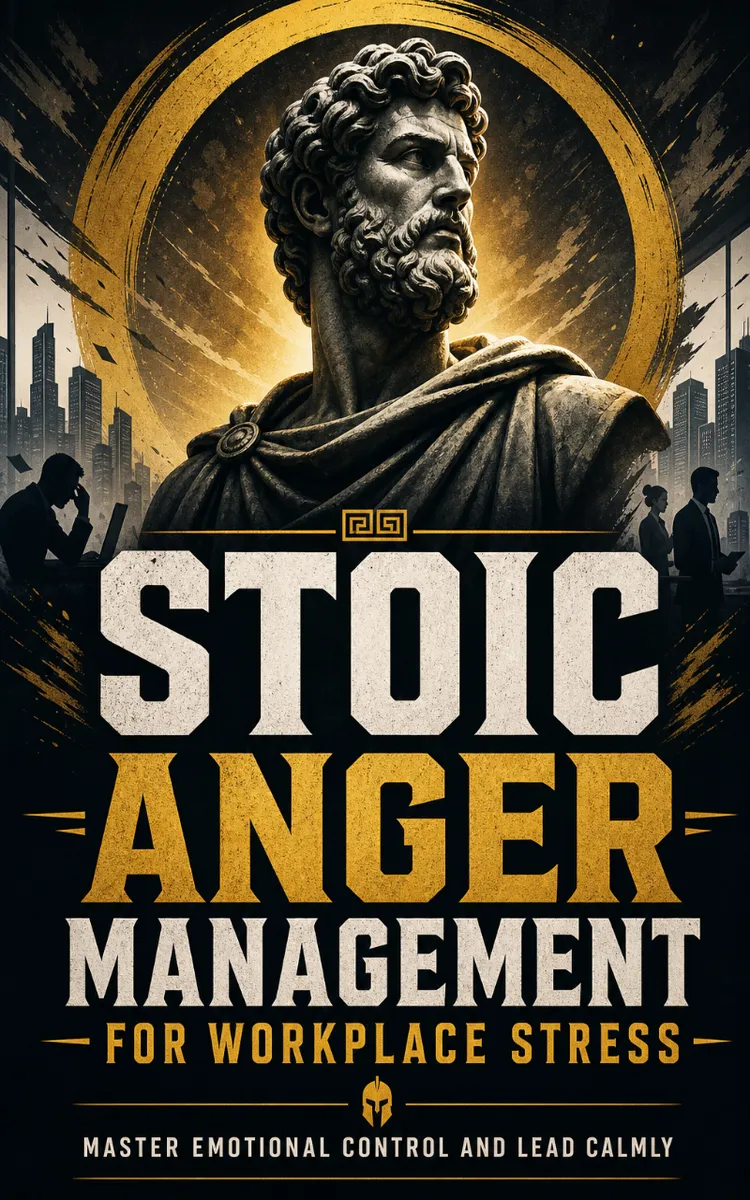
Stoic Anger Management For Workplace Stress
Created with Inkfluence AI
Stoic-based anger management strategies for workplace stress
Table of Contents
- 1. Recognize Anger Triggers at Work
- 2. Separate What You Control
- 3. Practice Stoic Pause Before Reply
- 4. Use the Stoic View From Above
- 5. Name the Emotion Without Feeding It
- 6. Turn Complaints Into Clear Requests
- 7. Respond to Criticism Like a Stoic
- 8. Manage Rumination After a Conflict
- 9. Set Boundaries With Calm Clarity
- 10. Handle Passive-Aggressive Behavior
- 11. De-Escalate Heated Meetings Fast
- 12. Choose Virtue Over Winning
- 13. Use Pre-Commitment for Difficult People
- 14. Practice the Stoic “Negative Visualization”
- 15. Write Calm Messages Under Stress
- 16. Lead With Emotional Contagion Control
- 17. Coach Others Through Stoic Reframing
- 18. Run Restorative Conversations After Tension
- 19. Prevent Burnout That Fuels Anger
- 20. Build a Daily Stoic Anger Routine
Preview: Recognize Anger Triggers at Work
A short excerpt from “Recognize Anger Triggers at Work”. The full book contains 20 chapters and 33,529 words.
What do you feel in your body right before you snap-tight chest, fast words, clenched jaw, a heat wave behind your eyes? If you can’t name that signal yet, you’ll usually notice your anger only after it already spilled onto Slack, an email, or a meeting. This chapter helps you catch the moment earlier by spotting your personal anger triggers at work-through situations, specific words, repeating patterns, and bodily cues-so you can intervene before escalation.
Nadia, a 34-year-old customer support specialist, learned this the hard way. She didn’t “feel angry” at first; she felt busy. Then her shoulders tightened, her thumbs hovered over the keyboard, and her replies got sharper. By the time she noticed the tone, the customer thread had already turned into a back-and-forth that cost time to fix. You don’t have to wait for that point. You can train your attention to catch the early signals and act while you still control your next sentence.
The goal here is simple: after this chapter, you’ll be able to identify your own early anger signals, map them to real work situations, and use that map to choose a calmer response in the next hard moment-without pretending you never get triggered.
Why This Matters
Anger at work rarely starts as a full explosion. It usually starts as a small alarm-your mind reads something as disrespect, unfairness, waste, or threat, and your body starts preparing to fight, defend, or push back. If you only notice anger after you react, you lose the chance to steer the outcome. You may still be “right” about the facts, but your delivery can turn a fixable problem into a conflict that drains everyone’s time.
This chapter solves a specific problem: people often try to manage anger by telling themselves to “stay calm.” That doesn’t work well because anger doesn’t arrive as a thought you can ignore-it arrives as signals. When you learn your signals early, you stop guessing. You can predict your next likely escalation moment and intervene while you still have choices.
After you learn this, you’ll be able to do three practical things: (1) spot the exact situation cues that set you off, (2) recognize the words and patterns that reliably trigger you, and (3) track bodily changes that show anger is rising. When you can do those three, you control your timing. You respond on purpose instead of reacting on autopilot. Take a breath and ask yourself one question: “When my anger starts, what changes first-my thoughts, my words, or my body?”
Practical takeaway: Anger control starts with early detection, not late self-control.
How It Works
Your anger has a “setup” and a “signal.” The setup is the work moment that sets the stage. The signal is what your body and mind do when the setup hits. The Trigger Map Compass gives you a way to label those signals quickly so you can act sooner.
Use this framework as a personal mapping tool. It doesn’t require changing your job or trusting a theory-it uses what already happens to you.
1. Name your situation trigger (the Compass North)
- Write the specific workplace moments that reliably start the climb: “customer demands a callback after closing,” “manager changes priorities mid-day,” “handoff from another team is missing details,” or “someone corrects me in public.” Include the setting, not just the emotion.
- Why this works: your brain reacts to patterns in context. When you label the context, you can spot it faster next time.
2. Capture the word trigger (the Compass East)
- List the exact phrases or word types that hit a nerve. It might be “as per policy,” “you should have,” “it’s not our fault,” “just follow the SOP,” or “this is urgent” when you’re already overloaded.
- Why this works: your anger often locks onto language that sounds like blame, dismissal, or pressure. Naming it helps you separate facts from tone.
3. Track the pattern trigger (the Compass South)
- Identify the repeating structure: “I explain, they interrupt,” “they ask for exceptions, I say no, they escalate,” “we promise a timeline, then delays stack,” “I ask for clarity, then I get vague answers.”
- Why this works: patterns predict your escalation. You stop treating each incident like a surprise.
4. Watch the body cue (the Compass West)
- Pick 1-3 physical signals that show anger is rising for you: tight jaw, heat in face, clenched stomach, faster typing, shallow breathing, sudden silence, or feeling “wired.”
- Why this works: body cues arrive early-often before your words do. You get a head start.
Here’s how Nadia used it. She noticed her body cue first: her shoulders tightened and her thumbs hovered over the keyboard. She then recognized her situation trigger: customers who repeated the same complaint after she already provided a resolution. Her word trigger: “So you’re telling me…” because it felt like a trap. Her pattern trigger: repeat → accusation tone → request for escalation....
About this book
"Stoic Anger Management For Workplace Stress" is a how-to guide book by Socratic Mastery with 20 chapters and approximately 33,529 words. Stoic-based anger management strategies for workplace stress.
This book was created using Inkfluence AI, an AI-powered book generation platform that helps authors write, design, and publish complete books. It was made with the AI Ebook Generator.
Frequently Asked Questions
What is "Stoic Anger Management For Workplace Stress" about?
Stoic-based anger management strategies for workplace stress
How many chapters are in "Stoic Anger Management For Workplace Stress"?
The book contains 20 chapters and approximately 33,529 words. Topics covered include Recognize Anger Triggers at Work, Separate What You Control, Practice Stoic Pause Before Reply, Use the Stoic View From Above, and more.
Who wrote "Stoic Anger Management For Workplace Stress"?
This book was written by Socratic Mastery and created using Inkfluence AI, an AI book generation platform that helps authors write, design, and publish books.
How can I create a similar how-to guide book?
You can create your own how-to guide book using Inkfluence AI. Describe your idea, choose your style, and the AI writes the full book for you. It's free to start.
Write your own how-to guide book with AI
Describe your idea and Inkfluence writes the whole thing. Free to start.
Start writingCreated with Inkfluence AI


