
Read the first chapter
The whole of chapter one, free. About 9 min. Turn the pages with the arrows, your keyboard, or a swipe.
Chapter 1
First Day at Albright Medical
The gates of Albright Medical School closed behind Maya Albright with a heavy metallic sound that seemed louder than it should have been. She stood beside the campus sign, holding her admission folder against her chest while the morning air carried the smell of wet pavement and trimmed grass. Students moved toward the main building in neat groups, their coats pressed, their bags full, their faces serious.
Maya was twenty years old, and she had imagined this morning many times. In those dreams, she had entered the school with confidence. She had pictured herself walking through the halls as if she already belonged there, carrying books beneath one arm and wearing the calm expression of a future doctor.
Instead, she kept checking the address on her letter.
Albright Medical School.
The name on the gate was also her own, but the connection gave her no comfort. She felt like a visitor who had been allowed inside by mistake.
She adjusted the strap of her bag and followed the other students toward the orientation hall. Her shoes made small, careful sounds against the stone path. Around her, conversations rose and fell.
“Did you find the registration desk?”
“They said the first session starts at eight.”
“I heard the rules are strict.”
Maya listened without joining in. She had left home that morning after a quiet breakfast. Her parents had not stopped her, but neither had they encouraged her. Her father had looked over the top of his newspaper and reminded her that medicine required years of study and money. Her mother had placed a cup of tea in front of her without meeting her eyes.
“You should still think about other courses,” her mother had said.
Maya had folded her admission letter and put it into her bag.
“I have thought about them,” she had answered.
That had been the end of the conversation. No blessing had followed. No proud embrace. She had walked out with her documents, her small savings, and the knowledge that the choice was hers alone.
Inside the orientation hall, the air was cool and smelled faintly of polish and paper. Rows of chairs filled the wide room. At the front stood a long table covered with registration forms. Behind it, staff members sorted name lists and spoke to students in short, firm voices.
Maya joined the line. She held her folder with both hands and tried to slow her breathing.
When she reached the desk, a woman with glasses looked at her identification card, then at the list.
“Name?”
“Maya Albright.”
The woman ran a finger down the page. “Admission number.”
Maya gave it to her.
The woman looked again. “You are late.”
Maya glanced at the clock on the wall. It was seven minutes before the announced starting time.
“I arrived early,” she said. “I was directed to the wrong entrance.”
The woman handed her a form. “You should have asked at the gate. Fill this out and take it to the second desk.”
Maya accepted the paper. “Thank you.”
The woman had already turned to the next student.
At the second desk, another staff member checked the form and pointed toward a narrow table near the wall.
“Photograph.”
Maya placed two passport photographs on the table.
“Your copies are not arranged correctly.”
“I am sorry. I can arrange them now.”
“You should have done that before coming.”
The words were not loud, but they carried enough sharpness to make Maya’s face grow warm. She moved aside, opened her folder, and placed the documents in the requested order. Around her, students waited in silence. Someone coughed. A chair scraped across the floor.
When she returned the papers, the staff member stamped the form and gave her a small card.
“Seat number forty-two. Do not lose this.”
Maya nodded and walked into the hall.
Seat forty-two was near the back. From there, the front table looked distant, and the rows between them seemed to form a narrow path she would have to cross every day. She sat down and placed the card carefully beside her notebook.
A bell sounded from somewhere in the building. The remaining students hurried inside. The doors were closed, and the orientation began.
A senior administrator stood at the front. He did not introduce himself with warmth. He read from a printed sheet and explained the rules of the school in a steady voice.
Attendance was compulsory. Late arrival would be recorded. Uniforms had to be worn on specified days. Identification cards had to remain visible. No student could leave the campus during certain hours without permission. Failure in required examinations could lead to dismissal from the program.
Maya wrote each rule in her notebook. Her pen moved quickly, but her confidence did not keep pace.
The administrator paused beside the words on his page.
“Medical training is not for people who are uncertain,” he said. “If you are here because your family chose this for you, you should reconsider. If you are here because you think the profession will bring comfort or status, you should reconsider that as well.”
Maya kept her eyes on her notebook.
She had not come because her family chose it. In fact, she had come despite their doubts. But the statement still reached her. She felt as if the hall had become smaller, as if every student had been asked to prove a reason for sitting there.
A staff member moved along the aisles, checking identification cards. When she reached Maya, Maya lifted hers.
“Visible,” the woman said.
“It is visible.”
“More visible.”
Maya moved it from the edge of her bag to the front of her coat.
The woman continued down the row.
For the rest of the morning, the students were taken through procedures. They received schedules, lists of required books, instructions about examinations, and warnings about conduct. Each paper added weight to Maya’s folder. By the time the session ended, her fingers were sore from gripping her pen.
Outside the hall, students gathered beneath the covered walkway. The rain had started again, tapping against the roof. Some spoke with excitement about their first classes. Others compared schedules and discussed where they would find the required books.
Maya stood near a pillar and read her own schedule. The first week included lectures, laboratory sessions, and an early morning practical orientation. The book list was longer than she had expected. Several titles were expensive, and the school required the latest editions.
A girl with a blue scarf approached her.
“Are you in the first group?” she asked.
Maya looked up. “Yes. I am Maya.”
“I am Lillian.” The girl glanced at the schedule in Maya’s hand. “You have the same laboratory group as me.”
“That is good.”
Lillian smiled, though her expression soon changed. “Did you hear the administrator? They remove students quickly here.”
“I heard him.”
“My cousin studied nursing at another school. She said medical school was difficult, but this place sounds impossible.”
Maya folded the schedule. “We have only just arrived.”
“That is what I am telling myself.” Lillian lowered her voice. “My parents wanted me to study pharmacy. They think medicine will take too long.”
Maya looked at her. “My parents say something similar.”
For the first time that morning, Maya felt less alone. The comfort lasted only a moment. A notice was placed on the wall near them, and a group of students moved closer to read it.
The notice listed the fees due before the first full week of classes. It also stated that students who failed to meet the deadline would not be permitted to attend certain sessions.
Maya read the amount twice.
The money she had saved would not cover everything. She had expected her parents to help with the first payment, even if they did not fully support her decision. She had assumed that once she was accepted, the seriousness of the choice would become clear to them.
She took out her phone and called her mother.
The call rang for a long time before it was answered.
“Hello?” her mother said.
“Mother, I received the fee notice. They need the payment before next week.”
There was a pause. In the background, Maya heard dishes being moved.
“How much?”
Maya told her.
Her mother exhaled softly. “That is a lot of money.”
“I know. I have some savings, but I cannot pay all of it.”
“You knew medical school would cost money.”
“I knew. I thought we would discuss it.”
“We have discussed it many times,” her mother said. “Your father has already said he cannot continue paying for a decision he did not support.”
Maya pressed the phone closer to her ear. Rainwater dripped from the edge of the roof beside her.
“I am not asking him to pay everything.”
“What are you asking?”
“I am asking for help with the first payment.”
Her mother did not answer at once. When she spoke again, her voice was tired rather than angry.
“Maya, you should consider changing courses before you become more deeply involved. You could study public health, teaching, or administration. There are other respectable paths.”
Maya looked through the glass doors at the orientation hall. The rows of chairs were empty now. The room seemed even larger without the students.
“I want to become a doctor,” she said.
“I know you want it. Wanting something does not make it easy.”
The call ended without an agreement.
Maya lowered the phone. Lillian was standing a short distance away, pretending not to listen. When their eyes met, Lillian did not ask what had happened.
“You can use the library computers to look for the book prices,” she said instead. “Maybe some students sell used copies.”
Maya nodded. “Thank you.”
They walked toward the library together. The campus no longer looked welcoming. The buildings were clean and impressive, but the rules seemed to stand between Maya and every door. She had entered the school hoping to prove that she belonged. By afternoon, she understood that belonging would not be given to her simply because her name appeared on an admission list.
At the library, she searched through the required texts and wrote down the prices. Her calculations left very little money for transportation and food. She closed the notebook and rested her hand on its cover.
She had earned admission. That was true. She had passed the entrance process, completed registration, and received a place in the program. But the achievement came with a cost she had not been ready to face: strict demands from the school and uncertainty at home.
On the journey back, she kept the fee notice inside her folder. It bent at the corners from being opened so many times. She had entered Albright Medical School as a hopeful newcomer. She returned home as a student already learning that determination would not protect her from fear, loneliness, or practical hardship.
Looking back, I now understand that my first day did not test my knowledge. It tested whether I could remain committed when encouragement was absent. The school had given me a place, but it had not promised comfort. My parents had given me life, but they were not ready to give their full support to the path I had chosen.
That evening, I placed my identification card beside my bed and read the name printed across it: Maya Albright, Medical Student. The words still frightened me. They also reminded me that I had not imagined my future. I had entered it.
The next morning, I would have to find a way to pay the fee, attend the first class, and return to a campus that already felt determined to measure every weakness. For the first time, I understood that becoming a doctor would require more than passing examinations. It would require me to keep showing up when no one was waiting to cheer for me.
End of chapter one. 7 more chapters in the full book.
Swipe or use the arrows to turn the page
What's inside: 8 chapters
- 1. First Day at Albright Medical
- 2. Choosing Medicine Against Family
- 3. Friends Push Her Toward Other Courses
- 4. Anatomy Lab Secrets and Hidden Answers
- 5. Scholarship Interview at St. Brigid Hospital
- 6. Night Shifts and the Breaking Point
- 7. Appeal Hearing for Her Clinical Record
- 8. Becoming Head of Doctors at St. Brigid
About this book
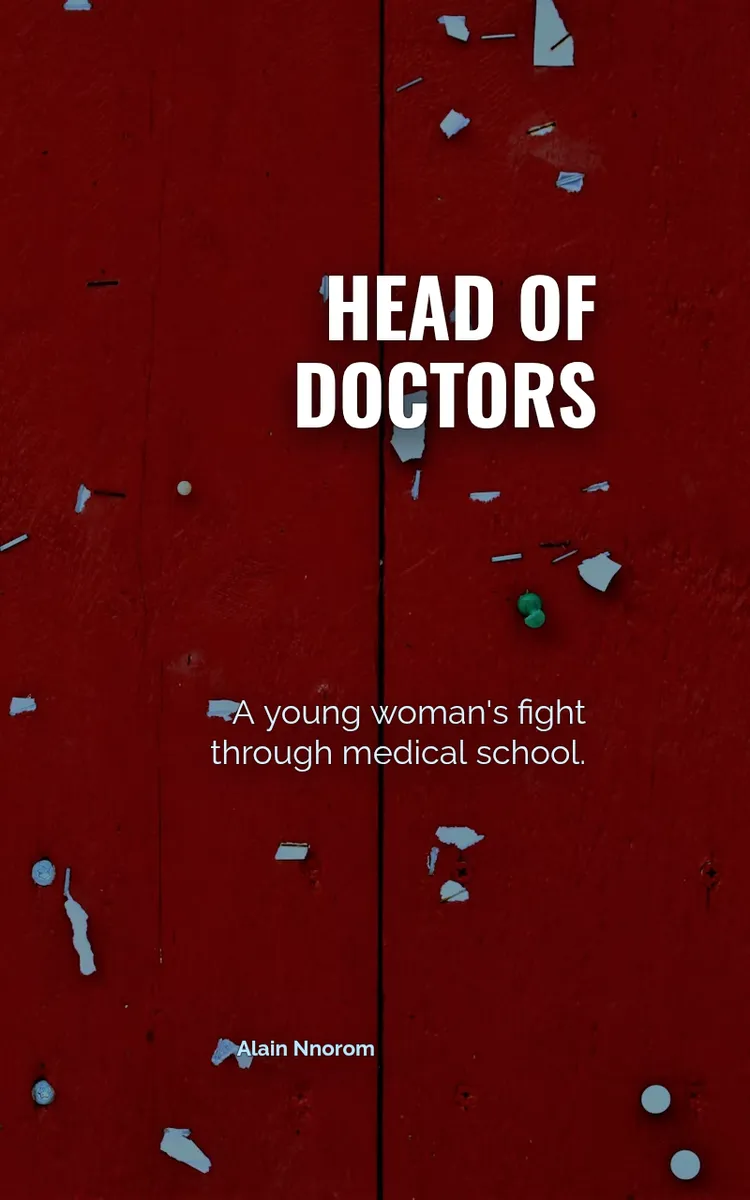
"Head Of Doctors" is a biography book by Alain Nnorom with 8 chapters and approximately 18,434 words. A determined woman overcoming family and medical school challenges.
This book was created using Inkfluence AI, an AI-powered book generation platform that helps authors write, design, and publish complete books. It was made with the AI Biography Writer.
Frequently Asked Questions
What is "Head Of Doctors" about?
A determined woman overcoming family and medical school challenges
How many chapters are in "Head Of Doctors"?
The book contains 8 chapters and approximately 18,434 words. Topics covered include First Day at Albright Medical, Choosing Medicine Against Family, Friends Push Her Toward Other Courses, Anatomy Lab Secrets and Hidden Answers, and more.
Who wrote "Head Of Doctors"?
This book was written by Alain Nnorom and created using Inkfluence AI, an AI book generation platform that helps authors write, design, and publish books.
How can I create a similar biography book?
You can create your own biography book using Inkfluence AI. Describe your idea, choose your style, and the AI writes the full book for you. It's free to start.
Write your own biography book with AI
Describe your idea and Inkfluence writes the whole thing. Free to start.
Start writingCreated with Inkfluence AI


