
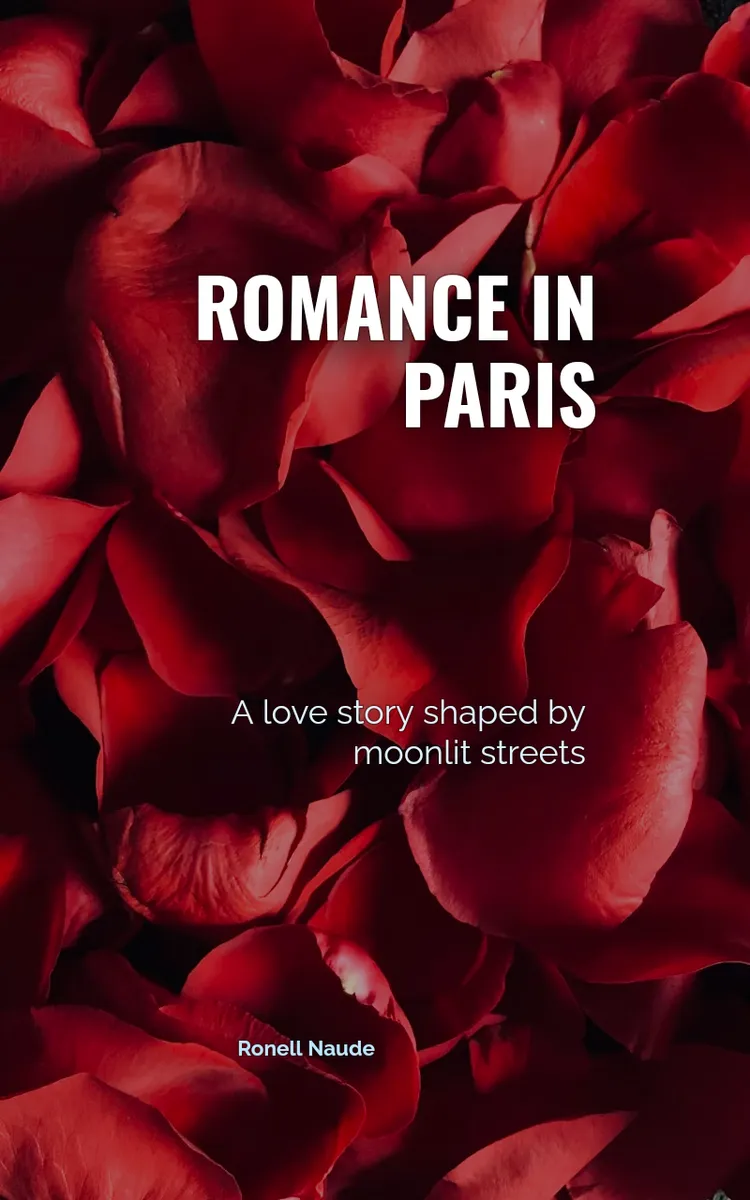
Read the first chapter
The whole of chapter one, free. About 17 min. Turn the pages with the arrows, your keyboard, or a swipe.
Chapter 1
The Seine Night That Changes Everything
The violin note came to Mara the way a thought did when you couldn’t shake it - threaded through the night, impossible to hold still. It slipped over the black water of the Seine, bright as a match struck in a closed fist, then vanished before she could name it. She stopped at the Pont des Arts railing, fingers curled around cold metal, and listened harder until the city’s usual chorus - distant traffic, late laughter leaking from somewhere along the embankment, the low shush of current - fell away. Only that sound stayed, not loud, not steady. It was calling and warning at the same time.
She’d tried to tell herself it was coincidence. Paris was full of street musicians who understood how to haunt a tourist’s memory. But this wasn’t that. The melody kept turning its face away from her, as if it knew exactly how far she could follow. Mara moved anyway, boots whispering over damp stone, her coat tugged open by a night breeze that smelled faintly of river mud and cigarette smoke. The note returned, higher now, and she followed it along the embankment where the lights thinned into reflections - gold on water, silver on her breath.
For a few blocks, she couldn’t see the source. The sound threaded between the columns and the bridges like it was deciding where to be heard. Then it slipped close enough that the hairs on her arms lifted. Somewhere ahead, under the curve of an archway, the melody broke into a phrase that landed too cleanly in her chest, like a memory she hadn’t earned. Mara pressed her palm to her own sternum once, sharply, as if to keep herself from running headlong into whatever was waiting.
Under the arch, the air changed. It was warmer there, trapped by stone, and it carried something else along with it - rosin, faint but unmistakable, the dry, sweet bite of wood scraped into music. Her eyes adjusted and she saw a figure half-turned toward the river, shoulders angled away as if they’d been listening for her too. The violin wasn’t raised now; the music had stopped. Only the last note still vibrated in the dark, fading like steam on glass.
“Playing alone is a talent,” Mara said, and her voice came out steadier than she felt. She didn’t move closer. “But leaving a melody hanging like that - someone will pick it up.”
The figure turned at the sound of her words. He was close enough that she could see the line of his jaw and the shadow of stubble along his cheek, close enough that the night didn’t fully hide him. His hair - dark, slightly disobedient - was damp at the ends, as though he’d been out in the rain or the mist had found him before she did. When he looked at her, his eyes flashed with a kind of alertness that didn’t belong to a casual passerby.
“You heard it,” he said, French shaped around a cautious English accent, the sentence simple but weighted. “You followed.”
Mara swallowed. The river’s cold breath touched her face and her lips tasted faintly of metal from biting the inside of her cheek. “I didn’t know I could.”
He took a step, slow, like he was measuring the distance between them without moving too fast. His hands were empty - no violin case, no bow visible - yet his posture suggested the instrument was close, just out of her sight. He smelled faintly of soap and something sharper underneath, like clean fabric warmed by body heat.
“I tried,” he said, and the way he said it made it sound like he’d tried to do the right thing and failed. “I didn’t mean for - ”
“For me to hear?” Mara cut in, sharper than she intended. Anger was easier than curiosity. “Why are you here, then?”
His gaze flicked past her shoulder, toward the bridge behind her. The movement was quick, involuntary, like he’d checked for a threat and found none. Then he looked back at her. “Because sometimes people leave things where they can’t afford to be seen.”
Mara’s pulse kicked. The melody had led her here for a reason, and now the reason had a face. She should have asked for the violinist’s name, for the story behind the sound. Instead she kept her voice low, controlled. “You’re not answering the question.”
His mouth tightened. “I’m answering the part I’m allowed to.”
That made Mara feel suddenly, sharply foolish - as if she’d walked into a conversation already in progress. She took one step toward him anyway, the stone under her boot slick and cold. “Allowed by who?”
He didn’t answer immediately. The night filled with the soft percussion of water against the embankment and, somewhere farther down, a car horn that sounded like it was too far away to matter. Then he said, “By me. By them. By whatever comes next.”
Mara could have walked away. She should have. But the rosined air, the lingering phrase in her bones, and the way his eyes seemed to guard something made her want to force the truth into the open. “If you’re the violinist,” she said, “then you left a melody and a trail. Trails don’t happen by accident.”
“I didn’t leave it for you,” he replied. The rhythm of his words was deliberate, as if he’d rehearsed them in his head and hated himself for needing to. “I was trying to get it to someone else.”
“Then give me the someone else,” Mara demanded.
His gaze dropped to her hands. She realized too late she’d been gripping the railing so hard her knuckles had gone pale. She loosened them, but the tension didn’t fade. “You shouldn’t be here,” he said, quieter now. “Not tonight.”
That was the first time the fear in her shifted direction - away from the source of the music and toward the stranger himself. He looked like someone who’d spent the last hour expecting trouble.
Before Mara could ask what kind of trouble, the city changed its sound. A flash of light swept across the stone, too white to be streetlamps. Blue and red stuttered along the archway mouth, then spilled over the embankment like a spotlight trying to find a secret.
Mara heard footsteps - disciplined, not wandering - and the sharp crackle of a radio. The stranger’s shoulders tightened so fast it was almost visible. He moved, turning his body between her and the light, as if his coat could block a search.
“Police,” he said, and the word landed hard.
Mara’s mind went blank for half a second. Then her training - whatever part of her survived in the cracks - took over. She looked toward the river and saw the bridge’s shadowed steps, the narrow strip of darkness where people sometimes leaned to watch the water. If she moved now, she might look like she was running from something.
The stranger’s gaze met hers, and there was an urgency there that didn’t feel like manipulation. It felt like genuine risk. “Stay behind me,” he said.
“I’m not your - ” Mara started, but the police lights flared again, closer. A voice called out in French, not asking, not politely. It was a directive, the kind that made people comply without thinking.
Mara’s stomach clenched. She didn’t want to hide. She didn’t want to be mistaken for someone else’s problem. And yet staying in the open would make the note in her coat pocket - paper she’d found earlier, tucked beneath the railing where the melody had seemed to begin - immediately relevant in the worst way. She needed to get it away from the line of sight.
The stranger shifted his stance, and in that moment Mara saw something she hadn’t noticed: a small paper corner sticking from his inner coat pocket, not fully hidden. It looked like it had been grabbed and shoved there in a hurry. Like a message that still mattered.
“Where did you - ” she began, but the police footsteps reached the edge of the archway.
A pair of officers turned the corner, their coats dark against the flashing lights. One held a flashlight, its beam cutting through mist. It landed on Mara’s face, then slid away as if the officer’s eyes had been trained to look for a certain shape, a certain behavior.
Mara froze - too still, too guilty-looking, the way fear teaches you. The stranger moved at the same time, stepping toward the officers with hands visible, palms open, like he could plead with his body.
“Bonsoir,” he said, and his voice was calm enough to be dangerous. “We were just - ”
The officer’s flashlight swung back toward Mara. “And you?” the officer asked, tone clipped. “Why were you standing here?”
Mara forced her breath to stay even. “I heard music,” she said, and hated how helpless it sounded. “I thought someone might be playing. I came closer.”
The officer looked skeptical, and skepticism was its own kind of accusation. “Music,” he repeated, as if trying to find the lie inside the word.
The stranger stepped half a pace closer to Mara, but not touching her. His proximity was an unintended shelter. “She’s not with me,” he said quickly. Then slower, to make it believable: “You can check. She’s just a passerby.”
Mara’s throat tightened. Passerby was what people called you when they wanted you to disappear.
The officer’s flashlight lowered, then rose again, scanning her coat, her hands. The beam lingered on her pocket. Mara felt it like heat. Without thinking, she pulled her hands away from her body and tucked them into her sleeves, covering the pocket instinctively.
The radio crackled, and another officer called out from down the embankment, “We have a report - someone dropped something near the bridge.”
The stranger’s eyes flicked toward the river again. That glance told Mara more than his earlier words: he’d known trouble could arrive. He’d known, and he hadn’t told her everything.
The first officer narrowed his eyes. “What did you see?” he asked Mara.
Mara could have lied. She could have said she’d been walking, that the music was just a street performance. But the note in her pocket wasn’t just paper - it was proof that she’d been drawn here for a reason, and that reason had weight. If she lied, she might make herself part of the mess.
“I saw… a violin case earlier,” she said, choosing the smallest truth she could. “It was left open. I didn’t touch anything.”
The officer’s mouth twitched, not quite a smile. “And yet you’re still here.”
Mara kept her gaze steady on the officer’s shoulder, refusing to look at his flashlight. “I came to find the person who left it.”
The stranger spoke then, cutting in like he’d decided he couldn’t afford to let her answer alone. “She’s a music student,” he said. “She hears things. She follows melodies. It’s not a crime.”
Mara shot him a look - sharp enough to sting. Music student. The lie was almost perfect, except for the way it sounded like it had been pulled out of him rather than grown. He wasn’t trying to protect her because he cared about her story. He was protecting her because the story might lead to him.
The officer studied them both. Then, with the heavy sigh of someone who’d seen too many nights end badly, he waved his hand. “Go on,” he told Mara, and his voice turned bored. “But don’t linger.”
Mara didn’t wait for permission to move. She stepped away from the archway, down the embankment toward the bridge lights, forcing her legs to look like they belonged to someone with nowhere urgent to be. The stranger stayed where he was for a heartbeat longer - long enough that Mara felt his attention burn against her back.
Behind her, one officer called, “Check the area. Someone left something - ”
The stranger’s voice cut through the noise, quiet but clear. “It’s nothing. She didn’t see anything.”
Mara walked faster, breath coming in thin bursts that tasted of river cold. When she reached the shadowed stretch near the bridge steps, she turned her head just enough to see him through the gap between columns.
He hadn’t followed. Not yet. But he was watching her leave, and his posture said he’d decided something.
Her fingers finally slipped into her pocket and found the paper there - the note she’d taken when the melody first lured her close. The corner had been damp from mist, the ink smudged as though it had been written quickly and then worried over. Mara unfolded it with careful hands. The streetlight caught the handwriting: narrow, slanted, impatient.
Two lines. A string of numbers and letters that didn’t read like an address at first glance, only like a code that wanted to be solved by someone who had the patience to look twice.
A sudden sound - her own heartbeat, too loud in her ears - made her flinch. She forced herself to focus. Her eyes went to the margins, where someone had scratched a small symbol: a treble clef crossed by a tiny arrow. Beneath it, a phrase in plain French, almost gentle.
“Pour la retrouver là où elle a cessé de parler.”
For her to find her where she stopped speaking.
Mara stared until the words blurred. She wasn’t sure who “she” referred to. The violinist? The melody? Or a person. Her mind tried to turn the code into something she could understand, but the numbers refused to settle.
She needed a landmark. A place. Something fixed enough to anchor the meaning.
The bridge steps offered one: Pont des Arts itself, its locks and metal railings, its constant flow of people pretending not to look too closely at the river. The note’s code might refer to a spot beneath the bridge, an entrance, a hidden corner. She re-folded it carefully, tucking it back into her pocket like it could protect her.
Then she heard footsteps again, not police now - closer, deliberate.
Mara didn’t turn immediately. She let the sound approach until she could recognize the cadence: one step faster than the other, as if the person had learned to move quietly and didn’t always succeed. The night smelled suddenly of wet stone and rosin again, the same dry sweetness from under the arch.
A voice at her shoulder, low enough to belong only to the space between them. “You shouldn’t have taken that.”
Mara whipped around. The stranger stood just out of the pool of light, his face half-shadowed. The police lights had receded behind her, but he looked no less tense. In his hand, he held something small and folded - another paper, or perhaps the other half of the same message. When he saw her expression, he seemed to regret it and then decided he couldn’t afford regret.
“You were watching me,” Mara said. Her anger came out steadier now that she had something solid to aim at.
His eyes flicked to the note in her pocket. “I was trying to make sure you didn’t get caught,” he said.
“That’s not what you said when you were… hiding.” Mara’s voice tightened around the word. “You said you were allowed. Allowed by who?”
He hesitated, and the hesitation was worse than a lie. The space between them filled with the river’s constant moving sound, and Mara realized she could hear her own breath rubbing against her throat.
“By the person who put the violin where it could be found,” he said finally. “And by the person who would punish me if I failed.”
Mara stared at him, trying to decide what part of him was true. His calm earlier had been a performance. His urgency now felt real, but real could still be dangerous. “Are you the one who played?” she asked.
His jaw flexed. “Not the way you think.”
“Then why the melody?” Mara demanded, and the question came out like a wound.
He stepped closer, close enough that she could smell soap and rosin and the faint metallic tang of stress. “Because it was meant to lead you away from something,” he said. “And it did. For a few minutes.”
Mara’s skin prickled. “From what?”
He looked at her then, properly, like he’d been holding himself back until he could no longer pretend. “From me,” he said, and the words sounded like an admission he didn’t want to make. “From the fact that I’m not supposed to be here either.”
The world narrowed to the curve of his mouth, the shine of moisture on his lashes, the way his eyes kept returning to her pocket as if the note were a key that could unlock him or ruin him.
Mara swallowed. “You have another note,” she said, watching his hand.
He unfolded it slightly, just enough for her to see a line of handwriting. “They always write two,” he said. “One for the finder. One for the person who thinks they’re safe.”
Mara’s stomach turned. “And which one are you?”
His gaze held hers, steady now, stripped of the performance he’d used with the police. “I’m the one who followed the music too late,” he said. “And I’m the one who can’t stop you from doing the wrong thing.”
She didn’t understand what he meant, not fully, but she felt the implication settle like cold water on her skin. Her fingers tightened around the note in her pocket. “I’m not doing the wrong thing,” she said. “I’m doing the thing that makes sense.”
He looked like he wanted to argue, but instead he reached into his own coat and pulled out a small object - metal, thin, wrapped in cloth. He held it out carefully, as if it could burn.
“A violin bow rosin case,” Mara guessed, and her voice went quiet. She recognized the shape from a shop window she’d once passed. “You said you weren’t playing.”
“I wasn’t,” he said. “I was carrying the piece someone else left behind.”
Mara stared at it, caught between relief that there was something tangible and dread that tangible things were exactly what traps used. “Where’s the violin?” she asked.
His eyes darkened. “Gone,” he said. “But the message wasn’t.”
A distant siren rose and fell behind them, another sweep somewhere else on the river. The sound made the night feel crowded with unseen movement.
Mara lifted her chin. “Then help me decode it,” she said. “Or get out of my way.”
His breath hitched, and for the first time his composure cracked. “I can’t help you the way you want,” he said. “Because if I tell you the address, you’ll go there. And if you go there, they’ll know you found it.”
“They already know I’m here,” Mara shot back. “They looked at me. They asked questions.”
His gaze flicked over her face again, as if searching for bruises only fear would leave. “That’s why you can’t go alone,” he said.
Mara’s anger flared into something hotter - something that felt like wanting and refusing at the same time. “Don’t decide that for me.”
For a moment, neither of them moved. The Seine kept sliding past, indifferent. Then he reached out, not to touch her, but to hover his hand near the pocket where her note sat. A question without words.
Mara held her ground. Her heart beat hard enough that she could feel it in her fingertips. “If you follow me,” she said, “don’t pretend you’re not.”
“I don’t know how to pretend,” he answered, voice rougher now. “But I know how to hide.”
Mara’s throat tightened at the honesty in that. She didn’t want his hiding. She wanted the music’s source and the person behind it - the one who’d left her a breadcrumb trail through the dark like she was meant to catch it. She also wanted, unexpectedly, to believe that he wasn’t dangerous just because he had secrets.
She pulled the note out again and held it between them, catching the light with the damp corner. “This code,” she said. “It points to a place beneath the bridge. Not the steps. Not the arch. Somewhere colder.”
His eyes narrowed, and the expression on his face told her he’d seen the clue before. “You can read it,” he murmured.
“I can,” Mara lied only a little. The truth was she could sense the pattern, the way the numbers connected to the city’s bones. She just didn’t know if she was right.
The stranger’s gaze went to the river, then back to her. “If you’re right,” he said, “they’ll be waiting.”
“So you don’t want me to go,” Mara said, and the words tasted like fear and attraction braided together. She hated that she could feel both.
“I want you to survive,” he corrected, as if survival was the only romance he could safely offer.
Mara’s breath turned shallow. The night pressed in around them, and her desire to run toward the answer warred with the part of her that had learned what answers cost. She didn’t look away when she spoke again. “Then walk with me,” she said. “Not behind me. With me.”
His expression shifted - something like surprise, something like grief. Then he nodded once, tight and decisive, as if the decision hurt.
They started forward together, keeping to the darker edge of the embankment. The city’s lights flickered across their shoulders as they moved, and the river kept whispering the last note of the melody like it was impatient with delay.
Halfway toward the bridge’s base, Mara felt it again - the sound, not loud, not clear, but close enough to make her skin tighten. The violin melody wasn’t finished. It had followed her after all, and now it was leading them deeper into the place where music stopped speaking.
Behind them, footsteps resumed - another set, not theirs. Mara didn’t turn. She only tightened her grip on the note until it bent slightly, and wondered what she’d just invited into her life.
End of chapter one. 11 more chapters in the full book.
Swipe or use the arrows to turn the page


What's inside: 12 chapters
- 1. The Seine Night That Changes Everything
- 2. A Café Bargain With Jules Montreuil
- 3. The Note That Points to Rue Lenoir
- 4. Locked Doors at the Atelier Saint-Rémy
- 5. Confiding the Truth About Her Past
- 6. The Museum Ledger and a Hidden Name
- 7. A Candlelit Apology in the Catacombs
- 8. When the Courier Vanishes on Rue Oberkampf
- 9. Mara Chooses Solitude Over Love
- 10. The Letter Waiting at Her Hotel
- 11. Jules Risks Everything at the Auction
- 12. A Paris Promise Under the Eiffel Lights
About this book
"Romance In Paris" is a romance book by Ronell Naude with 12 chapters and approximately 37,664 words. A romantic love story set in Paris.
This book was created using Inkfluence AI, an AI-powered book generation platform that helps authors write, design, and publish complete books. It was made with the AI Romance Novel Writer.
Frequently Asked Questions
What is "Romance In Paris" about?
A romantic love story set in Paris
How many chapters are in "Romance In Paris"?
The book contains 12 chapters and approximately 37,664 words. Topics covered include The Seine Night That Changes Everything, A Café Bargain With Jules Montreuil, The Note That Points to Rue Lenoir, Locked Doors at the Atelier Saint-Rémy, and more.
Who wrote "Romance In Paris"?
This book was written by Ronell Naude and created using Inkfluence AI, an AI book generation platform that helps authors write, design, and publish books.
How can I create a similar romance book?
You can create your own romance book using Inkfluence AI. Describe your idea, choose your style, and the AI writes the full book for you. It's free to start.
Write your own romance book with AI
Describe your idea and Inkfluence writes the whole thing. Free to start.
Start writingCreated with Inkfluence AI


