
Read the first chapter
The whole of chapter one, free. About 8 min. Turn the pages with the arrows, your keyboard, or a swipe.
Chapter 1
My School: A Knowledge Temple
The first bell rang, and the courtyard smelled like wet leaves and fresh flowers. I ran my fingers along the cool railing near the classroom, feeling the paint smooth under my palm, and looked up at the sky above the green trees. When I stepped inside, my shoes made a soft scuff on the floor, like they were whispering, “Come in, we’re ready.” The school was quiet for a moment, the way it gets right before everyone becomes one big group.
Then our morning prayer started. Voices joined together, warm and clear, and I stood straight the way my teacher had taught us - feet firm, hands calm, eyes forward. After that came the national anthem. I could feel the words in my chest as we sang, and the room seemed to straighten with us. In the courtyard, a breeze moved the flower plants, and the leaves rustled like they were also listening.
I’m a student, so my day always begins with that feeling: the campus looks bright, the air feels fresh, and learning is waiting like a friend who never forgets your name. I walked to my desk, opened my notebook, and tried to make space for excitement. I wanted today to be a good one - math, science, and a little bit of art - and maybe, if we had time, we could practice our speech for tomorrow’s class activity.
At the start of our English period, something small but annoying happened. I reached into my bag for the paper where I had written my short paragraph, and my fingers touched only empty cloth. I checked again - zip, zip, shake - nothing. My paper was gone. The classroom sounds changed at once: pencils tapping, a soft page-turning here and there, and my own throat going dry.
“Ma’am,” I said, trying to keep my voice steady, “I think I left my paragraph at home.”
My English teacher, Mrs. Patel, looked at me the way she always does - kindly, like she wasn’t surprised by mistakes, only ready to help. “Let’s not worry,” she said. “Tell me what you remember. What was the paragraph about?”
I swallowed. “It was about my school as a knowledge temple. I wrote about the green courtyard and the way we begin with prayer and the anthem.”
A few classmates glanced up. Some of them didn’t say anything, but I could feel their curious eyes, like tiny lights on my face. My cheeks warmed. I didn’t want to be the student who forgets things. I wanted to be ready, to be like the others who always seem sure.
Mrs. Patel nodded. “If you can remember the main points, you can write again. But first, let’s check together. Did you keep your paragraph in your notebook folder?”
I opened my notebook and flipped through the pages. Nothing. I lifted the corner of my file and found only last week’s worksheets. The classroom clock ticked loudly, and the air smelled like chalk dust from the board.
Raju, my friend from our row, leaned slightly closer. “Maybe you kept it in the science book?” he whispered. “Sometimes I do that by mistake.”
I turned toward him, relieved he wasn’t teasing. “I don’t remember,” I admitted.
Mrs. Patel smiled. “Raju, you can help by thinking, not by rushing. Let’s all do this calmly.” She picked up a small stack of notebooks from the front and placed them neatly, her movements slow and steady. “We will use a few minutes after class to locate it, and right now we’ll start with a short activity.”
The lesson continued, but I kept hearing the missing paper like a missing sound. When Mrs. Patel asked us to read our lines, I had no lines to read. I held my notebook open anyway, staring at the blank space where my words should have been.
After a while, she walked to my desk. “Your idea is good,” she said softly. “A knowledge temple means a place where we grow. You already know the feeling. So we’ll build it again.”
“From scratch?” I asked.
“From your memory,” she corrected gently. “Memory is also knowledge.”
Raju tapped my page with his pencil, not hard, just a light tap. “Write three lines first,” he suggested. “Green courtyard. Prayer and anthem. Teachers helping.”
I hesitated, then grabbed my pencil. The tip felt warm from my hand. I wrote the first line carefully, sounding it out in my head: “My school is a knowledge temple because it makes my mind grow.” The words didn’t come out perfectly at first, but they came out true.
I looked up at Mrs. Patel. “Is it okay if it’s not the same as before?”
“It’s yours,” she said. “We don’t need the same paper. We need the same effort.”
That made something inside me relax, like a knot loosening. The chalkboard smell faded a little, and I could hear my classmates breathing and turning pages. I began again, line by line, using my own remembered details. When I reached the part about the courtyard, I could almost see the flowers again - the way the petals looked bright against the green leaves.
Near the end of the period, Mrs. Patel announced, “Today we will also do a quick class sharing. If someone is missing a piece, we help each other with ideas.” She pointed to the board where she had written a simple topic: “My School: A Knowledge Temple.” The words looked neat, like they were waiting for everyone’s thoughts.
Raju raised his hand. “Ma’am, I remember how Keyur - ” he stopped and corrected himself quickly, “how my friend described the prayer and anthem. It sounded powerful.”
Mrs. Patel nodded toward me. “Then you can share your three lines. Not everything. Just what you have.”
My heart thumped, but I stood. My legs felt a little shaky, yet my voice came out clearer than I expected. “My school is a knowledge temple,” I said, “because it teaches us to learn with respect. In the morning we do prayer and sing the national anthem, and that makes us feel disciplined. The teachers guide us like helpful lights.”
A few classmates smiled. One of them, Shreya, said, “That’s nice! I like how you used the word ‘disciplined’.”
I nodded, surprised at how easy it felt when people were kind. Mrs. Patel clapped once, soft and gentle. “Good sharing,” she said. “Now, after school, we’ll try to find the lost paragraph paper. But even if it doesn’t come back, the knowledge you wrote today is still yours.”
After the bell for lunch and break, Raju and I walked toward the classroom with careful steps, looking at the floor near where we had sat. The hallway walls were bright, and the sound of students chatting echoed like a happy drum. The air smelled like snacks and the sweet scent of something baked from the canteen.
“Maybe it fell from your bag while you were opening it,” Raju said, bending down to check near my desk.
I looked carefully too. My eyes scanned the floor, noticing tiny bits of paper dust and erased pencil marks. We checked the chair legs, the space under the desk, and even the shelf where we keep water bottles.
When we didn’t find it, we didn’t stop. We went to the place where the morning prayer group had stood. The courtyard had a soft wind. Leaves swayed, and the flower plants looked like they were still shining.
“Could it be in the prayer area?” I asked.
Raju pointed toward a corner near the step where the students line up. “Let’s see.” We both searched, moving slowly so we wouldn’t miss anything. I felt embarrassed again for a moment, but then I remembered Mrs. Patel’s words: memory is also knowledge. Searching was still part of learning.
At last, I spotted a small folded paper tucked into the edge of a bench. I reached out, grabbed it gently, and unfolded it. My handwriting was there - my words, my lines, the same topic I had written earlier. The paper smelled faintly like my bag and old pencil dust.
I let out a happy laugh that surprised even me. “Found it!” I said, holding it up.
Raju’s eyes lit up. “You see? It wasn’t gone forever.”
Mrs. Patel was nearby because she was helping another group prepare for the next activity. When she saw the paper, she smiled with real relief. “Good job, both of you,” she said. “You didn’t give up, and you helped each other.”
I handed her the paragraph. She read it quickly, her finger guiding the lines. “Your idea is strong,” she said. “And now you also have a new version in your notebook. That means you practiced twice.”
I looked down at my notebook page. The three lines I had written in class sat there neatly, and beside them I could imagine adding more later. My lost paper had returned, but what stayed most in my mind wasn’t only the paper. It was the feeling of how the classroom became a safe place again - how mistakes didn’t mean trouble, and how learning could start even with a missing part.
The day continued with subjects and activities, like the school was carrying me forward. In science, we watched a simple demonstration and talked about how things work. In math, the numbers felt friendlier after I had written my paragraph. During art time, I drew the courtyard with green trees and small flowers, and I added my school’s prayer line at the top of the page like a tiny promise.
When I finally walked out at the end of the day, the air outside felt cooler than in the morning, and my bag was heavier with books and practice sheets. Raju walked beside me, swinging his backpack gently.
“Tomorrow,” he said, “we’ll be ready. But if something gets lost, we’ll still think and help.”
I nodded. The school’s gate looked familiar, and the path home felt like it belonged to my routine. I didn’t feel worried now. I felt steady.
In my school, even when a small thing goes missing, we find it together, and discipline means caring for time, rules, and each other.
End of chapter one. 4 more chapters in the full book.
Swipe or use the arrows to turn the page
What's inside: 5 chapters
- 1. My School: A Knowledge Temple
- 2. Prayer and National Anthem Mornings
- 3. Teachers Who Guide with Care
- 4. Debate, Essay, Art, Science Show
- 5. Discipline, Sports, and My Big Dream
About this book
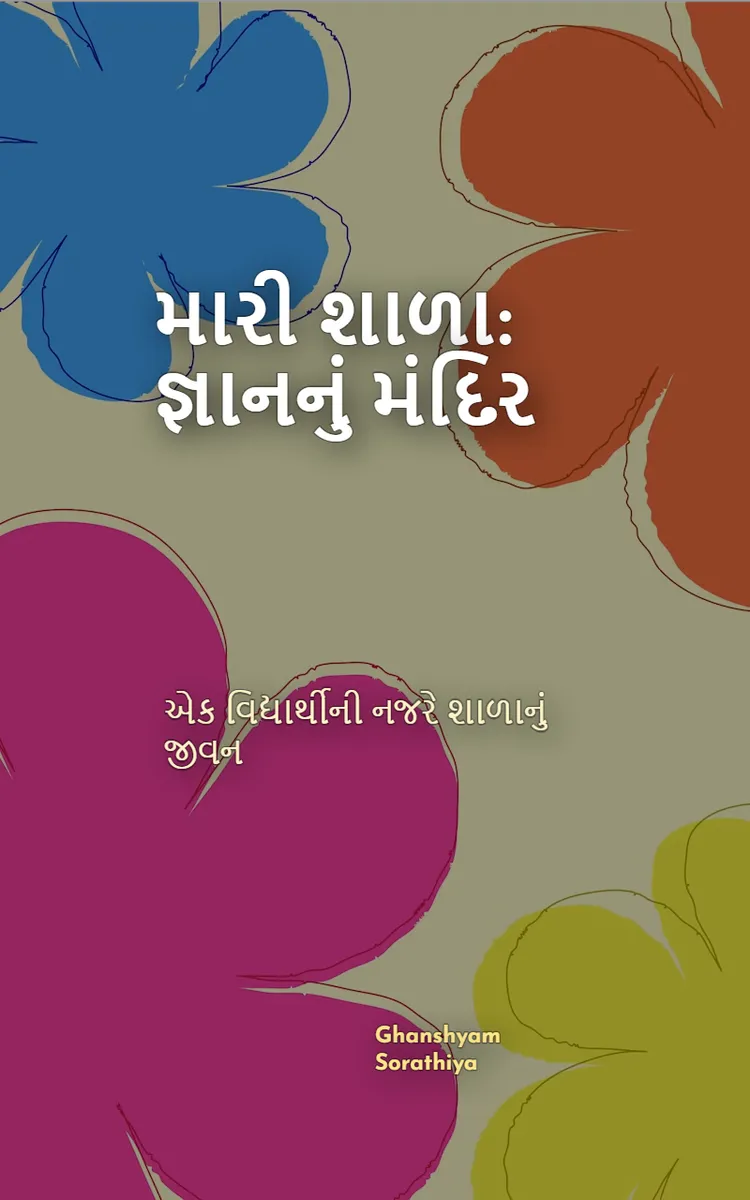
"મારી શાળા: જ્ઞાનનું મંદિર" is a children's book by Ghanshyam Sorathiya with 5 chapters and approximately 7,131 words. વિદ્યાર્થીના દૃષ્ટિકોણથી શાળા, શિક્ષકો, મિત્રતા અને શિસ્ત.
This book was created using Inkfluence AI, an AI-powered book generation platform that helps authors write, design, and publish complete books. It was made with the AI Children's Book Creator.
Frequently Asked Questions
What is "મારી શાળા: જ્ઞાનનું મંદિર" about?
વિદ્યાર્થીના દૃષ્ટિકોણથી શાળા, શિક્ષકો, મિત્રતા અને શિસ્ત
How many chapters are in "મારી શાળા: જ્ઞાનનું મંદિર"?
The book contains 5 chapters and approximately 7,131 words. Topics covered include My School: A Knowledge Temple, Prayer and National Anthem Mornings, Teachers Who Guide with Care, Debate, Essay, Art, Science Show, and more.
Who wrote "મારી શાળા: જ્ઞાનનું મંદિર"?
This book was written by Ghanshyam Sorathiya and created using Inkfluence AI, an AI book generation platform that helps authors write, design, and publish books.
How can I create a similar children's book?
You can create your own children's book using Inkfluence AI. Describe your idea, choose your style, and the AI writes the full book for you. It's free to start.
Write your own children's book with AI
Describe your idea and Inkfluence writes the whole thing. Free to start.
Start writingCreated with Inkfluence AI


