
Read the first chapter
The whole of chapter one, free. About 8 min. Turn the pages with the arrows, your keyboard, or a swipe.
Chapter 1
Spotting Dyslexia in Early Years
Why Early Signs Deserve Careful Attention
Could a child who avoids rhyming, guesses familiar words, or struggles to remember letter sounds be showing more than ordinary early learning difficulty? One sign alone cannot answer that question. A pattern across several skills, repeated over time, gives parents and educators a clearer starting point.
Early observation matters because young children develop at different speeds, and many temporary struggles resolve with practice. At the same time, persistent difficulty with spoken sounds, memory, language, and early print skills can point to dyslexia. Dyslexia is a learning difference that mainly affects accurate and fluent reading and spelling. It does not reflect low intelligence, poor effort, or a lack of interest in learning.
The aim is not to diagnose a child at home or in the classroom. The aim is to notice patterns, record useful details, and share clear information with a qualified professional. By the end of these pages, you will know which early signs to watch, how to use the Early Signals Checklist, and how to document what happens before requesting further support. Your practical takeaway: observe patterns rather than labels, and record what you can see and hear.
Using the Early Signals Checklist
The Early Signals Checklist groups observations into five areas: spoken language, sound awareness, memory and sequencing, early print skills, and response to teaching. These areas overlap, so a child may show signs in more than one. The checklist helps you collect evidence without turning ordinary variation into a diagnosis.
1. Listen for spoken-language difficulties. Notice whether the child struggles to find the right word, pronounce longer words, remember a new word, or retell a short event in order. For example, a child may call a “thermometer” a “temperature thing” repeatedly, even after hearing the word several times. Record the exact wording rather than writing “poor language.”
2. Check sound awareness through playful tasks. Sound awareness means noticing and working with parts of spoken words. Ask, “Do cat and sun rhyme?” or “What word remains if we remove /s/ from stop?” A child who cannot identify the first sound in moon after several calm attempts may need closer observation. Use spoken words first, because this check focuses on listening, not reading.
3. Watch memory and sequencing. Give two or three simple directions, such as, “Get your coat, place it on the hook, and bring your book.” Note whether the child loses the order, forgets the middle step, or needs each direction repeated. Also watch difficulty remembering days of the week, nursery rhymes, number sequences, or the names of familiar letters.
4. Observe early print skills. Look for difficulty learning letter names, matching a letter to its sound, recognizing a familiar name in print, noticing that print moves from left to right, or remembering a word seen several times. A child may identify m on one page and call it w on the next. Record the situation, not just the error.
5. Record the response to teaching. Ask whether brief, repeated instruction leads to improvement. Teach one sound or letter for five minutes each day for a week, using the same clear routine. If the child still cannot recall it the next day, note the practice time, activity, and result. Slow progress does not prove dyslexia, but it gives a professional useful information about how the child learns.
Use the checklist once or twice each week rather than testing constantly. A short observation during normal play, story time, or classroom work often gives better information than a long session that makes the child tired. Write the date, activity, exact prompt, child’s response, and support provided. For example: “14 October, 9:10 a.m.; asked for first sound in fish; child said ‘f’; identified correctly after stretching the word; no visual prompt.” This level of detail shows whether the child works independently or succeeds only with help.
Ask yourself: does the difficulty appear in one isolated task, or does it occur across settings and activities? A child may struggle with rhyming after a poor night’s sleep but manage it later. A repeated pattern across home and school deserves more attention. Your practical takeaway: use the Early Signals Checklist to describe behavior precisely, not to assign a diagnosis.
Documenting a Clear Pattern Before Seeking Support
Consider a preschool classroom where staff notice that a child remembers the tune of a rhyme but cannot supply a rhyming word, mixes up similar letter names, and forgets a sound taught the previous day. A useful record turns those concerns into information that a speech and language professional, teacher, or educational psychologist can review.
1. Choose a two-week observation period. Record three brief observations each week at home or school. This gives you several examples without making the child feel watched. Include the setting, time of day, and activity because tiredness, noise, or group size may affect performance.
2. Use the same prompts when possible. Ask, “What sound starts sun?” and “Which word rhymes with cat: hat or dog?” Keep the wording steady so you can compare results. Avoid giving extra clues halfway through, because changing the prompt makes progress difficult to judge.
3. Record the first response and the support needed. Write “said /b/ for fish, then corrected after the word was stretched” rather than “got it wrong.” Note whether the child needed repetition, a picture, a model, or physical pointing. The type of support matters because it shows which approaches help.
4. Collect work samples with dates. Keep three or four examples of name writing, letter matching, attempts to write sounds, or responses to a rhyming activity. Do not correct every mark before saving it. The original sample helps a professional see the child’s current skills.
5. Compare learning across settings. Ask the child’s early-years teacher whether the same pattern appears during group time, one-to-one work, and free play. Share observations respectfully rather than suggesting a conclusion. Different settings may reveal whether noise, attention, hearing, or language exposure affects the task.
6. Prepare focused questions for professional support. Bring the record and ask, “Which skills should we monitor next?” “Should we check hearing or speech and language?” and “What short activities should we use at home?” Specific questions lead to practical next steps.
After two weeks, review the notes. Count patterns without treating the count as a diagnosis. For instance, if a child misses the first sound in a word on five of six attempts, confuses letter names in four activities, and needs repeated directions in three routines, you have a clearer reason to request advice than a single difficult morning would provide. Also record strengths, such as strong understanding of stories, careful drawing, good memory for songs, or interest in building. A balanced record helps adults plan support around what the child can already do.
Quick checklist
• Choose a two-week period. - Record three brief observations each week. - Use the same spoken prompts. - Write the exact response. - Note the help the child needed. - Save dated work samples. - Ask the teacher to compare settings. - Record strengths as well as difficulties. - Share the notes with the appropriate professional. - Ask for hearing, speech, language, and learning guidance when concerns persist.
Expected outcome: you should finish with a short, dated record that shows patterns, conditions, supports, and changes over time. Your practical takeaway: a professional can act more quickly when you bring examples instead of general statements such as “something seems wrong.”
Avoiding Misleading Conclusions
Mistaking one difficult skill for dyslexia
Some children dislike rhyming but learn letter sounds easily. Others remember letters but struggle to pronounce longer words. One sign does not establish a pattern, and normal development varies.
Do this: observe several areas of the Early Signals Checklist over at least two weeks and note whether difficulties continue.
Not this: tell a child, “You have dyslexia,” because the child cannot rhyme or writes a letter backwards.
Letter reversals also need careful interpretation. Young children may reverse b and d while they learn direction and shape. Treat reversals as one observation, especially when they continue alongside difficulty remembering letter sounds, reading simple words, or spelling. Ask whether the child can identify the letter when it appears in a different font or position. This separates a shape-recognition problem from a wider reading concern.
Blaming effort when the child cannot explain the problem
A child may avoid books, rush through sound games, or say, “I don’t know,” because the task feels confusing. Repeated failure can look like carelessness, especially during a busy classroom routine. Fatigue, hearing problems, speech-language difficulties, limited exposure to English, vision concerns, and attention differences can also affect early literacy tasks.
Do this: check the conditions. Offer a quiet five-minute activity, speak clearly, use familiar words, and record whether the child responds differently. Share concerns with the child’s teacher and ask whether hearing, vision, speech, or language checks are appropriate.
Not this: increase pressure, demand faster answers, or compare the child with classmates.
A calm response protects the quality of your observations. If the child becomes upset, stop and record that the task ended after two minutes because the child cried or refused. That information matters, but it should not become a test of endurance. Use short, playful activities and praise accurate effort without praising guesses. If a child answers correctly after hearing the word slowly, record that support rather than treating the answer as fully independent.
Waiting for the child to “grow out of it” without recording anything
Some early difficulties do improve, but waiting without tracking can delay useful advice. A child who still struggles after several weeks of clear, repeated teaching needs a closer look, even if the child enjoys stories and speaks confidently.
Do this: share dated observations with the teacher, health visitor, speech and language professional, or educational psychologist according to your local support system. Ask what assessment or screening process fits the child’s age.
Not this: rely on memory from a conversation held months earlier.
Keep the record factual, brief, and respectful. Describe what happened, what you tried, and what changed. The goal is not to prove dyslexia before seeking help. The goal is to make the child’s learning needs visible so adults can choose suitable teaching and checks. When careful observation leads into targeted support, early signs become a practical starting point rather than a label.
End of chapter one. 7 more chapters in the full book.
Swipe or use the arrows to turn the page

What's inside: 8 chapters
- 1. Spotting Dyslexia in Early Years
- 2. Building Phonics With Sound Boxes
- 3. Teaching Multisensory Letter Formation
- 4. Improving Fluency With Repeated Reading
- 5. Expanding Vocabulary Through Morphology
- 6. Using Assistive Tech for Reading Access
- 7. Designing Effective Classroom Accommodations
- 8. Motivation and Self-Advocacy Routines
About this book
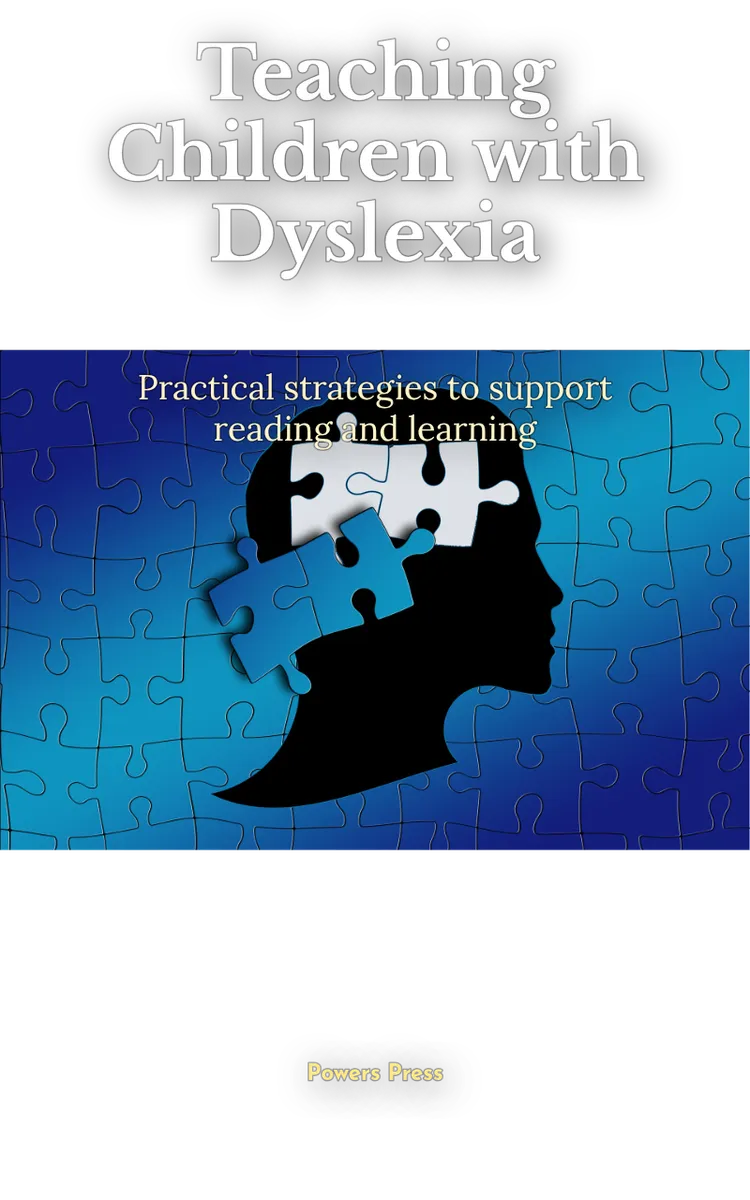
"Teaching Children With Dyslexia" is a how-to guide book by Powers Press with 8 chapters and approximately 14,336 words. Teaching methods and interventions for children with dyslexia.
This book was created using Inkfluence AI, an AI-powered book generation platform that helps authors write, design, and publish complete books. It was made with the AI Ebook Generator.
Frequently Asked Questions
What is "Teaching Children With Dyslexia" about?
Teaching methods and interventions for children with dyslexia
How many chapters are in "Teaching Children With Dyslexia"?
The book contains 8 chapters and approximately 14,336 words. Topics covered include Spotting Dyslexia in Early Years, Building Phonics With Sound Boxes, Teaching Multisensory Letter Formation, Improving Fluency With Repeated Reading, and more.
Who wrote "Teaching Children With Dyslexia"?
This book was written by Powers Press and created using Inkfluence AI, an AI book generation platform that helps authors write, design, and publish books.
How can I create a similar how-to guide book?
You can create your own how-to guide book using Inkfluence AI. Describe your idea, choose your style, and the AI writes the full book for you. It's free to start.
Write your own how-to guide book with AI
Describe your idea and Inkfluence writes the whole thing. Free to start.
Start writingCreated with Inkfluence AI


