

Read the first chapter
The whole of chapter one, free. About 5 min. Turn the pages with the arrows, your keyboard, or a swipe.
Chapter 1
The Ownership Problem
The Ownership Problem: Most people think their biggest problem is stress, anxiety, lack of motivation, or the fact that life feels harder than it should. They’re wrong. The real problem is quieter and more dangerous.
You no longer fully own your own mind. Something else does. It might be other people’s opinions. It might be the need to be liked. It might be the constant low-level fear of looking foolish, falling behind, or being judged. It might be the endless stream of information, comparison, and noise that you’ve allowed to live rent-free in your head. Whatever it is, it has taken ownership of your emotional state. And most of the time, you don’t even notice it’s happening. You feel irritated after scrolling for ten minutes and call it “just stress.” You replay a short conversation for hours and call it “overthinking.” You change your behavior to avoid disappointing someone and call it “being considerate.” You check your phone for the fifteenth time looking for validation and call it “staying connected.”These are not small habits. They are symptoms of a deeper issue: you have handed over the keys to your inner life. This is the Ownership Problem.
It doesn’t announce itself dramatically. There is no single moment where you officially surrender control. It happens gradually. A little reaction here. A little people-pleasing there. A little extra mental energy spent managing how you’re perceived. Over time, you wake up and realize that a large portion of your peace is no longer under your command. You are still living your life, but you are no longer fully in charge of how it feels to live it.
What Ownership Actually Means:
When something owns you, it gets to decide how you feel. A critical comment owns you when it ruins the next two hours. A delayed reply owns you when you can’t focus until it arrives. Someone else’s bad mood owns you when you start adjusting your personality to manage it. An outcome you can’t fully control owns you when your self-worth rises and falls with it. In each case, something outside of you has been given the power to dictate your internal state.
Most people live this way for years without questioning it. They assume that feeling constantly affected is just part of being human. It’s not. Being affected is human. Being ruled by those effects is optional. There is a difference between noticing something and being owned by it. You can notice that someone is disappointed in you without letting that disappointment run your nervous system. You can notice that you failed at something without turning it into a referendum on your value. You can notice that the world is chaotic without letting the chaos move into your chest and set up permanent residence. The Ownership Problem begins the moment you stop making that distinction.
How the Problem Shows Up in Everyday Life
It looks ordinary. That’s what makes it so effective. You walk into a room and immediately scan faces to see how you’re being received. You send a message and then monitor how long it takes for the other person to respond. You achieve something and still feel oddly empty because it didn’t get enough recognition. You make a decision and then spend days second-guessing it based on how you think it looks to others. None of these behaviours feel dramatic in the moment. Collectively, they create a life in which your emotional baseline is set by external conditions. This is why so many people feel tired even when their lives look fine on paper. They are carrying an invisible workload: the constant management of other people’s potential reactions, the monitoring of their own image, and the effort of keeping uncomfortable feelings at bay. That workload is expensive. It costs attention. It costs presence. It costs the ability to move through the day without being emotionally jerked around. Most of all, it costs the quiet sense that your life belongs to you.
The Hidden Agreement
Here’s the part most people don’t like to admit. No one forced this ownership on you. You agreed to it. Not in a formal way. Not with a contract. But through thousands of small decisions in which you chose the path of least immediate discomfort. You avoided the awkward conversation. You softened your opinion. You checked the phone one more time. You replayed the comment instead of letting it pass. You tried to control how someone else felt about you. Each decision made sense in the moment. Together, they created a pattern: better to stay a little owned than risk the discomfort of full ownership. This is the quiet agreement most of us make. We trade pieces of our inner freedom for the feeling of safety, belonging, or control. The price is rarely obvious until the bill has already become large.
What This Book Is Actually About
This is not a book about becoming indifferent. It is not about pretending you don’t care. It is not about building walls so high that nothing can reach you. It is about becoming selective. Some things deserve your energy and emotional investment. Most things do not. The Ownership Problem exists because that distinction has been blurred for so long that almost everything feels equally important — and therefore equally capable of controlling you.
The work ahead is not complicated, but it is demanding. It requires you to see the ways you have been giving yourself away. It requires you to tolerate discomfort instead of automatically escaping it. And it requires you to practice a different way of responding until it becomes more natural than the old one. You will not fix this by thinking about it. You will fix it by training. The first step is simply recognizing the problem for what it is. You are not broken. You are not uniquely weak. You have just been owned for a long time. And ownership can be taken back.
End of chapter one. 17 more chapters in the full book.
Swipe or use the arrows to turn the page


What's inside: 18 chapters
- 1. The Ownership Problem
- 2. The Approval Economy
- 3. Overthinking as Emotional Avoidance
- 4. Why We Prefer Thinking to Feeling
- 5. Moving From Avoidance to Contact
- 6. Comfort Is Not Safety
- 7. Selective Caring – The Core Skill
- 8. The Emotional Ownership Filter
- 9. Discomfort as Necessary Training
- 10. Responsibility Without Self-Punishment
- 11. Handling Criticism and Judgment
- 12. Relationships Without Emotional Ownership
- 13. Love Without Self-Abandonment
- 14. Ambition Without Attachment
- 15. Building Daily Unbothered Habits
- 16. Conclusion
- 17. About the Author
- 18. Appendix: Influences & Further Reading
About this book
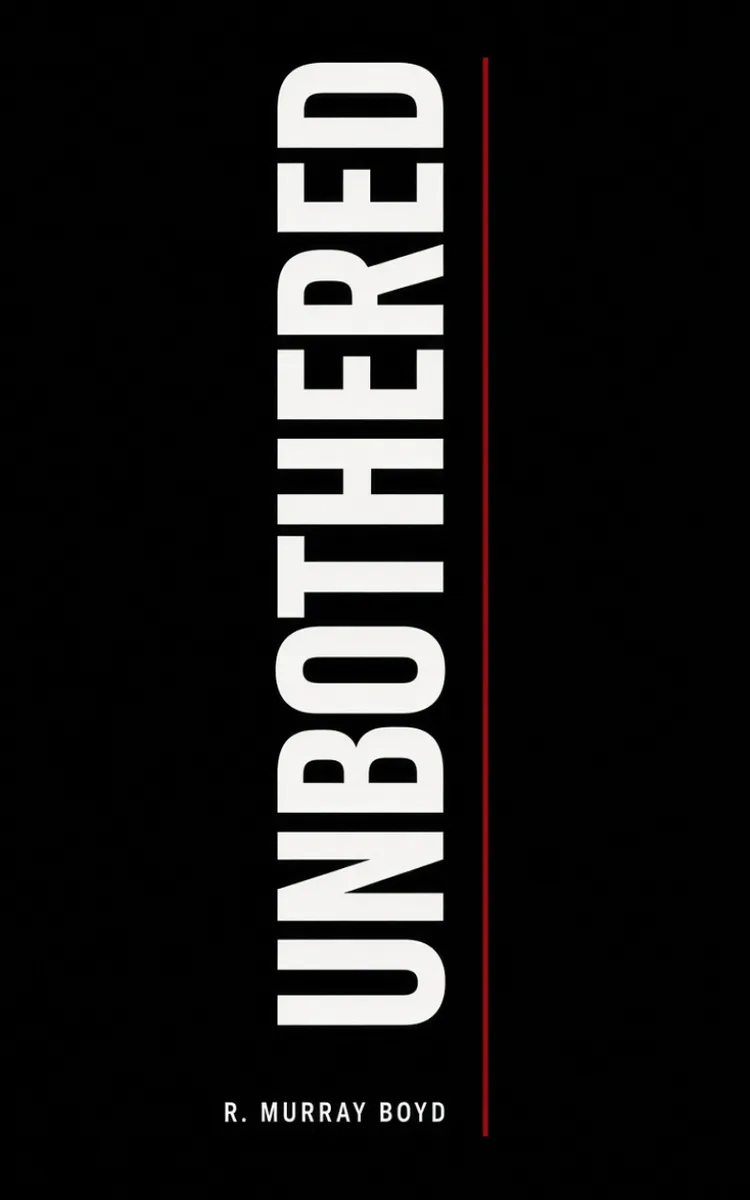
"Unbotheredtext" is a general book by R. Murray Boyd with 18 chapters and approximately 12,918 words. It covers key insights and practical takeaways on the topic.
This book was created using Inkfluence AI, an AI-powered book generation platform that helps authors write, design, and publish complete books.
Frequently Asked Questions
What is "Unbotheredtext" about?
"Unbotheredtext" is a general book by R. Murray Boyd covering key insights and practical takeaways on the topic.
How many chapters are in "Unbotheredtext"?
The book contains 18 chapters and approximately 12,918 words. Topics covered include The Ownership Problem, The Approval Economy, Overthinking as Emotional Avoidance, Why We Prefer Thinking to Feeling, and more.
Who wrote "Unbotheredtext"?
This book was written by R. Murray Boyd and created using Inkfluence AI, an AI book generation platform that helps authors write, design, and publish books.
Write your own book with AI
Describe your idea and Inkfluence writes the whole thing. Free to start.
Start writingCreated with Inkfluence AI


