
Read the first chapter
The whole of chapter one, free. About 10 min. Turn the pages with the arrows, your keyboard, or a swipe.
Chapter 1
The River That Invented Cities
The River That Invented Cities: Leila’s Walk Along the Waterline
A river can be a road, a market, a calendar, and - strangest of all - a kind of accountant. It keeps time by flood and drought, and it keeps score by who can move grain, stone, and people faster than their rivals. In Syria, the earliest cities didn’t spring up because someone “wanted” urban life; they gathered where water made long-distance exchange reliable enough to support specialists, temples, and rule.
Leila, a 19-year-old archaeology student, learned that lesson the hard way during a field visit to the Orontes River valley. Standing with her cohort near a modern channel, she noticed how the landscape seemed to “offer” flat ground in some places and then abruptly tighten into slopes and rock in others. The temptation was to think like an artist - attractive views, dramatic bends, pretty ruins. But the river kept pulling her attention back to something more stubborn: the spots where water could be reached, stored, and controlled were also the spots where people could afford to stay put.
This chapter follows that link - what I’ll call the River-to-Religions Pipeline - from settlement patterns to trade routes, from power struggles to the first urban religions that tried to make sense of concentrated life. The goal isn’t to treat religion as an abstract idea floating above daily work. It’s to show how the practical mechanics of rivers helped create the conditions where gods, priests, and sacred buildings could become central to city life.
If cities began as a solution to water, what did people worship once they had learned to manage it?
River Settlements as Trade Engines
Think of Syria’s rivers not as pretty lines on a map, but as moving systems - carrying silt, shaping floodplains, and forcing communities to negotiate with timing. The most fertile land in the region tends to cluster along watercourses where soils are renewed and where irrigation can stretch harvests beyond rainfall alone. That matters because early urban life wasn’t just about having crops; it was about having enough surplus, enough predictability, and enough access to distant goods to justify permanent infrastructure.
Archaeology gives us a way to see this pipeline. Over thousands of years, settlements often appear where waterways made transport easier than overland travel. A river valley can move goods in bulk - grain, timber, reeds, pottery - while roads between isolated villages are slower and more expensive. In the Middle East, where distances can be deceptive and terrain can punish heavy loads, the ability to move bulky goods reliably turns geography into economics.
In the Levant, including parts of modern Syria, one of the recurring patterns is that early farming communities gradually became more clustered and more connected. As communities intensified agriculture, they needed labor that wasn’t only producing food. Someone had to manage storage, repair tools, organize seasonal work, and maintain canals or field boundaries where water was diverted. Once those roles existed, the question shifted from “How do we eat?” to “How do we coordinate?” That coordination, in turn, favored places where people could meet, bargain, and exchange ideas.
Leila’s field notes from that Orontes valley trip reflected this. She wasn’t just recording pottery shapes or looking for walls; she was tracking the logic of the waterline - how far a settlement could reach without losing access to moisture, and where the terrain would have made expansion expensive. It’s not romantic, but it’s illuminating: city beginnings often look less like sudden invention and more like repeated choices about where the costs of staying were lower than the costs of moving.
A single sentence can capture the counterintuitive core here: rivers don’t just attract people - they concentrate responsibilities. When water is shared, disputes multiply; when water is controlled, authority becomes useful. Long before people built big temples, they were already building systems for fairness, enforcement, and record-keeping, even if those systems weren’t yet written down in the way we expect from later empires.
Floodplains, Power, and the Rise of Urban Institutions
Once settlements grow dense along a river, the social structure changes. You can feel it in the archaeological record: more standardized buildings, more evidence of craft production, and more signs that some individuals or groups could command resources beyond what their own fields could produce. Power in such settings rarely stays purely personal. It becomes institutional - tied to storage, redistribution, and the ability to direct labor.
Here’s where the River-to-Religions Pipeline starts to look like more than economics. Agriculture along river valleys is vulnerable. Floods can destroy crops, drought can shrink yields, and shifts in the river’s course can ruin waterworks. A community that depends on water management needs ways to interpret misfortune and to justify decisions when resources are scarce. Those needs don’t automatically produce religion, but they create the social space where religion can become a tool for stability.
In early cities, sacred space often sits at the center of political space. That doesn’t mean every temple was built to “control” people in a modern sense. It does mean that urban religions became entangled with the mechanisms of coordination - who receives what from the storehouse, who can authorize redistribution, who has standing to speak for the future. In many ancient societies, rituals and festivals also synchronized community labor. A calendar is not just a religious invention; it’s a practical one for planting, harvesting, and planning for drought.
Leila found that idea tangible when she compared two nearby mounds - one more accessible to the river, the other higher and slightly more isolated. The more river-connected site had signs of longer occupation and more complex material remains, suggesting it could support the kind of sustained, organized life that eventually produces institutions. The other mound looked like it could survive, but not as easily. The river didn’t merely feed people; it helped decide who could grow into a city and who remained a cluster of households.
A well-known scientific principle underlies why this pattern keeps showing up across regions: water availability tends to be more predictable along managed river systems than along purely rain-fed farms, but only if someone can manage it. Management requires coordination, and coordination requires authority. Over time, authority finds symbolic language - stories about order, cosmic justice, and divine oversight. Those stories become religions with buildings, specialists, and routines.
And cities, once established, can reinforce the very conditions that create them. Trade routes bring new goods and new pressures. Craft production increases. People with specialized knowledge - potters, metalworkers, scribes - multiply in urban centers. That specialization makes cities dependent on systems of exchange, which again makes institutions more valuable. The result is a feedback loop: rivers support settlements; settlements support authority; authority supports religious institutions that help people live with uncertainty.
The First Urban Religions: Making Sense of Concentrated Life
When people think about ancient religion, they often picture myths first and daily life second. Along Syrian river valleys, the reverse is frequently closer to the truth. Urban religions developed where communities were dense enough that collective life demanded shared explanations. When storage is central and redistribution is contested, it helps to have a language for fairness that goes beyond personal relationships.
In early urban contexts, religious practice can be seen in the built environment: sanctuaries, altars, ritual areas. It can also be seen in objects - figurines, offerings, and the repeated appearance of certain symbols in contexts tied to community gatherings. Over time, religious specialists gain status because they interpret signs, manage ritual schedules, and oversee ceremonies that reaffirm social bonds.
Leila’s training emphasized a careful point: archaeologists can’t read minds, and they can’t always say exactly what someone believed. But they can track patterns. If a site repeatedly shows attention to sacred space - especially in places where people were already managing irrigation and trade - it’s a strong clue that religion was doing social work. In a city, religion becomes a way to stabilize expectations. It offers a shared story when everyday experience can’t guarantee outcomes.
Here’s the counterintuitive finding that surprises even readers who think they know the origin story of cities: the earliest “urban religions” weren’t only about worship in the sky - they were about governance on the ground. In many cases, sacred institutions functioned alongside administrative ones, and sometimes in the same buildings or through overlapping personnel. That changes how we understand religion’s rise. It wasn’t merely a response to fear or wonder; it was also a response to the practical problem of living together tightly, with shared resources and shared risks.
Why does that matter? Because it reframes religion as part of infrastructure. Not in a superficial “people needed something comforting” way, but in a structural sense: ritual and sacred authority helped coordinate action in communities where water management and trade required trust. It also means that when rivers shifted, political centers could weaken, and sacred authority could be pulled into new places - following the flow of settlement rather than simply following the flow of belief.
Leila noticed a modern echo when she watched how people in river towns today still orient their daily routines around water - fishermen checking currents, farmers watching seasonal patterns, families timing chores around rainfall and flood risk. The details have changed, but the underlying dependency remains. Ancient urban religions grew out of that dependency, only amplified by the density and complexity of city life.
Leila at the Orontes: A River’s Logic You Can Measure
To make the abstract feel real, return to the Orontes River valley where Leila worked. The landscape there isn’t flat everywhere; it alternates between terraces and tighter slopes. That matters because terraces - older floodplain levels - can preserve evidence of earlier occupation and can offer relatively stable ground near water. The river’s ability to create usable land is why people kept coming back, building, and rebuilding in roughly the same corridors.
At one stop, Leila pointed out how the modern channel had shifted compared with older landforms. Even without fancy instruments, you can see that rivers don’t stay put. They migrate, carve, and deposit. For ancient communities, that would have meant adapting field boundaries, rethinking access to water, and renegotiating who had the best positions. Such changes strain relationships. They also raise questions that communities answer with stories and ritual: why did the river behave this way, and what does it mean for the coming season?
Then she showed something else - how trade can be “written” into the ground. Pottery styles and construction materials don’t travel like footprints, but they often cluster along routes where movement was frequent. A river valley can act as a corridor for exchange between regions, connecting upstream and downstream communities that might otherwise have stayed separate. As exchange grows, cities emerge as hubs: places where goods are accumulated, assessed, and redistributed.
In that setting, religion becomes more than a local tradition. It can become a shared language among groups that interact through trade. Sacred symbols and ritual practices offer common ground when merchants, farmers, and officials are negotiating value and obligations. Over time, urban religions can absorb influences from connected regions, but their core role remains: providing a framework for collective life under conditions that are never fully controllable.
Leila’s fieldwork also made her cautious about simple explanations. A river alone doesn’t “cause” a religion. People make choices - about where to settle, how to manage water, which authorities to trust, and how to frame uncertainty. But rivers shape the range of choices. They determine where surplus is possible, where trade networks can form, and where institutions have incentives to grow.
That’s the river’s deeper trick: it doesn’t just bring water; it brings a whole chain of dependencies that require social glue. The glue, in cities, often came in the form of sacred authority.
What the River-to-Religions Pipeline Reveals
Once you see the River-to-Religions Pipeline, ancient history starts to look less like a sequence of isolated “events” and more like a set of linked systems. Water management shapes settlement patterns; settlement density shapes economic roles; economic roles shape institutions; institutions shape sacred life. The surprising part is how often the sacred and the administrative sit close together, not because ancient people were confused, but because concentrated living demands shared explanations.
Human societies, it turns out, don’t just discover meaning - they organize it. When the environment forces people into close cooperation, they invent ways to keep trust from collapsing. Rivers are one of the oldest teachers of that lesson, not through drama, but through repetition: flood, recovery, redistribution, and the stories people tell so they can face the next season.
And if cities learned to worship by managing water, then what else - what other systems we depend on today - turn into invisible “religions” once they become the center of our shared life?
End of chapter one. 4 more chapters in the full book.
Swipe or use the arrows to turn the page
What's inside: 5 chapters
- 1. The River That Invented Cities
- 2. How Empires Turned Syria Into a Prize
- 3. The Silk Road’s Hidden Syrian Middle
- 4. Why Levantine Faiths Keep Splitting
- 5. From Mandate to Modern Nationhood
About this book
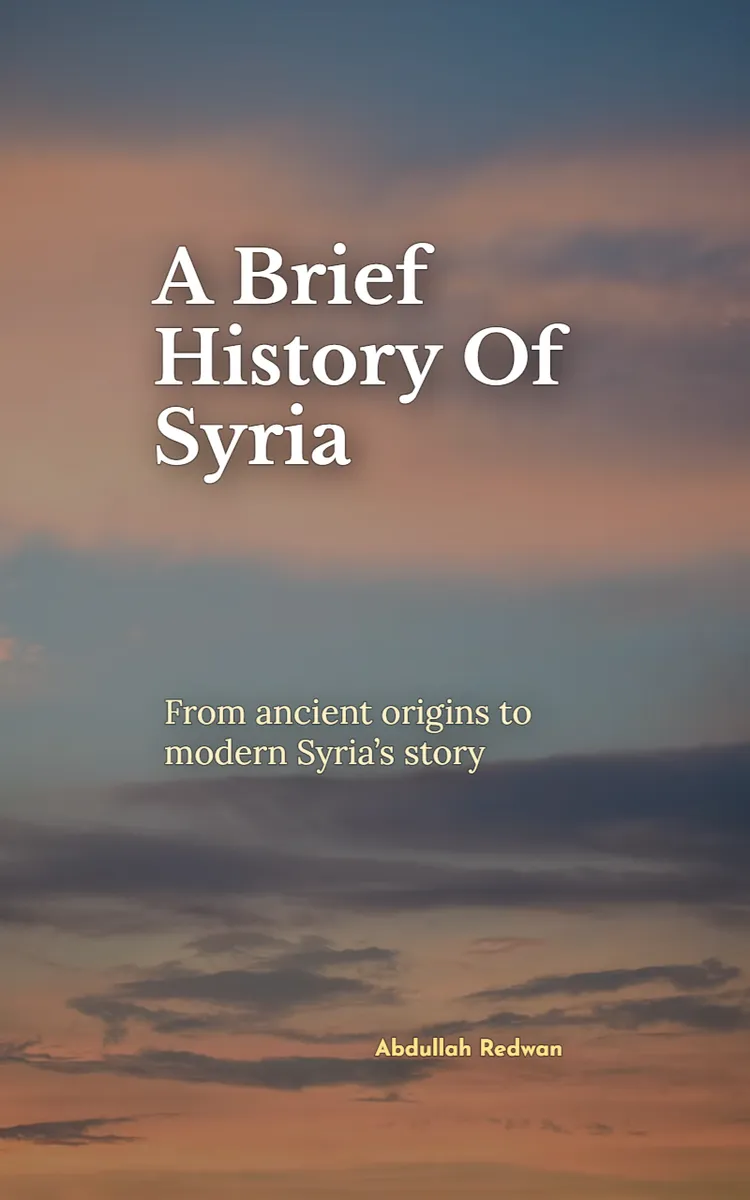
"A Brief History Of Syria" is a curiosity book by Abdullah Redwan with 5 chapters and approximately 8,585 words. Syria’s history from the ancient world to present.
This book was created using Inkfluence AI, an AI-powered book generation platform that helps authors write, design, and publish complete books.
Frequently Asked Questions
What is "A Brief History Of Syria" about?
Syria’s history from the ancient world to present
How many chapters are in "A Brief History Of Syria"?
The book contains 5 chapters and approximately 8,585 words. Topics covered include The River That Invented Cities, How Empires Turned Syria Into a Prize, The Silk Road’s Hidden Syrian Middle, Why Levantine Faiths Keep Splitting, and more.
Who wrote "A Brief History Of Syria"?
This book was written by Abdullah Redwan and created using Inkfluence AI, an AI book generation platform that helps authors write, design, and publish books.
Write your own curiosity book with AI
Describe your idea and Inkfluence writes the whole thing. Free to start.
Start writingCreated with Inkfluence AI


