
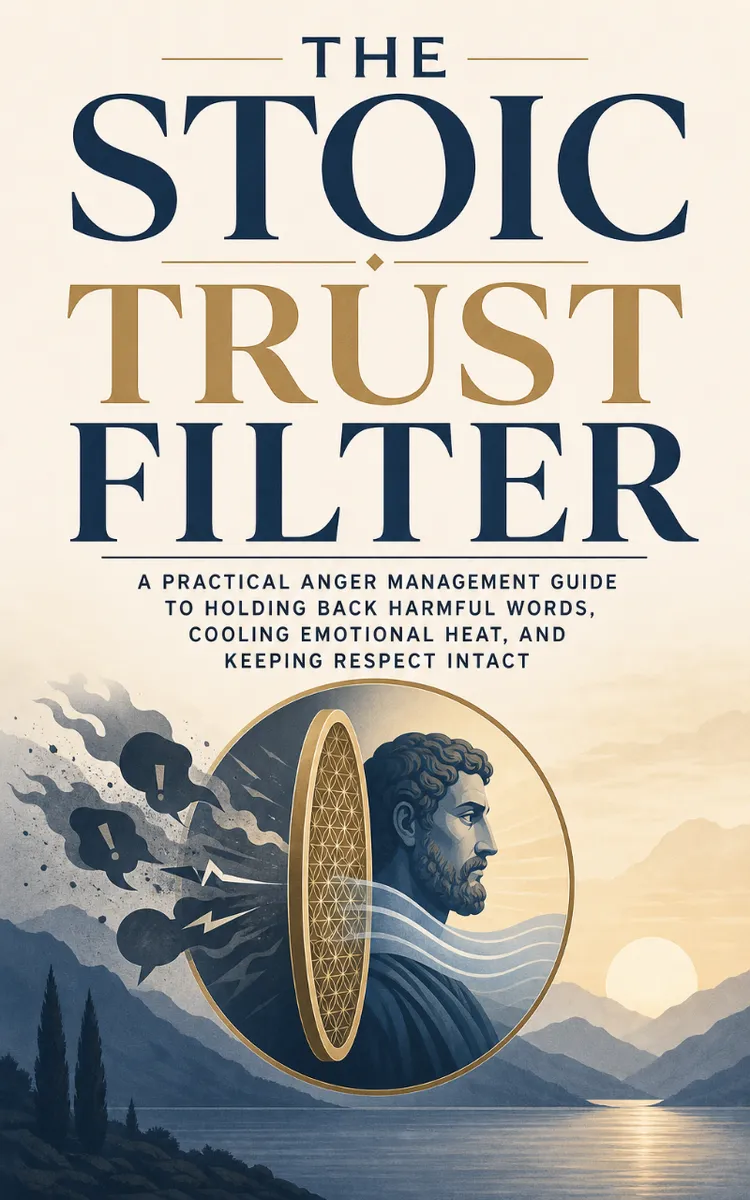
The Stoic Trust Filter
Created with Inkfluence AI
Table of Contents
- 1. Chapter 1
- 2. Chapter 2
- 3. Chapter 3
- 4. Chapter 4
- 5. Chapter 5
- 6. Chapter 6
- 7. Chapter 7
- 8. Chapter 8
- 9. Chapter 9
- 10. Chapter 10
- 11. Chapter 11
- 12. Chapter 12
- 13. Chapter 13
- 14. Chapter 14
- 15. Chapter 15
- 16. Chapter 16
- 17. Chapter 17
- 18. Chapter 18
- 19. Chapter 19
- 20. Chapter 20
- 21. Chapter 21
- 22. Chapter 22
- 23. Chapter 23
- 24. Chapter 24
- 25. Chapter 25
- 26. Chapter 26
- 27. Chapter 27
- 28. Chapter 28
- 29. Chapter 29
- 30. Chapter 30
Preview: Chapter 1
A short excerpt from “Chapter 1”. The full book contains 30 chapters and 2,495 words.
Chapter 1: The Moment Before Words Damage Trust
Why Angry Speech Breaks Trust
Your partner asks why the bill was not paid yet, and something inside you tightens before the question is even finished. You hear accusation where they may have meant concern. You feel the heat rise in your chest, and your mind gathers proof that you are being judged again. Before you choose your words carefully, you say something sharp, something defensive, something meant to push the pressure away. The room changes, and the original question becomes less important than the wound your answer just created.
That is how angry speech damages trust. It does not always arrive as shouting or obvious cruelty. Sometimes it comes as a cold sentence, a sarcastic reply, an exaggerated accusation, or a tone that says the other person should regret speaking. You may believe you are only protecting yourself, explaining your side, or making your frustration clear. But the person receiving your words learns something different: when tension rises, your mouth may become unsafe.
This book is for the part of you that already knows the cost of that pattern. You may love the people you hurt with your words. You may value respect, honesty, loyalty, and calm communication. Yet in the pressured moment, anger can move faster than your standards. The goal is not to shame you for that gap. The goal is to help you close it with a practical skill you can use before damage happens.
Angry speech breaks trust because it changes the emotional meaning of a conversation. A simple disagreement becomes a threat. A question becomes an attack. A mistake becomes a character trial. Once your words turn harsh, the other person stops listening only for information and starts listening for danger. They wonder whether honesty with you is safe, whether a small concern will become a fight, and whether your anger will punish them for speaking plainly.
This matters because trust is built through repeated evidence. People do not trust you because you say you are calm; they trust you because they experience your calm under pressure. They trust you when you are tired and still careful, offended and still measured, disappointed and still respectful. One harmful sentence may not destroy a relationship, but repeated angry sentences teach people to protect themselves from you. Over time, they share less, soften the truth, avoid difficult topics, or prepare for your reaction before they speak.
The first lesson is simple: the moment before you speak is not empty. It is the doorway between impulse and character. If you treat it as nothing, anger will rush through it and call that honesty. If you train it, you gain the power to decide whether your next sentence builds trust or weakens it. This is where Stoic anger control becomes practical, not abstract. You learn to govern the first movement of speech before it governs the conversation.
Anger often feels convincing because it arrives with energy. It speeds up your thoughts, narrows your attention, and tells you that immediate expression will bring relief. You may feel certain that the other person meant disrespect, that they never listen, that you always carry the burden, or that this is finally the moment to say everything. The problem is not that every angry thought is false. The problem is that anger usually presents a partial truth as the whole truth, then demands instant speech.
When you speak from that state, your words often serve the emotion more than the situation. Instead of solving the bill, the missed chore, the late reply, the criticism, or the disrespectful tone, your words try to discharge pressure. They may aim to win, defend, expose, punish, or control. For a few seconds, that can feel powerful. Later, when your body cools and your mind widens again, you may see what the sentence cost.
The practical Stoic principle here is self-command before expression. You do not control every question, tone, delay, insult, mistake, or misunderstanding that reaches you. You do control whether the first heated sentence becomes the final sentence you offer. You can feel anger without letting it appoint itself as your speaker. That does not make you weak. It makes you trustworthy, because others can bring difficulty to you without fearing that your reaction will become the larger problem.
How The Trust Filter Works
The trust filter begins with one clear decision: your first angry sentence does not deserve automatic release. It must pass through attention before it becomes speech. This filter is not a complicated technique that requires silence, perfect calm, or a peaceful setting. It works in kitchens, cars, offices, text threads, family visits, and tense phone calls. It gives you a small pause, a few useful questions, and a better sentence than the one anger first supplied.
The first gate asks, “How hot am I right now?” This question matters because high emotional heat distorts speech....
About this book
"The Stoic Trust Filter" is a self-help book by Socratic Mastery with 30 chapters and approximately 2,495 words. It covers key insights and practical takeaways on the topic.
This book was created using Inkfluence AI, an AI-powered book generation platform that helps authors write, design, and publish complete books. It was made with the AI Self-Help Book Writer.
Frequently Asked Questions
What is "The Stoic Trust Filter" about?
"The Stoic Trust Filter" is a self-help book by Socratic Mastery covering key insights and practical takeaways on the topic.
How many chapters are in "The Stoic Trust Filter"?
The book contains 30 chapters and approximately 2,495 words. Topics covered include Chapter 1, Chapter 2, Chapter 3, Chapter 4, and more.
Who wrote "The Stoic Trust Filter"?
This book was written by Socratic Mastery and created using Inkfluence AI, an AI book generation platform that helps authors write, design, and publish books.
How can I create a similar self-help book?
You can create your own self-help book using Inkfluence AI. Describe your idea, choose your style, and the AI writes the full book for you. It's free to start.
Write your own self-help book with AI
Describe your idea and Inkfluence writes the whole thing. Free to start.
Start writingCreated with Inkfluence AI


