
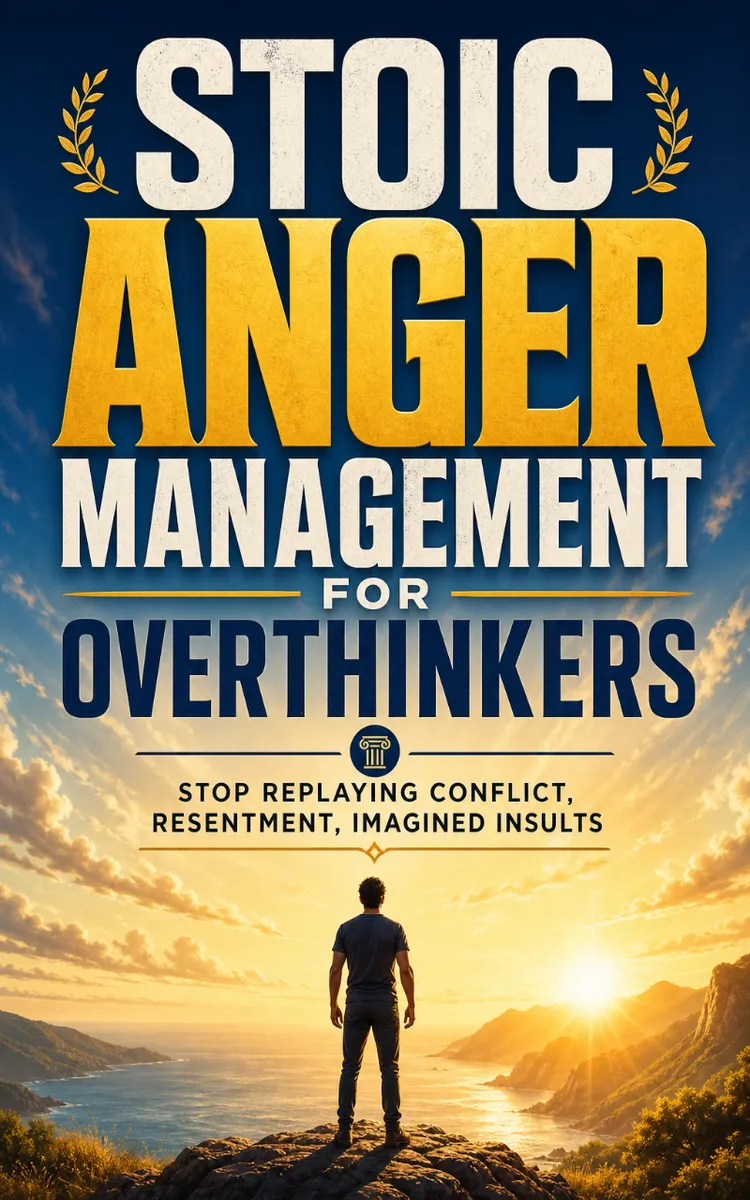
Stoic Anger Management For Overthinkers
Created with Inkfluence AI
Stoic-based strategies to manage anger and rumination after arguments
Table of Contents
- 1. Spotting the Anger Replay Loop
- 2. Separating Facts From Judgments
- 3. Choosing Your Response Over Reaction
- 4. Reframing Anger as Information
- 5. Letting Go of Imagined Insults
- 6. Building a Stoic ‘Control List’
- 7. Turning Rumination Into a Decision
- 8. Practicing Premeditation for Conflict
- 9. Using ‘Negative Visualization’ Wisely
- 10. Correcting Thought With Stoic Countermoves
- 11. Communicating Without Winning the Past
- 12. Setting Boundaries Without Guilt
- 13. Repairing After Missteps Fast
- 14. Practicing ‘Amor Fati’ Toward Outcomes
- 15. Resisting the ‘Justice Fantasy’
- 16. Strengthening Empathy Without Losing Yourself
- 17. Creating a ‘No-Replay’ Evening Routine
- 18. Journaling With the Stoic Lens
- 19. Turning Lessons Into Future Virtue
- 20. Maintaining Calm Under Provocation
Preview: Spotting the Anger Replay Loop
A short excerpt from “Spotting the Anger Replay Loop”. The full book contains 20 chapters and 29,037 words.
Picture This
Have you ever finished an argument and felt like the “real” conversation didn’t end-it just got muted? Like your mind hit rewind and started playing the same ten seconds again and again: the exact sentence, the tone, the moment you thought, Wait… did they just mean that? You’re not even trying to be angry anymore. You’re just… stuck in it.
Nina, 34, works customer support. She’s good at her job, and most days she can stay calm. But after one tense call with a customer-where the customer snapped and then accused her of “not caring”-something flipped. She closed the ticket, thanked the customer for their patience (like she always does), and went to stand up… and her brain grabbed the call by the throat. First it replayed the accusation. Then it added imagined replies she “should’ve” said. Then it served her a new scene: her manager hearing it, deciding she handled it wrong, her reputation taking a hit. She could feel her face heat up while she was technically done. The argument had ended, but the anger didn’t.
What if the moment anger turns into mental replay is the real trigger-and it’s happening way earlier than you think?
The Mindset Shift
Old Belief: “I’m angry because what they said was disrespectful / unfair / wrong.”
New Reality: “I’m angry because my mind is running the Replay Loop Map-turning a past trigger into an ongoing threat.”
That shift matters because it separates the event from the engine. Yes, the customer was rude. Yes, the accusation stung. But the replay isn’t just “feeling.” It’s a choice your attention starts making automatically-like your brain thinks it’s solving a problem that no longer exists.
Here’s what Nina noticed once she stopped blaming the argument for everything. The first wave of anger showed up right after the call, sure. But the real escalation happened when her mind started “fixing the scene.” She caught herself doing it: If I had said this… then they would have seen I’m professional. That’s the moment her body followed her thoughts. Her chest tightened, her hands got restless, and her voice got louder in her head. Not because the customer was still there-because her mind was rehearsing a battle.
Concrete example: Nina used to think, “I need to calm down because this is unproductive.” Now she watches for the transition point. She asks, Did I just jump from what happened to what I wish I could rewrite? When the answer is yes, she treats it like a signal, not a mystery. The anger becomes trackable. And when it becomes trackable, it becomes interruptible.
Going Deeper
The Replay Loop Map is simple, but it’s not “vibes simple.” It’s about spotting the exact handoff: where your brain stops responding to reality and starts generating a storyline. Anger doesn’t just appear. It gets built-trigger to replay to escalation.
Usually it goes like this: a trigger lands (a sentence, a tone, a look). Then your mind tags it as important-threat, disrespect, loss of control. After that, attention doesn’t settle. It zooms in. You relive the moment to “understand” it better, except understanding turns into arguing with the past. Then the replay invites an add-on: imagined insults, comeback lines, worst-case outcomes, and revenge thoughts that feel satisfying for about eight seconds… and then poison the rest of your day.
That’s the psychology underneath the frustration: rumination feels like problem-solving, but it’s actually threat-maintenance. Your brain keeps the fire going because it believes the next replay will finally “win.” The anger doesn’t die because the loop keeps getting fed.
Signs this pattern is running your life
1. You feel angry after the conversation ended-while you’re doing normal tasks. The anger shows up in the quiet moments, not in the moment.
2. Your mind starts editing the past. You’re not just remembering-you’re rewriting. You hear your “better response” like it’s a script you’re auditioning for.
3. The emotion spikes when you try to “move on.” The effort to stop thinking makes the thoughts louder, like your brain resists losing its case.
4. You start predicting consequences that weren’t actually confirmed. Manager judgments, future conflict, social humiliation-your anger starts acting like a fortune teller.
En résumé: The Replay Loop Map is the point where your attention switches from “what happened” to “what must still be handled,” and your anger follows that switch.
The reason this chapter is so specific is because most advice only addresses the feeling. You get told to calm down, breathe, or “let it go.” But if you don’t catch the handoff into replay, you’re trying to put out a fire after it’s already spread through the building. This is about recognizing the moment you cross the line, so you can stop the loop before it runs the whole show.
Reflection & Self-Assessment
1....
About this book
"Stoic Anger Management For Overthinkers" is a self-help book by Socratic Mastery with 20 chapters and approximately 29,037 words. Stoic-based strategies to manage anger and rumination after arguments.
This book was created using Inkfluence AI, an AI-powered book generation platform that helps authors write, design, and publish complete books. It was made with the AI Self-Help Book Writer.
Frequently Asked Questions
What is "Stoic Anger Management For Overthinkers" about?
Stoic-based strategies to manage anger and rumination after arguments
How many chapters are in "Stoic Anger Management For Overthinkers"?
The book contains 20 chapters and approximately 29,037 words. Topics covered include Spotting the Anger Replay Loop, Separating Facts From Judgments, Choosing Your Response Over Reaction, Reframing Anger as Information, and more.
Who wrote "Stoic Anger Management For Overthinkers"?
This book was written by Socratic Mastery and created using Inkfluence AI, an AI book generation platform that helps authors write, design, and publish books.
How can I create a similar self-help book?
You can create your own self-help book using Inkfluence AI. Describe your idea, choose your style, and the AI writes the full book for you. It's free to start.
Write your own self-help book with AI
Describe your idea and Inkfluence writes the whole thing. Free to start.
Start writingCreated with Inkfluence AI


