
Read the first chapter
The whole of chapter one, free. About 10 min. Turn the pages with the arrows, your keyboard, or a swipe.
Chapter 1
The Day Apirl Went Quiet
Apirl’s fingers pinched the edge of her paper plate, smudging spaghetti sauce into a reddish streak. The kitchen smelled like warm bread and tomato, and the radio in the living room played a gentle song with soft claps of sound. Apirl watched the steam curl up from her cup of milk, then she looked at the bowl her family set in front of her and opened her mouth to say, “More, please.”
Nothing came out.
Her lips moved the way they always did, but the kitchen stayed quiet. The song kept going, and spoons clinked on plates, but Apirl’s voice felt like it had slipped away somewhere under the floorboards. She swallowed hard. The milk tasted a little too cold, like it had been left near the window.
“Apirl?” her family asked, not loud, just careful. Apirl could hear the concern in the way their words landed-soft, like they were stepping around puddles. She tried again, shaping the same words. “More… please.”
Still nothing.
Apirl’s shoulders tightened. The silence wasn’t the calm kind that comes when everyone listens to rain. This silence felt like a closed door. It made her ears ring, and it made her chest feel too small for her breath. She stared at her hands, at the sauce stain on her fingertip, and a memory slipped in without asking-Emily’s laugh, bright like the top of a glass bottle, and then the way that laugh had ended in the past. Apirl had lost Emily, and since then her thoughts sometimes moved like they were trying to find a path that was no longer there.
Her family leaned closer. “Do you want to point?” they asked, their voice warm and steady. Apirl nodded, because nodding was easy. She reached toward the serving bowl and pointed with one finger, then with another, like the bowl could understand through her pointing alone.
Her family passed the bowl closer, and Apirl ate, chewing slowly. Every few bites, she tried to speak again, as if the words might pop out like bubbles. They didn’t. The longer the afternoon went on, the more Apirl felt like she was watching herself from the outside-her mouth moving, her throat working, but her voice staying gone.
After lunch, Apirl carried her empty plate to the sink. The water ran clear, making a bright sound that filled the kitchen. Her family dried dishes nearby, and the towel’s cotton texture brushed the plates with a gentle rasp. Apirl wiped her own hands, then turned toward the hallway where her shoes sat by the door. She wanted to go somewhere familiar, somewhere she could feel steady.
“I’m going to-” Apirl tried to say. Her mouth opened. No sound. She pressed her lips together and held her breath for one second, then let it out slowly. She didn’t want to scare anyone with the way her face must have looked.
Her family crouched so they were eye-level with her. “Where do you want to go?” they asked.
Apirl thought of Emily. She thought of the places Emily had loved-the small park with the soft grass, the library where pages turned like quiet wings, the sidewalk chalk that smelled like dust and sweet colors. But Emily was a name Apirl carried like a glass marble: important, and fragile. Saying it out loud felt like holding something too tight and making it crack.
Apirl grabbed a small notebook from the shelf by the door. It was the one she used for drawing. Her pencil lay inside with a bitten eraser, and the notebook cover was worn where her thumb always rubbed. She flipped it open to a blank page and drew a circle for a sun, then a little stick figure with a long ribbon of hair. She added a small bench nearby, and then she drew a book with a bookmark sticking out.
When she finished, she handed the notebook to her family.
Her family looked at the page. “The park and the library?” they said, and their voice sounded relieved, like they’d found a clue. “Okay. We can do that.”
Apirl felt a tiny bit warmer, like the sunlight returned. But when they stepped out into the afternoon, the air outside was cooler than the kitchen. It smelled like grass and car exhaust, and the sky looked pale blue, bright in a way that made Apirl’s silence feel even louder.
At the park, Apirl walked slowly across the path. Her sneakers pressed into the dirt with a soft thump, then the grass gave under her weight with a springy feel. Birds made little chirps that bounced off the trees. Apirl pointed at the bench she’d drawn, then sat down and looked at her hands again.
Her family sat beside her. “Do you want to tell me what you’re thinking?” they asked. “You don’t have to use your voice.”
Apirl shook her head once, then nodded slowly, as if yes and no were both true. She pulled the notebook closer and began to draw faster. She shaded the grass green. She drew a small heart shape near the bench. Then she drew a circle inside a circle, like an idea getting trapped.
Her family watched quietly. Then, gently, they asked, “Is something missing?”
Apirl’s pencil tip trembled. She stopped drawing. A memory pressed against her mind again: Emily sitting close, pointing at something off to the side, and then Apirl trying to answer with her voice-trying so hard-until the moment became a blur of goodbye in the past. Apirl didn’t remember every detail, but she remembered the feeling of wanting to call Emily back and not being able to. Now her voice was missing again, and it made the past feel like it was right here, on the bench with her.
Apirl held up her hands, palms facing outward, and made a small motion, like putting something down and leaving it behind. Her family nodded, as if they understood.
“We can search,” her family said. “Not for a scary thing. Just for something you remember.”
Apirl frowned, thinking. Search where? Search how?
Her family stood and looked around, eyes scanning like they were hunting for lost socks. “Do you remember anything you and Emily used to do here?” they asked.
Apirl looked at the ground near the bench. Tiny leaves had gathered in a corner, and a thin crack ran through the concrete. She reached down carefully and pulled a small object from under a leaf-something flat and pale, like a piece of something that had been dropped long ago. She held it up.
It was a scrap of paper with a faint drawing on it, only a few lines still visible. Apirl’s throat tightened, and her eyes stung with a feeling she didn’t have words for. She pointed at the scrap, then at her notebook.
Her family’s face softened. “That looks like your style,” they said, and Apirl could tell they were trying to connect the dots without rushing her. “Maybe Emily gave you something to keep.”
Apirl nodded quickly, then tapped her pencil against her notebook page. She drew the bench again, but this time she added the scrap’s shape in the corner. She drew lines that matched the faint drawing on the paper. When she finished, she looked up at her family and tried one more time.
“Emily,” she mouthed, but no sound came out. Her mouth went numb with the effort. The name sat inside her like a stone.
Her family didn’t push. They just said, “You don’t have to say it out loud. You can show me.”
That was when Apirl noticed something she hadn’t noticed before. The scrap’s faint lines weren’t only a picture. They were next to a small symbol-an arrow pointing toward the library direction, the way Emily used to point when she had an idea. Apirl stared at it, her heart thumping in her body like a drum you can’t stop.
She tapped the symbol on the scrap, then pointed toward the road.
Her family stood and helped Apirl tuck the scrap into the notebook. “Okay,” they said. “We’ll follow your memory.”
At the library, the air changed. It smelled like old paper and clean carpet, and the lights were bright but gentle, like they didn’t want to bother anyone. Apirl walked quietly beside her family, her fingers gripping the notebook strap.
A librarian smiled as they passed. “Hello,” the librarian said, and Apirl tried to answer. No sound.
Her family spoke for her in a kind way. “She’s looking for something she drew,” they said. “We found a little scrap. We think it points somewhere.”
The librarian’s eyes lit up with interest. “A scrap with a symbol?” they asked, and Apirl nodded, then held out the notebook so the librarian could see the bench drawing and the arrow symbol.
The librarian looked at it carefully, turning the notebook slightly so the light caught the faded lines. “This symbol looks like one we use on the community board,” the librarian said. “Sometimes people leave messages about events. There’s a board near the back.”
Apirl’s mouth opened with hope, and then she remembered: still no voice. She swallowed and made a small soundless “yes” with her face. That still helped. Her family guided her toward the back of the library where a board covered in colorful papers sat like a busy garden for information.
Apirl’s pencil hovered over her notebook. She searched the board with her eyes, scanning until her gaze landed on a page with a matching symbol-an arrow with the same curved tail. Her hands went still. She stared so hard her eyes watered.
“Is it there?” her family asked.
Apirl nodded and pointed directly at the paper. The librarian reached for it gently, careful not to tear anything. When they brought it closer, Apirl saw that the paper had a small drawing on it too-another bench, another sun, and next to it, a tiny picture of a book open wide.
Apirl’s chest loosened a little. The silence inside her felt different now. It wasn’t only scary. It was also like a space where something could fit.
Her family looked down at Apirl. “What do you want to do with this?” they asked.
Apirl touched the notebook scrap, then the community paper, then her own pencil. She pointed at the symbols and at the drawings. She couldn’t tell them with words, but she could tell them with pictures. Apirl flipped to a clean page and began to draw again, but this time she drew the symbol clearly and added the open book beside it. She also drew a small star above the bench.
Her family watched closely. “A star?” they asked.
Apirl nodded and tapped the star in her drawing. Her mind showed Emily again-not as a whole movie, not as a perfect memory, but as a bright feeling. Emily had pointed at stars on the library ceiling once, laughing at the way the lights looked like tiny twinkles. Apirl wanted to keep that feeling safe.
The librarian smiled. “Would you like to make a new message for the board?” they asked.
Apirl looked at her family, then at the librarian, and then at the blank space on her notebook page. She didn’t know how to write with her voice, but she knew how to put meaning on paper. She drew the star, then the bench, then the open book, and finally she added a simple face with big eyes.
Her family held the notebook close and asked, “Is this your way of saying you’re still here?”
Apirl nodded, and her eyes grew shiny again. She tried one more time to speak, just a little, as if her voice might decide to return when she felt understood. No sound came. But Apirl didn’t feel as trapped as she had that morning.
Her family took a sheet of paper and helped Apirl place her drawings on it. Together, they carried the new message to the community board. The librarian secured it with a pin so it wouldn’t fall. Apirl watched her pictures sit side by side with other colorful notes, like her memory belonged here too.
When they walked back toward the front of the library, Apirl’s steps felt steadier. The sounds around her were still the same-pages fluttering, shoes on carpet, quiet voices-but Apirl’s mind didn’t feel as crowded with fear. She still couldn’t speak, and she still missed Emily, but she had something to hold: proof that Emily’s love and Apirl’s remembering could travel without words.
Outside, the air warmed a little. Apirl looked at the sky and then at her notebook, where the scrap of paper rested under a clear plastic cover. She squeezed the notebook strap once, hard, like a promise she could keep with her hands.
Her family walked with her to the car. “Apirl,” they said gently, “you’re not alone in the silence.”
Apirl nodded, and even though her voice stayed quiet, her face felt full. She thought of Emily and the past, and she understood something small but important: even when her mouth wouldn’t work, her heart could still send messages.
Apirl’s voice didn’t come back that day, but her kindness and her pictures made the silence feel safe, because remembering Emily can be shared even without speaking.
End of chapter one. 4 more chapters in the full book.
Swipe or use the arrows to turn the page
What's inside: 5 chapters
- 1. The Day Apirl Went Quiet
- 2. Finding Emily’s Clues in Memory
- 3. The Garden Where Words Bloom
- 4. A Note That Reaches Emily
- 5. Apirl’s Brave New Voice
About this book
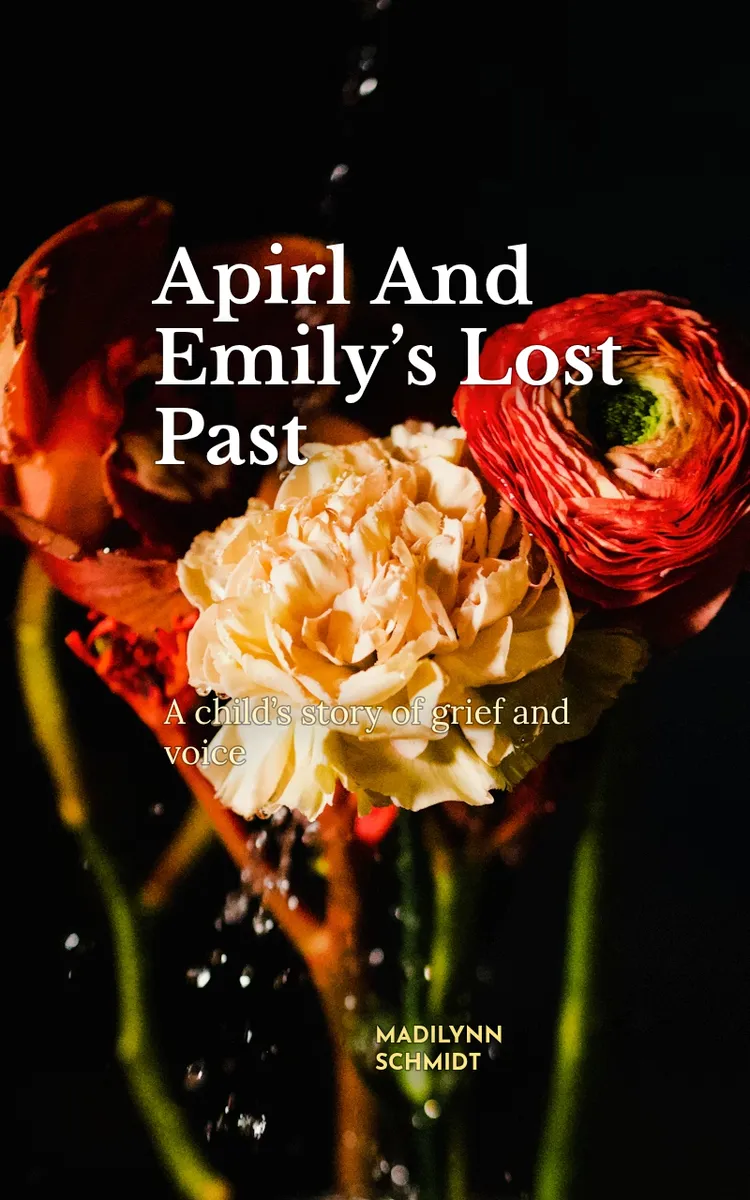
"Apirl And Emily’s Lost Past" is a children's book by MADILYNN SCHMIDT with 5 chapters and approximately 10,085 words. A child named Apirl struggles to speak after losing Emily.
This book was created using Inkfluence AI, an AI-powered book generation platform that helps authors write, design, and publish complete books. It was made with the AI Children's Book Creator.
Frequently Asked Questions
What is "Apirl And Emily’s Lost Past" about?
A child named Apirl struggles to speak after losing Emily
How many chapters are in "Apirl And Emily’s Lost Past"?
The book contains 5 chapters and approximately 10,085 words. Topics covered include The Day Apirl Went Quiet, Finding Emily’s Clues in Memory, The Garden Where Words Bloom, A Note That Reaches Emily, and more.
Who wrote "Apirl And Emily’s Lost Past"?
This book was written by MADILYNN SCHMIDT and created using Inkfluence AI, an AI book generation platform that helps authors write, design, and publish books.
How can I create a similar children's book?
You can create your own children's book using Inkfluence AI. Describe your idea, choose your style, and the AI writes the full book for you. It's free to start.
Write your own children's book with AI
Describe your idea and Inkfluence writes the whole thing. Free to start.
Start writingCreated with Inkfluence AI


