
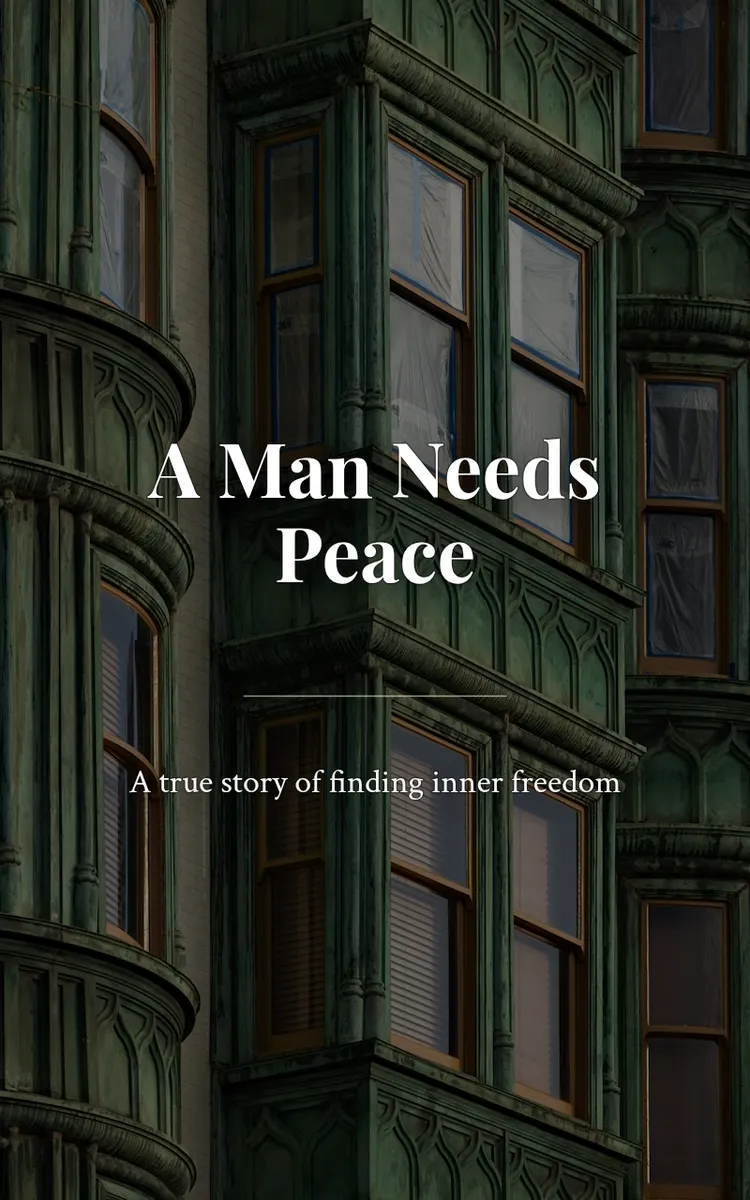
Read the first chapter
The whole of chapter one, free. About 13 min. Turn the pages with the arrows, your keyboard, or a swipe.
Chapter 1
The Long Ride Home
The forklift alarm had finally stopped echoing through the warehouse ceiling, but the sound stayed in my body like a bruise. I finished counting pallets nobody ever thanked me for, signed my name on a clipboard that smelled like old paper and diesel, and stepped out into the night that felt too cold for the work I’d just done. My hands were still buzzing from the shift - grip, lift, set, repeat - like my muscles didn’t know how to clock out with the rest of me. When I got to my truck, the keys were slick in my palm. I wiped them on my pants without thinking and sat there with the engine running, letting the cab fill with heat that didn’t reach my chest.
In the lot, the fluorescent lights flickered above the loading doors. Beyond them, the factory and warehouse area stretched out like a long stretch of quiet trouble - dark windows, chain-link fences, the occasional hum of a distant generator. I could hear my own breath and the soft rattle of tools in the back of the truck. Nothing dramatic happened. That was the problem. It was just twelve hours of moving and surviving, followed by a drive where the only thing waiting for me was myself.
I pulled onto the road and kept my shoulders tight, like I could hold my emotions in place by force. Every red light felt like an interruption. I watched the streetlights slide across the windshield, watched the miles stack up behind me, and told myself I’d be fine once I got home. Home was supposed to be the place where the day turned into something easier. Work was where I handled what could be handled - numbers, schedules, responsibilities. Home was where I could stop thinking so hard. That was the story I lived on.
But the silence in me didn’t loosen when I started driving. It settled deeper. It wasn’t the peaceful kind. It was the kind that trained you to stop asking questions because answers would cost too much. I’d spent so long treating silence like control that I didn’t notice I was using it until it started using me back.
A car passed me and its headlights swept across the road, briefly turning the asphalt into a wet-looking mirror. The beam cut across my steering wheel and lit up the faint scratches on the plastic. I remembered noticing those scratches months ago and thinking I’d fix them later, the way I always said later about the things that didn’t show up on a paycheck. Later, when things calmed down. Later, when I had time. Later, when I could afford to be a person instead of a provider.
At the next stretch of road, I could see the neighborhood ahead - lower lights, fewer warehouses, streets that belonged to families and not contracts. My phone sat face-down in the cup holder, untouched. I didn’t want noise. I didn’t want reminders. I just wanted to arrive with a steady face, the kind that didn’t invite conversations I wasn’t ready to have.
When I turned onto my street, the air changed. The factory smell - oil and metal - fell away, replaced by something more ordinary, like grass drying in the summer heat and the faint sweetness of someone’s laundry detergent drifting from an open window. The night cooled as I drove past houses with porch lights, the kind that made everything look safe from the road. I could feel myself trying to switch modes. My jaw tightened again. I adjusted my grip on the wheel, checking myself the way I checked loads - make sure it’s secure, make sure it won’t slip.
I pulled into the driveway and killed the engine. For a second, the truck’s ticking stopped, and the silence rushed in so loud it felt physical. I sat there with my hands still on the wheel, listening to the house breathe. Somewhere inside, there was no sound at all - no TV, no music, no movement that told me what kind of night my home was having. I swallowed and tried to convince myself that quiet was good. Quiet meant things were okay.
The front door opened when I stepped out. My body reacted before my mind did. I stood too still on the porch, like any shift in posture might give away what I was carrying. The door didn’t swing wide; it opened just enough for light to spill out and land on the steps. Heat from inside met the cold air outside, and the contrast made my skin prickle.
“Hey,” I said, keeping it plain. I didn’t ask how the day went. I didn’t ask how my tone sounded. I just offered the word like a bridge I could cross without looking down.
The response came quiet, cautious. “You’re home.”
I could’ve pretended I didn’t hear the edge in it. I could’ve shrugged it off the way I’d learned to shrug off small things at work - an extra task, a complaint from a supervisor, a problem that wasn’t technically mine. Instead, something in me stirred, not anger exactly, but pressure. The kind that happens when you’re holding a lid on too long.
I took my work boots off at the door and tried to keep my movements careful. I set my keys in the same spot I always used, like routine could erase whatever was building between us. My shoulders stayed tight. My throat stayed dry. I could smell the detergent on my own clothes from the last load, but the scent couldn’t cover the sweat and metal under it.
“I’m tired,” I said, because that was the truth I could live with. It was safe. It didn’t accuse anybody. It didn’t ask anything.
“I know,” came the reply, and the words landed heavier than I expected. I stared at the floor a moment, letting the silence take up space again.
We stood in the entryway with the light buzzing faintly overhead. I could hear the refrigerator humming in the kitchen, steady and mindless. I could hear my own breathing, too loud now. The longer we stayed like that, the clearer it became that I wasn’t tired in the way I wanted to be. I was worn down by the work, sure, but more than that, I was tired of managing myself so tightly that I couldn’t feel what was actually happening.
I tried to move past it. I picked up a small bag from the counter and set it down without thinking. “I’ll eat in a bit,” I said, the way I used to say it when I wanted to postpone the real conversation.
That’s when she looked at me fully, not just at my shoulders or my hands. Her eyes didn’t change, but my mind did something it hadn’t done all shift. It connected dots I’d been avoiding. Not the visible ones - the arguing, the tension that people could point to from the outside - but the pattern beneath it. The way I always came home and went quiet first. The way I controlled the temperature of the room with my silence, hoping that if I didn’t stir anything up, nothing would break.
She didn’t say my name loudly. She didn’t raise her voice. She just asked, “Are you going to talk to me, or are you going to shut down again?”
I froze with my hand still near the cabinet handle. Heat rose in my neck, but it wasn’t from embarrassment. It was from being seen. I’d told myself I was saving the peace. I’d told myself silence was how I kept things from getting worse. But when she said it out loud, it sounded less like protection and more like punishment - like I was giving her nothing and calling it calm.
“I’m not shutting down,” I said, and my voice came out firmer than I intended. “I’m just tired.”
She watched me for a beat too long. The house felt smaller suddenly, like the walls had moved in. “You always say that,” she replied, and the words weren’t meant to be cruel. They were meant to be accurate.
I wanted to defend myself. I wanted to list all the things I did and all the hours I put in. I wanted to point to the work boots by the door, the paycheck, the steady routine, and argue that I was doing my part. But the argument in my head didn’t feel clean. It felt rehearsed. It felt like performance, the kind you do when you’re afraid that if you stop acting like the strong one, everything will fall apart.
So I swallowed again and tried something different, something smaller and more honest. “I don’t know how to say it,” I admitted, and it startled me that the words came out at all. My chest tightened immediately, like honesty was another kind of labor.
Her face shifted - not into softness exactly, but into focus. “Then say what’s there,” she said. “Not what you think I want. Not what makes you look like you’re okay.”
I stood there with my hands empty, like I’d forgotten how to hold anything but work. The refrigerator hummed. A car passed outside, tires whispering on the street. The air inside smelled like dinner that hadn’t been cooked yet - clean and waiting.
I tried to explain without slipping into the old script. “When I’m at work,” I said slowly, “I can focus. I can handle what needs handling. When I come home… I don’t want everything to start again.”
“Start again?” she repeated, and her tone pulled tight. “So it’s already starting in your head before we even talk.”
That landed harder than I expected. My silence-as-control had been so automatic that I’d convinced myself it was preventing conflict. But if the conflict started before the words even did, then my silence wasn’t stopping anything. It was just giving it time to grow.
I looked toward the kitchen, toward the place where the dinner table sat under a light that always seemed too bright at night. I could feel my emotions pressing from the inside like heat trapped in a closed car. I didn’t raise my voice. I didn’t accuse her. I just felt cornered by the truth.
“I thought if I stayed quiet,” I said, “it would keep us from fighting.”
She didn’t smile. She didn’t look away. “That’s what you tell yourself,” she said. “But you’re not quiet because you’re calm. You’re quiet because you don’t want to be responsible for what you feel.”
I opened my mouth and then closed it. I hated how accurate that felt, even if it wasn’t the whole picture. The obstacle wasn’t the arguing. The obstacle was me - me choosing silence over the risk of connection. Me using tiredness like a shield. Me calling it peace when it was really just avoidance.
I could feel my old habits trying to take over. I could feel myself reaching for the familiar escape routes: change the subject, offer a joke, say I’ll talk later. Work had taught me how to keep moving when things felt heavy. Silence had taught me how to keep breathing without dealing with what was breaking.
“I’m trying,” I said, and I meant it in the only way I knew - by showing up, by staying, by not walking away. But the words didn’t carry the weight I wanted them to. They sounded thin in the room.
“Trying doesn’t help if you don’t let me in,” she said. Her voice stayed steady, but it held frustration that had been waiting.
I stared at her for a moment and felt something in me shift, not into peace, but into clarity. Looking back, I now understand how easy it was to confuse control with love. I believed that if I kept the air smooth, nobody would notice the cracks. I believed that if I didn’t speak, I couldn’t say the wrong thing. I believed silence could stand in for honesty the way overtime could stand in for attention.
But the truth was simpler and uglier. Silence wasn’t filling the gap. It was widening it.
I took a step toward the kitchen, not rushing, not hiding. My feet moved slower than I wanted, like my body was learning a new rhythm. “I don’t want to fight,” I said again, softer this time. “I want us to be okay. I just… I’ve been carrying it for so long.”
“And what is ‘it’?” she asked.
I felt the question hit the exact place I’d been protecting. My hands curled at my sides. I could smell the clean dish soap from the sink, and it made the moment feel even more exposed - like the house itself was too honest to let me lie.
“I don’t know,” I admitted, and that was the first time I’d said something like that in years. “I think I’m scared that if I say what I feel, you’ll think I don’t care. Or you’ll think I’m making excuses.”
Her eyes held mine. “Corey,” she said, and my name sounded different when it wasn’t used like a label. “I’m not asking you to make excuses. I’m asking you to stop disappearing.”
The room tightened around me again. I could feel my throat burn, but I didn’t let myself turn it into anger. I let the words come out, even though they didn’t fix anything right away. “I don’t want to disappear,” I said. “But I don’t know how to do it any other way.”
At that, her expression softened just a fraction, and I took it as a chance - one of those small openings where you can either step through or retreat. I stepped through, reaching for what I hoped would be calm.
“I’m going to talk,” I said, like I could promise it and make it true. “Just… give me a minute.”
The words were what I wanted to hear. The problem was what followed them. The minute didn’t stay calm. The silence didn’t stay quiet. Something in the tension shifted from waiting to confronting, and my careful tone didn’t protect me anymore. My chest felt too full. I could feel my words coming faster than my patience.
“I’m not trying to be cold,” I said, and then immediately felt myself slipping into defensiveness. My voice rose before I could stop it. “I work. I do what I can. You know that.”
She flinched at the edge of my tone, and I felt regret hit like a delayed bruise. “I know you work,” she replied, and there was hurt under her steadiness. “But you keep using work like it’s the only way you’re allowed to love me.”
I looked down at my hands. The silence inside me didn’t disappear. It transformed. It became the kind that watches your mouth, ready to shut you down the second you get too close. I realized then that my effort to start a calm conversation had collapsed for the same reason my silence had always felt like control: as soon as the conversation asked for something real, I tried to prove myself instead of being present.
The kitchen light buzzed. The refrigerator kept humming like nothing mattered. I could hear my own breathing again, too fast now. I wanted to pull back into work mode, to leave the room and let time do what it always did - numb the moment and bury it under the next shift.
But I stayed standing, because staying was the first honest thing I’d done all night.
“I don’t know how to do peace with words,” I said, and the confession tasted bitter and true. “I keep trying to do it the way I know how.”
Her face tightened again, not with anger this time, but with the weight of disappointment that had been building. “Then learn,” she said, and the words weren’t a command meant to break me. They sounded like the truth she’d been carrying too.
I couldn’t answer that. Not cleanly. Not quickly. My throat closed around the rest. I nodded once, barely, and the motion felt like surrender to something I’d avoided: that peace wasn’t something I could build with effort alone. Peace wasn’t a task with a finish line. It was something you had to sit inside, even when it felt uncomfortable.
I didn’t get the calm I’d driven home for. I did get closer to what was actually wrong.
As I moved farther into the house, the air stayed cool in one corner and warmer in another, like the house itself couldn’t decide what kind of night it was. I stood by the counter, feeling the silence press against my ribs, and I tried to hold still without vanishing. The tension didn’t break. It didn’t resolve. But at least it wasn’t hidden behind the work anymore.
That was the new cost - words that failed, and the truth that came through anyway.
End of chapter one. 4 more chapters and about 13,469 words in the full book.
Swipe or use the arrows to turn the page
What's inside: 5 chapters
- 1. The Long Ride Home
- 2. Peace Is Missing in the House
- 3. The Silent Provider’s Missing Clue
- 4. Her House, My Burden
- 5. Choosing Myself Brings Peace
About this book
"A Man Needs Peace" is a biography book by King Sin with 5 chapters and approximately 13,469 words. A man’s journey from silence to peace.
This book was created using Inkfluence AI, an AI-powered book generation platform that helps authors write, design, and publish complete books. It was made with the AI Biography Writer.
Frequently Asked Questions
What is "A Man Needs Peace" about?
A man’s journey from silence to peace
How many chapters are in "A Man Needs Peace"?
The book contains 5 chapters and approximately 13,469 words. Topics covered include The Long Ride Home, Peace Is Missing in the House, The Silent Provider’s Missing Clue, Her House, My Burden, and more.
Who wrote "A Man Needs Peace"?
This book was written by King Sin and created using Inkfluence AI, an AI book generation platform that helps authors write, design, and publish books.
How can I create a similar biography book?
You can create your own biography book using Inkfluence AI. Describe your idea, choose your style, and the AI writes the full book for you. It's free to start.
Write your own biography book with AI
Describe your idea and Inkfluence writes the whole thing. Free to start.
Start writingCreated with Inkfluence AI


