
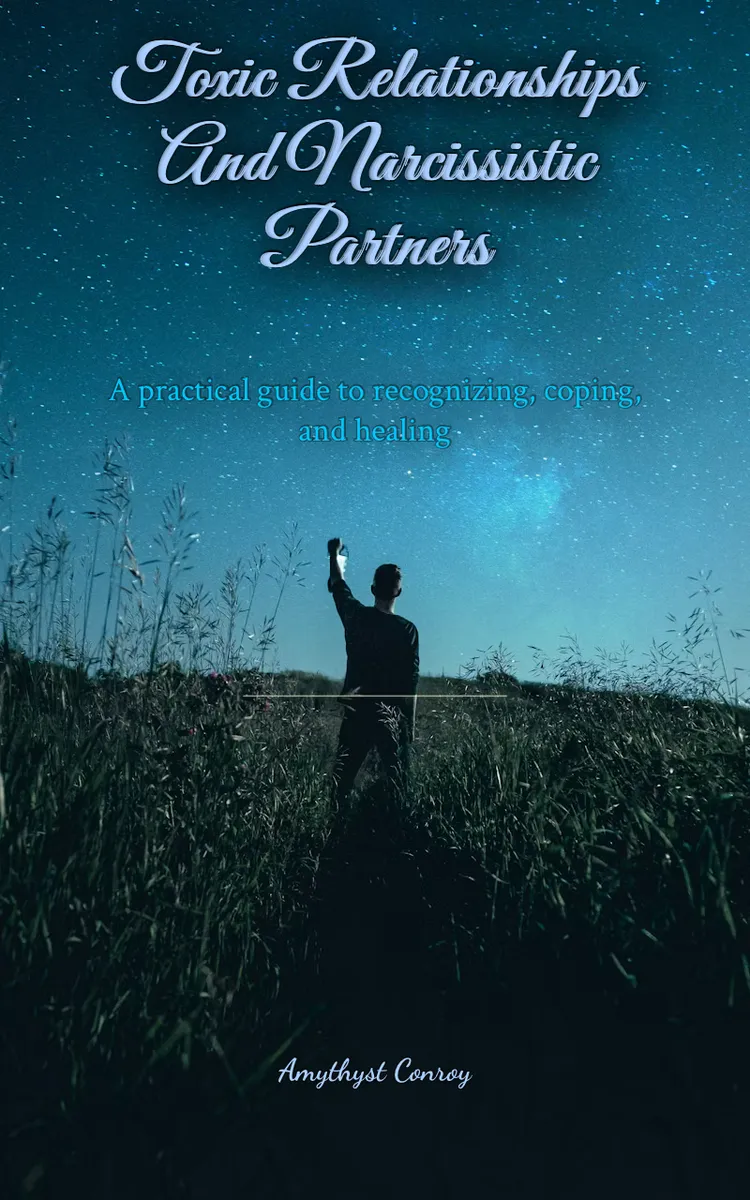
Toxic Relationships And Narcissistic Partners
Created with Inkfluence AI
Identifying toxic relationships and narcissistic partner dynamics
Table of Contents
- 1. Reclaiming Your Self-Worth
- 2. Breaking the Gaslight Cycle
- 3. Setting Boundaries Without Emotional Fallout
- 4. Communicating to Prevent Hoovering
- 5. Building a Recovery Plan and Purpose
Preview: Reclaiming Your Self-Worth
A short excerpt from “Reclaiming Your Self-Worth”. The full book contains 5 chapters and 7,580 words.
When Their Approval Becomes Your Identity
Lena, 34, could manage a hospital floor during a staffing crisis without blinking. She could calm an angry family, solve a scheduling mess, and make decisions with half the information most people needed. But at home, one cold look from her partner could undo her entire day.
If he said dinner was “fine,” she replayed the meal. If he criticized her clothes, she changed before leaving the house. When he praised her, relief rushed through her - followed by the quiet fear that she might lose it again. Her confidence seemed to live in his hands.
Maybe you know that feeling. You’re capable at work, with friends, or when handling practical problems. Yet beside your partner, you feel as if you’re constantly auditioning for the right to be loved.
What happens when someone else’s opinion becomes the mirror you use to see yourself?
The Mirror-Truth Reset: From Approval to Inner Evidence
Old Belief: If my partner disapproves of me, I must have done something wrong or become less worthy.
New Reality: My partner’s approval is information about their reaction - not a measurement of my identity, value, or reality.
This shift matters because narcissistic partners often make approval feel scarce. Warmth may arrive after you agree with them. Affection may disappear when you set a boundary. A compliment may be followed by a criticism, leaving you eager to earn the next kind word. Over time, your mind starts treating their mood as a report card.
The Mirror-Truth Reset interrupts that habit. Instead of asking, “Do they approve of me?” you ask two different questions: “What actually happened?” and “What do I know to be true about myself?” Those questions bring you back to evidence rather than emotional weather.
For Lena, the evidence might be simple. She prepared dinner after a long shift. She asked her partner what he wanted. She made one meal, not a promise to create perfect happiness. His complaint may reveal his expectations, his entitlement, or his desire to keep her trying harder. It doesn’t prove she’s careless, unattractive, or difficult.
This isn’t about pretending criticism never matters. Healthy feedback can be specific, respectful, and open to discussion. Approval-based control feels different. It makes your basic worth seem conditional. The reset helps you separate a behavior you can consider from an identity judgment you don’t have to carry.
How the Approval Loop Takes Over
Your brain naturally looks for patterns in close relationships. If affection follows compliance, you learn to comply. If conflict follows independence, you learn to hide your needs. This isn’t weakness. It’s adaptation. You’re trying to create safety with the tools available to you.
The problem is that the strategy slowly costs you your own point of view. You stop checking what you want and start scanning for what will keep the peace. You may even defend your partner’s opinion before anyone else has criticized it.
Signs this pattern is running your life:
1. You check their reaction before trusting your own.
You enjoy a new outfit until your partner looks at it. You feel proud of a work decision until they call it “nothing special.”
2. You change ordinary choices to avoid disapproval.
You cancel plans, rewrite messages, or stay quiet because you’re already predicting their irritation.
3. You treat praise like oxygen and criticism like proof.
One approving comment can lift you for hours. One dismissive remark can make you question your intelligence, appearance, or character.
4. You explain yourself long after the conversation is over.
You keep building a case for why your feelings are reasonable, hoping the perfect explanation will finally earn understanding.
The Mirror-Truth Reset doesn’t demand that you feel confident immediately. It gives you a place to stand while confidence returns. You notice the partner’s reaction, name the facts, and choose not to hand over the final verdict on who you are.
Your partner can react to you, but they don’t get to define you.
Questions That Return You to Yourself
1. Which parts of your personality have you edited to keep your partner pleased?
Be specific. Maybe you stopped laughing loudly, discussing money, seeing a friend, or wearing colors they dislike. An honest answer might be, “I’m quieter at home because enthusiasm gets mocked.”
2. What do you believe about yourself only because your partner repeats it?
Write the statement exactly as you hear it: “I’m too sensitive,” “I’m bad with money,” or “Nobody else would put up with me.” Then ask, “What facts support this, and what facts challenge it?”
3. When did you last make a decision without checking how your partner would respond?
Choose a small example, such as ordering your usual coffee, accepting a lunch invitation, or choosing how to spend an hour....
About this book
"Toxic Relationships And Narcissistic Partners" is a self-help book by Amythyst Conroy with 5 chapters and approximately 7,580 words. Identifying toxic relationships and narcissistic partner dynamics.
This book was created using Inkfluence AI, an AI-powered book generation platform that helps authors write, design, and publish complete books. It was made with the AI Self-Help Book Writer.
Frequently Asked Questions
What is "Toxic Relationships And Narcissistic Partners" about?
Identifying toxic relationships and narcissistic partner dynamics
How many chapters are in "Toxic Relationships And Narcissistic Partners"?
The book contains 5 chapters and approximately 7,580 words. Topics covered include Reclaiming Your Self-Worth, Breaking the Gaslight Cycle, Setting Boundaries Without Emotional Fallout, Communicating to Prevent Hoovering, and more.
Who wrote "Toxic Relationships And Narcissistic Partners"?
This book was written by Amythyst Conroy and created using Inkfluence AI, an AI book generation platform that helps authors write, design, and publish books.
How can I create a similar self-help book?
You can create your own self-help book using Inkfluence AI. Describe your idea, choose your style, and the AI writes the full book for you. It's free to start.
Write your own self-help book with AI
Describe your idea and Inkfluence writes the whole thing. Free to start.
Start writingCreated with Inkfluence AI


