
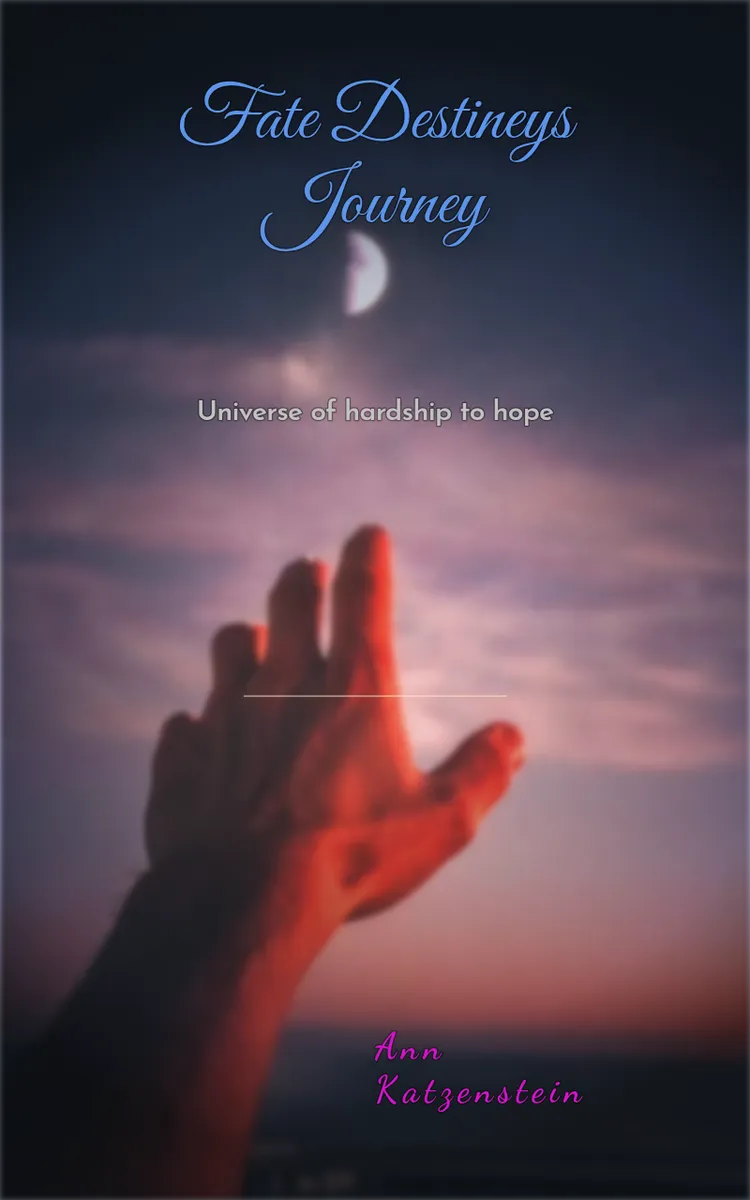
Fate Destineys Journey
Created with Inkfluence AI
Personal growth through life’s trials and tribulations
Table of Contents
- 1. Rewriting Your Fate Story
- 2. Never last, only lessons
- 3. Little is sometimes Better
- 4. Yes, better off No
- 5. No one to Blame but ourself
- 6. Blood related Family choosen
- 7. The Prymid
- 8. Walking Through Your Own Hell
- 9. The End Is the Beginning
Preview: Rewriting Your Fate Story
A short excerpt from “Rewriting Your Fate Story”. The full book contains 9 chapters and 10,792 words.
A small room, a cake, and a door that never opens the same way again just been counted - six little flames wobbling as the child leaned close to make a wish. Laughter filled the kitchen like warm light. The father sat on a low chair, his knees dusty from yard work, and the mother hummed as she washed a dish, both of them ordinary and steady. Six days later, the mother walked in with her coat still on, eyes that had lost their easy shine, and closed the door behind her like someone sealing a letter no one would read again.She sat down and said the words that rearranged the room: “You will never see your dad again. He’s gone.” Those words landed not as information but as an earthquake - every familiar piece of the child's map sliding under the floor. The child’s grief didn’t look like an adult’s: it folded into a question that felt like betrayal - how could the world change so fast? How could the person who’d read stories and tied shoes one moment be absent the next? Where did the warmth go when it mattered most?What do you do when the person who promised safety is the one who breaks the map?Bold, heavy, immediate - the hurt of being pulled from a happy life into a strange darkness with a mother and a strange man at the edges is not just loss. It’s a rupture of faith. It’s the moment the inner child learns that home can be taken. That lesson echoes in choices years later unless you rewrite the meaning of that seismic day.
How do you reclaim the story when the ground beneath you was pulled away?Old belief versus the life you can choose nextOld Belief: The betrayal you endured defines who you are - fragile, abandoned, forever damaged by the night someone you trusted left the map unfinished.
New Reality: The betrayal is part of your story, a wound with its own truth, but it does not have the authority to set your future. You can read the wound for what it teaches - about boundaries, about truth-telling, about where you still hold hope - and begin to write the next chapters from a place of choice.
This matters because identity forms where interpretation meets memory. A child who felt home ripped away can grow into an adult who subconsciously expects betrayal, shutting out connection preemptively. Or that same child can learn to notice the signs of safety, to choose people who show up consistently, and to set small rules that make trust more gradual and safer.
Concrete example: imagine a woman who still remembers that sixth birthday. She flinches when a partner is late. For years, lateness becomes proof of abandonment. When she adopts the new reality, she begins asking the questions that keep her safe: “Can you tell me if you’ll be late?” and “How do you handle conflict?” These aren’t walls; they’re scaffolding. She tests consistency with small things - texts returned, plans kept - and slowly replaces the reflexive verdict of betrayal with evidence of reliability. Over time, trust grows not because the past vanished, but because she’s chosen deliberate ways to avoid repeating its patterns.
You’ve got this: the point isn’t to force yourself to forget the hurt, but to stop letting it write your future without permission.
Why that shift matters - and how to recognize the patternWhen a child’s life is yanked into darkness, the brain does what brains do: it seeks rules. “If this happened, then that must be true.” Those rules are survival tools at first. They keep you alert to danger. But left unexamined, they calcify into habits - automatic distrust, self-blame, expecting abandonment before anyone has a chance to leave.
The reframing is not denial. It’s a reallocation of authority. You honor the child’s pain and give the adult in you permission to add evidence to the ledger before making final judgments. That’s often the difference between living under a verdict and choosing from a position of experience.
Signs this pattern is running your life:
You assume love will end and behave in ways that make endings more likely - pushing away, testing limits, or expecting the worst.
You replay the birthday moment or the day you were pulled away as a proof-text for character flaws: “I must be unlovable” or “I always get left.”
You avoid commitment or obsessively control relationships to prevent surprise departures.
You interpret small mistakes as existential threats, turning minor disappointments into evidence of permanent betrayal.
Short header: The wound taught you a rule - now consider teaching it a new one.
Honest change means you’ll sometimes feel foolish for testing trust slowly; that’s okay. That little awkwardness is the price of freedom. Take one small, repeatable practice - send a message, wait for a reply, notice your story - and you’ll begin collecting different kinds of evidence.
Questions that pry open the old verdictWhat exactly do I remember from the day they told me my dad was gone - sensory details, not meaning?
Try to list three things you saw, heard, or smelled....
About this book
"Fate Destineys Journey" is a self-help book by Ann Katzenstein with 9 chapters and approximately 10,792 words. Personal growth through life’s trials and tribulations.
This book was created using Inkfluence AI, an AI-powered book generation platform that helps authors write, design, and publish complete books. It was made with the AI Self-Help Book Writer.
Frequently Asked Questions
What is "Fate Destineys Journey" about?
Personal growth through life’s trials and tribulations
How many chapters are in "Fate Destineys Journey"?
The book contains 9 chapters and approximately 10,792 words. Topics covered include Rewriting Your Fate Story, Never last, only lessons, Little is sometimes Better, Yes, better off No, and more.
Who wrote "Fate Destineys Journey"?
This book was written by Ann Katzenstein and created using Inkfluence AI, an AI book generation platform that helps authors write, design, and publish books.
How can I create a similar self-help book?
You can create your own self-help book using Inkfluence AI. Describe your idea, choose your style, and the AI writes the full book for you. It's free to start.
Write your own self-help book with AI
Describe your idea and Inkfluence writes the whole thing. Free to start.
Start writingCreated with Inkfluence AI


