

Read the first chapter
The whole of chapter one, free. About 9 min. Turn the pages with the arrows, your keyboard, or a swipe.
Chapter 1
Why Ghosts Feel Like Anime
Why Ghost Stories Look Like Anime: The Spook-to-Story Bridge
Have you noticed that the most watchable ghost stories don’t feel scary in the dark - they feel legible in the light? A lot of eerie legends become easier to follow once they borrow the same visual grammar we use for characters, timing, and emotion on screen. That’s the paradox: the more “spooky” a tale becomes, the more it often relies on familiar cues to stay watchable.
This chapter explores the Spook-to-Story Bridge: how unsettling folklore gets reshaped into something that fits our eyes and ears - through recognizable visual signals and emotional timing. We’ll look at where those cues come from in film and animation, how communities keep telling the same story while changing the delivery, and why “ghosts” often behave like characters rather than like pure horror.
If you’ve ever wondered why a legend can be shared like entertainment without losing its mystery, the answer may be hiding in plain sight - between the flicker of an image and the pause before a reaction. What if the scariest part of a ghost story isn’t the ghost at all, but the exact moment your brain decides it’s safe enough to watch?
The Spook-to-Story Bridge: Visual Cues That Turn Fear Into Comprehension
Ghosts are not naturally “anime.” They’re language before they’re image - an idea passed through households, villages, and neighborhoods, shaped by what each generation fears and what it can explain. In many traditions, a ghost is less a single creature than a pattern: an absence that shouldn’t be there, a presence that doesn’t behave like the living, a story that gathers meaning around death.
What changes when a legend becomes a watchable myth is that the story starts using the viewer’s existing reading skills. Film and animation teach us, over and over, how to interpret faces, silhouettes, pacing, and “beats.” Even when a ghost is described as shapeless, the screen still has to do something concrete: it must show a figure entering a frame, or a disturbance moving through a space, or a reaction crossing a character’s expression. Those are visual cues - the same kind of cues that help us follow any narrative, from a romance to a courtroom drama.
A useful way to think about it is to separate threat from readability. Folklore can be vague on purpose. A spirit might be “there” without being clearly defined, and the vagueness is part of the dread. But once you put the tale into a format designed for audiences - especially animation, where visual style is controlled - you get pressure to make the legend legible. The story learns to “stand in the light” so viewers can track it.
That’s one reason ghost imagery so often borrows familiar archetypes: a pale silhouette, long hair, a fixed gaze, a delayed movement, a silhouette that looks like it belongs to a character sheet. These aren’t just aesthetic choices; they’re shorthand. The viewer doesn’t need a full explanation of the spirit’s history to understand its role in the scene. The image does that work quickly.
A scene in a moving medium also depends on emotional timing - not just what happens, but when it happens. Human attention is rhythm-sensitive. We notice changes in expression after we’ve had a fraction of a second to register a stimulus. Animation and editing exploit that by placing a pause at the moment of recognition: the ghost appears, the background goes still, and then the character reacts. The fear isn’t only in the apparition; it’s in the gap between seeing something and interpreting it.
When you watch enough serialized stories, you start to notice that ghosts behave like recurring characters: they arrive with a recognizable visual signature, and they trigger a predictable chain of responses. That predictability doesn’t remove mystery - it organizes it. The story becomes something you can follow, and following is what makes it bingeable.
The Editing Rhythm of Fear: How Timing Turns Eerie Into Watchable
Ghost legends often sound chaotic when told as oral history - parts of the account can vary from teller to teller, and details shift with the listener’s background. But film language prefers timing. Editors and animators work with micro-decisions: shot length, cuts, pauses, and the order in which information lands.
One of the simplest, most powerful timing mechanisms is expectation management. Viewers constantly predict what will happen next based on patterns they’ve seen before: footsteps approaching, a familiar room layout, a character’s posture. A ghost story becomes watchable when it knows exactly where to break the pattern. The “spook” is the disruption; the “story” is the organization that makes the disruption meaningful rather than random.
Rina, 19, a first-year film student, described it in terms she’d learned in class: “If you can’t tell what the scene is doing, you can’t tell what you’re supposed to feel.” She was talking about how she watched older horror films compared to modern ones. Older takes sometimes linger on dread without giving the viewer a clear emotional rhythm. Modern productions - across live action and animation - tend to cue the audience’s attention more precisely. Even when they’re still eerie, they’re rarely confusing in the way that makes people tune out.
That’s where emotional timing becomes an invisible “editor” inside the audience. Humans don’t process fear like a switch. We process it like a sequence: signal, interpretation, response. When the sequence is arranged - ghost appears, character hesitates, expression changes, cut to reaction - the viewer’s mind fills in the missing pieces. The legend feels complete enough to watch, even if it remains supernatural.
A familiar visual cue and a well-placed emotional beat also make it easier for the story to travel across communities. A legend can survive through adaptation because the adaptation doesn’t have to change the core fear. It can change the delivery: how long the camera holds, where the silence sits, how the ghost’s movement is stylized. That’s also why certain ghost motifs keep reappearing across different formats. They’re not just “cool.” They’re compatible with the viewer’s timing expectations.
There’s a scientific angle here, too: attention is limited, and surprise grabs it. When a story uses a clear cue to signal “something is different,” the brain can allocate resources without collapsing into confusion. The result is a kind of controlled suspense - an experience that feels intense but still coherent. You might not know the spirit’s origin, but you know what role it plays right now.
When the Ghost Behaves Like a Character (Counterintuitive Discovery)
Here’s the counterintuitive finding: the most “ghost-like” stories are often the ones that treat the spirit as a character with rules, not as pure chaos. That means the ghost’s behavior becomes consistent enough to be recognizable - through repeated visual signatures and repeatable timing patterns. The surprise doesn’t come from randomness; it comes from familiar patterns being interrupted in a controlled way.
Why does this matter? Because it flips a common assumption. Many people think legends become popular because they’re more frightening. But popularity often comes from structure: the story gives your brain enough scaffolding to stay engaged. A ghost can still be unsettling, but if it behaves like an unsortable blob of fear, the audience stops watching. Structure keeps the audience watching long enough for the mystery to “stick.”
This also changes how we interpret the cultural function of ghost stories. Folklore isn’t only entertainment; it’s a social tool for talking about death, anxiety, and uncertainty. When filmmakers and animators reshape folklore into watchable myths, they’re not abandoning the original fear. They’re translating it into a format that people can share repeatedly - without losing emotional impact.
Rina noticed something similar when she studied how scenes are storyboarded. “Even when it’s supernatural,” she said, “the scene still has to communicate cause and effect.” In other words, the ghost might be inexplicable, but the scene logic isn’t. That’s the Spook-to-Story Bridge in action: supernatural content gets paired with narrative legibility.
It’s also why the bridge looks similar across different media. Whether the spirit is a pale figure in a shrine tale or a stylized apparition in animation, audiences are reading the same set of signals: where the eyes go, how the body moves, how long the silence lasts, and when the character’s expression changes. The ghost’s “story-ness” is what makes the legend transferable.
A Real Place Where Legends Learn to Be Watched: Rina at a Local Screening Night
On a rainy evening in a student-friendly area of Japan, Rina went to a small screening night at a local cinema club. The program wasn’t a single blockbuster; it was a mix of short films and clips - some rooted in folklore, others in modern retellings. What stood out, she told me later, was how the group reacted to timing. People laughed at the “beat” where the character pauses, not at the moment the image is most frightening.
The room itself mattered. In a shared viewing space, timing becomes communal. When a cut lands and multiple people inhale at once, the audience collectively confirms the scene’s rhythm. The legend feels less like a private fear and more like a story with an agreed-upon emotional tempo. That’s a real-world version of what animation does on purpose: it synchronizes the viewer’s attention.
Rina pointed to one repeating pattern across the program: an eeriness that arrived gradually, then “snapped” into clarity through a recognizable cue. Sometimes it was the way a camera framed a doorway, sometimes the way a character’s face shifted from confusion to dread. In each case, the legend’s supernatural element was less important than the viewer’s ability to track what the scene was communicating.
She also noticed how the myths stayed anchored in familiar settings even when the visuals became stylized. Ghost stories often use recognizable environments - hallways, shrines, old rooms, places where people expect traces. When the setting is familiar, the viewer can focus on the cue: the flicker, the delayed movement, the unsettling stillness. That’s the emotional timing working together with visual cues. The brain has a map, so the ghost can be an interruption rather than a total disorientation.
In that screening club, the legends weren’t treated like “facts.” They were treated like shared cultural material. That social treatment matters for the Spook-to-Story Bridge. A legend survives when people can discuss it - when it’s specific enough to talk about. Visual cues and emotional timing make that discussion easier, because viewers can point to moments: “That’s when it appeared,” “That’s when the reaction changed,” “That’s the sequence that made it feel real.”
What the Bridge Reveals About Us: We Watch Fear Because We Need Meaning
Ghost stories become myths not just because they’re old, but because humans are pattern readers. When a legend is reshaped into a watchable form, it becomes a way to rehearse uncertainty without being swallowed by it. The visual cues offer orientation, and the emotional timing makes the uncertainty feel paced rather than chaotic.
There’s also something social underneath. A story that can be shared is a story with repeatable landmarks - images people recognize, moments everyone remembers. That’s how folklore turns into a cultural script, and why “eerie” doesn’t automatically mean “unwatchable.” The bridge is a kind of agreement between storyteller and audience about how fear can be held safely inside a narrative frame.
So the mystery isn’t only why ghosts feel like anime. It’s why we keep translating the unknown into forms we can read - until dread starts to look like storytelling craft. If our brains crave structure even when we’re scared, what else - besides ghosts - are we turning into watchable myths without noticing?
End of chapter one. 7 more chapters in the full book.
Swipe or use the arrows to turn the page

The World In Chaos 6x9 Interior

When Everyone Else Has Moved On 8 5x11 196p REVISED v3

The Blind Spot of Reality EDITED Garamond 6x9
What's inside: 8 chapters
- 1. Why Ghosts Feel Like Anime
- 2. The Monster That Teaches You
- 3. Shrines, Signs, and Secret Rules
- 4. The Curse Contract in Three Beats
- 5. How Legends Borrow Ancient Voices
- 6. The Festival Logic That Makes Magic
- 7. The “Why Me?” Loop That Hooks Fans
- 8. The Legend You Carry Forward
About this book
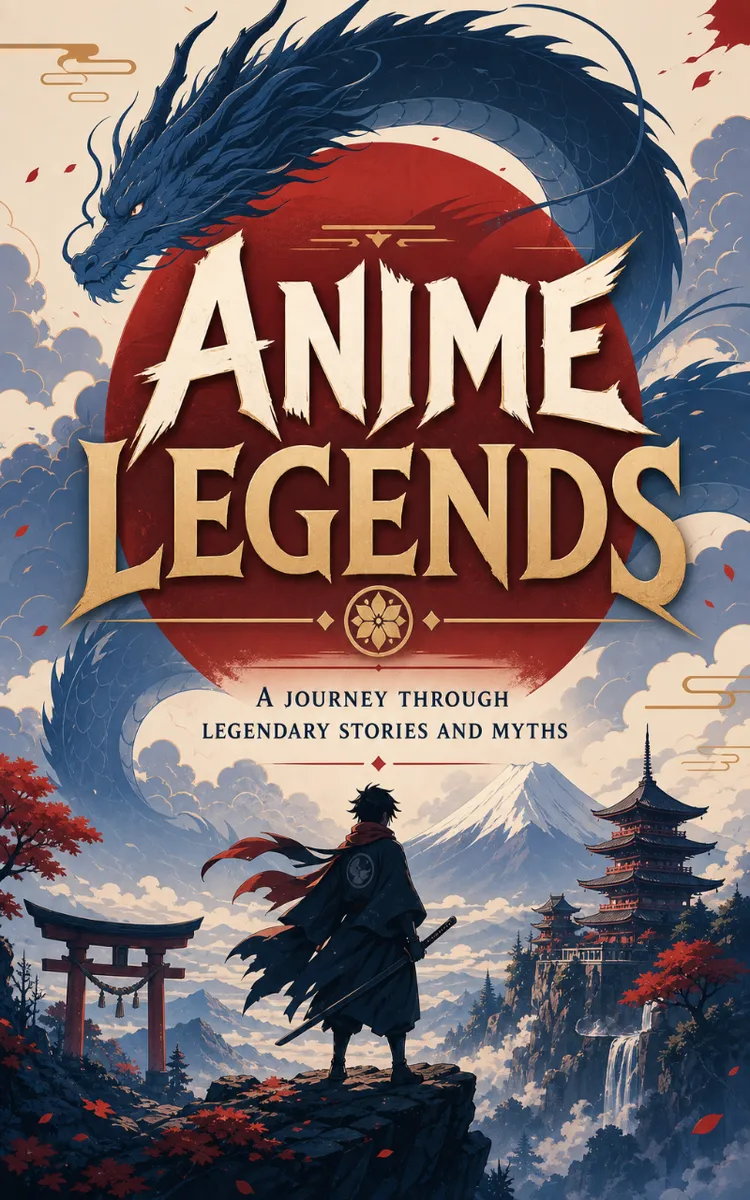
"Anime Legends" is a curiosity book by Lilly Marrs with 8 chapters and approximately 15,138 words. Anime legends, folklore, and myth-inspired tales.
This book was created using Inkfluence AI, an AI-powered book generation platform that helps authors write, design, and publish complete books.
Frequently Asked Questions
What is "Anime Legends" about?
Anime legends, folklore, and myth-inspired tales
How many chapters are in "Anime Legends"?
The book contains 8 chapters and approximately 15,138 words. Topics covered include Why Ghosts Feel Like Anime, The Monster That Teaches You, Shrines, Signs, and Secret Rules, The Curse Contract in Three Beats, and more.
Who wrote "Anime Legends"?
This book was written by Lilly Marrs and created using Inkfluence AI, an AI book generation platform that helps authors write, design, and publish books.
Write your own curiosity book with AI
Describe your idea and Inkfluence writes the whole thing. Free to start.
Start writingCreated with Inkfluence AI


