
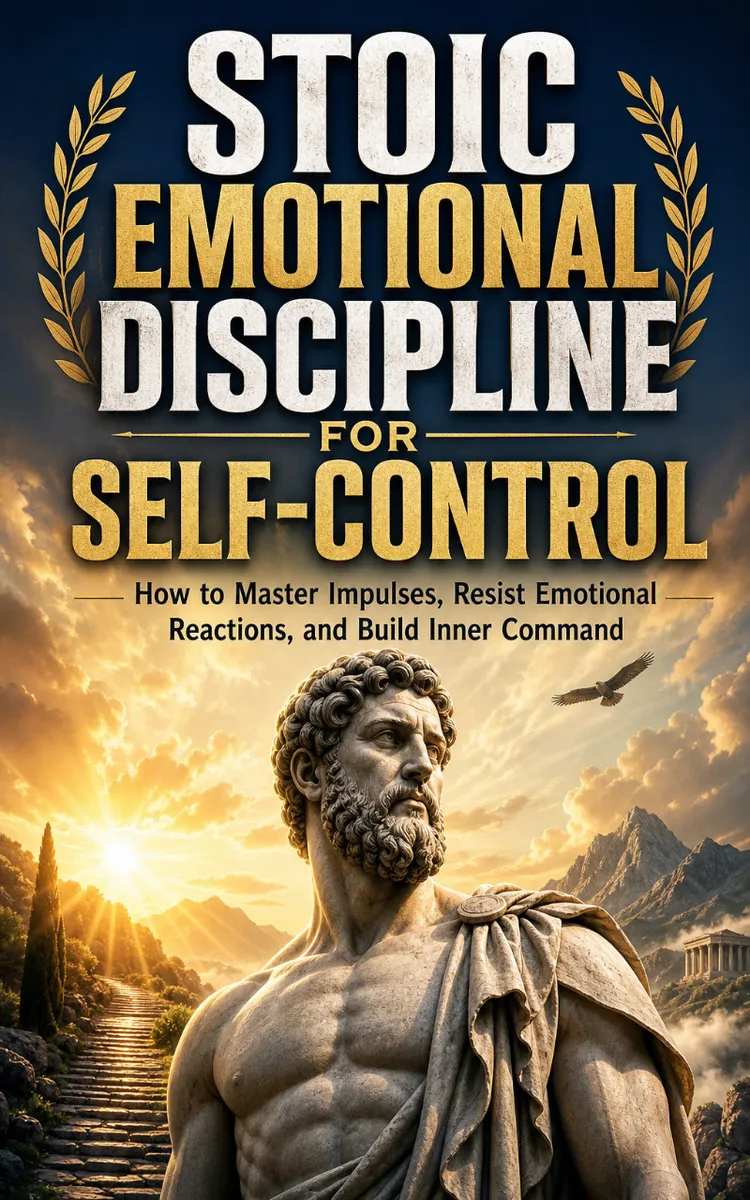
Stoic Emotional Discipline For Self-Control
Created with Inkfluence AI
Stoic methods for emotional self-control and impulse discipline
Table of Contents
- 1. Choosing Character Over Mood
- 2. The Stoic View of Emotions
- 3. Interrupting the First Assent
- 4. Using Negative Visualization Daily
- 5. Separating Desire From Direction
- 6. Building a Personal Values Compass
- 7. Practicing Voluntary Discomfort
- 8. The Two-Track Decision Method
- 9. Turning Triggers Into Training Signals
- 10. Managing Anger With Stoic Distance
- 11. Resisting Cravings Through Time-Delay
- 12. Rewriting Catastrophic Stories Fast
- 13. Practicing the “What’s Up to Me?” Lens
- 14. Building Emotional Self-Talk Scripts
- 15. Communicating Without Emotional Leverage
- 16. Choosing Delayed Gratification Plans
- 17. Recovering After Relapses Without Self-Hate
- 18. Strengthening Resilience With Stoic Review
- 19. Aligning Habits With Your Daily Virtues
- 20. Becoming Your Own Inner Commander
Preview: Choosing Character Over Mood
A short excerpt from “Choosing Character Over Mood”. The full book contains 20 chapters and 27,902 words.
> “Feelings are weather. Decisions are your compass.” - Stoic-influenced reminder
There’s a moment you can probably spot in your own life: something hits-stress from work, a craving you didn’t plan, a message that lands the wrong way-and suddenly your body is already running the show. Your mind catches up a second later, usually after you’ve made the choice you later explain with words like “I couldn’t help it.”
Darius, 34, shift supervisor, knows this pattern well. He can keep a line moving, handle problems fast, and stay calm with customers-until his phone buzzes with a late request from a manager. Then his mood goes hot. He starts snapping in the smallest ways: a sharper tone, a shorter fuse, a “whatever” attitude. The work still gets done, but his character gets dragged behind his mood like a suitcase with a broken wheel.
The Pattern
It usually begins with a trigger that feels small at the time. A glance at your inbox. A comment from someone you care about. The first thought of “I deserve this.” The trigger doesn’t ask permission. It just arrives, and your body answers instantly-tight chest, heat behind the eyes, a quick pulse of urgency. Then comes the part that fools you: the feeling acts like a command. Not “I’m uncomfortable,” but “I must respond.” Not “I’m tempted,” but “This is the right moment.” You don’t notice the switch happening because it blends into the background of everyday life.
For Darius, the pattern is almost automatic. When the manager sends a late request, he feels disrespected first. Then his brain fills in the rest: They don’t get it. I’m being set up to fail. I’ll show them I’m not taking this. His impulse isn’t just anger-it’s the urge to correct the situation with tone, speed, or control. He walks into the next interaction already “decided,” and he experiences his reaction as proof that his mood is accurate. Later, he’ll say, “I was just being honest,” but the truth is he was being driven. He wasn’t choosing character over mood; he was obeying mood because it felt like clarity.
If you’re honest, do you recognize that “my feeling is the instruction” moment in yourself?
A New Perspective
What if your emotions aren’t telling you what to do-what if they’re only telling you that you noticed something?
That question is uncomfortable because it steals the excuse. If a feeling is a command, then resisting it feels like fighting yourself. But if it’s a signal, then you can respect it without obeying it. Stoicism doesn’t deny emotion. It refuses the story that emotion automatically deserves the steering wheel. Feelings can be loud and convincing, but they’re still just information-like a smoke alarm. A smoke alarm doesn’t build the fire. It calls attention so you can act wisely.
Try this before you judge it. When Darius gets that late request, the old identity says: I feel disrespected, so I’m going to respond like a man who’s disrespected. The new identity says: I feel disrespected, so I’m going to act like a supervisor with standards. Same moment. Different authority. In the old version, he would cut people down to relieve pressure. In the new version, he pauses long enough to choose the next sentence on purpose. He still handles the request. He just stops turning his pain into other people’s burden.
Here’s the before-and-after he noticed that really stuck: before, he’d walk over to the team with the manager’s message still burning in his head, and his instructions would come out as impatience. After, he’d name the feeling quietly-“Disrespect is here”-then pick a value-based response: fairness, clarity, and calm. The work improved, but the bigger change was internal. He felt less like a passenger.
Breaking It Down
1. When you get a trigger (a message, a craving, a comment that lands wrong), your mind labels it fast-often as threat or entitlement.
2. You feel something intense (heat, urgency, tightness, a “need it now” pull).
3. So you act as if the feeling is the decision-maker: you speak first, spend first, snap first, justify it later.
4. Which leads to a predictable outcome: short-term relief, long-term regret-plus the quiet erosion of trust in your own control.
Now here’s the alternative chain-the Character-First Switch:
1. When the trigger hits, you treat the emotion as a signal, not an order.
2. You feel the feeling (yes, fully), but you refuse to let it name the action.
3. You choose the action from your values-what kind of person you’re being in that moment-before you choose the tone.
4. Which leads to a calmer mind and cleaner results: the same situation, but your character stays intact while your mood passes through like a storm.
The key difference is this: La différence clé : l’émotion signale, mais n’ordonne pas.
Check In With Yourself
Be real with this. Rate it, don’t romance it.
1....
About this book
"Stoic Emotional Discipline For Self-Control" is a self-help book by Socratic Mastery with 20 chapters and approximately 27,902 words. Stoic methods for emotional self-control and impulse discipline.
This book was created using Inkfluence AI, an AI-powered book generation platform that helps authors write, design, and publish complete books. It was made with the AI Self-Help Book Writer.
Frequently Asked Questions
What is "Stoic Emotional Discipline For Self-Control" about?
Stoic methods for emotional self-control and impulse discipline
How many chapters are in "Stoic Emotional Discipline For Self-Control"?
The book contains 20 chapters and approximately 27,902 words. Topics covered include Choosing Character Over Mood, The Stoic View of Emotions, Interrupting the First Assent, Using Negative Visualization Daily, and more.
Who wrote "Stoic Emotional Discipline For Self-Control"?
This book was written by Socratic Mastery and created using Inkfluence AI, an AI book generation platform that helps authors write, design, and publish books.
How can I create a similar self-help book?
You can create your own self-help book using Inkfluence AI. Describe your idea, choose your style, and the AI writes the full book for you. It's free to start.
Write your own self-help book with AI
Describe your idea and Inkfluence writes the whole thing. Free to start.
Start writingCreated with Inkfluence AI


