
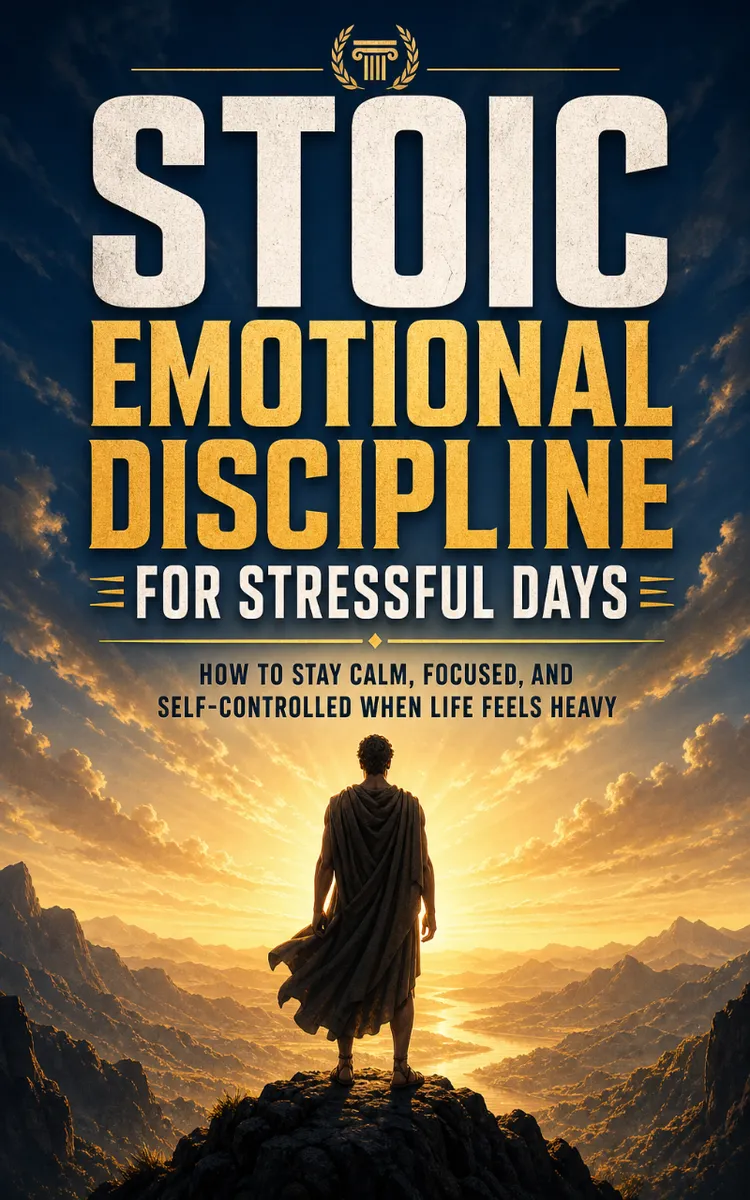
Stoic Emotional Discipline For Stressful Days
Created with Inkfluence AI
Stoic practices for emotional control and calm decision-making under stress
Table of Contents
- 1. Choose Your Inner Governor
- 2. Separate What’s Yours to Control
- 3. Rehearse the Worst Without Panic
- 4. Stop Treating Feelings as Facts
- 5. Turn Pressure Into Purpose
- 6. Build a Daily Calm Baseline
- 7. Use the Pause-Name-Choose Loop
- 8. Practice Negative Visualization for Clarity
- 9. Discipline Your Attention Like a Muscle
- 10. Replace Rumination With Actionable Review
- 11. Set Boundaries Without Losing Temperance
- 12. Communicate With Stoic Precision
- 13. Master Anger Using the Heat Dial
- 14. Handle Anxiety With the Three-Question Check
- 15. Choose Frugal Expectations for Real Life
- 16. Turn Fatigue Into a Smarter Plan
- 17. Practice Justice in Daily Decisions
- 18. Train Self-Control With Micro-Commitments
- 19. End Each Day With the Stoic Review
- 20. Live the System Through Stress Seasons
Preview: Choose Your Inner Governor
A short excerpt from “Choose Your Inner Governor”. The full book contains 20 chapters and 27,848 words.
“Your emotions are real, but they’re not the boss.” - Epictetus (paraphrased)
If you’ve ever snapped at someone, slammed a laptop shut, or spiraled into “I can’t handle this” after a rough day, you already know the problem isn’t that you feel things. The problem is when your feelings start acting like orders-especially when you’re tired, behind, or carrying too many responsibilities at once.
Darius, 34, operations manager, described it like this: “It’s like a switch flips. One email triggers the whole machine.” He didn’t call it dramatic. He called it predictable. And once he saw the pattern, he stopped treating his emotions as commands and started treating them as signals-something his judgment could govern.
The Pattern
The recurring pattern usually looks boring at first, then suddenly expensive. Something small hits: a late supplier update, a child’s meltdown at the worst possible moment, a coworker taking credit, a call from a contractor that turns out to be “quick” and then lasts 45 minutes. Your body reacts fast-tight chest, hotter face, jaw clenched, that “I’m done” feeling. Then your mind follows with a story that sounds convincing: They’re disrespecting me. I’m failing. This will never end. You don’t just feel stressed-you start defending your feelings like they’re evidence in a court case.
Here’s the part that costs you: you act before you decide. You send the message while your pulse is still loud. You answer the call with anger already loaded. You try to force control by pushing harder, speaking sharper, or withdrawing completely. Darius noticed his version clearly: after a chaotic morning, he’d check his inbox for “one more thing,” and the first problem email would immediately turn into a whole-day judgment. He’d start planning responses like he was already fighting a battle. Only later would he realize he’d been “governed” by emotion-then blamed himself for how he behaved.
Does any of that sound like your week-where your feelings show up first, and your choices follow like obedient workers?
A New Perspective
What if your emotions aren’t instructions-what if they’re alarms?
That question flips the whole relationship you have with stress. An alarm doesn’t tell you what to do. It tells you something needs attention. The Stoics make a sharp distinction here: impressions come in (the “this is bad” feeling), but your judgment decides what it means and what you’ll do next. Emotion can flood the room, but it doesn’t have to drive.
Think about a before-and-after that’s painfully normal. Before: a customer complaint hits your phone. Your stomach drops, anger rises, and you draft a defensive reply before you even read the full message. You’re not “solving” anything-you’re protecting your pride. After: you pause and treat the feeling like an alarm. You still feel the heat. You just stop obeying it. You read the complaint fully, identify the actual issue (shipping delay, unclear instructions, missing item), and respond with calm ownership-because your judgment is now the driver, not your anger.
Darius tried it on a specific morning. He got an email that sounded like blame. His first thought was instant and ugly: They’re attacking me. His emotion matched the thought-tight throat, fast typing, ready-to-fire response. Instead of deleting the feeling, he did something simpler: he appointed his judgment before his thumbs. He wrote the reply draft in a notepad, then asked one question: “What do I want this message to accomplish?” He aimed for clarity and resolution, not victory. The outcome changed because the response did.
If you can treat emotion as an alarm, you stop confusing “I feel this” with “this is what’s true.”
Breaking It Down
1. When you get a trigger (a harsh message, a delayed delivery, a sudden demand), your mind grabs a meaning fast.
2. You feel heat-anger, dread, shame-because your body believes the meaning is urgent.
3. So you act immediately: you reply, snap, withdraw, or over-control.
4. Which leads to a louder problem (more conflict, worse timing, regret you have to clean up later).
That chain is automatic. It doesn’t need you to be “bad.” It just needs you to be tired and moving too fast.
Now the alternative chain, built on the Stoic foundation that emotions are not commands:
1. When you get the trigger, you notice the first impression landing (“This feels like an attack”).
2. You feel the heat, but you label it as an impression, not a verdict.
3. So you appoint the Inner Governor: your judgment pauses the action long enough to ask what’s actually under your control.
4. Which leads to a response that matches your values (clarity, responsibility, fairness) instead of matching your adrenaline.
La différence clé : you don’t stop feeling-you stop obeying.
That’s the Inner Governor Protocol in one sentence: you keep the alarm, you refuse the orders.
Check In With Yourself
Rate yourself honestly-no hero mode, no self-bashing. Just data.
1....
About this book
"Stoic Emotional Discipline For Stressful Days" is a self-help book by Socratic Mastery with 20 chapters and approximately 27,848 words. Stoic practices for emotional control and calm decision-making under stress.
This book was created using Inkfluence AI, an AI-powered book generation platform that helps authors write, design, and publish complete books. It was made with the AI Self-Help Book Writer.
Frequently Asked Questions
What is "Stoic Emotional Discipline For Stressful Days" about?
Stoic practices for emotional control and calm decision-making under stress
How many chapters are in "Stoic Emotional Discipline For Stressful Days"?
The book contains 20 chapters and approximately 27,848 words. Topics covered include Choose Your Inner Governor, Separate What’s Yours to Control, Rehearse the Worst Without Panic, Stop Treating Feelings as Facts, and more.
Who wrote "Stoic Emotional Discipline For Stressful Days"?
This book was written by Socratic Mastery and created using Inkfluence AI, an AI book generation platform that helps authors write, design, and publish books.
How can I create a similar self-help book?
You can create your own self-help book using Inkfluence AI. Describe your idea, choose your style, and the AI writes the full book for you. It's free to start.
Write your own self-help book with AI
Describe your idea and Inkfluence writes the whole thing. Free to start.
Start writingCreated with Inkfluence AI


