
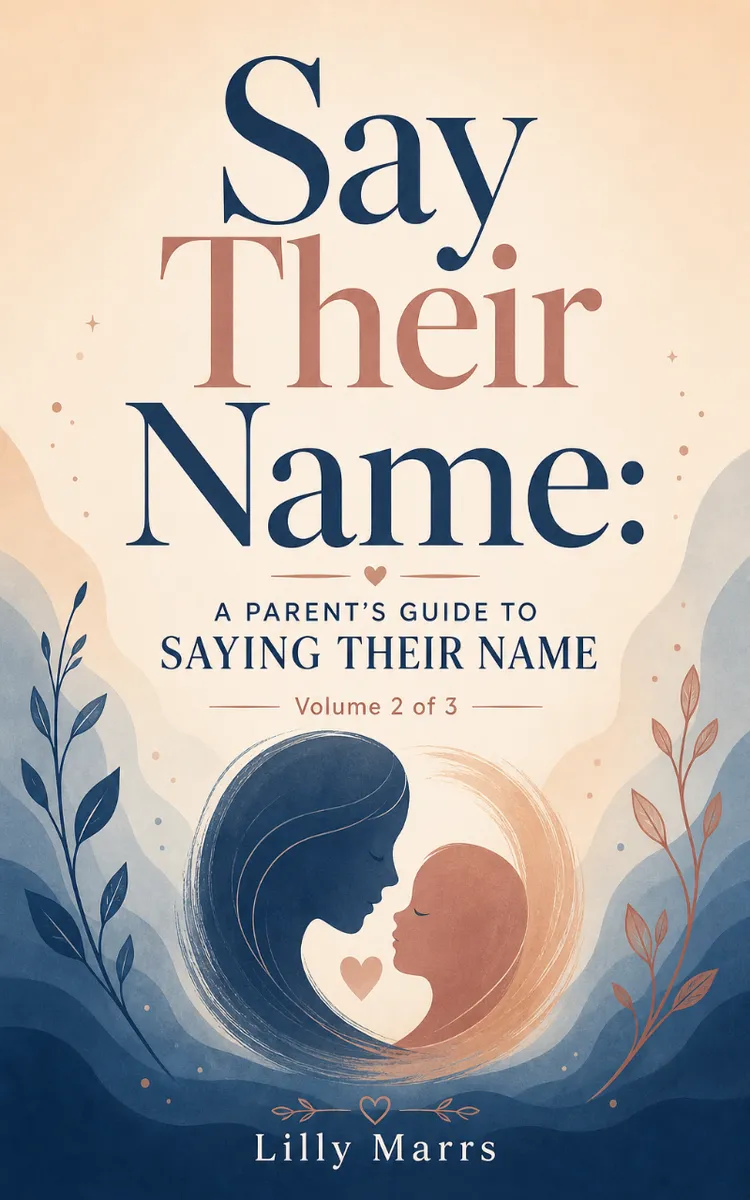
Say Their Name: A Parent’s Guide to Saying Their Name
Created with Inkfluence AI
🔀 Remixed from Say Their Name Loss of a Child
A conversational, practical companion volume for parents navigating grief—how to honor a child’s memory in everyday life, handle difficult moments, and find steady support after the initial shock.
Table of Contents
- 1. When the Shock Wears Off
- 2. Naming in Public vs. Private
- 3. Grief at Milestones and Holidays
- 4. Talking to Siblings and Family
- 5. Support That Actually Helps
- 6. Your Grief, Your Pace: Boundaries
- 7. Creating Ongoing Remembrance
Preview: When the Shock Wears Off
A short excerpt from “When the Shock Wears Off”. The full book contains 7 chapters and 11,134 words.
When the Shock Wears Off
In the first days and weeks after your child died, grief can feel like a force of nature. It knocks you off your feet, then keeps moving even when you are trying to stand. People may bring meals, offer prayers, and check in with the kind of care that feels almost surreal. You might even feel like you are watching your own life from the outside.
Then, slowly, the world starts to expect something from you.
It often happens without anyone saying it outright. The text messages get shorter. The “Let me know if you need anything” turns into silence. People begin to talk about “getting back to normal,” as if your normal is a door you can simply open one day. They might say things like, “It’s been a while,” or “You’ve been so strong,” or “They’re in a better place now.” Some of these phrases come from love. Others come from discomfort. Either way, the message you may hear is the same: move on.
This is the chapter where we talk about what happens when the shock wears off. Because grief does not end when the first wave passes. It changes shape. And if you are not prepared for that shift, it can feel like you are doing something wrong.
The Second Wave Nobody Warns You About
There is often a difference between “shock grief” and “living grief.” Shock grief is loud, immediate, and exhausting. It can show up as numbness, disbelief, fog, or a body that cannot catch up to the news.
When the shock wears off, something else may begin:
Quiet grief takes over. You may still be deeply hurting, but now it is not constantly crashing over you. It is more like a steady pressure.
Small moments hit harder. The first time you hear a certain song, see a birthday display, or pass your child’s school bus route, you might have been too stunned to fully feel it. Later, those moments become sharp and personal.
Resentment can surface. You might feel angry that life kept going. You might feel angry at well-meaning people who ask you to be “okay.”
Your body keeps the score. Sleep changes. Appetite changes. Anxiety can rise. Grief can look like exhaustion, headaches, nausea, or a mind that will not stop scanning for danger.
None of these mean you are failing. They mean you are human. They mean your brain and heart are working through the reality you were given.
Why People Expect You to “Move On”
People want grief to make sense because it scares them. Loss is unpredictable, and it asks too much of the living. If they can convince themselves that grief has an endpoint, then they can pretend they are safe. It is not necessarily cruelty. It is often fear wearing a helpful face.
There is another reason, too: most people have not been taught how to grieve in a lasting way. They assume grief is something you “finish,” like a project. But when the person you love is gone, there is no finished product. There is only continuing love, continuing absence, and continuing adjustment.
So when your grief continues quietly or resurges, it can feel like you are breaking a rule everyone else seems to understand. Here is the truth: there is no correct pace of grief. Your grief is not late. It is not too much. It is not an inconvenience you need to fix.
Your New Normal Is Not a Replacement
At some point, you will hear the phrase “new normal.” It can sound comforting, like you are being offered a path forward. But for many parents, “new normal” can feel like code for “forget the old normal.”
Please hear me clearly: your new normal is not meant to replace your child. It is meant to help you carry the weight of love and loss in a way that does not destroy you.
In earlier parts of this series, we have talked about meeting grief where it is and using small, steady steps to support your heart. If you have been keeping a journal, saying their name, or doing simple rituals of remembering, you may notice something now. You may feel less like you are “getting through” grief and more like you are learning how to live with it.
That learning can look messy.
Your “new normal” might include:
Doing ordinary tasks while grief sits beside you like a passenger.
Laughing sometimes, then feeling guilty, even though laughter is not betrayal.
Being able to plan an appointment, but not being able to plan a holiday.
Feeling steady for a stretch, then suddenly falling apart because of a date, a smell, or a random memory.
All of it can be true. Steady and shattered. Hopeful and furious. Present and absent. Grief is not one emotion. It is a whole landscape.
When Grief Resurges, It Is Not a Setback
Resurgence is common. It can show up as intense sadness returning after you thought you were managing. Or it can show up as anger, panic, or numbness that suddenly feels thicker than before.
Sometimes grief resurges for an obvious reason:
Anniversaries and birthdays
Holidays and school milestones
Medical or grief-related appointments
Memories triggered by a video, a photo, or a conversation
...
About this book
"Say Their Name: A Parent’s Guide to Saying Their Name" is a general book by Lilly Marrs with 7 chapters and approximately 11,134 words. A conversational, practical companion volume for parents navigating grief—how to honor a child’s memory in everyday life, handle difficult moments, and find steady support after the initial shock..
This book was created using Inkfluence AI, an AI-powered book generation platform that helps authors write, design, and publish complete books.
Frequently Asked Questions
What is "Say Their Name: A Parent’s Guide to Saying Their Name" about?
A conversational, practical companion volume for parents navigating grief—how to honor a child’s memory in everyday life, handle difficult moments, and find steady support after the initial shock.
How many chapters are in "Say Their Name: A Parent’s Guide to Saying Their Name"?
The book contains 7 chapters and approximately 11,134 words. Topics covered include When the Shock Wears Off, Naming in Public vs. Private, Grief at Milestones and Holidays, Talking to Siblings and Family, and more.
Who wrote "Say Their Name: A Parent’s Guide to Saying Their Name"?
This book was written by Lilly Marrs and created using Inkfluence AI, an AI book generation platform that helps authors write, design, and publish books.
Write your own book with AI
Describe your idea and Inkfluence writes the whole thing. Free to start.
Start writingCreated with Inkfluence AI


