
Read the first chapter
The whole of chapter one, free. About 6 min. Turn the pages with the arrows, your keyboard, or a swipe.
Chapter 1
Imagination as Divine Creative Power
“Imagination is the first draft of reality.” -a line you’ll hear in different forms, because it keeps showing up for a reason.
When you hear “imagination,” you might think of daydreaming, or escaping into fantasy. But let’s slow down and reframe it: imagination isn’t a detour from life. It’s one of your divine higher faculties. It shapes what you notice, what you expect, what you’re willing to choose, and-over time-what you keep becoming able to recognize as possible.
Think about how it works in an everyday way. If you expect a conversation to go badly, your body tightens before you even open your mouth. If you picture a job interview going smoothly, you stand a little taller and ask a little better questions. That’s not “wishful thinking.” That’s perception being trained by inner images. And perception drives decisions. Decisions drive outcomes. The inner world quietly steers the outer one-whether you’re paying attention or not.
This Chapter Is For You If... - You’ve noticed you “see” the same kinds of problems showing up again and again, and you want a spiritual, practical explanation for why. - You feel stuck trying to change your life without touching the inner pictures underneath your choices. - You want to use imagination without turning it into fantasy or pretending (you want something grounded). - You’re ready to treat your inner life like a real place-because it is-where creation begins.
The Core Truth
Imagination is not fantasy-it’s a divine higher faculty that shapes perception, choices, and outcomes.
Here’s the spiritual-meets-real-life piece: imagination is how the divine life within you translates “invisible” possibilities into “visible” direction. It doesn’t just entertain you. It organizes your attention. It becomes a lens. And your lens becomes your habits. Your habits become your days.
A concrete example: Clara, 34, a hospice nurse, knows how quickly the tone of a room can change. One minute she’s walking in with calm professionalism; the next minute she’s sensing fear, grief, and urgency-sometimes from a family she barely knows. If her mind is running on automatic images like “This will be too much” or “I’ll say the wrong thing,” she’ll move differently. Her breathing gets shallow. Her questions come out rushed. She may miss the subtle cue that a caregiver needs reassurance, not information.
But when Clara brings her imagination into alignment-before she enters the room-the outcome changes. She doesn’t “fake” confidence. She uses imagination to choose a clearer inner picture: “I’m here to bring presence. I’ll listen first. I’ll match the family’s pace.” She walks in with a steadier posture and a slower rhythm. That inner picture doesn’t guarantee every moment will be easy, but it changes how she responds. And response is where power lives.
In Practice, This Means... - You stop treating your inner images like harmless background noise. - You recognize that expectation is a choice you’re making (even if you didn’t realize it). - You use imagination to set your attention before you act-especially in high-stakes moments. - You measure results by your choices and presence, not by whether life feels “perfect.”
Putting It Into Practice
The Seed-Image Principle gives you a simple rule for working with imagination: what you plant inwardly becomes the seed of what grows outwardly. Not instantly. Not perfectly. But faithfully, over time.
Try these daily habits as if your inner world is part of your job-because it is. (And yes, you can do this without becoming “woo.”)
1. Morning (2 minutes): choose one seed-image. Before your feet hit the floor, ask: “What kind of moment do I want to help create today?” Then form a clear inner image. Keep it simple and sensory-how it feels in your body, how you speak, how you move. Example: “Steady breath, clear words, kind eyes.” That’s a seed-image.
2. Midday (30 seconds): check your attention. Pause and notice: “What image is running right now?” If it’s dragging you toward dread or overthinking, you don’t argue with it. You replace it-briefly. Decision rule: if the image makes you tighten, swap it for an image that makes you soften.
3. Evening (3 minutes): review the inner picture behind one moment. Pick one moment from today (a conversation, a task, a boundary). Ask: “What did I expect inside?” Then: “Did my inner picture help me choose what I actually wanted?” This turns imagination into learning, not blame.
4. Before a difficult interaction (60 seconds): imagine the first 10 seconds. Don’t try to control the whole conversation. Just picture your first response: your tone, your first question, your first breath. This is practical. It changes your posture and your words. Clara’s version of this would sound like: “I will listen first. I will speak slowly. I will notice what matters.”
5. One weekly practice (10 minutes): write your “seed-image” for the next week. Use one sentence and one phrase. One sentence for the direction, one phrase for the feeling. Example: “This week I respond with steadiness.” Phrase: “Slow breath, clear compassion.”
Real-Life Example
Clara is on shift, and she’s heading into a patient room where the family looks exhausted and tense. She can feel the heaviness before she even says hello.
Before: In the parking-lot stretch of her mind, an old inner movie plays. “They’re going to be upset. I’m going to get it wrong. I won’t know what to say.” Her chest tightens. She rushes her steps. Once inside, she starts talking faster than she intends, trying to “fix” the moment instead of meeting it.
Action: Right before she speaks, Clara does a quick Seed-Image reset. She doesn’t force cheer. She plants a steadier image: “I’m here to bring presence. I listen first. I match the family’s pace.” She takes one slower breath, then asks a first question that gives the family space: “What has been hardest for you today?”
Result: The family’s shoulders drop-not because everything is suddenly okay, but because Clara’s presence makes room for truth. She notices the cue she would’ve missed earlier. Her words land with less strain. The conversation doesn’t become easy, but it becomes workable. And in hospice work (and in life), “workable” matters a lot.
That’s the point: imagination shapes perception. Perception shapes choices. Choices shape outcomes. Clara didn’t change the world instantly. She changed the inner seed that governed her next response.
Time to Reflect
Use these prompts like a gentle flashlight, not a search-and-destroy tool.
1. Where does my imagination usually run when I feel pressure? If you notice it goes straight to worst-case scenarios, that’s not a character flaw. It’s a pattern. Patterns can be changed.
2. What inner image has been steering my choices lately-even when I didn’t name it? Sometimes the image is subtle: “I’m not safe,” “I’m behind,” “I have to perform.” Naming it gives you leverage.
3. Pick one moment from the last week that didn’t go the way you wanted. What seed-image was planted right before it? Honest reflection might reveal something simple: you expected resistance, so you defended sooner than you meant to.
4. What seed-image would have helped you choose the next right step? Don’t overthink it. Choose a seed-image that supports action, not perfection. A steady breath image is often enough.
5. What would it feel like in your body to live one seed-image instead of the old one? If it doesn’t feel any different, you might need a more physical image-something you can actually inhabit.
Next Step
Choose one seed-image for today-write it in one sentence and one phrase-and place it where you’ll see it (phone notes, a sticky note on your bathroom mirror, or the front of your work bag).
Time needed: 5-8 minutes. You will know it worked when... during one real moment today, you catch yourself switching from the old inner image to your new one-and your words or actions reflect that shift.
When you practice this kind of grounded inner choice, you start to see imagination not as escape, but as divine creative power-quiet, steady, and ready to cooperate with your life. Next, we’ll go deeper into how to refine those seed-images so they keep creating what you actually want.
End of chapter one. 4 more chapters in the full book.
Swipe or use the arrows to turn the page
What's inside: 5 chapters
- 1. Imagination as Divine Creative Power
- 2. Aligning Belief With Desired Reality
- 3. Feeling the Future as Present Truth
- 4. Practicing Daily Imaginative Discipline
- 5. Overcoming Doubt Through Inner Authority
About this book
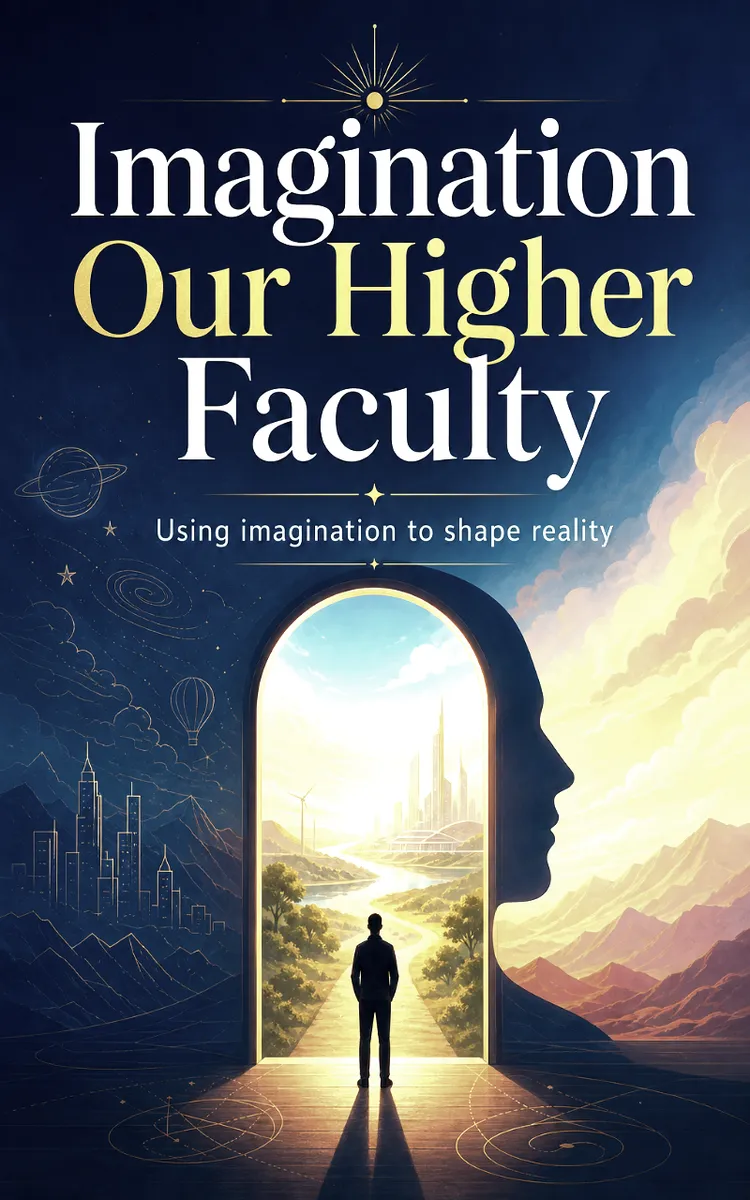
"Imagination And Divine Creation" is a inspirational book by Susan Legend with 5 chapters and approximately 7,462 words. Using imagination to create personal reality.
This book was created using Inkfluence AI, an AI-powered book generation platform that helps authors write, design, and publish complete books. It was made with the AI Inspirational Book Writer.
Frequently Asked Questions
What is "Imagination And Divine Creation" about?
Using imagination to create personal reality
How many chapters are in "Imagination And Divine Creation"?
The book contains 5 chapters and approximately 7,462 words. Topics covered include Imagination as Divine Creative Power, Aligning Belief With Desired Reality, Feeling the Future as Present Truth, Practicing Daily Imaginative Discipline, and more.
Who wrote "Imagination And Divine Creation"?
This book was written by Susan Legend and created using Inkfluence AI, an AI book generation platform that helps authors write, design, and publish books.
How can I create a similar inspirational book?
You can create your own inspirational book using Inkfluence AI. Describe your idea, choose your style, and the AI writes the full book for you. It's free to start.
Write your own inspirational book with AI
Describe your idea and Inkfluence writes the whole thing. Free to start.
Start writingCreated with Inkfluence AI


