
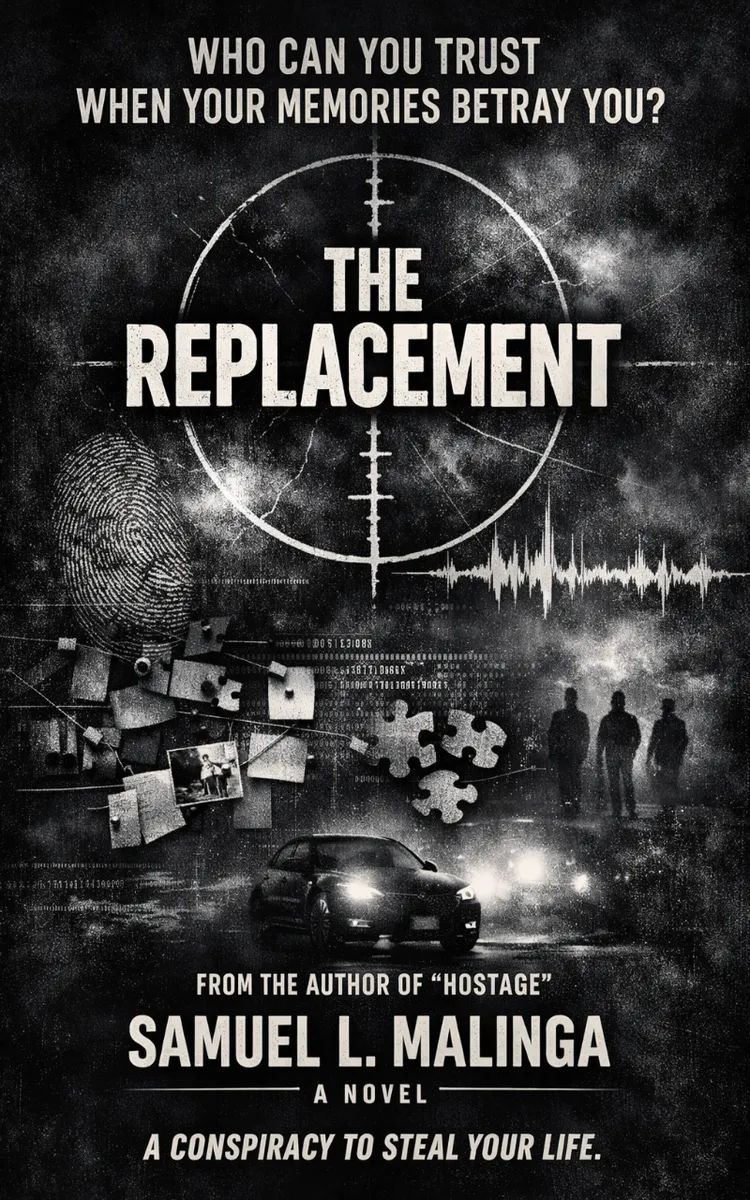

Read the first chapter
The whole of chapter one, free. About 11 min. Turn the pages with the arrows, your keyboard, or a swipe.
Chapter 1
THE BUZZ
T he fluorescent lights buzz.
That's the first thing. Not her name—not where she is—just the sound. A fly trapped in plastic tubing overhead, electric wings beating against nothing.
She blinks. White ceiling. Water stain in one corner, shaped like a continent she can't identify. The smell is antiseptic and something underneath it, something organic, human, the way hospitals always smell like they're trying very hard not to be places where people die.
A woman in pink scrubs enters. Middle-aged. Brown hair pulled back in a ponytail that's pulling loose at the temples. Tired eyes—the kind of tired that comes from double shifts, not tragedy. A name tag that reads MARGARET, RN.
Margaret checks the monitor. Makes a small sound. Reaches for something out of frame.
"You're awake." She doesn't look surprised. "Dr. Whitaker? Can you hear me? Blink twice for yes."
The woman in the bed—Dana, she remembers that much, her name is Dana—blinks twice.
"Good. That's good." Margaret is writing on a clipboard now, handwriting practiced and efficient. "Your sister's on her way. Should be here within the hour. Do you need anything? Water? Pain medication?"
Dana tries to speak. Her throat cooperates, barely. Sand and rust.
"Where's Caleb?"
Margaret's hand pauses.
Just for a second. Maybe less. Then the pen moves again, finishing whatever notation she was making.
"Honey, I'm going to let your family explain that part. It's not my place."
"Is he okay?"
More silence. Margaret sets the clipboard in its slot by the door. Adjusts the blanket across Dana's legs with the mechanical efficiency of someone who has done this ten thousand times.
"He's going to be so glad you're back with us," she says, and leaves the room before Dana can ask what back with us means.
The room is small. Hospital-small. Window showing gray sky, maybe dawn or dusk, impossible to tell. An empty chair in the corner—someone was sitting there recently, she can tell because the cushion still holds an impression. A plastic pitcher of water with ice melted to the consistency of slush. A call button attached to the sheet by a coiled cord.
Dana reaches for the water. Her arm works. That's good. She takes a sip. Swallows. Takes another.
Her memories are fragmented. Not gone— fragmented. Like a mirror dropped on tile, the pieces still reflective but no longer showing a whole image.
She remembers:
· A car. Headlights. Not her driving.
· Rain on glass.
· Caleb's voice saying something she couldn't quite catch.
· Then nothing. Until now.
How long is now?
She finds the remote control attached to the bed rail. Raises herself—slowly, carefully, testing each muscle before trusting it—and angles the bed upright. The room tilts, settles. Her head swims, clears.
On the bedside table: a card. Get-well message. She picks it up.
Thinking of you. Can't wait until you're home. —T
The handwriting is familiar. Warm loops, pressure on certain letters suggesting urgency mixed with care. Tessa. Of course it's Tessa. Tessa Monroe, who she's known since graduate school, who stood beside her at her wedding, who makes terrible puns during presentations to make her laugh when no one's looking.
Dana holds the card. Stares at it longer than necessary. Something nags at her—a wrongness she can't articulate—but the feeling slips away before she can examine it.
The door opens.
Not Margaret this time. A woman in civilian clothes. Dark hair, shoulder-length, wearing a cream-colored cardigan over a blouse that might have been professional once but has seen better days. Makeup applied with attention shadowed by fatigue.
She stops in the doorway. Her expression does something complicated—relief colliding with grief colliding with something else Dana can't read.
"Oh god," the woman says. "Oh god, Dana."
"Tess?"
And then she's being hugged. The scent of lavender detergent—Tessa's favorite, always has been, ever since college when their dorm floor smelled like everyone's laundry mixed together and Tessa insisted on finding something distinctive. Arms tight around her shoulders. A shoulder damp against her cheek, and it takes Dana a moment to realize Tessa is crying.
"I thought—I thought we lost you. Six months, Dana. Six months. "
Six months.
That doesn't seem right. But time is slippery when you're unconscious, isn't it? Days feel like hours. Weeks feel like days. Six months could feel like—
"Caleb," Dana says into Tessa's shoulder. "Where's Caleb? Is he okay? Was he—was he in the accident too?"
Tessa goes rigid.
Pulls back. Holds Dana by the arms, grip firm enough to feel desperate. Her face is wet, mascara starting to smudge at the edges in a way Tessa would normally never allow—she's meticulous about appearance, calls it "armor against a world that judges women for everything."
"Dana." Tessa's voice is careful now. Measured. "Caleb isn't—he's not—"
"Is he in another hospital? Did they take him somewhere else?" Panic rises, hot and illogical. "Tessa, just tell me where he is. I need to see him. I need to know he's—"
"Dana." Tessa's hands move from arms to face. Cupping her cheeks. Forcing eye contact. " Caleb died. "
The words land like physical objects. Heavy. Solid. Wrong.
"What?"
"The accident. Your accident. Three years ago. You were both in the car, and Caleb—he didn't make it, Dana. He died at the scene. You were in a coma for two weeks, and when you woke up, you weren't—you couldn't accept it. You kept asking for him. Kept insisting he was alive."
Dana shakes her head. The motion hurts. Everything hurts.
"No. No, that's—that's not right. I saw him. Yesterday. Or—the day before. He made breakfast. Eggs, the way I like them, too runny, he always cooks them too long and apologizes and I tell him I like them burnt and he knows I'm lying—"
"That was three years ago." Tessa's voice cracks. "Dana, that was three years ago. And then after—after the funeral, you got worse. The grief, it just... it broke something. You started having episodes. Memory gaps. You'd call me at three in the morning asking where you were, standing in your own kitchen. You were hospitalized. Multiple times. And then six months ago, you—you had a breakdown. A bad one. They had to sedate you heavily. You've been at the Birchwood facility since then."
Birchwood. The word means nothing. A hole where memory should be.
"You're confused," Tessa continues, gentle now, the way someone speaks to a frightened animal. "That's normal. The doctors said there might be disorientation when you woke up. But you're home now. Well—not home home. We're getting you stabilized first. I brought some of your things. Your toiletries. That sweater you like."
She gestures toward a bag Dana didn't notice before. Sitting by the door. Packed by someone who cares, organized by category, labeled mentally if not physically.
Dana stares at her best friend's face. Sees the grief there—old grief, layered over like sediment, freshened by current circumstances. Sees the love. The exhaustion.
Believes her.
Has to believe her, because the alternative is that everything she remembers—Caleb's laugh, his hands, the weight of him beside her in bed—is somehow simultaneously real and impossible.
"I don't understand," she whispers.
"I know." Tessa pulls her close again. Rocks slightly, an unconscious motion. "I know you don't. But I'm here. I'm not going anywhere. We'll figure this out together. Like always."
Margaret returns with a man in a white coat. Doctor, obviously—there's a particular way medical professionals carry themselves, a blend of authority and efficiency that announces itself before introductions do.
Dr. Adrian Vance (no relation, he jokes later, though Dana doesn't find it funny). Middle-fifties. Silver at the temples. Eyes that have delivered bad news often enough to have developed a script for it.
"Dr. Whitaker. Good to see you conscious. How are we feeling?"
Confused. Terrified. Grieving for a husband whose death apparently happened three years ago but feels like yesterday.
"Disoriented," she manages.
"Expected. You've been under heavy sedation for an extended period. Cognitive recalibration can take time." He shines a light in her eyes. Asks her to track his finger. Asks the year, the month, the president's name. Standard questions. She answers most correctly, which seems to please him.
"We'll want to keep you for observation. Forty-eight hours, minimum. Make sure there's no neurological damage from the sedation protocol." He makes notes. Nods at Tessa. "She can stay. Visiting hours are flexible given the circumstances."
Then he's gone. Busy. Other patients. Other crises. Dana is one item on a list that never stops growing.
Tessa settles into the chair by the window—the chair that held someone's impression earlier, and now Dana wonders who sat there before, how many hours they kept vigil, whether they're still waiting for news somewhere down the hall.
"Tell me about it," Dana says. "The accident. Tell me everything."
Tessa tells her.
A Tuesday night. Late. Rain, already mentioned. Caleb was driving—they'd been at dinner, celebrating something, Tessa isn't sure what, maybe an anniversary or a promotion or just the fact that they were young and in love and celebrated small things because large things felt too precarious.
Highway 17. The winding section near the old mill. Another driver—drunk, later tests would confirm—crossed the median in an SUV going sixty-five in a forty-five zone.
Caleb swerved. Lost traction. Rolled three times, according to the report. Ended up in a ravine.
He died before the paramedics arrived. Internal injuries. Quick, they told her later. Probably didn't suffer. Probably didn't know.
Dana was thrown clear—or partially thrown. Caught in a deformation zone that should have killed her too, didn't, left her with broken ribs, a concussion, and the beginning of a grief that would eventually unspool her completely.
"They had to identify him by his dental records," Tessa says. Voice flat now, the tone of someone who has told this story enough times to have worn smooth its emotional edges. "The fire. After the crash. There was a fire."
A fire. Caleb burned. Caleb died in flames while she lay broken nearby, unaware, possibly already slipping toward the coma that would steal the next two weeks from her.
She touches her own face. Checks that it's solid. Real. Still here when he isn't.
"I don't remember any of it."
"I know."
"I remember him making eggs that morning."
"I know." Tessa reaches out. Takes her hand. "I know you do. That's the hardest part, isn't it? Your brain holding onto things that aren't true anymore. Making you live in a version of the world that stopped existing three years ago."
Dana looks at their intertwined fingers. Tessa's nails are short, practical, painted a neutral beige. There's a scar on her knuckle—from a cooking incident in grad school, the time she tried to impress a date with homemade bread and sliced her palm open instead. The date didn't last. The scar did.
This is Tessa. Her Tessa. Real and present and grieving alongside her.
So why does something still feel wrong?
Visiting hours end. Tessa leaves reluctantly, after extracting promises to call if anything changes, to rest, to let the nurses help instead of trying to do everything herself.
Dana doesn't rest.
She waits until the hallway quietens. Until Margaret's footsteps fade past her door for the third time in an hour, each pass slower than the last as the shift drags toward its end.
Then she swings her legs over the side of the bed.
Stands.
Wavers. Finds her balance.
The room spins once, settles. She's barefoot—her shoes are somewhere, packed in Tessa's bag probably, or lost to whatever system governs patient belongings in places like this. The floor is cold linoleum, slightly sticky in spots where countless feet have worn paths through the cleaning solution.
She crosses to the window.
Outside: parking lot. Streetlights buzzing the same tune as the fixtures overhead inside. A few cars. Empty spaces marked with numbers that don't correspond to anything visible. Beyond that, trees. Beyond that, darkness that might be hills or mountains or just the absence of light that happens when you're not in a city anymore.
Where is she, exactly? She didn't think to ask. The question felt unimportant compared to where is Caleb, and now that question has an answer she doesn't want, and this new question feels like it should matter but can't quite find purchase.
She presses her palm to the glass. Cold seeps through.
Caleb.
His name in her head. His face behind her eyes. The specific way he squinted when he was reading without glasses, stubborn about wearing them even though he needed them constantly. The scar on his chin from a bicycle accident at age twelve. How he took his coffee (black, no sugar, "like my soul"). The sound of his voice when he was about to say something important—a small clearing of the throat, a half-breath preparation.
All of it present. All of it vivid. All of it, according to everyone else, three years dead.
She stays at the window for a long time.
Behind her reflection, the room waits. The empty chair. The card from Tessa. The pitcher of water with its melting ice.
The buzz of lights that sounds like a fly that will never escape.
In the hallway, a phone rings. Someone answers. Muffled voices, words indistinguishable.
A cart passes. Wheels squeaking. A meal she won't eat delivered to a room down the hall.
Normal sounds. Normal hospital sounds. The machinery of care operating as designed, keeping people alive or helping them die or holding them in states between, all part of the same process, all documented and monitored and filed away.
Dana turns from the window.
Returns to bed. Lies down. Pulls the blanket up.
Doesn't sleep.
Waits for morning, or whatever comes next, or for the world to start making sense again.
It doesn't.
But she's learned something tonight, even if she can't name it yet:
Either everyone she loves is lying to her, or her own mind has become a place she can't trust.
Neither option is acceptable.
Both might be true.
End of chapter one. 2 more chapters in the full book.
Swipe or use the arrows to turn the page


What's inside: 3 chapters
- 1. THE BUZZ
- 2. THE DETECTIVE
- 3. THE GRAVE
About this book
"THE REPLACEMENT" is a general book by Malinga Protea with 3 chapters and approximately 8,330 words. It covers key insights and practical takeaways on the topic.
This book was created using Inkfluence AI, an AI-powered book generation platform that helps authors write, design, and publish complete books.
Frequently Asked Questions
What is "THE REPLACEMENT" about?
"THE REPLACEMENT" is a general book by Malinga Protea covering key insights and practical takeaways on the topic.
How many chapters are in "THE REPLACEMENT"?
The book contains 3 chapters and approximately 8,330 words. Topics covered include THE BUZZ, THE DETECTIVE, THE GRAVE.
Who wrote "THE REPLACEMENT"?
This book was written by Malinga Protea and created using Inkfluence AI, an AI book generation platform that helps authors write, design, and publish books.
Write your own book with AI
Describe your idea and Inkfluence writes the whole thing. Free to start.
Start writingCreated with Inkfluence AI


