

Read the first chapter
The whole of chapter one, free. About 10 min. Turn the pages with the arrows, your keyboard, or a swipe.
Chapter 1
Rat Body Basics and Needs
A rat doesn’t need “special” care, but it does need specific care. If the room runs too cold, if you feed “whatever’s cheapest,” or if you leave your rat alone for long stretches, you’ll often see the problem before you notice the cause - sleeping more, breathing changes, picky eating, or sudden crankiness. Those signs aren’t random; they connect directly to the basics this species depends on: temperature, sleep, food, and social life.
Talia, 31 and new to pet rats, learned this the hard way when she set up her cage in a spare room that felt fine to her. Her rats acted normal at first - then one started dropping food less often and slept in a tighter ball than before. Talia didn’t need a vet immediately to understand what was happening; she needed a checklist for the foundations. That’s what this chapter gives you: clear targets, daily routines, and simple checks you can do at home so you can set up healthy conditions instead of guessing.
By the time you finish, you’ll know what healthy rats require, how to set those requirements in your home, and what to watch for when something shifts. You’ll also get a “Rat Readiness Checklist” you can use to quickly spot weak spots in temperature, sleep setup, diet basics, and social needs before they turn into bigger behavior or health problems.
Temperature, Sleep, Diet Basics, and Social Needs That Keep Rats Healthy
Rats run on a tight balance. Their bodies handle small changes in their environment, but they can’t do “good enough” forever. Temperature affects how well they digest food and how easily they move and breathe. Sleep affects immune function and stress levels - rats don’t just rest; they cycle through sleep stages that help them recover. Diet affects everything from stool quality to energy and coat condition. Social needs affect stress hormones and how confidently they explore, eat, and interact.
Here’s the practical problem this chapter solves: most new rat owners don’t realize that “healthy” isn’t a vague label. Healthy looks like consistent routines and predictable conditions. When something goes wrong, you need to know where to look first. Temperature setup, sleep access, diet basics, and social structure give you a fast way to narrow down causes instead of chasing symptoms.
Use this chapter to build a base you can measure. When you can say, “My rats live in the right temperature range, they have safe sleep spots, their food matches their needs, and they have rat company,” you stop reacting and start preventing. Ask yourself as you read: If one of my rats changed behavior today, could I explain which basic requirement might have shifted? That’s the mindset that makes the rest of rat care easier.
Rat Body Basics: What “Healthy” Looks Like in Four Categories
Start with temperature. Rats do best when their environment stays steady and warm enough for comfort without overheating. A common home mistake is placing the cage near a drafty window, a vent, or on a floor that gets chilly at night. Another mistake is blasting a heater or placing the cage in direct sun. You want stable comfort so your rats don’t spend their energy coping with heat or cold.
Now sleep. Rats sleep in short blocks and also take longer rest periods, and they need hiding spots where they can feel safe. If they can’t relax because they feel exposed, they may stay alert and restless. That shows up as constant movement, interrupted napping, or choosing “open” sleeping spots that look uncomfortable. A good sleep setup supports both comfort and safety.
Diet basics matter because rats have specific food needs and a sensitive digestive system. You can’t “wing it” with seed-only mixes or random treats as a main meal. Rats need the right balance of nutrients and the fiber that helps their gut stay regular. When diet shifts, you often see changes in eating style, stool consistency, and body condition.
Finally, social needs. Rats are social animals. A lone rat often tries to adapt, but stress builds over time. Social needs show up in behavior: reduced confidence, less grooming, less play, and more guarding or irritability. You don’t have to be perfect at bonding - your rat needs another rat companion to feel secure.
The Rat Readiness Checklist (Temperature, Sleep, Diet, Social)
Use the Rat Readiness Checklist like a quick shop check before you start fine-tuning behavior. You’re not trying to “make it perfect.” You’re trying to confirm the essentials are in place.
• Set and protect your temperature
• Keep the room at a steady comfortable warmth and avoid drafts and direct sun. Use a thermometer you place near the cage, not just the one on your wall.
• Why: temperature swings push stress and change how rats digest food, which can lead to picky eating or breathing-related discomfort.
• Plan sleep like a safety job
• Put at least one enclosed hide (a small, dark shelter) and one soft resting area in the cage. Make sure the hide stays dry and easy to access.
• Why: rats sleep best when they can feel hidden and safe. If they don’t, they don’t rest deeply.
• Feed a base diet you can repeat every day
• Choose a rat-formulated pellet as the main food and treat seeds, grains, or yogurt drops as extras rather than the foundation.
• Why: pellets give you consistent nutrition. Seed mixes often let rats pick favorites and leave gaps.
• Build a social setup that fits rat behavior
• Keep rats in compatible pairs or small groups. Plan introduction work carefully when adding a new rat, but don’t keep a single rat as a long-term plan.
• Why: social contact reduces stress and supports normal grooming, play, and confident exploration.
At this stage, you should be able to look at your setup and answer, “Is my cage safe and steady for temperature? Does it support real sleep? Does my food plan match rat needs? Do my rats have rat company?” If you can’t answer those confidently, your next step is setting up measurements and routines you can check daily.
What You Should Do With This Information Today
Don’t wait for “the first sign something’s off.” Set your baseline now so you can compare later. Your goal is to make it easy to spot change: if your rat’s behavior shifts, you’ll know what conditions also changed.
Set your thermometer where it reads the cage environment. If you can, note a quick reading at the same time each day for a few days. Then check the cage for sleep spots: can your rats choose a hide without climbing over rough edges or wet bedding? Next, look at your food container. If you see a seed mix as the main meal, switch your plan gradually (steady, not sudden) so you don’t stress their stomachs. Finally, check your social reality: how many rats live with your rat, and how stable has that arrangement been?
Take a moment to ask yourself: If my rat started sleeping more or eating less tomorrow, would I know whether temperature, sleep access, diet, or social contact changed in the last 48 hours? That question is your early-warning system.
A Real-World Setup: Fixing Talia’s Temperature, Sleep, and Diet Fast
Talia’s rats improved once she stopped guessing. She started with the basics and measured what she could. Here’s a step-by-step walkthrough you can copy.
• Place a thermometer near the cage
• Put the thermometer at cage level, not across the room. Leave it there for 24-48 hours and read it at least twice a day (morning and evening).
• Expected outcome: you’ll see whether the room runs cooler at night or spikes during the day from sun or heating.
• Remove draft and sun risks
• Move the cage away from direct window light and away from vents, bathroom fans, or drafty hallways.
• Expected outcome: your rats stop acting “wired” or unusually sleepy because the environment stays steady.
• Refresh sleep options
• Add one enclosed hide that fits your rats comfortably and one extra resting area (soft bedding or a covered ledge). Make sure bedding stays dry.
• Expected outcome: you’ll see normal rest patterns - predictable napping blocks and more relaxed body language when lights change.
• Switch to a pellet-based base diet
• If your current diet relies on seed mix, move toward a pellet base. Start by mixing in pellets with the seed for several days, then gradually increase pellets until pellets become the main food.
• Expected outcome: your rats eat more consistently, and you get more predictable stool and steady body condition.
• Triage treats and “extras”
• Limit treats to small portions and only after the base meal is stable. Don’t use treats to replace meals.
• Expected outcome: your rats don’t get picky, and you can tell when they truly refuse food versus eating around it.
• Confirm social structure
• If Talia had only one rat, she would treat “add a compatible companion” as a priority, not a future project.
• Expected outcome: your rat shows more normal grooming and social behaviors - less guarding, more relaxed exploration.
Quick checklist
• Thermometer sits near the cage (check morning and evening)
• Cage avoids drafts and direct sun
• At least one enclosed hide stays dry and accessible
• A soft resting area gives comfort without blocking airflow
• Pellets form the main diet; seed mix becomes an occasional extra
• Treats don’t replace meals
• Your rat has stable rat company (not long-term single-rat life)
When you finish these steps, you should feel a shift in your ability to read your rats. You’ll also have a clear baseline for the next chapter’s behavior-reading tools: you’ll know whether “behavior change” comes from normal rat communication or from an unmet basic need.
Common Mistakes and Edge Cases in Rat Basics
Even experienced pet owners run into predictable traps here. The goal isn’t perfection - it’s catching the mistakes that most often cause sleep issues, diet problems, and stress behaviors.
Overheating or chilling from “comfort guessing”
Do this: Measure temperature at cage level and adjust placement before you change anything else. Move the cage away from vents, windows, and heaters, then re-check the thermometer readings after a day.
Not this: Trust your own comfort. If the room feels fine to you, the cage might still sit on a colder floor or catch direct sun that warms it too much.
Why it matters: rats can show stress through sleeping patterns and appetite changes. If you change diet or hides while the temperature stays wrong, you’ll feel like nothing works.
Seed mix as “food” and pellets as “extra”
Do this: Use pellets as the repeatable base meal and treat seed mix as a topping. Offer seeds in small amounts after your rat has accepted the base diet.
Not this: Feed seed mix as the main meal because it looks like the rats are eating. Rats often pick favorites and leave out nutrients they need.
Why it matters: inconsistent nutrition can show up as dull coat, variable energy, and stool changes - problems you might blame on stress or age when the root cause is diet structure.
Assuming a single rat “does fine”
Do this: Plan for rat company as part of the care plan. Keep compatible rats together and treat introductions seriously so everyone stays safe.
Not this: Wait months hoping the single rat will adjust. Some rats seem okay at first, then develop ongoing stress behaviors like low confidence, reduced grooming, or irritability.
Why it matters: social needs affect daily life. Your rat’s “personality” often changes when stress drops - so don’t label behavior as permanent early on.
Sleep hides that block access or get dirty fast
Do this: Place hides where rats can enter and exit easily, and keep them clean and dry. If a hide sits in a wet corner, replace or reposition it.
Not this: Use an attractive decoration that becomes a damp, hard-to-reach spot. Rats may avoid it, and you’ll lose the benefit of real rest.
Why it matters: sleep isn’t just “where they lie down.” It’s about feeling safe enough to rest deeply.
Closing Takeaway: Build a Baseline You Can Trust
Once you lock in temperature stability, real sleep options, a pellet-based diet structure, and rat social contact, you remove most of the guesswork that makes rat care feel overwhelming. You also give yourself something powerful: a baseline you can compare against when behavior changes.
Keep the Rat Readiness Checklist where you can reach it - on your phone notes or taped near the cage area. The next time your rat acts “off,” you’ll know where to look first: the basics, not just the symptoms. And that’s how you become the person your rat learns to trust - because you keep their world steady.
End of chapter one. 7 more chapters and about 16,162 words in the full book.
Swipe or use the arrows to turn the page


What's inside: 8 chapters
- 1. Rat Body Basics and Needs
- 2. Choosing a Healthy Rat and Pairing
- 3. Reading Rat Emotions Through Body Language
- 4. Habituation and Trust-Building Steps
- 5. Cage Setup for Safety, Enrichment, and Hygiene
- 6. Feeding Plans: Pellets, Treats, and Water
- 7. Common Behavior Problems and Fixes
- 8. Preventive Care and When to Call a Vet
About this book
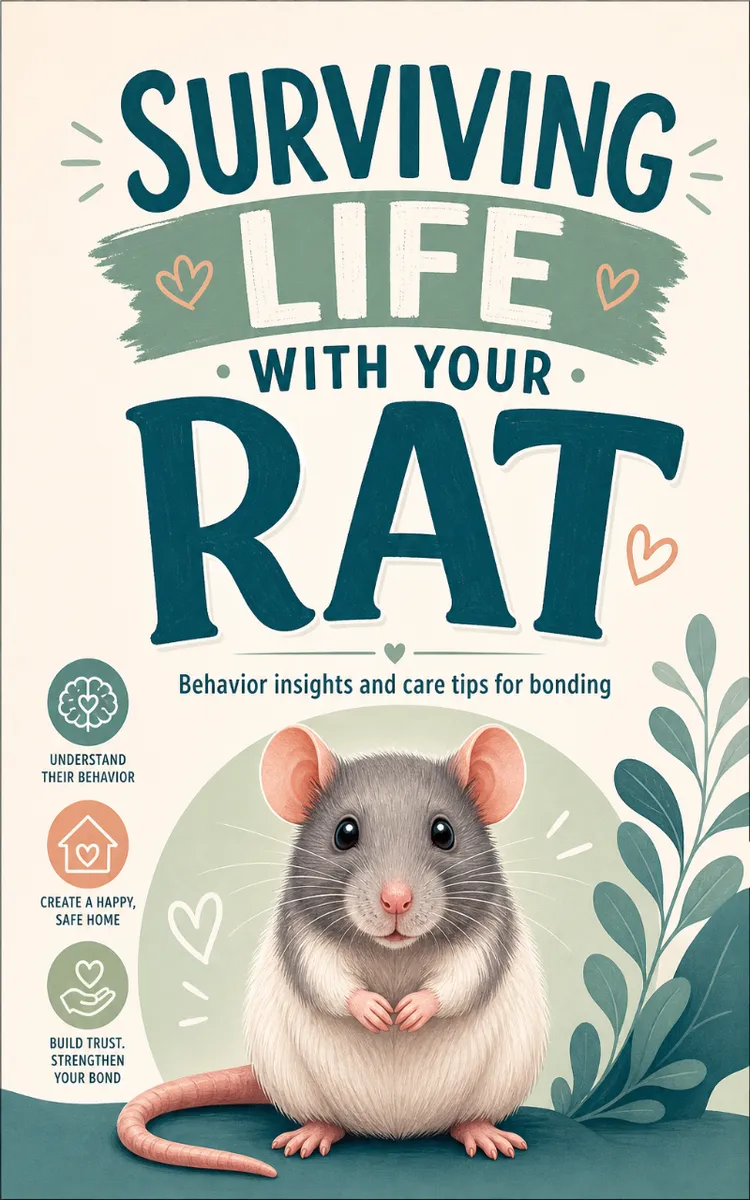
"Surviving Life With Your Rat" is a how-to guide book by Violet Powers with 8 chapters and approximately 16,162 words. Rat behavior reading, care guidance, and bonding strategies.
This book was created using Inkfluence AI, an AI-powered book generation platform that helps authors write, design, and publish complete books. It was made with the AI Ebook Generator.
Frequently Asked Questions
What is "Surviving Life With Your Rat" about?
Rat behavior reading, care guidance, and bonding strategies
How many chapters are in "Surviving Life With Your Rat"?
The book contains 8 chapters and approximately 16,162 words. Topics covered include Rat Body Basics and Needs, Choosing a Healthy Rat and Pairing, Reading Rat Emotions Through Body Language, Habituation and Trust-Building Steps, and more.
Who wrote "Surviving Life With Your Rat"?
This book was written by Violet Powers and created using Inkfluence AI, an AI book generation platform that helps authors write, design, and publish books.
How can I create a similar how-to guide book?
You can create your own how-to guide book using Inkfluence AI. Describe your idea, choose your style, and the AI writes the full book for you. It's free to start.
Write your own how-to guide book with AI
Describe your idea and Inkfluence writes the whole thing. Free to start.
Start writingCreated with Inkfluence AI


