
Read the first chapter
The whole of chapter one, free. About 10 min. Turn the pages with the arrows, your keyboard, or a swipe.
Chapter 1
Zoning Lines and Bitter Apologies
Maya Lin tightened her grip on the folder until the cardboard edge cut into her palm.
Across the Chicago City Hall hearing room, the demolition rendering gleamed beneath fluorescent lights: a glass luxury tower rising where the Marigold Theater had stood since 1928, its upper floors catching a manufactured sunset. In the foreground, a landscaped plaza erased the theater’s cracked terra-cotta marquee so completely that Maya could almost hear the city approving the lie.
She had come for one thing - to make the room remember what would be lost.
The hearing clerk called the next speaker. Maya glanced toward the aisle.
Julian Vance entered without hurrying.
He wore a dark suit that fit him with architectural precision, no wasted fabric, no visible uncertainty. At thirty-two, he looked less like a man who designed buildings than someone who had learned to stand inside other people’s disasters without being touched by them. A leather portfolio rested beneath his arm. His expression was composed, almost bored.
Then his gaze found the Marigold.
Something moved behind his eyes. Not affection. Calculation, perhaps. The theater’s footprint. Its load-bearing walls. The cost of stabilizing the roof.
Maya hated him before he sat down.
She hated that his attention lingered on the building’s photograph. She hated more that she noticed.
“Ms. Lin,” the clerk said. “You have three minutes.”
Maya rose. The room smelled of wet wool, old paper, and the bitter coffee cooling in council members’ cups. Beyond the tall windows, February had turned the city the color of unpolished steel.
“The Marigold is not an empty parcel with sentimental paint,” she began. “It is one of the last intact jazz theaters on the South Side. Musicians who changed American music played beneath that marquee. The balcony still carries the original acoustic plaster. The lobby mosaics were made by local artists who were never credited in the development records.”
A councilman shifted behind his microphone. Someone in the audience coughed.
Maya opened her folder and lifted a photograph of the theater before neglect had hollowed it out: brass doors shining, marquee letters blazing against the night.
“Preservation is not obstruction. It is accountability. We cannot keep calling displacement revitalization simply because the replacement has a rooftop bar.”
A ripple moved through the room - approval from the back rows, irritation at the dais. Maya felt it like a current under her skin. Public support. That was what she needed. Enough voices to make demolition politically expensive.
She turned toward the council.
“Approve landmark review. Require an independent structural assessment. Give the Marigold a chance to prove what it is.”
Three minutes became two. Then one. The clerk raised a hand.
Maya returned to her seat with her pulse sharp in her throat. She had said the words cleanly. She had not mentioned the betrayal that had taught her how quickly a trusted ally could sell her work for a better title. She had not said that she was tired of carrying the Marigold alone while everyone praised the building’s history and waited for someone else to pay for its future.
Julian stood.
He did not bring photographs. He brought numbers.
“The proposed Vance Urban development will generate four hundred million dollars in construction activity,” he said. His voice was low, spare, irritatingly easy to hear. “Two thousand permanent jobs. Three hundred eighty housing units, including affordable units required under the city agreement. The current structure is seventy percent vacant, fails modern accessibility standards, and requires an estimated forty-two million dollars in stabilization.”
Maya’s fingers curled around her pen.
Julian tapped the rendering once. “The question before the council is not whether the Marigold has cultural value. It does. The question is whether cultural value alone can justify preserving a structure that cannot sustain itself.”
“Convenient,” Maya said.
His eyes moved to her. “You’re welcome to wait your turn.”
“I’ve been waiting six months for your company to release the full structural report.”
The room sharpened.
Julian’s mouth tightened - not anger exactly, but a recalculation. “The report is preliminary.”
“Preliminary enough to recommend demolition.”
“Accurate enough to identify a public safety risk.”
“The roof has been neglected because your client bought the property and left it to decay.”
A council member leaned toward the microphone. “Ms. Lin.”
Maya did not look away from Julian. “Neglect is not evidence.”
“No,” he said. “But gravity is.”
The answer landed harder than it should have. His eyes were gray, she realized. Not pale; storm-colored, with a darker ring around the iris. She had expected arrogance to be louder. Julian’s was quiet. It wore a watch and cited load limits.
“You’re framing the theater as a failed investment,” she said.
“I’m framing it as a building.”
“And I’m telling you it is more than one.”
“That distinction doesn’t make the roof safer.”
“It might make the city less ashamed of itself.”
A few people laughed. Julian didn’t. But the corner of his mouth moved, almost unwillingly, as if her answer had found a structural weakness.
Maya felt the flicker and despised herself for noticing that, too.
The council chair called for order, then asked both parties to submit final comments. Julian returned to his seat. As he passed Maya’s row, the sleeve of his coat brushed the back of her chair. A clean scent followed him - cedar, cold air, something metallic. He placed his portfolio on the table with deliberate care.
“You’re good,” he murmured.
Maya kept her eyes on the dais. “I’m not here for your review.”
“No. You’re here to win.”
“At least one of us is.”
His gaze dropped to the photograph in her folder. “Winning doesn’t pay for a roof.”
“Neither does demolishing it.”
“That’s exactly what it pays for.”
The hearing dragged through objections, revised zoning maps, and a developer’s attorney who called the Marigold “an impediment to responsible density.” Maya took notes until the words blurred. Every time she looked up, Julian was doing the same thing: listening with an unnerving stillness, one hand resting near his phone.
Once, the screen lit.
He glanced down. The composure left his face.
Only for a second. A message. A name she couldn’t see. His thumb moved quickly, then he locked the phone and placed it facedown. When he looked back at the council, the architect had returned.
Maya should have felt satisfaction. Instead, the glimpse unsettled her. She knew too well what it meant to keep a private emergency behind a professional expression.
The chair finally called the vote on the demolition application.
Maya rose before the clerk finished reading the motion. “I request a formal landmark review and independent access to the structure.”
“Denied,” said the developer’s attorney. “The applicant has already completed its assessment.”
“Your assessment,” Maya said, “excluded the original orchestra pit, the rear service corridor, and the east wall behind the plasterwork.”
Julian turned toward her fully now. “Those areas are inaccessible.”
“Then you don’t know what’s there.”
“I know enough.”
“That’s the problem.”
The chair struck the gavel once. “Mr. Vance, Ms. Lin. Sit down.”
Maya sat, though every muscle in her body resisted.
The vote began. One council member spoke in favor of economic development. Another mentioned jobs. A third praised the developer’s commitment to the neighborhood in the careful language of someone who would not be living beneath the tower’s shadow.
Then Councilwoman Reyes, who had listened without taking notes, leaned toward her microphone.
“I’m not prepared to approve demolition based on a report that may not account for the building’s full historic fabric,” she said. “Nor am I prepared to halt a major development on the basis of photographs and oral history.”
Maya’s hope rose too fast.
Reyes continued. “The city’s preservation office proposes a thirty-day co-assessment. Ms. Lin and Mr. Vance will receive shared access to the Marigold Theater, conduct a joint structural and historical review, and submit one report addressing both preservation feasibility and redevelopment constraints.”
Maya stared at her.
Julian’s face went blank.
The chair read from the order. “Access begins Monday. Neither party may obstruct the other. Findings must be signed by both assessors.”
“Absolutely not,” Maya said.
Julian spoke at the same time. “That is impractical.”
Their voices collided. A murmur spread through the room.
Reyes looked between them. “You have both argued that the other side lacks sufficient information. Thirty days should cure that.”
“Councilwoman,” Julian said, “my firm has contractual obligations.”
“And Ms. Lin has professional obligations,” Reyes replied. “You’ll both manage.”
Maya pushed to her feet. “I will not put the theater’s future in the hands of the person hired to erase it.”
Julian’s attention cut toward her. “And I won’t stake a billion-dollar project on an assessment conducted by an advocate who has already decided the conclusion.”
“Then we agree on something.”
The chair’s gavel came down again. “The order stands.”
A clerk approached with two copies of the mandate. Maya signed hers with a hand that felt detached from her body. The ink dried beside Julian’s signature, his name controlled and slanted, the V sharp as a blade.
Thirty days.
Shared access. Shared findings. Shared responsibility if the building failed - or if it survived.
In the corridor outside, the hearing room’s heat gave way to a draft that smelled of stone dust and snow. Reporters clustered near the elevators. Someone called Maya’s name. She ignored them and walked toward the tall windows at the end of the hall, where the river cut a dull line between buildings.
Julian caught up beside her.
“You made your point,” he said.
She turned. “Did I?”
“The council didn’t approve demolition.”
“They didn’t protect the theater.”
“Neither did you.”
The words struck the place she kept armored.
He seemed to realize it. His expression shifted, not softening, exactly. Attention was too dangerous a thing to mistake for kindness.
Maya stepped closer. “You don’t get to stand in that room and reduce a century of music to maintenance costs.”
“And you don’t get to turn my work into a moral failure because you dislike the client.”
“I dislike what your client is doing.”
“You dislike that I’m the one who can do it.”
The corridor noise thinned around them. Somewhere behind the closed hearing-room doors, a microphone squealed and went silent.
Maya could see the pulse in his throat.
“I know what you can do,” she said. “That’s why I’m worried.”
For the first time, Julian looked tired. Not in the ordinary way. The exhaustion seemed lodged beneath his skin, a private debt collecting interest.
His phone vibrated again.
He checked it. This time Maya saw the message preview: Need you to call about Eleanor.
Julian’s jaw tightened. He silenced the phone.
Maya looked away, granting him the privacy he had not asked for. “You should take that.”
“You’re not suddenly concerned about my schedule.”
“No. I’m concerned about being trapped in a building with someone who can’t be bothered to show up.”
His eyes returned to her. “I’ll show up.”
The certainty in it unsettled her more than an excuse would have.
“Monday,” she said.
“Seven a.m.”
“Eight.”
“Seven.”
“The theater has no heat.”
“Then wear a coat.”
“Is that your professional recommendation?”
“It’s the only one you’re getting for free.”
Despite herself, Maya almost smiled. She stopped it before it reached her mouth.
Julian noticed anyway. His gaze dropped, briefly, and the moment became too intimate for a public corridor. Maya felt the old instinct rise - the urge to retreat before anyone could mistake proximity for trust.
She gathered her folder against her chest. “I’ll bring the archival records.”
“I’ll bring the structural plans.”
“And if your plans contradict the building?”
“Then the building wins.”
The answer was so quiet she nearly missed it.
Maya studied him. “You just said gravity was the only thing that mattered.”
“I said it was accurate.”
“That isn’t the same thing.”
“No,” Julian said. “It isn’t.”
The elevator doors opened behind them.
Maya stepped inside. Julian did not.
For one suspended second, she thought he might join her. Instead, he remained in the corridor, phone vibrating against his palm, the city’s mandate folded between them like a contract neither had wanted and neither could escape.
“Seven,” he said.
“Eight.”
His mouth tilted. “You’ll be there at seven.”
The doors began to close.
Maya watched him through the narrowing gap: the immaculate suit, the locked phone, the man hired to demolish the only place in Chicago she had refused to abandon.
Then the doors sealed, taking his face from view.
On Monday, she would enter the Marigold with Julian Vance.
For thirty days, every hidden weakness in the theater - and every weakness in the man beside her - would have to survive inspection.
End of chapter one. 4 more chapters in the full book.
Swipe or use the arrows to turn the page
What's inside: 5 chapters
- 1. Zoning Lines and Bitter Apologies
- 2. Blueprint Rules for Shared Space
- 3. Hidden Voids Under the Stage
- 4. When the Company Turns Its Back
- 5. Reopening Night, New Foundations
About this book
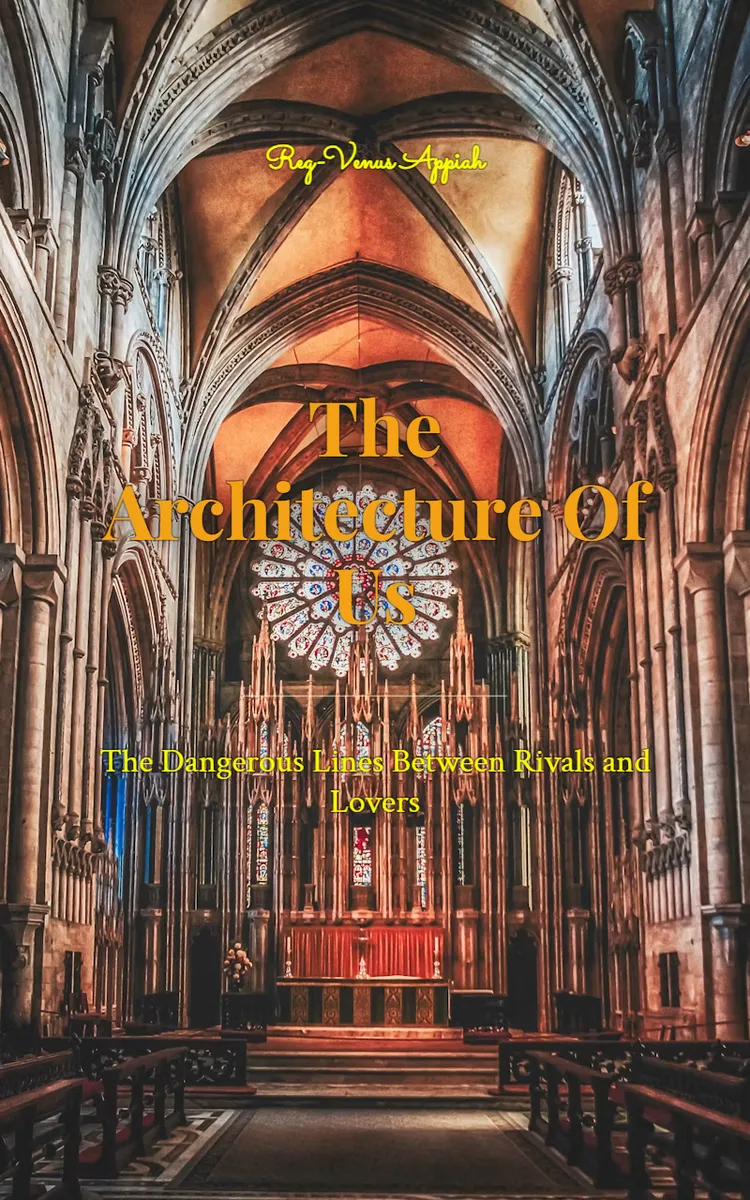
"The Architecture Of Us" is a romance book by Reg-Venus Appiah with 5 chapters and approximately 10,968 words. Dual-POV enemies-to-lovers romance over a Chicago theater demolition..
This book was created using Inkfluence AI, an AI-powered book generation platform that helps authors write, design, and publish complete books. It was made with the AI Romance Novel Writer.
Frequently Asked Questions
What is "The Architecture Of Us" about?
Dual-POV enemies-to-lovers romance over a Chicago theater demolition.
How many chapters are in "The Architecture Of Us"?
The book contains 5 chapters and approximately 10,968 words. Topics covered include Zoning Lines and Bitter Apologies, Blueprint Rules for Shared Space, Hidden Voids Under the Stage, When the Company Turns Its Back, and more.
Who wrote "The Architecture Of Us"?
This book was written by Reg-Venus Appiah and created using Inkfluence AI, an AI book generation platform that helps authors write, design, and publish books.
How can I create a similar romance book?
You can create your own romance book using Inkfluence AI. Describe your idea, choose your style, and the AI writes the full book for you. It's free to start.
Write your own romance book with AI
Describe your idea and Inkfluence writes the whole thing. Free to start.
Start writingCreated with Inkfluence AI


